10 Books Similar to "Deschooling Society"
by Ivan Illich
A Pedagogy for Liberation: Dialogues on Transforming Education

"A Pedagogy for Liberation" captures a series of dynamic conversations between Ira Shor and Paulo Freire, exploring the principles and practices of critical, liberating education. It delves into how education can empower individuals to question dominant narratives, critically analyze their social realities, and actively work towards societal transformation. The book offers practical insights into implementing a student-centered, problem-posing approach within various educational settings.
This book resonates strongly with "Deschooling Society" through its shared denouncement of conventional, institutionalized schooling. Both texts critique the inherent power imbalances and hidden curricula within traditional educational systems that often serve to reinforce existing social hierarchies rather than foster genuine learning and critical thought. They advocate for radical reimagining of learning environments beyond the confines of standardized schooling.
The appeal lies in its hopeful and actionable vision for change. It provides concrete examples and theoretical frameworks for educators and activists seeking to foster critical consciousness and dismantle oppressive structures through pedagogy. The dialogue format makes complex ideas accessible, offering inspiration and practical guidance for anyone committed to creating more equitable and empowering learning experiences.
A Pedagogy for Liberation: Dialogues on Transforming Education
"A Pedagogy for Liberation" captures a series of dynamic conversations between Ira Shor and Paulo Freire, exploring the principles and practices of critical, liberating education. It delves into how education can empower individuals to question dominant narratives, critically analyze their social realities, and actively work towards societal transformation. The book offers practical insights into implementing a student-centered, problem-posing approach within various educational settings.
This book resonates strongly with "Deschooling Society" through its shared denouncement of conventional, institutionalized schooling. Both texts critique the inherent power imbalances and hidden curricula within traditional educational systems that often serve to reinforce existing social hierarchies rather than foster genuine learning and critical thought. They advocate for radical reimagining of learning environments beyond the confines of standardized schooling.
The appeal lies in its hopeful and actionable vision for change. It provides concrete examples and theoretical frameworks for educators and activists seeking to foster critical consciousness and dismantle oppressive structures through pedagogy. The dialogue format makes complex ideas accessible, offering inspiration and practical guidance for anyone committed to creating more equitable and empowering learning experiences.
The Underground History of American Education: An Intimate Investigation Into the Prison of Modern Schooling

John Taylor Gatto's "The Underground History of American Education" meticulously deconstructs the origins and purposes of compulsory schooling in the United States. Gatto, a former New York City Teacher of the Year, argues that modern education is not designed for intellectual awakening or individual flourishing, but rather to inculcate obedience, conformity, and economic subservience. He traces its roots to Prussian military models and the industrial revolution, presenting a provocative case that our current system intentionally diminishes critical thinking and personal autonomy.
This work resonates strongly with Ivan Illich's "Deschooling Society" by sharing a fundamental critique of institutionalized education. Both authors contend that formal schooling, as currently structured, inherently obstructs genuine learning and personal development. They challenge the premise that learning requires a dedicated institution, advocating instead for environments that empower individuals to pursue knowledge independently and through diverse, self-directed avenues.
This book offers a compelling re-evaluation of a foundational societal institution. It provides an alternative framework for understanding education's historical trajectory and its impact on personal freedom and societal progress. For anyone questioning the efficacy or purpose of conventional schooling, Gatto's investigation illuminates hidden agendas and inspires fresh perspectives on how societies can truly foster knowledge and individual potential.
The Underground History of American Education: An Intimate Investigation Into the Prison of Modern Schooling
John Taylor Gatto's "The Underground History of American Education" meticulously deconstructs the origins and purposes of compulsory schooling in the United States. Gatto, a former New York City Teacher of the Year, argues that modern education is not designed for intellectual awakening or individual flourishing, but rather to inculcate obedience, conformity, and economic subservience. He traces its roots to Prussian military models and the industrial revolution, presenting a provocative case that our current system intentionally diminishes critical thinking and personal autonomy.
This work resonates strongly with Ivan Illich's "Deschooling Society" by sharing a fundamental critique of institutionalized education. Both authors contend that formal schooling, as currently structured, inherently obstructs genuine learning and personal development. They challenge the premise that learning requires a dedicated institution, advocating instead for environments that empower individuals to pursue knowledge independently and through diverse, self-directed avenues.
This book offers a compelling re-evaluation of a foundational societal institution. It provides an alternative framework for understanding education's historical trajectory and its impact on personal freedom and societal progress. For anyone questioning the efficacy or purpose of conventional schooling, Gatto's investigation illuminates hidden agendas and inspires fresh perspectives on how societies can truly foster knowledge and individual potential.
Dumbing Us Down: The Hidden Curriculum of Compulsory Schooling

"Dumbing Us Down" argues that compulsory schooling, far from empowering children, actually diminishes their natural curiosity and self-direction. Gatto, a former teacher, details how the modern educational system is designed to produce conformity and obedience rather than independent thought, essentially indoctrinating students into a predetermined societal role through its "hidden curriculum" of bells, schedules, and ranking.
Both Gatto's work and Illich's "Deschooling Society" critique the foundational assumptions of institutionalized education. They share the conviction that formal schooling, as currently structured, restricts individual liberty and learning potential. Both authors advocate for a fundamental re-evaluation of how societies approach learning, moving beyond the confines of traditional classrooms.
This book offers a powerful and often unsettling perspective on the true purpose and impact of our schooling system. It encourages critical thinking about educational policy and parental involvement, providing insightful commentary for anyone concerned with fostering genuine intellectual development and individual autonomy in children.
Dumbing Us Down: The Hidden Curriculum of Compulsory Schooling
"Dumbing Us Down" argues that compulsory schooling, far from empowering children, actually diminishes their natural curiosity and self-direction. Gatto, a former teacher, details how the modern educational system is designed to produce conformity and obedience rather than independent thought, essentially indoctrinating students into a predetermined societal role through its "hidden curriculum" of bells, schedules, and ranking.
Both Gatto's work and Illich's "Deschooling Society" critique the foundational assumptions of institutionalized education. They share the conviction that formal schooling, as currently structured, restricts individual liberty and learning potential. Both authors advocate for a fundamental re-evaluation of how societies approach learning, moving beyond the confines of traditional classrooms.
This book offers a powerful and often unsettling perspective on the true purpose and impact of our schooling system. It encourages critical thinking about educational policy and parental involvement, providing insightful commentary for anyone concerned with fostering genuine intellectual development and individual autonomy in children.
The School And Society
John Dewey's "The School And Society" advocates for an educational system deeply integrated with the community, emphasizing active learning and experimental engagement over rote memorization. It argues that schools should reflect and prepare students for societal life, fostering critical thinking and problem-solving through participation in real-world activities. Dewey champions education as a continuous process of growth, shaped by experience and social interaction.
This work resonates with "Deschooling Society" by Ivan Illich in its fundamental critique of traditional schooling's limitations. Both express skepticism about the institutionalized, standardized model of education, believing it often stifles genuine learning and alienates individuals from their innate capacities. They share a vision of learning that transcends the classroom, advocating for more organic, community-driven, and learner-centered approaches.
This book offers a foundational understanding of progressive education, providing a historical perspective on alternative learning philosophies. It appeals to educators, policymakers, and anyone interested in educational reform, offering insights into how learning can be made more relevant, engaging, and impactful for societal development. Its enduring principles remain highly relevant for contemporary discussions on educational innovation and the future of schooling.
The School And Society
John Dewey's "The School And Society" advocates for an educational system deeply integrated with the community, emphasizing active learning and experimental engagement over rote memorization. It argues that schools should reflect and prepare students for societal life, fostering critical thinking and problem-solving through participation in real-world activities. Dewey champions education as a continuous process of growth, shaped by experience and social interaction.
This work resonates with "Deschooling Society" by Ivan Illich in its fundamental critique of traditional schooling's limitations. Both express skepticism about the institutionalized, standardized model of education, believing it often stifles genuine learning and alienates individuals from their innate capacities. They share a vision of learning that transcends the classroom, advocating for more organic, community-driven, and learner-centered approaches.
This book offers a foundational understanding of progressive education, providing a historical perspective on alternative learning philosophies. It appeals to educators, policymakers, and anyone interested in educational reform, offering insights into how learning can be made more relevant, engaging, and impactful for societal development. Its enduring principles remain highly relevant for contemporary discussions on educational innovation and the future of schooling.
Horace's Compromise: The Dilemma of the American High School
"Horace's Compromise" meticulously examines the American high school experience from the perspectives of both students and teachers, highlighting the often-unspoken compromises made within the system. Sizer uncovers a reality where learning is frequently superficial, depth is sacrificed for breadth, and genuine intellectual engagement takes a backseat to passive compliance and administrative demands. He argues that this pervasive "compromise" stifles critical thinking and true educational development, leaving students unprepared and teachers disillusioned.
This work resonates with "Deschooling Society" through its fundamental critique of institutionalized education. Both authors argue that the very structure of schooling, rather than fostering learning, often impedes it. Illich calls for deschooling as a radical alternative, while Sizer, though focusing on reform within the system, similarly exposes how traditional structures inherently limit authentic educational outcomes, echoing Illich's concerns about the "hidden curriculum" and the professionalization of learning.
Those invested in understanding the systemic flaws within education will find Sizer's detailed observations and thoughtful analysis invaluable. It offers a penetrating look at the daily realities inside high schools, providing a nuanced perspective on why current models often fail to deliver on their promise. For anyone seeking to comprehend the persistent challenges in secondary education, this book offers profound insights and a strong foundation for future discussion and reform.
Horace's Compromise: The Dilemma of the American High School
"Horace's Compromise" meticulously examines the American high school experience from the perspectives of both students and teachers, highlighting the often-unspoken compromises made within the system. Sizer uncovers a reality where learning is frequently superficial, depth is sacrificed for breadth, and genuine intellectual engagement takes a backseat to passive compliance and administrative demands. He argues that this pervasive "compromise" stifles critical thinking and true educational development, leaving students unprepared and teachers disillusioned.
This work resonates with "Deschooling Society" through its fundamental critique of institutionalized education. Both authors argue that the very structure of schooling, rather than fostering learning, often impedes it. Illich calls for deschooling as a radical alternative, while Sizer, though focusing on reform within the system, similarly exposes how traditional structures inherently limit authentic educational outcomes, echoing Illich's concerns about the "hidden curriculum" and the professionalization of learning.
Those invested in understanding the systemic flaws within education will find Sizer's detailed observations and thoughtful analysis invaluable. It offers a penetrating look at the daily realities inside high schools, providing a nuanced perspective on why current models often fail to deliver on their promise. For anyone seeking to comprehend the persistent challenges in secondary education, this book offers profound insights and a strong foundation for future discussion and reform.
Pedagogy of the Oppressed
"Pedagogy of the Oppressed" by Paulo Freire critiques traditional education as a "banking concept," where teachers deposit knowledge into passive students. Freire advocates for a Problem-Posing Education, a dialogical and emancipatory process. Through this approach, both students and teachers become co-investigators of reality, critically analyzing their world and challenging oppressive structures. It emphasizes conscientization – a profound understanding of social, political, and economic contradictions, leading to action for liberation.
This book shares significant common ground with Ivan Illich's "Deschooling Society." Both authors fundamentally question the institutionalized nature of education and its role in perpetuating existing power dynamics. They argue that conventional schooling often hinders genuine learning and critical thought, instead reinforcing societal hierarchies and conformity rather than fostering true liberation and individual agency.
The insights offered in "Pedagogy of the Oppressed" resonate deeply with those seeking to understand the socio-political dimensions of education and human liberation. It provides a powerful framework for dissecting power structures, inspiring critical consciousness, and envisioning educational practices that empower individuals to transform their realities. Its enduring relevance lies in its call for education to be a tool for freedom, not control.
Pedagogy of the Oppressed
"Pedagogy of the Oppressed" by Paulo Freire critiques traditional education as a "banking concept," where teachers deposit knowledge into passive students. Freire advocates for a Problem-Posing Education, a dialogical and emancipatory process. Through this approach, both students and teachers become co-investigators of reality, critically analyzing their world and challenging oppressive structures. It emphasizes conscientization – a profound understanding of social, political, and economic contradictions, leading to action for liberation.
This book shares significant common ground with Ivan Illich's "Deschooling Society." Both authors fundamentally question the institutionalized nature of education and its role in perpetuating existing power dynamics. They argue that conventional schooling often hinders genuine learning and critical thought, instead reinforcing societal hierarchies and conformity rather than fostering true liberation and individual agency.
The insights offered in "Pedagogy of the Oppressed" resonate deeply with those seeking to understand the socio-political dimensions of education and human liberation. It provides a powerful framework for dissecting power structures, inspiring critical consciousness, and envisioning educational practices that empower individuals to transform their realities. Its enduring relevance lies in its call for education to be a tool for freedom, not control.
The Death and Life of the Great American School System: How Testing and Choice Are Undermining Education

Diane Ravitch's "The Death and Life of the Great American School System" critically examines modern education reform. She argues that initiatives like high-stakes standardized testing, privatization, and school choice, often championed as solutions, are in fact dismantling public education and contributing to educational inequality. Ravitch, a former proponent of many of these reforms, meticulously details their detrimental impact on curriculum, teacher autonomy, and student well-being.
This work resonates with "Deschooling Society" through its shared skepticism of established educational institutions and pervasive reform efforts. Both authors challenge the fundamental assumptions underlying contemporary schooling, arguing that systemic flaws, rather than being addressed, are often exacerbated by well-intentioned but ultimately misguided policies. While Illich's critique is broader, Ravitch offers a contemporary, empirical examination of how specific "reforms" mirror Illich's concerns about institutionalized learning hindering genuine education.
The book will appeal to those seeking a nuanced and data-driven critique of current education policy. Its value lies in offering an authoritative voice, grounded in decades of experience, that unpacks the complex interplay of politics, economics, and pedagogy in shaping the American school system. It provides vital context for understanding ongoing debates and empowers a more informed perspective on the future of education.
The Death and Life of the Great American School System: How Testing and Choice Are Undermining Education
Diane Ravitch's "The Death and Life of the Great American School System" critically examines modern education reform. She argues that initiatives like high-stakes standardized testing, privatization, and school choice, often championed as solutions, are in fact dismantling public education and contributing to educational inequality. Ravitch, a former proponent of many of these reforms, meticulously details their detrimental impact on curriculum, teacher autonomy, and student well-being.
This work resonates with "Deschooling Society" through its shared skepticism of established educational institutions and pervasive reform efforts. Both authors challenge the fundamental assumptions underlying contemporary schooling, arguing that systemic flaws, rather than being addressed, are often exacerbated by well-intentioned but ultimately misguided policies. While Illich's critique is broader, Ravitch offers a contemporary, empirical examination of how specific "reforms" mirror Illich's concerns about institutionalized learning hindering genuine education.
The book will appeal to those seeking a nuanced and data-driven critique of current education policy. Its value lies in offering an authoritative voice, grounded in decades of experience, that unpacks the complex interplay of politics, economics, and pedagogy in shaping the American school system. It provides vital context for understanding ongoing debates and empowers a more informed perspective on the future of education.
The Language Police: How Pressure Groups Restrict What Students Learn
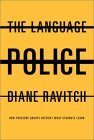
Diane Ravitch’s "The Language Police" scrutinizes how various special interest groups, from fundamentalist Christians to multiculturalist activists, exert pressure on school curricula and textbooks. It meticulously details how these groups, often with conflicting agendas, succeed in sanitizing educational materials, removing anything deemed offensive, controversial, or culturally insensitive. The book reveals a pervasive self-censorship within the publishing industry and educational system, leading to bland, homogenized content that stifles critical thinking and presents a distorted view of history and society.
This book resonates with themes in "Deschooling Society" by tackling systemic issues within education that hinder genuine learning. Just as Illich critiques the institutionalization of education for stifling individual growth and promoting conformity, Ravitch exposes how external forces manipulate the curriculum to serve political or ideological ends, rather than fostering a robust, unvarnished intellectual exploration. Both authors challenge the fundamental assumptions about what and how students should learn, advocating for environments where knowledge is pursued freely, not dictated.
Individuals concerned with the integrity of education and freedom of thought will find this analysis compelling. It offers a vital look into the often-unseen mechanisms that shape what future generations are taught, equipping them with a deeper understanding of the battles waged over learning content. The insights provided are invaluable for anyone seeking to advocate for a more honest, comprehensive, and intellectually stimulating educational experience.
The Language Police: How Pressure Groups Restrict What Students Learn
Diane Ravitch’s "The Language Police" scrutinizes how various special interest groups, from fundamentalist Christians to multiculturalist activists, exert pressure on school curricula and textbooks. It meticulously details how these groups, often with conflicting agendas, succeed in sanitizing educational materials, removing anything deemed offensive, controversial, or culturally insensitive. The book reveals a pervasive self-censorship within the publishing industry and educational system, leading to bland, homogenized content that stifles critical thinking and presents a distorted view of history and society.
This book resonates with themes in "Deschooling Society" by tackling systemic issues within education that hinder genuine learning. Just as Illich critiques the institutionalization of education for stifling individual growth and promoting conformity, Ravitch exposes how external forces manipulate the curriculum to serve political or ideological ends, rather than fostering a robust, unvarnished intellectual exploration. Both authors challenge the fundamental assumptions about what and how students should learn, advocating for environments where knowledge is pursued freely, not dictated.
Individuals concerned with the integrity of education and freedom of thought will find this analysis compelling. It offers a vital look into the often-unseen mechanisms that shape what future generations are taught, equipping them with a deeper understanding of the battles waged over learning content. The insights provided are invaluable for anyone seeking to advocate for a more honest, comprehensive, and intellectually stimulating educational experience.
A Thomas Jefferson Education: Teaching a Generation of Leaders for the Twenty-First Century
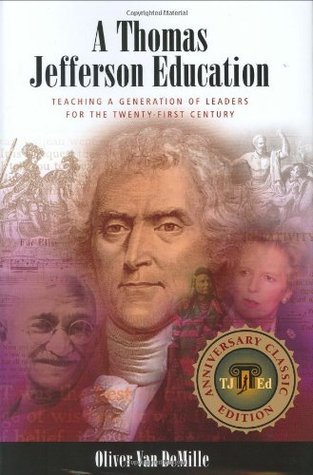
"A Thomas Jefferson Education" advocates for a personalized, self-directed approach to learning, primarily for children and young adults. It outlines a method focusing on extensive reading of classics, Socratic dialogue, and mentorship, aiming to cultivate critical thinking, leadership skills, and a deep understanding of core principles rather than rote memorization or compliance with standardized curricula.
This book shares thematic ground with "Deschooling Society" through its critique of conventional schooling. Both texts question the institutionalized, compulsory nature of traditional education and propose alternative paradigms that empower individuals to take ownership of their learning. Illich's call for disaggregated learning networks echoes DeMille's emphasis on mentorship and a broad, accessible "great books" curriculum outside typical school structures.
The book offers a compelling blueprint for fostering intellectual independence and a love of learning. It provides actionable strategies for parents and educators seeking to cultivate genuine intellectual curiosity and leadership qualities in a way that resonates profoundly in an age demanding adaptability and critical thought. Its value lies in offering a practical alternative to the perceived shortcomings of mainstream educational systems.
A Thomas Jefferson Education: Teaching a Generation of Leaders for the Twenty-First Century
"A Thomas Jefferson Education" advocates for a personalized, self-directed approach to learning, primarily for children and young adults. It outlines a method focusing on extensive reading of classics, Socratic dialogue, and mentorship, aiming to cultivate critical thinking, leadership skills, and a deep understanding of core principles rather than rote memorization or compliance with standardized curricula.
This book shares thematic ground with "Deschooling Society" through its critique of conventional schooling. Both texts question the institutionalized, compulsory nature of traditional education and propose alternative paradigms that empower individuals to take ownership of their learning. Illich's call for disaggregated learning networks echoes DeMille's emphasis on mentorship and a broad, accessible "great books" curriculum outside typical school structures.
The book offers a compelling blueprint for fostering intellectual independence and a love of learning. It provides actionable strategies for parents and educators seeking to cultivate genuine intellectual curiosity and leadership qualities in a way that resonates profoundly in an age demanding adaptability and critical thought. Its value lies in offering a practical alternative to the perceived shortcomings of mainstream educational systems.
The Having of Wonderful Ideas and Other Essays on Teaching and Learning
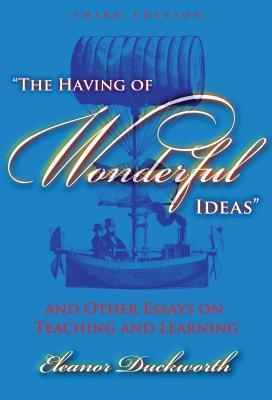
Eleanor Duckworth's "The Having of Wonderful Ideas" champions a constructivist approach to education, asserting that genuine learning stems from students actively constructing their own understanding rather than passively receiving information. Through a collection of essays, she illustrates how fostering curiosity, providing opportunities for exploration, and valuing students' unique perspectives are paramount to deep, meaningful intellectual development.
This collection resonates with "Deschooling Society" through its shared critique of conventional schooling models and its advocacy for learner-centered processes. Both works question the efficacy of standardized curricula and institutionalized instruction, instead emphasizing the inherent human capacity for self-directed learning and the importance of an environment that supports individual intellectual autonomy.
The book offers a refreshing perspective for educators, parents, and anyone interested in effective learning methodologies. It provides practical insights and philosophical grounding for cultivating environments where original thought and genuine inquiry can flourish, moving beyond rote memorization to a more profound engagement with knowledge.
The Having of Wonderful Ideas and Other Essays on Teaching and Learning
Eleanor Duckworth's "The Having of Wonderful Ideas" champions a constructivist approach to education, asserting that genuine learning stems from students actively constructing their own understanding rather than passively receiving information. Through a collection of essays, she illustrates how fostering curiosity, providing opportunities for exploration, and valuing students' unique perspectives are paramount to deep, meaningful intellectual development.
This collection resonates with "Deschooling Society" through its shared critique of conventional schooling models and its advocacy for learner-centered processes. Both works question the efficacy of standardized curricula and institutionalized instruction, instead emphasizing the inherent human capacity for self-directed learning and the importance of an environment that supports individual intellectual autonomy.
The book offers a refreshing perspective for educators, parents, and anyone interested in effective learning methodologies. It provides practical insights and philosophical grounding for cultivating environments where original thought and genuine inquiry can flourish, moving beyond rote memorization to a more profound engagement with knowledge.
More Books to Explore
Discover more titles that expand on these ideas and themes.
A Pedagogy for Liberation: Dialogues on Transforming Education
The Underground History of American Education: An Intimate Investigation Into the Prison of Modern Schooling
Dumbing Us Down: The Hidden Curriculum of Compulsory Schooling
The School And Society
Horace's Compromise: The Dilemma of the American High School
Pedagogy of the Oppressed