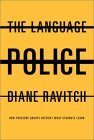
The Language Police: How Pressure Groups Restrict What Students Learn
Book Description
Caught in a web of censorship, the classroom transforms into a battleground as pressure groups manipulate education to fit their narrow agendas. Diane Ravitch exposes the chilling tactics that dilute knowledge and stifle critical thinking, revealing how hidden forces shape the curriculum and stymie voices that challenge the norm. As students face a constricted worldview, the stakes couldn’t be higher for the future of democracy. Unravel the intricate dance between protection and oppression in education. What happens when the quest for intellectual freedom collides with the demands of conformity?
Quick Book Summary
Diane Ravitch’s "The Language Police" exposes how political, ideological, and advocacy groups influence the creation of textbooks and standardized tests, shaping what students can learn in American schools. The book reveals how both left- and right-wing activists pressure publishers to eliminate or alter language, topics, and ideas they find objectionable. Such interventions often lead to a sanitized curriculum stripped of complexity, cultural richness, and critical thought. Ravitch argues that these constraints harm student understanding and democracy itself by preventing honest discussion of history, literature, and social issues. Ultimately, she warns that excessive censorship and self-censorship create a generation poorly equipped to engage in open civic dialogue and robust intellectual debate.



Summary of Key Ideas
Table of Contents
The Influence of Pressure Groups on Curriculum
Diane Ravitch’s investigation begins with the strategies advocacy groups employ to influence what is included—and excluded—in American classrooms. Both conservative and progressive groups lobby school boards and textbook companies to have certain words, concepts, and histories omitted or softened. Whether motivated by concerns over offending sensitivities or advancing particular moral agendas, these pressure groups effectively reshape education at a fundamental level.
Censorship and Sanitization of Educational Materials
The impact of such pressure is evident in the censorship and sanitization of both texts and test questions. Ravitch documents the extensive editing processes designed to avoid controversy: African-American dialects are removed from classics, passages suggesting violence, poverty, or nontraditional family structures are cut, and even references to evolution or certain historical events are softened or eliminated. The result is teaching material that lacks authenticity, complexity, and the potential to challenge or engage students meaningfully.
Impact on Students’ Critical Thinking and Knowledge
These restrictions, Ravitch argues, have dire consequences for students’ ability to think critically and understand their world. By filtering out nuanced or difficult content, students encounter a bland, one-dimensional presentation of knowledge that discourages questioning and stifles debate. As a result, they miss out on learning the skills needed for democratic citizenship, such as evaluating evidence, understanding differing perspectives, and engaging in reasoned argument.
The Role of Publishers and Test Makers
Ravitch also analyzes the pivotal role of publishers and test makers, who often prioritize avoiding controversy over educational integrity. To capture the lucrative textbook market, which is dictated by large states’ approval processes, publishers often create stripped-down, least-offensive versions of materials. Likewise, standardized tests are engineered to minimize the possibility of complaints, resulting in questions and passages devoid of real-world relevance or challenge.
The Battle Between Protection and Intellectual Freedom
Ultimately, Ravitch contends that the core issue is the tension between blameless intentions to protect children and the vital necessity of intellectual freedom in education. She warns that overzealous censorship does not protect, but instead undermines the democratic purpose of schooling: to foster informed, thoughtful, and engaged citizens. Ravitch calls for a recommitment to open inquiry, robust content, and honest engagement with complex realities in the classroom.
Download This Summary
Get a free PDF of this summary instantly — no email required.