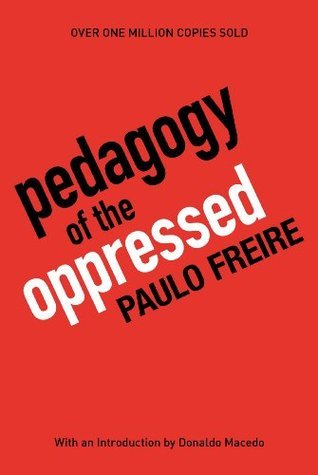
Pedagogy of the Oppressed
Book Description
Imagine a classroom where learning is a revolutionary act, a space where traditional roles dissolve and dialogue ignites transformation. Paulo Freire's 'Pedagogy of the Oppressed' unveils the raw power of education as a tool for liberation, challenging the status quo and urging the oppressed to reclaim their voices. Through compelling narratives and bold theories, he exposes the intricate ties between knowledge and power, inspiring movements across the globe. This is not just a book; it’s a call to action. Are you ready to break free from the chains of conformity and embrace the freedom that education can bring?
Quick Book Summary
"Pedagogy of the Oppressed" by Paulo Freire is a foundational work in critical pedagogy, arguing that education should be a practice of freedom, not an instrument of oppression. Freire critiques the traditional "banking model" of education, where teachers deposit information into passive students, and instead advocates for a dialogical approach rooted in mutual respect and critical thinking. The book emphasizes the importance of consciousness-raising (conscientização) and empowers the marginalized to challenge and change their realities. Freire underscores the role of dialogue and reflection in the learning process, promoting education as a collaborative effort aimed at transforming oppressive social structures. Through his compelling analysis, Freire encourages educators and learners to become active agents of liberation, making his work crucial for those committed to social justice through education.



Summary of Key Ideas
Table of Contents
The Banking Model of Education and Its Critique
Freire begins by critiquing the traditional "banking model" of education, where students are treated as empty vessels to be filled with knowledge by the teacher. In this model, education reinforces existing power structures and maintains passivity among the oppressed. Freire contends that this approach stifles creativity, critical thinking, and self-actualization. Education, he argues, should not be about depositing information but about co-creating knowledge through active engagement. By challenging this paradigm, Freire sets the stage for a revolutionary understanding of the teacher-student relationship.
Liberation Through Dialogue and Critical Consciousness
He transitions to advocating for education as a dialogical process, one rooted in communication and mutual respect. Dialogue, according to Freire, is both a method and a goal: it fosters critical consciousness (conscientização), allowing individuals to perceive and act upon the social, political, and economic contradictions in their lives. The act of engaging in meaningful dialogue empowers learners to become protagonists in their own education, transforming relationships of domination into partnerships of liberation.
The Role of Oppressors and the Oppressed in Society
Freire delves into the dynamics between oppressors and the oppressed, explaining how oppression dehumanizes both parties. The struggle for liberation, he asserts, is not about reversing roles but about restoring humanization for all. He warns against the temptation among the oppressed to emulate their oppressors once in power, emphasizing the importance of developing a new way of being that transcends oppressive frameworks. Education becomes the means by which the oppressed develop a critical awareness of their situation and begin to challenge injustice.
Education as a Political and Transformative Act
Central to Freire's philosophy is the concept of praxis: the combination of reflection and action. It is not enough to simply contemplate or theorize about oppression; individuals must also act to change their circumstances. Praxis is the foundation of meaningful social transformation, bridging the gap between thought and practice. Through continuous cycles of reflection and action, people can reconstruct their realities and challenge the structures that maintain inequality.
Praxis: Reflection and Action for Social Change
In sum, "Pedagogy of the Oppressed" is a manifesto calling for a radical reimagining of education. Freire's vision lies in building solidarity among learners and educators to reclaim the transformative power of education. By engaging critically with the world and each other, the oppressed are equipped to participate fully in the process of liberation. Freire’s work has inspired educators, activists, and scholars worldwide, making his call for a participatory, just, and liberating pedagogy as urgent today as when it was first published.
Download This Summary
Get a free PDF of this summary instantly — no email required.