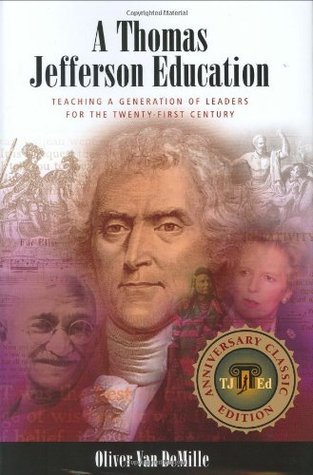
A Thomas Jefferson Education: Teaching a Generation of Leaders for the Twenty-First Century
Book Description
Imagine a world where education transforms mere students into visionary leaders ready to tackle the challenges of the 21st century. In "A Thomas Jefferson Education," Oliver DeMille unleashes a revolutionary approach to learning that ignites passion, innovation, and critical thinking. This isn’t just a method; it’s a call to arms for educators and parents alike, inspiring bold moves away from outdated systems and into a future driven by empowered minds. With vivid examples and compelling insights, the book reveals the timeless principles that can reshape tomorrow’s leaders. Are you ready to redefine what education means for the next generation?
Quick Book Summary
"A Thomas Jefferson Education" by Oliver DeMille introduces a transformative approach to learning, inspired by the educational practices of Thomas Jefferson and the great thinkers of history. DeMille argues that modern education often prioritizes rote memorization and standardized testing at the expense of originality and leadership. The book urges parents, educators, and communities to return to a mentor-driven, classics-based pedagogy that fosters critical thinking, character, and lifelong learning. By emphasizing personal responsibility, active participation, and deep study of classic literature and ideas, DeMille lays out practical steps for nurturing young leaders equipped to navigate the complexities of the twenty-first century. The work is both a criticism of conventional schooling and a call for radical innovation, offering a roadmap for cultivating visionary minds that can shape the future.



Summary of Key Ideas
Table of Contents
Mentor-Based Learning Over Conveyor-Belt Education
Oliver DeMille’s foundational critique is of the "conveyor-belt" system—modern education’s industrial model that processes students uniformly, stifling creativity and leadership. He asserts that this approach values compliance over independent thought, resulting in a society with fewer visionary thinkers. DeMille exposes how standardized curricula and rigid structures undermine the development of the unique talents and passions that students require to become innovative leaders. By highlighting the limitations of this mass-production mindset, he sets the stage for a dramatic shift in educational philosophy.
The Power of Studying the Classics
Instead, DeMille champions a mentor-based learning experience, reminiscent of the classical tradition practiced by Thomas Jefferson and other historical greats. This model centers on the relationship between student and mentor, where individualized guidance and Socratic dialogue replace lectures and rote learning. Mentors inspire and challenge students to pursue excellence, fostering intellectual curiosity and self-reliance. DeMille describes how such relationships ignite intrinsic motivation, making learning personal, dynamic, and deeply transformative.
Creating Leaders Through a Love of Learning
A cornerstone of DeMille’s philosophy is an immersion in the classics: literature, philosophy, history, and original sources that have shaped civilization. Studying the classics cultivates analytical thinking, moral reasoning, and empathy, equipping students to grapple with big ideas and eternal questions. DeMille insists that exposure to time-tested works develops the capacity for wisdom and discernment required of leaders. This classical foundation serves as a launchpad for innovation in confronting modern challenges.
The Core-Phase and Scholar-Phase Approach to Education
Central to executing this educational vision are the "Core-Phase" and "Scholar-Phase." The Core Phase, focused on young children, emphasizes character development, foundational skills, and instilling a love of learning within nurturing contexts like home and community. Scholar Phase, for older students, builds on this foundation through increasingly rigorous, self-directed study, mentored guidance, and active engagement with great works and ideas. This progression recognizes stages of maturity and supports organic growth from curiosity toward mastery and leadership.
The Role of Families and Communities in Developing Leaders
DeMille concludes that the reinvigoration of education must involve families and communities as active participants. The role of parents, teachers, and mentors is to create an environment that values questioning, creativity, and moral integrity. By reclaiming education as a holistic, lifelong pursuit grounded in relationships and the classics, society can develop leaders who are adaptable, principled, and visionary—the kind of individuals capable of shaping a thriving future.
Download This Summary
Get a free PDF of this summary instantly — no email required.