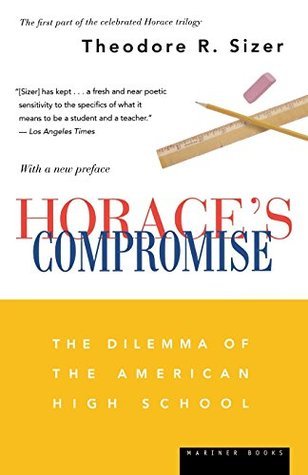
Horace's Compromise: The Dilemma of the American High School
Book Description
What if the very institution designed to shape the future is caught in a web of compromise? In "Horace's Compromise," Theodore R. Sizer unveils the haunting struggles within American high schools, revealing a system at odds with its mission. Teachers confront insurmountable pressures while students seek meaning amidst bureaucracy. As powerful ideals clash with the reality of education, hope flickers in the chaos. This gripping exploration dives deep into the heart of learning, raising urgent questions about purpose and potential. Can a broken system be fixed, or are we destined to repeat the same mistakes?
Quick Book Summary
"Horace's Compromise" by Theodore R. Sizer critically examines the American high school system through the lens of Horace Smith, a composite teacher, to reveal how systemic constraints force teachers and students into continual compromise. Rather than fostering deep learning and intellectual curiosity, high schools often emphasize coverage of content and bureaucratic compliance, leaving both teachers and students disillusioned. Sizer exposes how institutional routines, large class sizes, and inflexible structures hinder meaningful education. The book proposes that genuine reform is possible with a focus on personalization, trust, and flexibility, urging educators and policymakers to prioritize authentic learning over superficial achievement. Sizer’s insights challenge readers to reconsider the goals and methods of American secondary education, painting a compelling portrait of schools caught between tradition and the needs of a changing world.


Summary of Key Ideas
Table of Contents
The Nature of Compromise in High Schools
Sizer opens with the concept of compromise as the defining feature of American high schools. Horace Smith, the archetypal teacher, is caught between the ideals of thorough, individualized instruction and the practical realities of overloaded schedules, diverse student needs, and administrative mandates. This compromise pervades daily life, with teachers forced to choose between depth and breadth, caring and efficiency, or flexibility and standardization. The book highlights that the system, more than individuals, perpetuates mediocrity and inhibits authentic learning experiences.
Structural and Institutional Challenges
Institutional structures play a significant role in shaping educational outcomes. Large class sizes, rigid bell schedules, departmental divides, and bureaucracy undermine meaningful relationships and tailored instruction. Sizer examines how graduation requirements, standardized assessments, and external pressures redirect focus from understanding to mere content coverage. The physical and organizational arrangement of most high schools, he argues, contributes to fragmented experiences for students and limits teachers’ professional autonomy to adapt and innovate.
Teacher and Student Disengagement
Disengagement affects both teachers and students. Teachers like Horace must ration their energy, often defaulting to rote methods that satisfy minimal expectations but stifle creativity and passion. Students, in turn, sense the superficiality, viewing school as a series of hurdles rather than an opportunity for growth. The ambiance of compromise erodes motivation, as neither group feels truly empowered or valued, and high school becomes a place of going through the motions instead of genuine intellectual engagement.
Redefining the Purpose of Education
Sizer encourages a fundamental redefinition of educational purpose. He underscores the importance of fostering thoughtful, critical thinkers rather than graduates who simply meet requirements. He contends that education should be centered on depth over breadth, encouraging subject mastery and the development of essential habits of mind. The need for personalization is emphasized: knowing students as individuals and building trust are key to meaningful learning.
Pathways for Meaningful Reform
The book concludes with avenues for reform, arguing that change is possible but requires courage and commitment from communities and policymakers. Sizer proposes smaller schools, more flexible structures, interdisciplinary curricula, and increased teacher autonomy. He advocates for redefining success beyond test scores to include habits such as inquiry, reflection, and collaboration. Through stories and analysis, Sizer calls for a revival of hope and purpose in American high schools, envisioning places where compromise yields to authentic, transformative education.
Download This Summary
Get a free PDF of this summary instantly — no email required.