10 Books Similar to "The Collapse of Complex Societies"
by Joseph A. Tainter

Collapse: How Societies Choose to Fail or Succeed

Jared Diamond's *Collapse: How Societies Choose to Fail or Succeed* examines how various past and present societies, from Easter Island to modern Montana, faced environmental and societal pressures, and ultimately either thrived or disintegrated. Diamond identifies key factors contributing to collapse, including environmental damage, climate change, hostile neighbors, dwindling support from friendly neighbors, and a society's response to its problems.
This book shares a foundational analytical lens with Tainter's *The Collapse of Complex Societies*. Both authors delve into the intricate mechanisms of societal decline, seeking overarching patterns and causative factors rather than focusing on isolated historical events. They both explore how societies, particularly complex ones, succumb to various stresses and the inherent vulnerabilities within their structures or environments.
The book offers a compelling exploration of human ingenuity and folly, providing invaluable lessons for contemporary challenges. It equips individuals with a sophisticated perspective on sustainability, resource management, and the crucial role of societal decision-making in navigating existential threats, fostering a deeper understanding of historical trajectories and future possibilities.
Collapse: How Societies Choose to Fail or Succeed
Jared Diamond's *Collapse: How Societies Choose to Fail or Succeed* examines how various past and present societies, from Easter Island to modern Montana, faced environmental and societal pressures, and ultimately either thrived or disintegrated. Diamond identifies key factors contributing to collapse, including environmental damage, climate change, hostile neighbors, dwindling support from friendly neighbors, and a society's response to its problems.
This book shares a foundational analytical lens with Tainter's *The Collapse of Complex Societies*. Both authors delve into the intricate mechanisms of societal decline, seeking overarching patterns and causative factors rather than focusing on isolated historical events. They both explore how societies, particularly complex ones, succumb to various stresses and the inherent vulnerabilities within their structures or environments.
The book offers a compelling exploration of human ingenuity and folly, providing invaluable lessons for contemporary challenges. It equips individuals with a sophisticated perspective on sustainability, resource management, and the crucial role of societal decision-making in navigating existential threats, fostering a deeper understanding of historical trajectories and future possibilities.
Guns, Germs, and Steel: The Fates of Human Societies
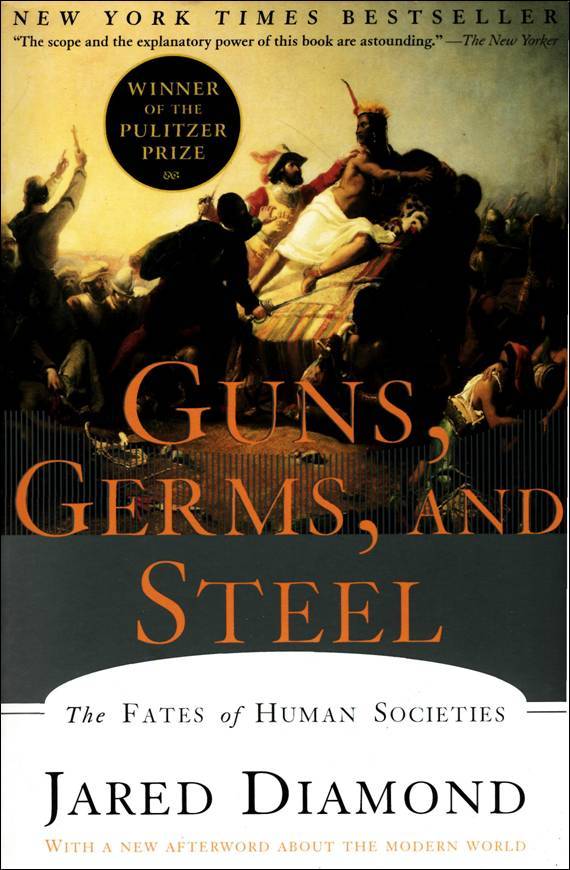
"Guns, Germs, and Steel" explores the broad patterns of human history over the past 13,000 years, offering a compelling explanation for why different societies developed along such divergent paths. Diamond argues that geographic and environmental factors – particularly the availability of domesticable plants and animals, and east-west continental axes – played a crucial role in enabling early agricultural revolutions, technological advancements, and resistance to diseases, ultimately shaping global power dynamics and inequalities.
This work resonates with "The Collapse of Complex Societies" by sharing a fundamental interest in the grand forces that govern societal trajectories. Both books analyze the underlying mechanisms and systemic pressures that contribute to the rise and fall, or divergence, of civilizations. They move beyond mere historical narratives to propose overarching frameworks for understanding human societal development and vulnerability.
It will appeal to anyone seeking a deeply interconnected view of history, moving beyond conventional narratives to understand the ecological and geographical foundations of human success and failure. Its comprehensive scope and accessible argumentation provide a powerful lens through which to examine current global disparities, offering profound insights into the long-term impact of environmental factors on human destiny.
Guns, Germs, and Steel: The Fates of Human Societies
"Guns, Germs, and Steel" explores the broad patterns of human history over the past 13,000 years, offering a compelling explanation for why different societies developed along such divergent paths. Diamond argues that geographic and environmental factors – particularly the availability of domesticable plants and animals, and east-west continental axes – played a crucial role in enabling early agricultural revolutions, technological advancements, and resistance to diseases, ultimately shaping global power dynamics and inequalities.
This work resonates with "The Collapse of Complex Societies" by sharing a fundamental interest in the grand forces that govern societal trajectories. Both books analyze the underlying mechanisms and systemic pressures that contribute to the rise and fall, or divergence, of civilizations. They move beyond mere historical narratives to propose overarching frameworks for understanding human societal development and vulnerability.
It will appeal to anyone seeking a deeply interconnected view of history, moving beyond conventional narratives to understand the ecological and geographical foundations of human success and failure. Its comprehensive scope and accessible argumentation provide a powerful lens through which to examine current global disparities, offering profound insights into the long-term impact of environmental factors on human destiny.
Story of Civilization
Will Durant's "Story of Civilization" is an ambitious, multi-volume narrative chronicling the grand sweep of human history, from ancient Mesopotamia to Napoleonic Europe. It examines the rise and fall of empires, the evolution of cultures, philosophies, religions, and scientific advancements, weaving a comprehensive tapestry of humanity's past with a focus on its intellectual and artistic achievements.
This work resonates with Tainter's "The Collapse of Complex Societies" by exploring similar thematic undercurrents. While Tainter provides a theoretical framework for societal collapse, Durant offers countless historical examples, demonstrating the intricate factors that contribute to both flourishing and decline across diverse civilizations. Both authors are deeply concerned with the lifecycles of complex human endeavors, albeit from different analytical perspectives.
Anyone interested in the long arc of human civilization, the forces that drive cultural development, and the recurring patterns of societal success and failure will find immense value in Durant's narrative. It provides a rich, contextual understanding of historical processes, allowing for profound insights into the challenges and triumphs that define the human condition, offering a broad historical canvas against which to understand specific theories of societal change.
Story of Civilization
Will Durant's "Story of Civilization" is an ambitious, multi-volume narrative chronicling the grand sweep of human history, from ancient Mesopotamia to Napoleonic Europe. It examines the rise and fall of empires, the evolution of cultures, philosophies, religions, and scientific advancements, weaving a comprehensive tapestry of humanity's past with a focus on its intellectual and artistic achievements.
This work resonates with Tainter's "The Collapse of Complex Societies" by exploring similar thematic undercurrents. While Tainter provides a theoretical framework for societal collapse, Durant offers countless historical examples, demonstrating the intricate factors that contribute to both flourishing and decline across diverse civilizations. Both authors are deeply concerned with the lifecycles of complex human endeavors, albeit from different analytical perspectives.
Anyone interested in the long arc of human civilization, the forces that drive cultural development, and the recurring patterns of societal success and failure will find immense value in Durant's narrative. It provides a rich, contextual understanding of historical processes, allowing for profound insights into the challenges and triumphs that define the human condition, offering a broad historical canvas against which to understand specific theories of societal change.
The Power of Scale: A Global History Approach: A Global History Approach
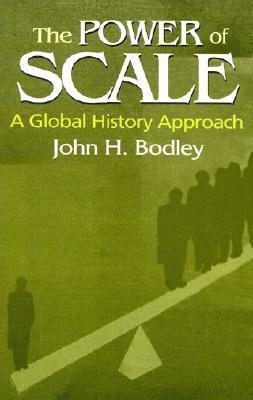
"The Power of Scale" explores how societies throughout history have organized themselves across vast geographic and demographic scales, from small tribes to expansive empires and modern global networks. Bodley analyzes the inherent benefits and challenges of increasing societal scale, examining the innovations and adaptations required to manage larger populations, resources, and administrative complexities. It's a comprehensive look at the historical trajectory of human organization and its implications.
This book resonates with "The Collapse of Complex Societies" by offering a complementary perspective on the dynamics of complexity. While Tainter focuses on the unsustainable costs and diminishing returns that can lead to societal breakdown, Bodley examines the very construction and maintenance of that complexity. Both texts delve into the logistical, resource, and organizational demands that scale imposes, exploring the thresholds where growth becomes either an advantage or a vulnerability.
It will appeal to those interested in macro-historical patterns, the anthropology of complex societies, and the underlying forces shaping human civilization. The book offers a robust framework for understanding the historical evolution of social organization, providing insights not only into past successes and failures but also into the enduring challenges of managing complexity in our increasingly interconnected world.
The Power of Scale: A Global History Approach: A Global History Approach
"The Power of Scale" explores how societies throughout history have organized themselves across vast geographic and demographic scales, from small tribes to expansive empires and modern global networks. Bodley analyzes the inherent benefits and challenges of increasing societal scale, examining the innovations and adaptations required to manage larger populations, resources, and administrative complexities. It's a comprehensive look at the historical trajectory of human organization and its implications.
This book resonates with "The Collapse of Complex Societies" by offering a complementary perspective on the dynamics of complexity. While Tainter focuses on the unsustainable costs and diminishing returns that can lead to societal breakdown, Bodley examines the very construction and maintenance of that complexity. Both texts delve into the logistical, resource, and organizational demands that scale imposes, exploring the thresholds where growth becomes either an advantage or a vulnerability.
It will appeal to those interested in macro-historical patterns, the anthropology of complex societies, and the underlying forces shaping human civilization. The book offers a robust framework for understanding the historical evolution of social organization, providing insights not only into past successes and failures but also into the enduring challenges of managing complexity in our increasingly interconnected world.
The Rise and Fall of the Great Powers: Economic Change and Military Conflict from 1500 to 2000

"The Rise and Fall of the Great Powers" examines how the economic and military strength of major nations has shaped global history from the Age of Discovery to the turn of the millennium. Kennedy argues that sustained military ambition, while seemingly essential for great power status, often leads to economic overstretch, eventually undermining the very foundations of that power. He meticulously traces this pattern across empires and states, demonstrating how a nation's resources, industrial capacity, and technological prowess directly influence its ability to assert and maintain dominance on the world stage.
This book shares a fundamental intellectual kinship with "The Collapse of Complex Societies" in its exploration of the systemic vulnerabilities inherent in large and resource-intensive governmental structures. Both Tainter and Kennedy investigate the intricate relationship between societal complexity, resource allocation, and the long-term sustainability of power. They converge on the idea that maintaining complex systems, whether entire societies or global hegemons, places increasing strain on resources and often leads to an eventual decline or collapse under mounting pressures.
The book will appeal to those interested in grand narratives of history, international relations, and the enduring forces that shape geopolitical power. It provides a comprehensive framework for understanding the cyclical nature of ascent and decline among nations, offering valuable insights into the dynamics of global competition and resource management. Its analytical rigor and sweeping scope make it a crucial text for comprehending the historical interplay between economic vitality and military might.
The Rise and Fall of the Great Powers: Economic Change and Military Conflict from 1500 to 2000
"The Rise and Fall of the Great Powers" examines how the economic and military strength of major nations has shaped global history from the Age of Discovery to the turn of the millennium. Kennedy argues that sustained military ambition, while seemingly essential for great power status, often leads to economic overstretch, eventually undermining the very foundations of that power. He meticulously traces this pattern across empires and states, demonstrating how a nation's resources, industrial capacity, and technological prowess directly influence its ability to assert and maintain dominance on the world stage.
This book shares a fundamental intellectual kinship with "The Collapse of Complex Societies" in its exploration of the systemic vulnerabilities inherent in large and resource-intensive governmental structures. Both Tainter and Kennedy investigate the intricate relationship between societal complexity, resource allocation, and the long-term sustainability of power. They converge on the idea that maintaining complex systems, whether entire societies or global hegemons, places increasing strain on resources and often leads to an eventual decline or collapse under mounting pressures.
The book will appeal to those interested in grand narratives of history, international relations, and the enduring forces that shape geopolitical power. It provides a comprehensive framework for understanding the cyclical nature of ascent and decline among nations, offering valuable insights into the dynamics of global competition and resource management. Its analytical rigor and sweeping scope make it a crucial text for comprehending the historical interplay between economic vitality and military might.
Violence and Social Orders: A Conceptual Framework for Interpreting Recorded Human History
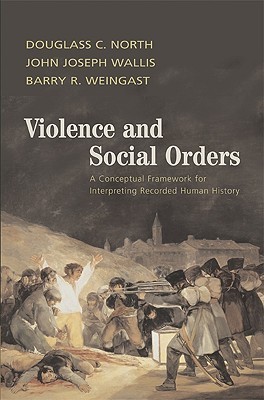
"Violence and Social Orders" by North, Wallis, and Weingast explores how societies develop and maintain order, focusing on the fundamental role of violence. It differentiates between "open access orders," characterized by impersonal institutions guaranteeing broad access to political and economic life, and "limited access orders" (or "natural states"), where elites control resources and institutions to prevent violence. The book argues that transitions between these orders are pivotal in human history, shaping economic growth and political stability.
The commonality with Tainter's "The Collapse of Complex Societies" lies in their shared investigation into the fundamental drivers of societal stability and change. Both texts analyze the inherent vulnerabilities and adaptive strategies of complex systems. While Tainter focuses on the increasing costs of complexity leading to collapse, North et al. examine how the mechanisms societies employ to control violence – be they inclusive or exclusive – ultimately determine their longevity and developmental trajectory. Both offer macro-historical frameworks for understanding societal evolution.
This book offers a compelling lens through which to understand the persistent challenges of development, conflict, and governance across diverse civilizations. Its conceptual framework provides powerful tools for analyzing why some nations prosper while others remain mired in cycles of violence and underdevelopment. The insights gained from comparing different societal orders illuminate both historical patterns and contemporary global issues, offering a profound understanding of the human condition in its organized forms.
Violence and Social Orders: A Conceptual Framework for Interpreting Recorded Human History
"Violence and Social Orders" by North, Wallis, and Weingast explores how societies develop and maintain order, focusing on the fundamental role of violence. It differentiates between "open access orders," characterized by impersonal institutions guaranteeing broad access to political and economic life, and "limited access orders" (or "natural states"), where elites control resources and institutions to prevent violence. The book argues that transitions between these orders are pivotal in human history, shaping economic growth and political stability.
The commonality with Tainter's "The Collapse of Complex Societies" lies in their shared investigation into the fundamental drivers of societal stability and change. Both texts analyze the inherent vulnerabilities and adaptive strategies of complex systems. While Tainter focuses on the increasing costs of complexity leading to collapse, North et al. examine how the mechanisms societies employ to control violence – be they inclusive or exclusive – ultimately determine their longevity and developmental trajectory. Both offer macro-historical frameworks for understanding societal evolution.
This book offers a compelling lens through which to understand the persistent challenges of development, conflict, and governance across diverse civilizations. Its conceptual framework provides powerful tools for analyzing why some nations prosper while others remain mired in cycles of violence and underdevelopment. The insights gained from comparing different societal orders illuminate both historical patterns and contemporary global issues, offering a profound understanding of the human condition in its organized forms.
The Clash of Civilizations and the Remaking of World Order

"The Clash of Civilizations and the Remaking of World Order" posits that future global conflicts will primarily arise not from ideological or economic clashes, but from cultural and religious differences among distinct "civilizations." Huntington argues that the post-Cold War world is characterized by these large, cohesive cultural blocs whose interactions, often leading to friction, will shape international relations and the new world order.
This book resonates with "The Collapse of Complex Societies" by examining large-scale societal shifts and potential systemic breakdown. Both works analyze foundational factors that contribute to societal transformation, whether through collapse or conflict, focusing on macro-level forces that dictate the trajectory of human civilization. They share a grand, overarching perspective on historical dynamics and the inherent vulnerabilities of complex systems.
The book offers a compelling framework for understanding contemporary geopolitical dynamics. Its thesis provides a lens through which to interpret current events, anticipate future challenges, and critically assess international relations, offering profound insights into the deep-seated cultural forces that drive global interactions.
The Clash of Civilizations and the Remaking of World Order
"The Clash of Civilizations and the Remaking of World Order" posits that future global conflicts will primarily arise not from ideological or economic clashes, but from cultural and religious differences among distinct "civilizations." Huntington argues that the post-Cold War world is characterized by these large, cohesive cultural blocs whose interactions, often leading to friction, will shape international relations and the new world order.
This book resonates with "The Collapse of Complex Societies" by examining large-scale societal shifts and potential systemic breakdown. Both works analyze foundational factors that contribute to societal transformation, whether through collapse or conflict, focusing on macro-level forces that dictate the trajectory of human civilization. They share a grand, overarching perspective on historical dynamics and the inherent vulnerabilities of complex systems.
The book offers a compelling framework for understanding contemporary geopolitical dynamics. Its thesis provides a lens through which to interpret current events, anticipate future challenges, and critically assess international relations, offering profound insights into the deep-seated cultural forces that drive global interactions.
The Great Transformation: The Political and Economic Origins of Our Time
Polanyi's "The Great Transformation" dissects the revolutionary shift from pre-industrial societies, where markets were embedded within social relations, to the modern, self-regulating market system that arose in the 19th century. He argues this transformation was not a natural evolution but a deliberate, often violent political project that profoundly reorganized human society, treating land, labor, and money as commodities—fictitious ones, in his view—with devastating social and environmental consequences.
Both Tainter and Polanyi explore how fundamental societal structures are reorganized under stress, leading to significant systemic change or even collapse. While Tainter focuses on the diminishing returns of increasing complexity in societies, Polanyi examines the disruptive, simplifying force of the disembedded market on traditional social complexity and communal bonds. Both challenge narratives of inevitable progress, highlighting how structural vulnerabilities can unravel established orders.
This book offers a profound lens through which to understand contemporary economic and social crises, demonstrating the historical contingency of our current economic arrangements. It provides a powerful analytical framework for questioning market fundamentalism and appreciating the deep societal implications of economic policy. The insights gleaned from Polanyi's work are invaluable for anyone seeking a deeper understanding of capitalism's origins and its enduring impact on human civilization.
The Great Transformation: The Political and Economic Origins of Our Time
Polanyi's "The Great Transformation" dissects the revolutionary shift from pre-industrial societies, where markets were embedded within social relations, to the modern, self-regulating market system that arose in the 19th century. He argues this transformation was not a natural evolution but a deliberate, often violent political project that profoundly reorganized human society, treating land, labor, and money as commodities—fictitious ones, in his view—with devastating social and environmental consequences.
Both Tainter and Polanyi explore how fundamental societal structures are reorganized under stress, leading to significant systemic change or even collapse. While Tainter focuses on the diminishing returns of increasing complexity in societies, Polanyi examines the disruptive, simplifying force of the disembedded market on traditional social complexity and communal bonds. Both challenge narratives of inevitable progress, highlighting how structural vulnerabilities can unravel established orders.
This book offers a profound lens through which to understand contemporary economic and social crises, demonstrating the historical contingency of our current economic arrangements. It provides a powerful analytical framework for questioning market fundamentalism and appreciating the deep societal implications of economic policy. The insights gleaned from Polanyi's work are invaluable for anyone seeking a deeper understanding of capitalism's origins and its enduring impact on human civilization.
Incoherent Empire
Michael Mann's "Incoherent Empire" analyzes the strategic blunders and internal contradictions that undermined American foreign policy, particularly post-9/11. It argues that the pursuit of global hegemony, driven by ideological fervor and a flawed understanding of power, led to a fragmented and ultimately self-defeating empire. Mann meticulously dissects the mechanisms of American exceptionalism and military overreach, explaining how these factors created an unsustainable and often counterproductive global presence.
The book resonates with "The Collapse of Complex Societies" through its shared focus on systemic failure and the limitations of complexity. Both explore how societies, whether ancient empires or modern superpowers, can overextend their resources and decision-making capabilities, leading to diminishing returns and eventual decline. Tainter examines the inherent costs of increasing societal complexity, while Mann applies a similar lens to the practical and intellectual costs of a sprawling, overambitious foreign policy. Both authors shed light on the internal stressors that can lead to institutional fragility.
This book offers a compelling and critical examination of power dynamics, appealing to those interested in international relations, historical patterns of rise and fall, and the challenges inherent in maintaining global influence. It provides a nuanced framework for understanding contemporary geopolitical events and offers a sobering assessment of the pitfalls of unchecked imperial ambition. The insights gain from its analysis are enduring and relevant to current discussions about statecraft and global order.
Incoherent Empire
Michael Mann's "Incoherent Empire" analyzes the strategic blunders and internal contradictions that undermined American foreign policy, particularly post-9/11. It argues that the pursuit of global hegemony, driven by ideological fervor and a flawed understanding of power, led to a fragmented and ultimately self-defeating empire. Mann meticulously dissects the mechanisms of American exceptionalism and military overreach, explaining how these factors created an unsustainable and often counterproductive global presence.
The book resonates with "The Collapse of Complex Societies" through its shared focus on systemic failure and the limitations of complexity. Both explore how societies, whether ancient empires or modern superpowers, can overextend their resources and decision-making capabilities, leading to diminishing returns and eventual decline. Tainter examines the inherent costs of increasing societal complexity, while Mann applies a similar lens to the practical and intellectual costs of a sprawling, overambitious foreign policy. Both authors shed light on the internal stressors that can lead to institutional fragility.
This book offers a compelling and critical examination of power dynamics, appealing to those interested in international relations, historical patterns of rise and fall, and the challenges inherent in maintaining global influence. It provides a nuanced framework for understanding contemporary geopolitical events and offers a sobering assessment of the pitfalls of unchecked imperial ambition. The insights gain from its analysis are enduring and relevant to current discussions about statecraft and global order.
Inadequate Equilibria: Where and How Civilizations Get Stuck
"Inadequate Equilibria" explores situations where seemingly intelligent systems—individuals, organizations, or even societies—persist in suboptimal states despite readily available, superior alternatives. Yudkowsky investigates *why* problems aren't fixed, even when solutions are evident, delving into cognitive biases, political inertia, and structural hindrances that prevent rational progression.
This book resonates with Tainter's "Collapse of Complex Societies" by examining the internal vulnerabilities and systemic rigidities that undermine long-term stability. Both authors dissect how established structures, once beneficial, can become self-defeating, leading to decline or stagnation. While Tainter focuses on the ultimate disintegration of complexity, Yudkowsky analyzes the preceding "stuck" states that often pave the way for such collapse.
The book provides a compelling framework for understanding persistent societal problems, offering insights into why progress stalls and why even well-intentioned efforts often fail to shift entrenched inefficiencies. It prompts a critical examination of organizational and societal decision-making, offering valuable perspectives for anyone seeking to understand and address collective shortcomings.
Inadequate Equilibria: Where and How Civilizations Get Stuck
"Inadequate Equilibria" explores situations where seemingly intelligent systems—individuals, organizations, or even societies—persist in suboptimal states despite readily available, superior alternatives. Yudkowsky investigates *why* problems aren't fixed, even when solutions are evident, delving into cognitive biases, political inertia, and structural hindrances that prevent rational progression.
This book resonates with Tainter's "Collapse of Complex Societies" by examining the internal vulnerabilities and systemic rigidities that undermine long-term stability. Both authors dissect how established structures, once beneficial, can become self-defeating, leading to decline or stagnation. While Tainter focuses on the ultimate disintegration of complexity, Yudkowsky analyzes the preceding "stuck" states that often pave the way for such collapse.
The book provides a compelling framework for understanding persistent societal problems, offering insights into why progress stalls and why even well-intentioned efforts often fail to shift entrenched inefficiencies. It prompts a critical examination of organizational and societal decision-making, offering valuable perspectives for anyone seeking to understand and address collective shortcomings.
More Books to Explore
Discover more titles that expand on these ideas and themes.
Collapse: How Societies Choose to Fail or Succeed
Guns, Germs, and Steel: The Fates of Human Societies
Story of Civilization
The Power of Scale: A Global History Approach: A Global History Approach
The Rise and Fall of the Great Powers: Economic Change and Military Conflict from 1500 to 2000
Violence and Social Orders: A Conceptual Framework for Interpreting Recorded Human History