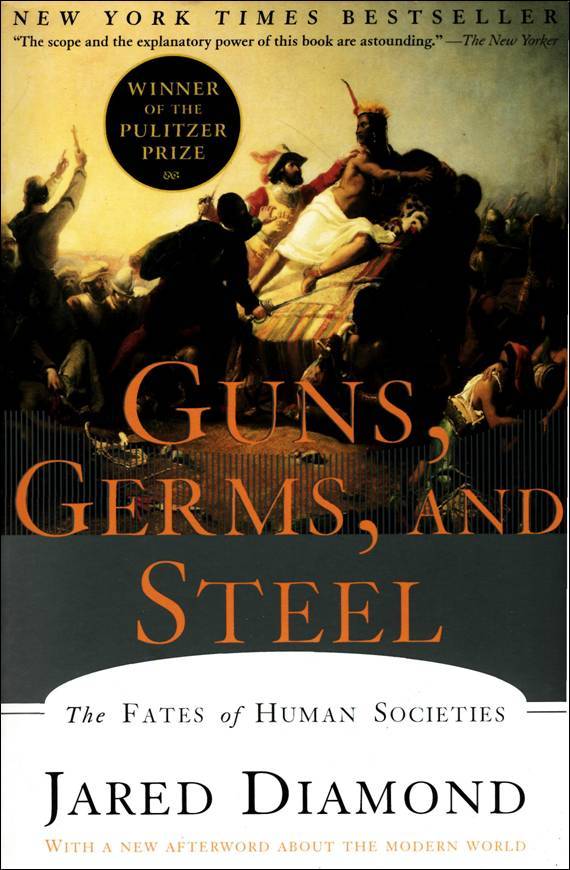
Guns, Germs, and Steel: The Fates of Human Societies
Book Description
What if the fate of entire civilizations hinged on geography, not destiny? In "Guns, Germs, and Steel," Jared Diamond unveils the dramatic forces that shaped human history through the lens of environment, technology, and culture. With gripping insights, he dissects the rise and fall of societies, exploring how factors like agriculture and disease influenced the development of nations. As ancient empires clash and thrive, the roots of inequality unravel before our eyes. Prepare for an intellectual journey that challenges assumptions and ignites curiosity. Can understanding our past illuminate a better future for humanity?
Quick Book Summary
"Guns, Germs, and Steel" by Jared Diamond investigates why some societies have historically conquered or dominated others. Diamond argues that environmental and geographical factors—rather than racial or cultural superiority—primarily determined the unequal development of human societies. He examines the link between the domestication of plants and animals, the spread of diseases, and the evolution of technology, showing how these elements gave certain civilizations decisive advantages. The book deconstructs the roots of global inequality, suggesting that access to resources and fertile land, rather than inherent differences among people, shaped the fate of nations. Diamond’s work challenges purely biological explanations for the spread of power and highlights the intricate web of environment, chance, and innovation that influenced the world as we know it.




Summary of Key Ideas
Table of Contents
Geography and Environmental Determinism
Jared Diamond’s central thesis is that environmental differences, not biological superiority, determined why Eurasian civilizations developed advanced technology and political systems, while other regions lagged behind. He rejects racial explanations for global inequality, focusing on the ways climate, geography, and the availability of domesticable plants and animals shaped societies. Diamond demonstrates how societies with a head start in domesticating crops and animals could support larger populations, leading to complex social structures and technological innovation.
The Impact of Agriculture and Food Production
The rise of agriculture was a turning point. In regions like the Fertile Crescent, the abundance of domesticable plants and animals permitted the transition from hunting-gathering to settled farming. This shift led to food surpluses, population growth, and the emergence of specialists such as craftsmen and leaders. Those societies became more organized and were able to develop writing, metallurgy, and sophisticated technologies, thus accelerating their advantage over others.
The Role of Infectious Diseases
Diamond explains that germs and diseases played a pivotal role in shaping societies. Populations living near domesticated animals developed immunity to deadly pathogens which later devastated unexposed societies. When Europeans colonized the Americas and other regions, they brought diseases like smallpox that decimated indigenous populations, often more than military conflict did, enabling conquest and colonization.
Technology and Political Organization
Technological innovation and political organization also contributed to Eurasia’s dominance. The spread of ideas, inventions, and institutions was facilitated by continental axes and ease of communication, especially east-west in Eurasia. Societies that developed writing and centralized governments could better coordinate large populations, wage warfare, and spread their influence, furthering disparities between regions.
The Roots of Global Inequality
By the end of "Guns, Germs, and Steel," Diamond makes clear that global inequality is not the result of intellectual or genetic differences, but of geographical luck, resource distribution, and cascading environmental effects. Understanding these historical forces not only debunks racist theories but also highlights the unpredictable and interconnected nature of human development. Diamond’s analysis urges readers to confront the real roots of inequality and inspires hope that such knowledge can guide future global cooperation and equity.
Download This Summary
Get a free PDF of this summary instantly — no email required.