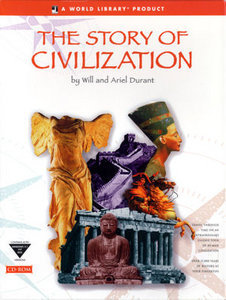
Story of Civilization
Book Description
Civilization's journey unfolds like an epic saga, where the rise and fall of empires shapes the very essence of humanity. Will Durant takes you through the grand theater of history, illuminating the triumphs and tragedies of cultures that defined our world. Relentless conflicts, breathtaking innovations, and profound philosophies echo through the ages, revealing the intricate tapestry of human endeavor. Each page is a pulse—beating with the dreams of the ambitious and the struggles of the oppressed, inviting reflection on the bitter and beautiful realities of existence. What lessons linger in our past that could illuminate our future?
Quick Book Summary
Will Durant's "The Story of Civilization" is a sweeping chronicle of humanity from its earliest beginnings through the rise and fall of empires, exploring the profound forces that have shaped societies across continents. Spanning philosophy, politics, art, and religion, Durant examines how ideas, institutions, and individuals forged the course of human history. The work blends accessible storytelling with scholarly analysis, tracing the evolution of cultures, the interplay of conflict and cooperation, and the enduring impact of innovation and leadership. By highlighting both the brilliance and the brutality of past ages, Durant invites readers to reflect on history's lessons and to see civilization not as a static achievement but as a dynamic, ongoing enterprise. Through this panoramic narrative, he reveals humanity’s triumphs, follies, and the persistent quest for meaning.




Summary of Key Ideas
Table of Contents
The Evolution of Societies and Cultures
Durant begins by detailing the dawn of civilization, examining how early societies formed around fundamental needs such as survival, cooperation, and the organization of communities. He traces humanity's transition from nomadic tribes to settled agricultural societies, emphasizing the foundational role of language, social structures, and the development of law. The narrative underscores how the earliest civilizations—Mesopotamia, Egypt, India, and China—established the groundwork for subsequent advancements, creating paradigms for governance, culture, and technological innovation.
The Interplay of Power, War, and Leadership
As the chronicle unfolds, Durant focuses on the rise and fall of empires, analyzing the recurring patterns of conquest, consolidation, and fragmentation. Charismatic leaders, dynamic cultures, and transformative conflicts propel the fortunes of states such as Greece, Rome, China, and Islamic caliphates. Durant illustrates how power is accumulated and exercised, but often leads to excess and eventual decline. By exploring cycles of violence, reform, and rebirth, he reveals the fragile balance between ambition and stability that defines civilization’s trajectory.
The Influence of Religion and Philosophy
Religion and philosophy emerge as central themes, guiding moral frameworks and shaping societies’ identities. Durant explores the foundational tenets of major world religions, their roles in unifying or dividing populations, and their influence on cultural norms. He examines the philosophical legacies of thinkers from Socrates to Confucius, demonstrating how worldviews inform both governance and everyday life. These spiritual and intellectual traditions serve as both a foundation and a challenge to political and social orders.
Progress through Science and Art
Durant highlights the immense creative energy unleashed by human imagination, showcased through monumental achievements in art, literature, and science. He investigates the Renaissance, Enlightenment, and other periods of innovation that dramatically advanced knowledge and culture. Notable figures—scientists, artists, architects—are portrayed as visionaries whose contributions altered the course of civilization. Durant emphasizes how technological inventions transformed economies and societies, enabling both progress and new tensions.
Lessons from History for Modern Civilization
In closing, Durant draws reflective lessons from the vast panorama of history. He warns against complacency, reminds readers of the costs of hubris, and praises the enduring resilience of the human spirit. Durant frames civilization as a continuous process, shaped by both celebrated and forgotten individuals, urging contemporary society to learn from past mistakes while striving for wisdom, justice, and harmony. He concludes with the hopeful assertion that civilization’s story is ever-unfolding, its next chapters dependent on humanity’s choices.
Download This Summary
Get a free PDF of this summary instantly — no email required.