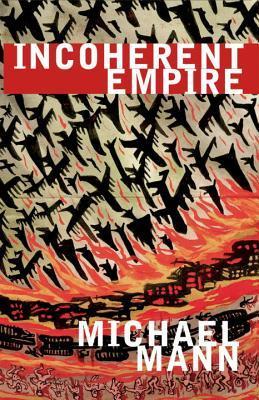
Incoherent Empire
Book Description
Chaos reigns as empires crumble and alliances shift in Michael Mann's 'Incoherent Empire.' Power struggles ignite a whirlwind of betrayal, espionage, and bloody confrontations across a fractured world. Characters grapple with shifting loyalties and their own moral compasses, tangled in a web of ambition and despair. Each page pulses with urgency, drawing you deeper into a landscape where trust is a luxury few can afford. As ambitions collide and destinies intertwine, the stakes have never been higher. Can anyone emerge from the ruins of their aspirations unscathed, or will the quest for power consume them all?
Quick Book Summary
"Incoherent Empire" by Michael Mann offers a critical analysis of the United States’ attempts to assert itself as an imperial power in the modern world. Mann explores how, unlike previous historical empires, modern America lacks the political coherence, ideological strategy, and administrative capacity to sustain its global dominance. Through detailed examination of military interventions, shifting alliances, and internal contradictions, Mann demonstrates that America’s efforts often backfire, resulting in unintended chaos, weakened authority, and increased global instability. Rather than shaping a stable world order, the U.S. faces an environment where its power is contested by emerging actors, domestic limitations, and its own ideological contradictions. Ultimately, Mann contends that American hegemony is marked by incoherence—unable to adapt, unify, or maintain the trust and order necessary for lasting imperial rule.




Summary of Key Ideas
Table of Contents
Modern Empire and Its Contradictions
Michael Mann asserts that the United States, unlike historical empires, lacks the clear ideological purpose, centralized control, and administrative mechanisms necessary for lasting global dominance. The so-called 'American empire' is marked by competing interests and objectives, with an absence of coherence in both foreign and domestic policies. Mann argues that this incoherence erodes the foundational legitimacy required for genuine imperial authority and produces unpredictable, often self-defeating outcomes.
Failures of Military Intervention
Examining military interventions, Mann highlights how U.S. actions—particularly in the Middle East and Afghanistan—have led to long-term instability rather than order. American attempts to reshape societies through force routinely fail due to cultural ignorance, overreliance on military solutions, and underestimation of nationalist opposition. These failures expose the limits of imperial power in the modern era, undermining both local support and global credibility. Mann sees these interventions as symptoms of an empire that cannot control or transform the systems it seeks to dominate.
Shifting Alliances and Global Backlash
Mann delves into shifting alliances, showing that the traditional mechanisms of dominance—such as economic leverage, military bases, or diplomatic networks—no longer guarantee compliance. Allies increasingly pursue their own regional agendas, sometimes at odds with U.S. wishes. Meanwhile, rising powers and non-state actors exploit the cracks in American influence, leading to further erosion of authority and increased global unpredictability. This reflects a world less susceptible to centralized imperial control than ever before.
Internal Divisions and Ideological Disarray
Domestically, Mann identifies political polarization, diminishing social consensus, and fragmented priorities as undermining America’s ability to project consistent power. Competing interest groups, partisan divisions, and ideological uncertainty further limit the country's capacity to act as a unified imperial agent. These internal fractures mirror the global incoherence Mann attributes to American foreign policy, creating a situation in which the U.S. is unable to marshal the resources and will necessary for sustained leadership.
Limits to American Hegemony
Mann concludes that the United States’ imperial project is doomed not only by external resistance and global complexity but also by its own internal contradictions. America’s hegemonic ambitions are incompatible with the realities of a fragmented world and society. The book calls for a recognition of these limits, suggesting that only by abandoning imperial pretensions can the U.S. pursue a more stable, just, and sustainable global role.
Download This Summary
Get a free PDF of this summary instantly — no email required.