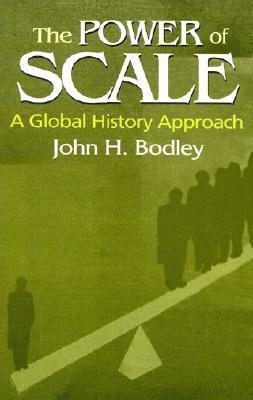
The Power of Scale: A Global History Approach: A Global History Approach
Book Description
What if the very scale of societies determines their fate? In 'The Power of Scale: A Global History Approach', John H. Bodley unravels the intricate relationship between size and function, exploring how civilizations rise and fall in the shadow of their own dimensions. From sprawling empires to intimate communities, the interplay of scale transforms cultures, economies, and ecosystems in ways that ripple through history. Brace for a mind-expanding journey that challenges conventional wisdom and reveals profound truths beneath the surface of human experience. Are we destined to repeat history, or can we learn the lessons of scale to shape a better future?
Quick Book Summary
"The Power of Scale: A Global History Approach" by John H. Bodley delves into how the scale—meaning the size and complexity—of societies profoundly shapes their evolution and outcomes. Drawing from anthropology, history, and philosophy, Bodley reveals that as societies expand, their dynamics shift: social inequality, governance challenges, and resource pressures often intensify. He explores both the creative innovations and destructive tendencies that accompany growth, examining the patterns from small-scale tribal groups to massive global empires. By tracing the impact of scale across diverse cultures and epochs, Bodley shows that understanding scale is crucial to interpreting historical successes and failures, and to envisioning pathways for future societies that are just, sustainable, and resilient.



Summary of Key Ideas
Table of Contents
How Scale Shapes Social Organization and Inequality
Bodley frames scale as a fundamental determinant in how societies are structured and function. In small-scale settings, social relations are personal and egalitarian, often relying on shared norms and reciprocity. However, as populations grow and societies become more complex, there is a shift towards hierarchy, formal governance, and bureaucracies. Such changes lead to increasing social stratification, where elites amass power and resources, often at the expense of broader well-being. This move from intimacy to impersonality transforms economic, political, and cultural life.
Cultural Innovation versus Environmental Limits
A major theme is the tension between cultural innovation and environmental limits as societies scale up. Larger societies have the capacity for remarkable technological and organizational advancements, but these often come with a dramatic increase in ecological impact. Bodley details how resource extraction, urbanization, and agricultural intensification can lead to environmental degradation. When societies ignore ecological boundaries in their pursuit of growth, the risk of collapse or crisis grows, highlighting the double-edged sword of innovation at scale.
The Rise and Fall of Complex Societies
Historically, the rise and fall of complex societies can often be traced to their scale. Bodley documents cases from ancient Mesopotamia to imperial China and colonial empires, demonstrating that as societies grew, so did their vulnerabilities. Large entities must manage vast territories and diverse populations, often leading to internal tensions, overextension, and diminishing returns. Ultimately, many great societies unraveled under the weight of their own complexities, offering cautionary lessons for the present.
Centralization, Power, and Resistance
With increased scale comes increased centralization of authority and power. Bodley explores how elites use scale to consolidate control, but also how such centralization breeds resistance and social movements. From peasant revolts to anti-colonial struggles, resistance emerges as oppressed groups challenge unequal distributions of wealth and opportunity. The dynamics between centralization and resistance are critical for understanding both societal stability and potential for transformation.
Learning from History to Envision Sustainable Futures
In his concluding analysis, Bodley urges readers to learn from past patterns and scale-sensitive dynamics. He posits that a critical understanding of scale can inform efforts to create more equitable and sustainable societies. Rather than accepting ever-increasing growth as inevitable, Bodley suggests that intentional limits and conscious social design can promote well-being. Ultimately, the book advocates for a reassessment of how scale shapes our lives, pushing us to apply these historical insights to global challenges today.
Download This Summary
Get a free PDF of this summary instantly — no email required.