10 Books Similar to "Leviathan"
by Paul Auster
The New York Trilogy

"The New York Trilogy" presents three distinct novellas – *City of Glass*, *Ghosts*, and *The Locked Room* – each exploring themes of identity, authorship, and the elusive nature of truth within the labyrinthine streets of New York City. Characters often find their realities shifting, their names dissolving, and their purposes becoming entangled with those of others, creating a pervasive sense of existential uncertainty. Auster masterfully blurs the lines between detective fiction, philosophical inquiry, and literary meta-commentary.
Both "The New York Trilogy" and "Leviathan" share Auster's signature blend of intricate plot construction and profound philosophical introspection. They delve into questions of identity, exploring how circumstances and arbitrary choices can dramatically alter a person's life trajectory. The characters in both works grapple with a sense of predetermined fate and the ultimate futility of their struggles, often finding themselves caught in webs of their own making or at the mercy of forces beyond their control. The melancholic yet analytical tone, coupled with a fascination for the unexpected turns of human existence, forms a strong thematic bridge between these two works.
This collection will resonate with those who appreciate literary fiction that challenges conventional narrative structures and explores the deeper currents of human experience. Its intellectual depth, coupled with its engaging narrative style, offers a stimulating reading experience. The enduring questions it poses about identity, purpose, and the nature of reality provide ample material for contemplation, making it a rewarding choice for anyone seeking a thought-provoking and meticulously crafted literary journey.
The New York Trilogy
"The New York Trilogy" presents three distinct novellas – *City of Glass*, *Ghosts*, and *The Locked Room* – each exploring themes of identity, authorship, and the elusive nature of truth within the labyrinthine streets of New York City. Characters often find their realities shifting, their names dissolving, and their purposes becoming entangled with those of others, creating a pervasive sense of existential uncertainty. Auster masterfully blurs the lines between detective fiction, philosophical inquiry, and literary meta-commentary.
Both "The New York Trilogy" and "Leviathan" share Auster's signature blend of intricate plot construction and profound philosophical introspection. They delve into questions of identity, exploring how circumstances and arbitrary choices can dramatically alter a person's life trajectory. The characters in both works grapple with a sense of predetermined fate and the ultimate futility of their struggles, often finding themselves caught in webs of their own making or at the mercy of forces beyond their control. The melancholic yet analytical tone, coupled with a fascination for the unexpected turns of human existence, forms a strong thematic bridge between these two works.
This collection will resonate with those who appreciate literary fiction that challenges conventional narrative structures and explores the deeper currents of human experience. Its intellectual depth, coupled with its engaging narrative style, offers a stimulating reading experience. The enduring questions it poses about identity, purpose, and the nature of reality provide ample material for contemplation, making it a rewarding choice for anyone seeking a thought-provoking and meticulously crafted literary journey.
Invisible
Paul Auster's *Invisible* delves into the fractured recollections of Adam Walker, a young American student in 1967 Paris whose life takes a dark turn after a tragic love affair and a disturbing encounter with a charismatic older man. The novel, presented through multiple, often unreliable narrative perspectives, twists through themes of identity, memory, desire, and the elusive nature of truth, ultimately questioning what truly constitutes a life lived. It challenges the reader to piece together a coherent story from fragmented, contradictory accounts.
This novel shares a striking kinship with *Leviathan* in its exploration of a protagonist whose life is meticulously reconstructed through different lenses, often after a significant, life-altering event. Both books employ a metafictional approach, questioning the very act of storytelling and the inherent biases within memory. The presence of a central figure whose journey is marked by intellectual curiosity, moral ambiguities, and a drift into unconventional or dangerous paths is a strong thematic link.
The value of reading *Invisible* lies in its sophisticated narrative structure and the intellectual workout it provides. It is a deeply atmospheric and introspective work that rewards close attention, offering profound insights into the human mind's capacity for self-deception and the ways in which personal history is constructed. This novel engages the intellect and emotions, leaving a lasting impression through its philosophical depth and its masterful dissection of character and consequence.
Invisible
Paul Auster's *Invisible* delves into the fractured recollections of Adam Walker, a young American student in 1967 Paris whose life takes a dark turn after a tragic love affair and a disturbing encounter with a charismatic older man. The novel, presented through multiple, often unreliable narrative perspectives, twists through themes of identity, memory, desire, and the elusive nature of truth, ultimately questioning what truly constitutes a life lived. It challenges the reader to piece together a coherent story from fragmented, contradictory accounts.
This novel shares a striking kinship with *Leviathan* in its exploration of a protagonist whose life is meticulously reconstructed through different lenses, often after a significant, life-altering event. Both books employ a metafictional approach, questioning the very act of storytelling and the inherent biases within memory. The presence of a central figure whose journey is marked by intellectual curiosity, moral ambiguities, and a drift into unconventional or dangerous paths is a strong thematic link.
The value of reading *Invisible* lies in its sophisticated narrative structure and the intellectual workout it provides. It is a deeply atmospheric and introspective work that rewards close attention, offering profound insights into the human mind's capacity for self-deception and the ways in which personal history is constructed. This novel engages the intellect and emotions, leaving a lasting impression through its philosophical depth and its masterful dissection of character and consequence.
The Book of Illusions
"The Book of Illusions" chronicles David Zimmer, a literature professor reeling from a devastating personal tragedy. He finds an improbable solace in the filmography of a forgotten silent-film comedian, Hector Mann, leading him on a search for the reclusive artist who vanished decades prior. The novel explores grief, identity, the power of art, and the elusive nature of truth as Zimmer descends into Mann's mysterious past.
This novel shares a thematic DNA with "Leviathan." Both delve into profound personal crises that propel their protagonists into quests to understand enigmatic figures—Benjamin Sachs in "Leviathan," and Hector Mann in "The Book of Illusions." Both narratives involve a search for meaning amidst loss and the unearthing of complex lives through fragmented information and shifting perspectives, ultimately blurring the lines between reality and fabrication.
The intricate narrative structure, compelling character studies, and Auster's signature blend of philosophical inquiry with suspenseful plotting will resonate deeply. The exploration of how art helps us confront sorrow, reconstruct identity, and make sense of life's unpredictable turns offers a rich and thoughtful reading experience. The novel's elegant prose and intellectual depth provide significant intellectual and emotional engagement.
The Book of Illusions
"The Book of Illusions" chronicles David Zimmer, a literature professor reeling from a devastating personal tragedy. He finds an improbable solace in the filmography of a forgotten silent-film comedian, Hector Mann, leading him on a search for the reclusive artist who vanished decades prior. The novel explores grief, identity, the power of art, and the elusive nature of truth as Zimmer descends into Mann's mysterious past.
This novel shares a thematic DNA with "Leviathan." Both delve into profound personal crises that propel their protagonists into quests to understand enigmatic figures—Benjamin Sachs in "Leviathan," and Hector Mann in "The Book of Illusions." Both narratives involve a search for meaning amidst loss and the unearthing of complex lives through fragmented information and shifting perspectives, ultimately blurring the lines between reality and fabrication.
The intricate narrative structure, compelling character studies, and Auster's signature blend of philosophical inquiry with suspenseful plotting will resonate deeply. The exploration of how art helps us confront sorrow, reconstruct identity, and make sense of life's unpredictable turns offers a rich and thoughtful reading experience. The novel's elegant prose and intellectual depth provide significant intellectual and emotional engagement.
Man in the Dark

"Man in the Dark" centers on August Brill, an aging, insomniac writer recovering from an accident. To pass the sleepless nights, he invents a parallel reality where America is locked in a civil war, a brutal, fragmented landscape starkly different from his own. This imagined world, and its inhabitants, intertwine with his personal meditations on grief, family, and the nature of storytelling.
Both novels delve into the profound impact of individual narrative on reality, exploring how characters wrestle with their pasts and the fictions they construct to make sense of their existence. The protagonists in both books are solitary figures deeply immersed in introspective journeys, reflecting Auster's signature exploration of chance, identity, and the slipperiness of truth.
This book will appeal to those who appreciate literary fiction that blurs the lines between reality and invention. It offers a poignant examination of aging, loss, and the power of imagination as a coping mechanism. The intricate layering of narratives provides a rich intellectual experience, prompting reflection on personal and national histories, and the stories we tell ourselves to endure.
Man in the Dark
"Man in the Dark" centers on August Brill, an aging, insomniac writer recovering from an accident. To pass the sleepless nights, he invents a parallel reality where America is locked in a civil war, a brutal, fragmented landscape starkly different from his own. This imagined world, and its inhabitants, intertwine with his personal meditations on grief, family, and the nature of storytelling.
Both novels delve into the profound impact of individual narrative on reality, exploring how characters wrestle with their pasts and the fictions they construct to make sense of their existence. The protagonists in both books are solitary figures deeply immersed in introspective journeys, reflecting Auster's signature exploration of chance, identity, and the slipperiness of truth.
This book will appeal to those who appreciate literary fiction that blurs the lines between reality and invention. It offers a poignant examination of aging, loss, and the power of imagination as a coping mechanism. The intricate layering of narratives provides a rich intellectual experience, prompting reflection on personal and national histories, and the stories we tell ourselves to endure.
Oracle Night

*Oracle Night* plunges into the mind of Peter Aaron, a writer recovering from a near-fatal illness. He impulsively buys a mysterious blue notebook, and as he begins to write a novel within its pages, the fictional narrative starts to unsettlingly intertwine with and even dictate the events of his own life. It’s a compelling exploration of authorship, fate, and the porous boundary between creation and reality.
Both novels share Auster’s signature exploration of chance, identity, and the power of narrative. Like *Leviathan*, *Oracle Night* features a protagonist deeply involved in shaping and interpreting a story – both their own and another's – where the act of writing becomes a central, transformative force. The narrative structure, often layered and metafictional, invites readers to question the nature of truth and the unreliable narrator, building suspense through intellectual intrigue.
This book offers a captivating journey into the human psyche and the creative process. Its intellectual depth, coupled with a subtly unfolding mystery, provides a rewarding experience for anyone who appreciates literature that stimulates thought while maintaining a compelling plot. The insights into how stories shape lives, and the unsettling possibilities of fiction becoming fact, offer a profound and memorable reflection on existence itself.
Oracle Night
*Oracle Night* plunges into the mind of Peter Aaron, a writer recovering from a near-fatal illness. He impulsively buys a mysterious blue notebook, and as he begins to write a novel within its pages, the fictional narrative starts to unsettlingly intertwine with and even dictate the events of his own life. It’s a compelling exploration of authorship, fate, and the porous boundary between creation and reality.
Both novels share Auster’s signature exploration of chance, identity, and the power of narrative. Like *Leviathan*, *Oracle Night* features a protagonist deeply involved in shaping and interpreting a story – both their own and another's – where the act of writing becomes a central, transformative force. The narrative structure, often layered and metafictional, invites readers to question the nature of truth and the unreliable narrator, building suspense through intellectual intrigue.
This book offers a captivating journey into the human psyche and the creative process. Its intellectual depth, coupled with a subtly unfolding mystery, provides a rewarding experience for anyone who appreciates literature that stimulates thought while maintaining a compelling plot. The insights into how stories shape lives, and the unsettling possibilities of fiction becoming fact, offer a profound and memorable reflection on existence itself.
City of Glass
"City of Glass" delves into the unraveling identity of a detective novelist, Quinn, after he receives a misdirected phone call. He impersonates a private investigator named Paul Auster, becoming entangled in a bizarre case involving a man who believes his estranged father is plotting to kill him. As Quinn descends deeper into this urban labyrinth, the lines between reality and fiction, and between his multiple personas, blur in disorienting ways.
Both "City of Glass" and "Leviathan" explore themes of fractured identity, the fragility of self, and the elusive nature of truth. Each novel features protagonists who, through a series of unusual circumstances, shed their former lives and adopt new, often precarious, existences. The narratives frequently employ metafiction, blurring the boundaries between author, character, and reader, and examining the profound impact of coincidence and fate on individual trajectories. "Leviathan" sees Ben Sachs reinvent himself following a political act, while Quinn in "City of Glass" undergoes a more existential transformation.
This book offers a compelling intellectual journey, challenging perceptions of reality and narrative construction. It provides a profound meditation on the human search for meaning in a chaotic world, and the ways in which stories, both real and imagined, shape our understanding of ourselves. It stimulates critical thought about authorship, identity, and the very act of storytelling itself, making it a valuable experience for those who appreciate literary depth and philosophical inquiry.
City of Glass
"City of Glass" delves into the unraveling identity of a detective novelist, Quinn, after he receives a misdirected phone call. He impersonates a private investigator named Paul Auster, becoming entangled in a bizarre case involving a man who believes his estranged father is plotting to kill him. As Quinn descends deeper into this urban labyrinth, the lines between reality and fiction, and between his multiple personas, blur in disorienting ways.
Both "City of Glass" and "Leviathan" explore themes of fractured identity, the fragility of self, and the elusive nature of truth. Each novel features protagonists who, through a series of unusual circumstances, shed their former lives and adopt new, often precarious, existences. The narratives frequently employ metafiction, blurring the boundaries between author, character, and reader, and examining the profound impact of coincidence and fate on individual trajectories. "Leviathan" sees Ben Sachs reinvent himself following a political act, while Quinn in "City of Glass" undergoes a more existential transformation.
This book offers a compelling intellectual journey, challenging perceptions of reality and narrative construction. It provides a profound meditation on the human search for meaning in a chaotic world, and the ways in which stories, both real and imagined, shape our understanding of ourselves. It stimulates critical thought about authorship, identity, and the very act of storytelling itself, making it a valuable experience for those who appreciate literary depth and philosophical inquiry.
Travels in the Scriptorium

"Travels in the Scriptorium" centers on an elderly man, Mr. Blank, who awakens in an unfamiliar room with no memory of his past or identity. His only companions are photographs of various individuals and a partially written manuscript. As he reads the manuscript, the characters within it begin to appear to him, creating a surreal and increasingly unsettling convergence of fiction and reality. The narrative explores his attempts to piece together his history and understand his predicament solely through the fragmented information at hand.
Both novels delve deeply into themes of identity, memory, authorship, and the construction of self through narrative. "Leviathan" presents a protagonist who meticulously reinvents his life before its dramatic culmination, while "Travels in the Scriptorium" shows a character grappling with a shattered sense of self, piecing it together from external clues. Auster's signature metafictional style, where the act of storytelling itself becomes a central element, is prominent in both works.
This book will appeal to those who appreciate intellectual puzzles and profound explorations of existence. Its layered narrative structure and philosophical undercurrents offer a rich, contemplative experience, encouraging engagement with the nature of reality and the stories we tell ourselves. It provides insight into the creative process and the intricate relationship between creator and creation.
Travels in the Scriptorium
"Travels in the Scriptorium" centers on an elderly man, Mr. Blank, who awakens in an unfamiliar room with no memory of his past or identity. His only companions are photographs of various individuals and a partially written manuscript. As he reads the manuscript, the characters within it begin to appear to him, creating a surreal and increasingly unsettling convergence of fiction and reality. The narrative explores his attempts to piece together his history and understand his predicament solely through the fragmented information at hand.
Both novels delve deeply into themes of identity, memory, authorship, and the construction of self through narrative. "Leviathan" presents a protagonist who meticulously reinvents his life before its dramatic culmination, while "Travels in the Scriptorium" shows a character grappling with a shattered sense of self, piecing it together from external clues. Auster's signature metafictional style, where the act of storytelling itself becomes a central element, is prominent in both works.
This book will appeal to those who appreciate intellectual puzzles and profound explorations of existence. Its layered narrative structure and philosophical undercurrents offer a rich, contemplative experience, encouraging engagement with the nature of reality and the stories we tell ourselves. It provides insight into the creative process and the intricate relationship between creator and creation.
The Brooklyn Follies
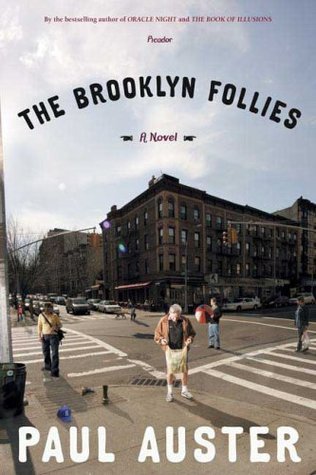
"The Brooklyn Follies" centers on Nathan Glass, a disillusioned publishing retiree who returns to Brooklyn seeking a quiet place to die. Instead, he finds himself drawn into the lives of his quirky relatives and neighbors, inadvertently becoming involved in a series of interconnected, often humorous, and sometimes poignant stories that ultimately reignite his will to live. It's a tale of urban serendipity, unexpected connections, and the search for meaning in the everyday.
The resemblance to "Leviathan" lies in their shared exploration of identity, individual purpose, and the often-unforeseen consequences of personal choices within a distinctly American landscape. Both novels feature protagonists grappling with existential malaise and seeking to redefine their lives, often through encounters with a vibrant cast of supporting characters. Auster's signature blend of philosophical inquiry, carefully constructed narratives, and a keen observational eye for the nuances of human experience is evident across both works.
This book will appeal for its warm introspection, witty dialogue, and the genuine humanity of its characters. It offers a comforting yet thought-provoking reflection on life's ordinary absurdities and profound moments, providing a valuable connection to stories about finding joy and purpose in unexpected places.
The Brooklyn Follies
"The Brooklyn Follies" centers on Nathan Glass, a disillusioned publishing retiree who returns to Brooklyn seeking a quiet place to die. Instead, he finds himself drawn into the lives of his quirky relatives and neighbors, inadvertently becoming involved in a series of interconnected, often humorous, and sometimes poignant stories that ultimately reignite his will to live. It's a tale of urban serendipity, unexpected connections, and the search for meaning in the everyday.
The resemblance to "Leviathan" lies in their shared exploration of identity, individual purpose, and the often-unforeseen consequences of personal choices within a distinctly American landscape. Both novels feature protagonists grappling with existential malaise and seeking to redefine their lives, often through encounters with a vibrant cast of supporting characters. Auster's signature blend of philosophical inquiry, carefully constructed narratives, and a keen observational eye for the nuances of human experience is evident across both works.
This book will appeal for its warm introspection, witty dialogue, and the genuine humanity of its characters. It offers a comforting yet thought-provoking reflection on life's ordinary absurdities and profound moments, providing a valuable connection to stories about finding joy and purpose in unexpected places.
Moon Palace
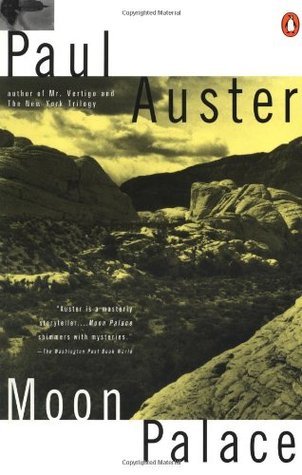
*Moon Palace* chronicles the picaresque journey of Marco Fogg, a Columbia University student who, after inheriting a small fortune, finds himself navigating destitution and a series of improbable encounters in 1960s New York. His quest for identity leads him through surreal landscapes of abandoned apartments, eccentric mentorship, and ultimately, a convoluted familial history tied to the American West and early 20th-century exploration. It’s a novel deeply concerned with memory, contingency, and the subjective reconstruction of the past.
Both *Moon Palace* and *Leviathan* showcase Paul Auster's signature literary style, marked by a pervasive sense of existential anomie and meticulously constructed narratives that blur the lines between fate and chance. They share protagonists who, though distinct, are similarly adrift, grappling with grander historical forces and their own often tragic personal choices. The precise, almost detached prose, the recurring motifs of American mythology, and the unexpected twists of fate resonate strongly across both works, inviting consideration of how individual lives are shaped by unseen hands and arbitrary events.
This novel offers a compelling exploration of rootlessness and the search for meaning in a world frequently devoid of it. Its intricate plot, philosophical undertones, and evocative portrayal of 20th-century America provide rich intellectual satisfaction, encouraging contemplation of freedom, artistic ambition, and the interconnectedness of seemingly disparate lives. The narrative complexity and the lingering questions about identity and providence make it a deeply rewarding literary experience.
Moon Palace
*Moon Palace* chronicles the picaresque journey of Marco Fogg, a Columbia University student who, after inheriting a small fortune, finds himself navigating destitution and a series of improbable encounters in 1960s New York. His quest for identity leads him through surreal landscapes of abandoned apartments, eccentric mentorship, and ultimately, a convoluted familial history tied to the American West and early 20th-century exploration. It’s a novel deeply concerned with memory, contingency, and the subjective reconstruction of the past.
Both *Moon Palace* and *Leviathan* showcase Paul Auster's signature literary style, marked by a pervasive sense of existential anomie and meticulously constructed narratives that blur the lines between fate and chance. They share protagonists who, though distinct, are similarly adrift, grappling with grander historical forces and their own often tragic personal choices. The precise, almost detached prose, the recurring motifs of American mythology, and the unexpected twists of fate resonate strongly across both works, inviting consideration of how individual lives are shaped by unseen hands and arbitrary events.
This novel offers a compelling exploration of rootlessness and the search for meaning in a world frequently devoid of it. Its intricate plot, philosophical undertones, and evocative portrayal of 20th-century America provide rich intellectual satisfaction, encouraging contemplation of freedom, artistic ambition, and the interconnectedness of seemingly disparate lives. The narrative complexity and the lingering questions about identity and providence make it a deeply rewarding literary experience.
In the Country of Last Things

"In the Country of Last Things" plunges into a Dystopian city where society has utterly collapsed. The narrative follows Anna Blume, a young woman searching for her missing brother. Survival is a daily struggle against widespread degradation, disease, and the constant threat of starvation and violence. The government is non-existent, and the city's inhabitants resort to barbaric practices to endure, creating a chilling portrait of humanity's darkest potential when faced with absolute desperation.
Both novels share Auster's signature exploration of identity, breakdown of societal structures, and the search for meaning in a chaotic world. They feature protagonists observing and attempting to navigate disintegrating realities, recording their experiences as a form of witness. The psychological toll of extreme environments and the subjective nature of truth are central to both narratives, presented through Auster's characteristically spare and cerebral prose.
This book offers a profound reflection on resilience and the fundamental nature of humanity when stripped of all pretense. It provides a stark examination of societal collapse and the individual's struggle for survival and purpose amidst overwhelming despair. The unflinching portrayal of a broken world, coupled with moments of unexpected human connection, makes it a powerful and thought-provoking analysis for those drawn to existential themes and incisive social commentary.
In the Country of Last Things
"In the Country of Last Things" plunges into a Dystopian city where society has utterly collapsed. The narrative follows Anna Blume, a young woman searching for her missing brother. Survival is a daily struggle against widespread degradation, disease, and the constant threat of starvation and violence. The government is non-existent, and the city's inhabitants resort to barbaric practices to endure, creating a chilling portrait of humanity's darkest potential when faced with absolute desperation.
Both novels share Auster's signature exploration of identity, breakdown of societal structures, and the search for meaning in a chaotic world. They feature protagonists observing and attempting to navigate disintegrating realities, recording their experiences as a form of witness. The psychological toll of extreme environments and the subjective nature of truth are central to both narratives, presented through Auster's characteristically spare and cerebral prose.
This book offers a profound reflection on resilience and the fundamental nature of humanity when stripped of all pretense. It provides a stark examination of societal collapse and the individual's struggle for survival and purpose amidst overwhelming despair. The unflinching portrayal of a broken world, coupled with moments of unexpected human connection, makes it a powerful and thought-provoking analysis for those drawn to existential themes and incisive social commentary.
More Books to Explore
Discover more titles that expand on these ideas and themes.
The New York Trilogy
Invisible
The Book of Illusions
Man in the Dark
Oracle Night
City of Glass