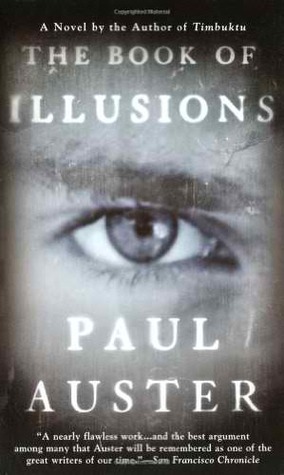
The Book of Illusions
Book Description
A tragic death unveils a hidden world where film and reality collide. Meet David Zimmer, a grieving man swept into an obsession with the mysterious illusionist Hector Mann, a figure lost to time and silence. As Zimmer unravels the threads of Mann's vanished life, he plunges into a labyrinth of deception, art, and intrigue. Each revelation pulls him deeper into a shadowy realm of fate and memory, blurring the lines between creator and creation. In a story that intertwines loss and discovery, how far will one man go to reclaim what he’s lost?
Quick Book Summary
"The Book of Illusions" by Paul Auster is a haunting exploration of grief, identity, and the enigmatic boundaries between fiction and reality. After the tragic deaths of his wife and children, David Zimmer, a literature professor, is consumed by despair until a chance viewing of silent film star Hector Mann reawakens his curiosity about the world. Zimmer becomes obsessed with uncovering Mann's secretive life after his mysterious disappearance, a quest that draws him into a world where the past is as elusive as shifting light. Through unraveling Mann's story, Zimmer confronts his own sense of loss, finding that identity and reality are as constructed—and fragile—as the illusions on the screen. The novel deftly interweaves quest, confession, and filmic artistry into a meditation on art and memory.



Summary of Key Ideas
Table of Contents
Grief and the Search for Meaning
David Zimmer, devastated by the sudden loss of his family in a plane crash, falls into a deep depression and aimlessness. His life regains purpose upon discovering the silent films of Hector Mann, an actor-director who mysteriously vanished decades earlier. Zimmer’s fascination grows into obsession, propelling him to write a book analyzing Mann’s surviving works. Through research and analysis, he finds temporary solace and a distraction from his grief.
The Intersection of Art and Reality
Zimmer’s journey intensifies when he receives a letter claiming Hector Mann is still alive and inviting him to New Mexico. Driven by curiosity and a yearning for connection, Zimmer embarks on a pilgrimage that becomes intertwined with his own healing process. Along the way, he meets Alma, Mann's confidante, and learns the story behind Mann’s disappearance. As Zimmer uncovers the narrative of Mann’s life, he is drawn ever deeper into a web of deception and revelation.
Obsession and the Allure of Mystery
The novel blurs boundaries between reality and illusion, both through Mann’s enigmatic films and the ways Zimmer reconstructs history from traces and hearsay. Questions of authorship, narrative reliability, and the creative act come to the fore, echoing how we reconstruct our own lives through memory and story. Each film, letter, and confession adds another layer of ambiguity, drawing Zimmer—and the reader—into the uncertain space between fact and fabrication.
The Fragility of Identity and Memory
Through Zimmer’s pursuit, the narrative explores how obsession can provide both refuge and danger in mourning, and how stories, whether filmic or lived, shape self-understanding. The seductive power of art, the desire to recover the past, and the need to find meaning in loss converge, revealing art as both a salve and a labyrinth. Zimmer’s journey is as much inward as outward, casting light on his wounds as much as Mann’s secrets.
Illusion versus Truth
By the story’s close, Zimmer faces unresolved questions and lingering uncertainties about both Mann’s fate and his own path forward. The book ultimately suggests that while illusions—whether of film or memory—can never bring back the dead or restore what is lost, the act of searching grants life shape and significance. Artifice and reality remain forever entwined, affirming that meaning resides not in answers, but in the pursuit itself.
Download This Summary
Get a free PDF of this summary instantly — no email required.