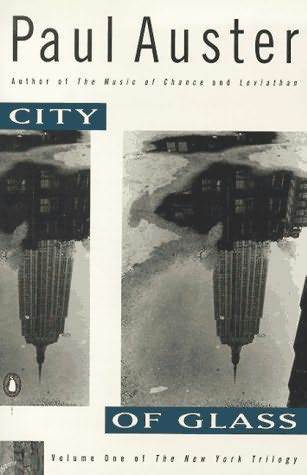
City of Glass
Book Description
In a city where shadows whisper secrets, a man named Daniel Quinn is drawn into a web of mystery and identity. As a detective writer mistaken for a private investigator, he embarks on a harrowing quest to find a missing person. Each twist leads him deeper into a labyrinth of confusion, blending reality with the surreal. Relationships blur as he encounters enigmatic figures and unravels the dark undercurrents of urban existence. Every choice he makes pulls him further from the life he knows. What will happen when the lines between hunter and hunted are obliterated?
Quick Book Summary
"City of Glass" by Paul Auster is a postmodern detective novel that follows Daniel Quinn, a reclusive writer of mystery novels, who is mistaken for a real private investigator. Accepting the unusual case, Quinn is plunged into a search for Peter Stillman Jr., who fears his estranged father may try to harm him. As Quinn navigates the streets of New York and delves into the strange psychological history of the Stillman family, the boundaries between author and character, detective and victim, begin to disintegrate. The novel evolves into a profound meditation on identity, language, and reality, questioning the very nature of storytelling and self. By the climactic conclusion, Quinn's ultimate quest for meaning dissolves into ambiguity, leaving both hero and reader questioning what is true and what is imagined.


Summary of Key Ideas
Table of Contents
Identity and Self-Deconstruction
Daniel Quinn is a lonely writer who pens detective stories under a pseudonym, living in the shadows of New York City after a personal tragedy. One night, he receives a mysterious phone call intended for Paul Auster, a private investigator. Intrigued and discontented with his stagnant existence, Quinn assumes Auster's identity and accepts the assignment. He is tasked with safeguarding Peter Stillman Jr., an emotionally unstable young man, whose estranged father may seek to harm him due to a disturbing past involving isolation and linguistic experiments.
The Limits of Language and Communication
Quinn's investigation pulls him into the complex backstory of the Stillmans. Peter's father, an obsessive academic, once locked his son in silence to test theories about the origins of language. As Quinn tracks Stillman Sr. through the labyrinthine streets of New York, he finds himself lost in symbolic patterns and philosophical riddles. The novel questions the power and failure of language, exploring whether words can ever truly capture reality. Communication falters at every turn, intensifying Quinn's sense of alienation.
Reality Versus Fiction
Throughout his quest, Quinn's sense of self begins to erode. He becomes increasingly detached from his own identity, mirroring the impersonality of the city and the case he investigates. Encounters with ambiguous figures—including an author named Paul Auster and the enigmatic Virginia Stillman—blur the distinctions between roles: detective, writer, and character. The dissolution of identity underscores the postmodern themes at the novel’s core, especially as Quinn’s own narrative grows more fragmented and uncertain.
Urban Alienation and Isolation
Auster’s "City of Glass" plays with the conventions of detective fiction, ultimately subverting them. Instead of resolving a crime or restoring order, the narrative spirals into chaos and ambiguity. The investigation leads Quinn nowhere definitive; his surveillance becomes obsessive, and his agency slips away. The line between hunter and hunted disappears entirely, suggesting that the search for truth—whether in fiction, identity, or reality—is elusive and perhaps impossible in the urban labyrinth.
The Detective Archetype Subverted
By the end, the novel leaves more questions than answers. Quinn’s fate is ambiguous; as his journal runs out of pages, his existence seems to fade along with his narrative. "City of Glass" becomes a meditation on the search for meaning in a fragmented world, raising profound questions about authorship, connection, and the limits of human understanding. The city’s glass, both transparent and reflective, encapsulates the mystery at the center of the novel: the search for the self in a world that refuses clear answers.
Download This Summary
Get a free PDF of this summary instantly — no email required.