
The New York Trilogy
Book Description
In the shadowy corners of New York City, three entwined narratives plunge into a labyrinth of identity, obsession, and existential mystery. A detective stalks a phantom of the past, a writer grapples with his own narrative, and a troubled man seeks meaning in a world that feels forever out of reach. Each story grips you tighter, punctured by unsettling encounters and profound revelations. The pulsating energy of the city mirrors the characters’ internal struggles, blurring the lines between author and creation. As their worlds collide, the question lingers: can anyone truly escape the confines of their own story?
Quick Book Summary
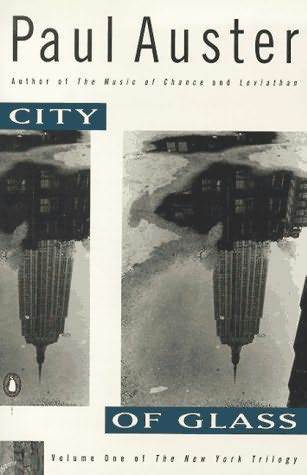
"The New York Trilogy" by Paul Auster is a mesmerizing postmodern detective fiction comprised of three interconnected stories: "City of Glass," "Ghosts," and "The Locked Room." Each narrative follows a protagonist drawn into mysterious cases that challenge the boundaries of selfhood and authorship. In the sprawling urban landscape of New York City, identities dissolve, and reality itself becomes ambiguous as characters investigate not only external mysteries but also the riddles of their own existence. The trilogy masterfully explores themes of identity, authorship, and obsession, with the city's ever-shifting environment serving as both setting and metaphor. As the lines between writer, detective, and subject blur, Auster crafts a literary labyrinth where the search for truth becomes a quest for self-understanding, leaving readers to wonder where fiction ends and reality begins.

Summary of Key Ideas
Table of Contents
Identity and Selfhood
The trilogy opens with "City of Glass," introducing Quinn, a reclusive writer who is mistaken for a private detective named Paul Auster. Quinn accepts a bizarre case to follow Peter Stillman, a man traumatized by his father's abusive experiments. The investigation descends into paranoia, surveillance, and a complex maze within the city, ultimately causing Quinn to lose himself, both physically and psychologically. This section introduces the recurring motif of lost identity and the city as a labyrinth, setting the tone for the stories that follow.
Blurring of Reality and Fiction
In "Ghosts," the narrative distills classic detective fiction to its essence. The protagonist, Blue, is hired by the mysterious White to observe another man, Black, from across the street. As Blue meticulously records Black's mundane activities, the boundaries between observer and observed blur. The assignment becomes existential: Blue's surveillance strips away his own sense of self, leading to questions about purpose, autonomy, and the meaning of watching someone else. Here, Auster explores the vacuity of routine and the dissolution of identity in endless repetition.
Obsession and Detective Work
"The Locked Room" shifts focus to the relationship between writer and subject. An unnamed narrator is asked to manage the literary estate of his vanished childhood friend, Fanshawe. As he edits Fanshawe's manuscripts and steps into his roles—husband, father, and writer—he faces mounting guilt and obsession. The search for Fanshawe transforms into a search for meaning and authenticity in his own life. The narrator's journey reflects the anxiety of living in another's shadow and the desire to author one's destiny amid existential uncertainty.
Isolation and Urban Alienation
The trilogy interweaves metafictional elements throughout, with characters hampered by and manipulated within their narratives. Paul Auster, the author, becomes a character, and the stories reference each other, reflecting on the act of storytelling itself. Each protagonist's investigation echoes the process of writing: constructing identity, encountering ambiguity, and confronting the limits of language and understanding. The cityscape becomes both setting and symbol for these conceptual mazes.
Literary Metafiction
Overall, "The New York Trilogy" entangles mystery conventions with philosophical questions, using the detective genre to probe existential doubt. The protagonists' quests are less about solving concrete crimes and more about unraveling the puzzles of human consciousness and isolation. Through shifting perspectives and unresolved endings, Auster compels readers to consider the nature of reality, the construction of meaning, and the possibility of escape—or entrapment—within one's own narrative.
Download This Summary
Get a free PDF of this summary instantly — no email required.