10 Books Similar to "Use of Weapons"
by Iain M. Banks

Look to Windward

"Look to Windward" is a profound exploration of trauma, cultural memory, and the moral complexities of intervention. Set years after a devastating war, it intertwines narratives of a Chelgrian composer haunted by his past, a Culture ambassador tasked with a delicate diplomatic mission, and a Haiman avatar investigating a strange phenomenon. The story delves into the psychological aftermath of conflict and the subtle ways past events continue to shape the present across vast interstellar civilizations.
It shares "Use of Weapons" central themes of moral ambiguity, the long-term repercussions of violence, and the burden of individual guilt within a grander societal context. Both novels utilize a non-linear narrative structure to reveal character motivations and unravel intricate backstories, emphasizing how past choices reverberate through personal and political landscapes. The sophisticated world-building and philosophical underpinnings regarding the nature of advanced civilizations are also strikingly similar.
This novel will appeal to those who appreciate thoughtful science fiction that delves deeply into character psychology and ethical dilemmas. Its value lies in its nuanced portrayal of grief, forgiveness, and the challenge of rebuilding after catastrophe, offering a compelling meditation on the costs of empire and the enduring human (or post-human) condition.
Look to Windward
"Look to Windward" is a profound exploration of trauma, cultural memory, and the moral complexities of intervention. Set years after a devastating war, it intertwines narratives of a Chelgrian composer haunted by his past, a Culture ambassador tasked with a delicate diplomatic mission, and a Haiman avatar investigating a strange phenomenon. The story delves into the psychological aftermath of conflict and the subtle ways past events continue to shape the present across vast interstellar civilizations.
It shares "Use of Weapons" central themes of moral ambiguity, the long-term repercussions of violence, and the burden of individual guilt within a grander societal context. Both novels utilize a non-linear narrative structure to reveal character motivations and unravel intricate backstories, emphasizing how past choices reverberate through personal and political landscapes. The sophisticated world-building and philosophical underpinnings regarding the nature of advanced civilizations are also strikingly similar.
This novel will appeal to those who appreciate thoughtful science fiction that delves deeply into character psychology and ethical dilemmas. Its value lies in its nuanced portrayal of grief, forgiveness, and the challenge of rebuilding after catastrophe, offering a compelling meditation on the costs of empire and the enduring human (or post-human) condition.
Matter
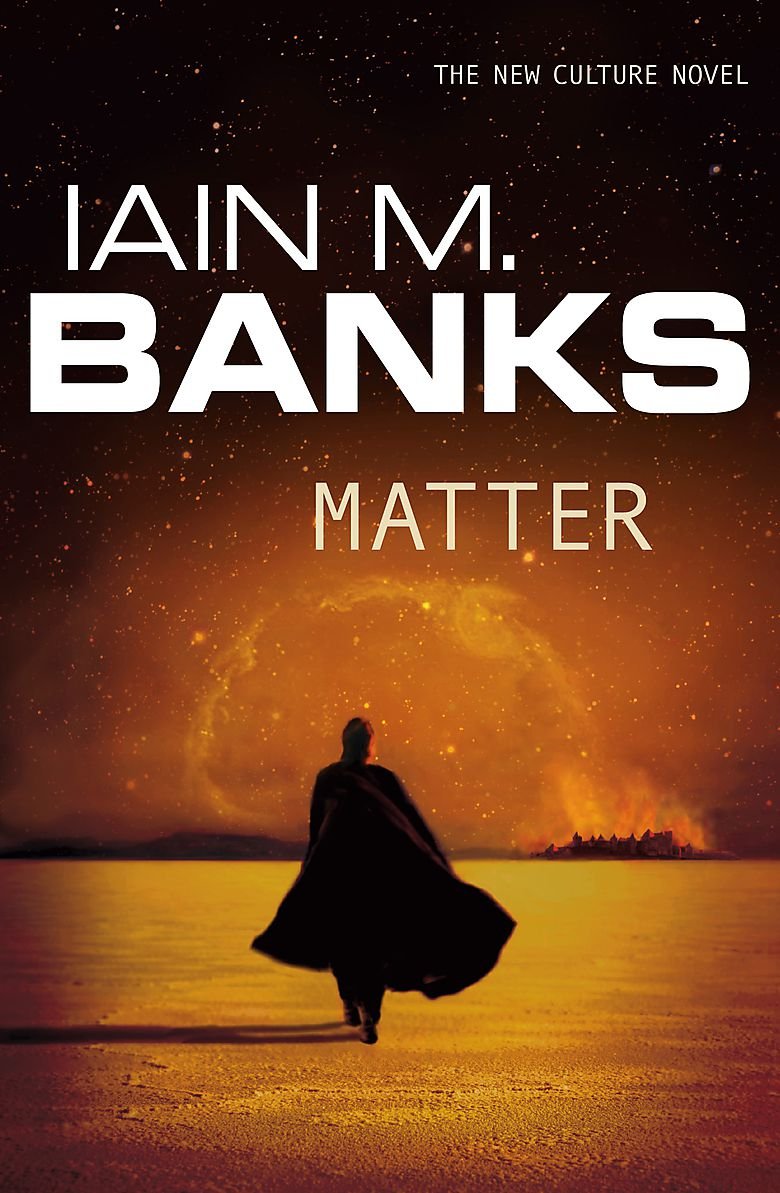
"Matter" explores a vast, multi-layered Dyson sphere inhabited by radically different civilizations, from feudal lords to advanced artificial intelligences. The narrative follows Prince Ferbin, seeking revenge for his father's death, and his sister Djan Seriy Anaplian, a Culture Special Circumstances agent, as their paths converge amidst a burgeoning war and ancient mysteries hidden deep within the sphere's colossal structure. It's an intricate tale of politics, power, and the clash of vastly disparate societies.
Both "Matter" and "Use of Weapons" delve into the morally ambiguous role of the Culture's Special Circumstances division and the psychological toll of its interventions. They share a common thread of protagonist figures grappling with their pasts and the complexities of warfare, often featuring elaborate, multi-perspective narratives that gradually reveal deeper truths and broader implications. The intricate plotting and the exploration of alien cultures are hallmarks of both.
The book offers a compelling narrative for those who appreciate richly detailed world-building and thought-provoking themes. It immerses one in a grand-scale science fiction epic, examining the ethics of power, the nature of intelligence, and the intricacies of inter-species conflict. This deep dive into complex moral landscapes and expansive technological futures provides significant intellectual and entertainment value.
Matter
"Matter" explores a vast, multi-layered Dyson sphere inhabited by radically different civilizations, from feudal lords to advanced artificial intelligences. The narrative follows Prince Ferbin, seeking revenge for his father's death, and his sister Djan Seriy Anaplian, a Culture Special Circumstances agent, as their paths converge amidst a burgeoning war and ancient mysteries hidden deep within the sphere's colossal structure. It's an intricate tale of politics, power, and the clash of vastly disparate societies.
Both "Matter" and "Use of Weapons" delve into the morally ambiguous role of the Culture's Special Circumstances division and the psychological toll of its interventions. They share a common thread of protagonist figures grappling with their pasts and the complexities of warfare, often featuring elaborate, multi-perspective narratives that gradually reveal deeper truths and broader implications. The intricate plotting and the exploration of alien cultures are hallmarks of both.
The book offers a compelling narrative for those who appreciate richly detailed world-building and thought-provoking themes. It immerses one in a grand-scale science fiction epic, examining the ethics of power, the nature of intelligence, and the intricacies of inter-species conflict. This deep dive into complex moral landscapes and expansive technological futures provides significant intellectual and entertainment value.
State of the Art
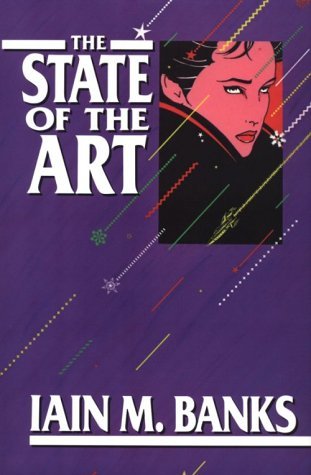
"State of the Art" is a collection of short stories and novellas, with the titular novella being a standout. It chronicles an encounter between the highly advanced, utopian Culture civilization and Earth in the late 1970s. The Culture, observing humanity from afar, grapples with ethical dilemmas surrounding intervention and the impact of their presence on a less developed society, all through the cynical yet observant eyes of a Culture agent.
The similarity to "Use of Weapons" lies in their shared exploration of Culture intervention and its complex moral implications. Both works feature protagonists navigating ethically murky waters within the Culture's grand strategy. The dispassionate yet internally conflicted perspective on "lesser" civilizations, and the psychological toll of Culture operations, are central to both narratives, as is a non-linear or segmented narrative structure that reveals truths incrementally.
This collection offers a compelling look at the Culture's philosophical underpinnings and its interactions with vastly different societies. It provides valuable insight into the consequences of technological and moral superiority, prompting reflection on cultural exchange and the ethics of non-intervention. The nuanced portrayal of Culture agents and their internal struggles will resonate, enriching understanding of Banks' intricate fictional universe and its recurring themes.
State of the Art
"State of the Art" is a collection of short stories and novellas, with the titular novella being a standout. It chronicles an encounter between the highly advanced, utopian Culture civilization and Earth in the late 1970s. The Culture, observing humanity from afar, grapples with ethical dilemmas surrounding intervention and the impact of their presence on a less developed society, all through the cynical yet observant eyes of a Culture agent.
The similarity to "Use of Weapons" lies in their shared exploration of Culture intervention and its complex moral implications. Both works feature protagonists navigating ethically murky waters within the Culture's grand strategy. The dispassionate yet internally conflicted perspective on "lesser" civilizations, and the psychological toll of Culture operations, are central to both narratives, as is a non-linear or segmented narrative structure that reveals truths incrementally.
This collection offers a compelling look at the Culture's philosophical underpinnings and its interactions with vastly different societies. It provides valuable insight into the consequences of technological and moral superiority, prompting reflection on cultural exchange and the ethics of non-intervention. The nuanced portrayal of Culture agents and their internal struggles will resonate, enriching understanding of Banks' intricate fictional universe and its recurring themes.
Excession

"Excession" plunges into the intricacies of the Culture, a post-scarcity, pan-human galactic civilization, as an enigmatic, supra-sentient artifact materializes. The discovery ignites a tense, multi-layered existential crisis, forcing the Culture's Minds – hyper-intelligent AI entities – to grapple with their own limitations, the nature of intelligence, and the potential implications of an entity beyond their comprehension, while navigating internal political factions and external threats.
Both "Excession" and "Use of Weapons" masterfully explore moral ambiguities and the psychological toll of conflict. While "Use of Weapons" focuses on individual trauma and the blurring lines of right and wrong through its non-linear narrative, "Excession" extrapolates this to a societal level, showcasing the Culture's internal struggles with its utopian ideals and the ethical dilemmas presented by overwhelming power and intelligence. Both novels showcase Banks's signature intellect, complex plot structures, and relentless examination of morality within advanced societies.
This novel will resonate deeply with those who appreciate ambitious science fiction that delves into philosophical questions. Its intricate world-building, compelling characters – particularly the hyper-intelligent Minds – and thought-provoking exploration of artificial intelligence, societal ethics, and the nature of ultimate power provide a rich, intellectually stimulating experience. It offers a profound commentary on humanity's place in the cosmos and the challenges of unimaginable technological advancement.
Excession
"Excession" plunges into the intricacies of the Culture, a post-scarcity, pan-human galactic civilization, as an enigmatic, supra-sentient artifact materializes. The discovery ignites a tense, multi-layered existential crisis, forcing the Culture's Minds – hyper-intelligent AI entities – to grapple with their own limitations, the nature of intelligence, and the potential implications of an entity beyond their comprehension, while navigating internal political factions and external threats.
Both "Excession" and "Use of Weapons" masterfully explore moral ambiguities and the psychological toll of conflict. While "Use of Weapons" focuses on individual trauma and the blurring lines of right and wrong through its non-linear narrative, "Excession" extrapolates this to a societal level, showcasing the Culture's internal struggles with its utopian ideals and the ethical dilemmas presented by overwhelming power and intelligence. Both novels showcase Banks's signature intellect, complex plot structures, and relentless examination of morality within advanced societies.
This novel will resonate deeply with those who appreciate ambitious science fiction that delves into philosophical questions. Its intricate world-building, compelling characters – particularly the hyper-intelligent Minds – and thought-provoking exploration of artificial intelligence, societal ethics, and the nature of ultimate power provide a rich, intellectually stimulating experience. It offers a profound commentary on humanity's place in the cosmos and the challenges of unimaginable technological advancement.
Consider Phlebas
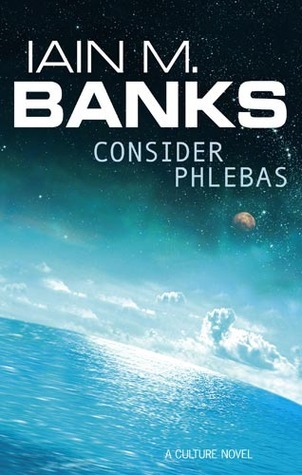
"Consider Phlebas" plunges into the heart of the Idiran-Culture War, an interstellar conflict between a rigidly religious, expansionist empire and a highly advanced, utopian civilization. The narrative follows Horza, a shapeshifting mercenary, on a perilous mission to recover a Culture Mind – a powerful artificial intelligence – stranded on a forbidden planet. His journey is a brutal odyssey through war-torn space, fraught with moral compromises, existential quandaries, and encounters with countless factions caught in the war's destructive wake.
Both novels share Banks's signature exploration of moral ambiguity and the price of conflict. Like "Use of Weapons," "Consider Phlebas" delves deeply into the psychological toll of war on individuals, regardless of their allegiance. They both feature complex protagonists navigating morally gray landscapes, forced into difficult choices with far-reaching consequences, often questioning their own motives and the justifications for the violence surrounding them. The intricate world-building, grand scale, and cynical undertones concerning power and human nature are also strongly resonant.
This foundational Culture novel offers a compelling entry point into Banks's expansive universe, presenting a raw, unfiltered perspective on galactic warfare. It provides valuable insight into the origins and defining conflicts of the Culture, grounding its idealistic future in a visceral history of conflict. The story’s thought-provoking themes concerning sentience, societal values, and the human condition ensure lasting impact, provoking reflection on power structures and the nature of conflict itself.
Consider Phlebas
"Consider Phlebas" plunges into the heart of the Idiran-Culture War, an interstellar conflict between a rigidly religious, expansionist empire and a highly advanced, utopian civilization. The narrative follows Horza, a shapeshifting mercenary, on a perilous mission to recover a Culture Mind – a powerful artificial intelligence – stranded on a forbidden planet. His journey is a brutal odyssey through war-torn space, fraught with moral compromises, existential quandaries, and encounters with countless factions caught in the war's destructive wake.
Both novels share Banks's signature exploration of moral ambiguity and the price of conflict. Like "Use of Weapons," "Consider Phlebas" delves deeply into the psychological toll of war on individuals, regardless of their allegiance. They both feature complex protagonists navigating morally gray landscapes, forced into difficult choices with far-reaching consequences, often questioning their own motives and the justifications for the violence surrounding them. The intricate world-building, grand scale, and cynical undertones concerning power and human nature are also strongly resonant.
This foundational Culture novel offers a compelling entry point into Banks's expansive universe, presenting a raw, unfiltered perspective on galactic warfare. It provides valuable insight into the origins and defining conflicts of the Culture, grounding its idealistic future in a visceral history of conflict. The story’s thought-provoking themes concerning sentience, societal values, and the human condition ensure lasting impact, provoking reflection on power structures and the nature of conflict itself.
The State of the Art

"The State of the Art" is a collection of Iain M. Banks' shorter fiction, predominantly exploring the intricate moralities and societal implications of advanced sentient civilizations, particularly the Culture. The titular novella centers on an expedition that observes Earth in 1977, grappling with the ethical dilemma of intervention versus non-interference and the profound cultural clash between a utopian, post-scarcity society and nascent humanity. Other stories delve into a range of speculative scenarios, from the personal cost of immortality to the psychological impact of war, all filtered through Banks' distinctive blend of intellectual rigor and sardonic wit.
It echoes "Use of Weapons" in its unflinching examination of the psychological scars of conflict and the moral ambiguity inherent in power. Both works feature protagonists deeply entangled in the geopolitical machinations of the Culture, forcing them to confront subjective interpretations of right and wrong. The non-linear narrative structure, particularly in the novella, mirrors the fractured chronology used in "Use of Weapons" to gradually reveal deeper truths and character motivations, demanding active engagement from the audience.
This collection will significantly appeal to those captivated by complex ethical quandaries and profound character studies within a sophisticated science fiction framework. Its exploration of interventionism, cultural relativism, and the nature of sentience offers rich material for reflection, deepening one's understanding of the Culture's philosophy and its interactions with less developed civilizations. The diverse narratives provide varied perspectives on recurring Banksian themes, proving valuable for anyone seeking intellectually stimulating and emotionally resonant speculative fiction.
The State of the Art
"The State of the Art" is a collection of Iain M. Banks' shorter fiction, predominantly exploring the intricate moralities and societal implications of advanced sentient civilizations, particularly the Culture. The titular novella centers on an expedition that observes Earth in 1977, grappling with the ethical dilemma of intervention versus non-interference and the profound cultural clash between a utopian, post-scarcity society and nascent humanity. Other stories delve into a range of speculative scenarios, from the personal cost of immortality to the psychological impact of war, all filtered through Banks' distinctive blend of intellectual rigor and sardonic wit.
It echoes "Use of Weapons" in its unflinching examination of the psychological scars of conflict and the moral ambiguity inherent in power. Both works feature protagonists deeply entangled in the geopolitical machinations of the Culture, forcing them to confront subjective interpretations of right and wrong. The non-linear narrative structure, particularly in the novella, mirrors the fractured chronology used in "Use of Weapons" to gradually reveal deeper truths and character motivations, demanding active engagement from the audience.
This collection will significantly appeal to those captivated by complex ethical quandaries and profound character studies within a sophisticated science fiction framework. Its exploration of interventionism, cultural relativism, and the nature of sentience offers rich material for reflection, deepening one's understanding of the Culture's philosophy and its interactions with less developed civilizations. The diverse narratives provide varied perspectives on recurring Banksian themes, proving valuable for anyone seeking intellectually stimulating and emotionally resonant speculative fiction.
Surface Detail

"Surface Detail" explores the ethical and practical implications of virtual realities designed to simulate hell. The narrative follows a woman seeking revenge for her own virtual damnation, and a group of individuals debating the very existence and nature of these digital afterlives across various factions within the Culture and beyond. It's a profound examination of justice, punishment, and the boundaries of suffering in an advanced technological society.
The similarity to "Use of Weapons" lies in their shared exploration of morally ambiguous characters navigating complex, high-stakes scenarios within the Culture universe. Both novels delve into the psychological scars of past traumas and the ways in which advanced technology can be used for both immense good and profound cruelty. They also share a non-linear narrative structure, slowly revealing critical backstory and motivations that reframe earlier events.
This novel will appeal to those who appreciate sophisticated science fiction that grapples with weighty philosophical questions. Its intricate plot, morally gray characters, and unflinching look at the nature of justice and retribution offer a thought-provoking experience that resonates long after the final page. The exploration of digital consciousness and the ethics of suffering provide fertile ground for intellectual engagement.
Surface Detail
"Surface Detail" explores the ethical and practical implications of virtual realities designed to simulate hell. The narrative follows a woman seeking revenge for her own virtual damnation, and a group of individuals debating the very existence and nature of these digital afterlives across various factions within the Culture and beyond. It's a profound examination of justice, punishment, and the boundaries of suffering in an advanced technological society.
The similarity to "Use of Weapons" lies in their shared exploration of morally ambiguous characters navigating complex, high-stakes scenarios within the Culture universe. Both novels delve into the psychological scars of past traumas and the ways in which advanced technology can be used for both immense good and profound cruelty. They also share a non-linear narrative structure, slowly revealing critical backstory and motivations that reframe earlier events.
This novel will appeal to those who appreciate sophisticated science fiction that grapples with weighty philosophical questions. Its intricate plot, morally gray characters, and unflinching look at the nature of justice and retribution offer a thought-provoking experience that resonates long after the final page. The exploration of digital consciousness and the ethics of suffering provide fertile ground for intellectual engagement.
Feersum Endjinn
*Feersum Endjinn* is a post-apocalyptic science fiction narrative set on a decaying planet where humanity struggles to understand and control forgotten technology. The story unfolds through multiple, distinct perspectives, including that of a young, cryptically-speaking hero on a quest, a powerful sentient AI, and the remnants of a governing council attempting to maintain order. Their intertwined fates dictate the survival or ultimate demise of their civilization.
The similarity to *Use of Weapons* lies in the structural ambition and thematic complexity. Both novels employ fragmented narratives, shifting perspectives, and non-linear storytelling to gradually reveal a grander, often disturbing truth. They explore themes of identity, memory, moral ambiguity, and the long-term consequences of past actions, all filtered through a distinctively warped and sometimes brutal lens. Banks's signature unflinching portrayal of difficult moral choices and the intricate psychology of his characters connects the two.
This novel will appeal to those who appreciate challenging narratives that reward careful attention. Its intricate plotting, unique linguistic stylings, and profound exploration of human nature under duress offer a deeply immersive and thought-provoking experience. The rich world-building and the intellectual puzzles embedded within the story ensure a valuable and lasting impact on the discerning reader.
Feersum Endjinn
*Feersum Endjinn* is a post-apocalyptic science fiction narrative set on a decaying planet where humanity struggles to understand and control forgotten technology. The story unfolds through multiple, distinct perspectives, including that of a young, cryptically-speaking hero on a quest, a powerful sentient AI, and the remnants of a governing council attempting to maintain order. Their intertwined fates dictate the survival or ultimate demise of their civilization.
The similarity to *Use of Weapons* lies in the structural ambition and thematic complexity. Both novels employ fragmented narratives, shifting perspectives, and non-linear storytelling to gradually reveal a grander, often disturbing truth. They explore themes of identity, memory, moral ambiguity, and the long-term consequences of past actions, all filtered through a distinctively warped and sometimes brutal lens. Banks's signature unflinching portrayal of difficult moral choices and the intricate psychology of his characters connects the two.
This novel will appeal to those who appreciate challenging narratives that reward careful attention. Its intricate plotting, unique linguistic stylings, and profound exploration of human nature under duress offer a deeply immersive and thought-provoking experience. The rich world-building and the intellectual puzzles embedded within the story ensure a valuable and lasting impact on the discerning reader.
Transition
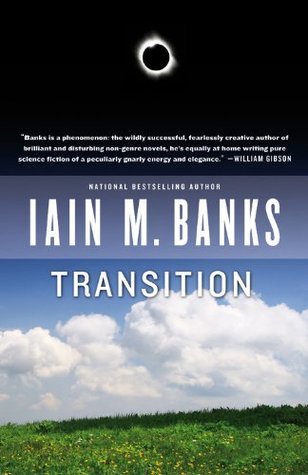
"Transition" revolves around Temir, an operative caught between a shadowy organization known as The Concern, which manipulates realities, and his own fractured memories. The novel delves into parallel universes, political intrigue, and the moral complexities of intervention and control, focusing on the insidious ways power can be exerted across different dimensions and its impact on personal identity and free will.
Both "Transition" and "Use of Weapons" masterfully employ non-linear narratives to construct their plots. They share a thematic preoccupation with protagonist operatives whose pasts are fragmented or manipulated, serving powerful, often ethically dubious, organizations. The exploration of identity, memory, and the consequences of wielding immense power, sometimes at a personal cost, provides a strong common thread between the two works.
This book will appeal to those who appreciate intricate, mind-bending narratives that challenge perceptions of reality and consequence. Its exploration of moral ambiguities within a multiverse framework offers substantial intellectual and emotional engagement, provoking thought about individual agency versus systemic manipulation. The sophisticated plotting and profound themes ensure a rewarding, thought-provoking experience.
Transition
"Transition" revolves around Temir, an operative caught between a shadowy organization known as The Concern, which manipulates realities, and his own fractured memories. The novel delves into parallel universes, political intrigue, and the moral complexities of intervention and control, focusing on the insidious ways power can be exerted across different dimensions and its impact on personal identity and free will.
Both "Transition" and "Use of Weapons" masterfully employ non-linear narratives to construct their plots. They share a thematic preoccupation with protagonist operatives whose pasts are fragmented or manipulated, serving powerful, often ethically dubious, organizations. The exploration of identity, memory, and the consequences of wielding immense power, sometimes at a personal cost, provides a strong common thread between the two works.
This book will appeal to those who appreciate intricate, mind-bending narratives that challenge perceptions of reality and consequence. Its exploration of moral ambiguities within a multiverse framework offers substantial intellectual and emotional engagement, provoking thought about individual agency versus systemic manipulation. The sophisticated plotting and profound themes ensure a rewarding, thought-provoking experience.
Inversions
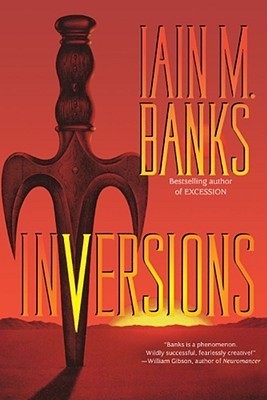
"Inversions" presents a series of interconnecting tales set on a technologically primitive, feudal world. Narrated through various perspectives, including a court physician, a bodyguard, and an assassin, the novel unravels political intrigue, philosophical dilemmas, and the subtle, often disturbing, influence of an outsider – implied to be a Culture agent – on the planet's destiny. The true nature and purpose of this outsider are gradually revealed through fragmented accounts, questioning perceptions of truth and intervention.
The thematic core of both "Inversions" and "Use of Weapons" lies in their exploration of covert intervention and the moral complexities of external influence on developing societies. Each book features a protagonist whose actions, while seemingly serving a greater purpose, leave a trail of ethical ambiguity and personal trauma. Both narratives employ non-linear structures to slowly expose past events and motivations, forcing a re-evaluation of earlier perspectives and characters.
This narrative approach offers a deeply engaging experience, rewarding careful attention to detail and subtle thematic connections. The thought-provoking examination of ethics, power, and the nature of "civilizing" a culture provides significant intellectual value. It encourages reflection on the long-term consequences of even well-intentioned meddling, resonating with contemporary discussions about intervention and cultural impact.
Inversions
"Inversions" presents a series of interconnecting tales set on a technologically primitive, feudal world. Narrated through various perspectives, including a court physician, a bodyguard, and an assassin, the novel unravels political intrigue, philosophical dilemmas, and the subtle, often disturbing, influence of an outsider – implied to be a Culture agent – on the planet's destiny. The true nature and purpose of this outsider are gradually revealed through fragmented accounts, questioning perceptions of truth and intervention.
The thematic core of both "Inversions" and "Use of Weapons" lies in their exploration of covert intervention and the moral complexities of external influence on developing societies. Each book features a protagonist whose actions, while seemingly serving a greater purpose, leave a trail of ethical ambiguity and personal trauma. Both narratives employ non-linear structures to slowly expose past events and motivations, forcing a re-evaluation of earlier perspectives and characters.
This narrative approach offers a deeply engaging experience, rewarding careful attention to detail and subtle thematic connections. The thought-provoking examination of ethics, power, and the nature of "civilizing" a culture provides significant intellectual value. It encourages reflection on the long-term consequences of even well-intentioned meddling, resonating with contemporary discussions about intervention and cultural impact.
More Books to Explore
Discover more titles that expand on these ideas and themes.
Look to Windward
Matter
State of the Art
Excession
Consider Phlebas
The State of the Art