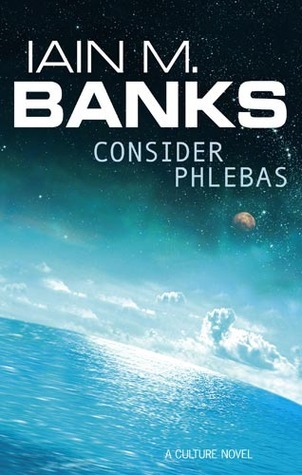
Consider Phlebas
Book Description
War rages across the galaxy, pitting a culture of advanced machines against a fiercely religious race battling for survival. Horza, a shape-shifting mercenary, races against time to capture a powerful AI hidden in the chaos. Betrayal lurks in every shadow, and alliances shift as blood is spilled on distant planets. Through dazzling battles and heart-wrenching encounters, the line between duty and desire blurs. As the stakes rise, Horza must confront his own beliefs and the true cost of loyalty. Will he sacrifice everything for a cause he no longer believes in?
Quick Book Summary
"Consider Phlebas," the first novel in Iain M. Banks' Culture series, plunges readers into a sweeping interstellar war between two powerful civilizations: the utopian, machine-led Culture and the zealously religious Idiran Empire. The story follows Horza, a shape-shifting mercenary hired by the Idirans to capture a rogue Mind—a highly advanced AI—that has gone into hiding on a forbidden planet. Driven by personal convictions and complex loyalties, Horza's journey is rife with shifting alliances, betrayals, and existential dilemmas. As he navigates perilous worlds, battles, and a motley crew of companions, Horza is forced to question both the morality of the causes he serves and his own identity. The novel explores themes of faith, technology, and the nature of war, blending high-stakes action with deep philosophical undercurrents that challenge the very concept of loyalty and purpose.



Summary of Key Ideas
Table of Contents
War and Ideology: The Culture vs. The Idiran Empire
The galaxy is engulfed in a brutal conflict between the technologically advanced Culture, which values individual freedom and is governed by sentient AIs (Minds), and the Idiran Empire, a rigid theocracy fighting to preserve its own vision of order. Amidst this galactic struggle, the fate of a single Mind—an ultra-intelligent AI—becomes a focal point of the war, as both sides race to locate it on the forbidden planet Schar's World. The story introduces Horza, a Changer capable of altering his physical appearance, who aligns with the Idirans out of ideological opposition to the Culture’s posthuman philosophy.
Identity, Loyalty, and Betrayal
Horza is captured and subjected to a series of harrowing adventures, first escaping death on a cannibal island and then conscripting into the crew of a pirate ship. The crew represents a fractious microcosm of the galaxy, with greed, ambition, and fear driving the characters into repeated conflict. As Horza gradually takes control, he forms fragile bonds, grapples with betrayal, and is repeatedly reminded of the blurred lines between friend and foe in wartime. The crew’s journey across hazardous regions and their skirmishes with Culture agents highlight the unpredictability and brutality of war, as well as its toll on the individual psyche.
The Nature of Artificial Intelligence
Artificial intelligence stands at the heart of the narrative, embodied by the elusive Mind that both sides desperately seek. The Culture’s reliance on AIs reflects its faith in enlightened, non-human governance, while the Idirans fear these "soulless" entities and what they represent. Through Horza’s mission, the novel examines the ethics of machine intelligence, the limits of sentient agency, and the existential threat posed by technologies that surpass human understanding. The desperate hunt for the Mind crystallizes the broader conflict between faith and reason—technology-driven utopianism versus spiritual certitude.
Morality and the Cost of War
Throughout the novel, Horza’s loyalties are tested as he confronts both external enemies and the contradictions within his own beliefs. His journey forces him to re-evaluate the justifications for violence, the rationale behind devotion to lost causes, and the true price of sacrifice. Relationships built on situational need falter, and his initial convictions give way to moments of doubt and introspection. In the chaos of interstellar war, the motives that once seemed clear are muddied by the brutality of battle and the ambiguity of right and wrong.
The Search for Meaning in Chaos
In the end, the battle for the Mind becomes a personal crucible for Horza, who must choose between allegiance to the Idirans and recognition of individual moral agency. The story closes with the reminder that, while grand strategies and ideologies shape the course of history, individual actions and choices ultimately define meaning in a chaotic universe. "Consider Phlebas" raises enduring questions about the costs of loyalty, the boundaries between human and machine, and the possibility of redemption amid relentless warfare.
Download This Summary
Get a free PDF of this summary instantly — no email required.