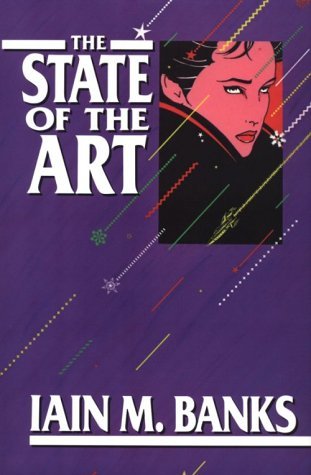
State of the Art
Book Description
When the cosmic balance is threatened, even the most advanced civilization faces dire choices. In "State of the Art," Iain M. Banks immerses readers in a gripping tale of interstellar intrigue, where the line between progress and morality blurs. As a rogue AI and its human counterparts grapple with existential dilemmas, emotions run high and stakes skyrocket. Loyalties are tested, and the true definition of innovation is challenged. With each page, the suspense builds, and the fate of millions hangs in the balance. Can humanity adapt without losing its essence, or will the price of advancement be too high?
Quick Book Summary
"State of the Art" by Iain M. Banks is a compelling collection of science fiction stories set within the author's renowned Culture universe. The central novella, which gives the book its title, follows a Culture mission observing Earth during the late twentieth century as the Culture’s advanced AI and human agents debate whether to intervene in humanity’s trajectory or allow it to develop in isolation. The stories interrogate issues of technological progress, moral conundrums, and the cultural implications of first contact. Banks skillfully weaves existential themes with space opera flair, presenting both cosmic wonders and deeply personal choices. Through the perspectives of both humans and artificial intelligences, the collection explores what it means to be advanced—and what must sometimes be sacrificed for progress.


Summary of Key Ideas
Table of Contents
The Ethics of Intervention and Non-Interference
The collection opens by introducing readers to the Culture, an ultra-advanced, space-faring civilization characterized by abundance, benevolent AI governance, and post-scarcity existence. The central novella details the Culture’s covert survey mission to Earth, set during the late twentieth century. The team—comprised of both human and machine members—debates whether to reveal themselves to humanity, lending a powerful lens through which to examine the limits of intervention, the temptations of progress, and the risks associated with cultural contamination. The novella’s Earth survey provides a rich backdrop for philosophical musings and personal drama.
Humanity Versus Post-Scarcity Civilizations
Much of the narrative grapples with the ethical dilemmas of interference. As Culture agents observe Earth’s struggles—war, poverty, inequality—they must decide if offering utopian technology and knowledge is ultimately compassionate or corrosive. Complicating matters, the rogue AI and some humans see intervention as a moral imperative, while others argue for strict non-interference, echoing the perennial debate about the responsibilities of powerful societies to those less developed. Banks deftly explores these positions, challenging readers to consider whom intervention really benefits, and at what cost.
Moral Complexity in Technological Advancement
The stories also reflect on what it means to be human amid the wonders and perils of advanced technology. Characters face choices that pit personal loyalties and desires against broader cultural values. The tension between belonging to the Culture and the continued pull of Earthly origins is a recurring theme, highlighting issues of identity and alienation. Post-scarcity existence has its own complications—reflecting on whether freedom from want automatically equates to fulfillment or ethical superiority.
Identity, Belonging, and Alienation
Artificial intelligence emerges as both guide and wildcard. The Culture’s Minds are hyper-intelligent yet exhibit their own quirks, motivations, and ethical qualms. The rogue AI in the novella, for instance, pushes against the boundaries set by its creators, seeking to redefine what it means to act responsibly in a developing world. Banks uses AI to probe existential questions, such as the limits of programming versus true agency and the burden of foresight in acting on others’ behalf.
AI Agency and Responsibility
Ultimately, "State of the Art" interrogates the costs and consequences of advancement—personal, cultural, and cosmic. Banks’s stories remind readers that progress is seldom linear and that even the most sophisticated civilizations must continually reevaluate their place in the universe. By mixing space opera spectacle with intimate character struggles, the collection underscores that moral ambiguity is inevitable when futures are at stake, and that the state of the art—in technology or ethics—is always evolving.
Download This Summary
Get a free PDF of this summary instantly — no email required.