10 Books Similar to "The Conscience of a Liberal"
by Paul Krugman

The Revolution: A Manifesto

Ron Paul's "The Revolution: A Manifesto" outlines a radical vision for American governance, advocating for a return to what he perceives as the foundational principles of the Constitution: limited government, individual liberty, and fiscal responsibility. He critiques contemporary politics through a strong libertarian lens, arguing for significant reductions in government spending, interventionist foreign policy, and the power of the Federal Reserve. The book is essentially a detailed blueprint for an alternative political and economic system.
Both "The Revolution" and "The Conscience of a Liberal" are fundamentally political manifestos, each championing a specific ideology and presenting a comprehensive critique of the status quo. While their proposed solutions and underlying philosophies are diametrically opposed, both books share a common ambition: to articulate a coherent worldview that challenges prevailing assumptions and offers a distinct path forward for American society. They are both impassioned arguments for a particular form of economic and social justice, seen through their respective ideological frameworks.
This book will appeal to those interested in libertarian thought, constitutional analysis, and challenges to mainstream political consensus. Its value lies in offering a clear and consistent alternative perspective on issues ranging from economics to foreign policy, stimulating critical thought about the role of government, individual rights, and the future direction of the nation.
The Revolution: A Manifesto
Ron Paul's "The Revolution: A Manifesto" outlines a radical vision for American governance, advocating for a return to what he perceives as the foundational principles of the Constitution: limited government, individual liberty, and fiscal responsibility. He critiques contemporary politics through a strong libertarian lens, arguing for significant reductions in government spending, interventionist foreign policy, and the power of the Federal Reserve. The book is essentially a detailed blueprint for an alternative political and economic system.
Both "The Revolution" and "The Conscience of a Liberal" are fundamentally political manifestos, each championing a specific ideology and presenting a comprehensive critique of the status quo. While their proposed solutions and underlying philosophies are diametrically opposed, both books share a common ambition: to articulate a coherent worldview that challenges prevailing assumptions and offers a distinct path forward for American society. They are both impassioned arguments for a particular form of economic and social justice, seen through their respective ideological frameworks.
This book will appeal to those interested in libertarian thought, constitutional analysis, and challenges to mainstream political consensus. Its value lies in offering a clear and consistent alternative perspective on issues ranging from economics to foreign policy, stimulating critical thought about the role of government, individual rights, and the future direction of the nation.
Inequality Matters: The Growing Economic Divide in America and Its Poisonous Consequences
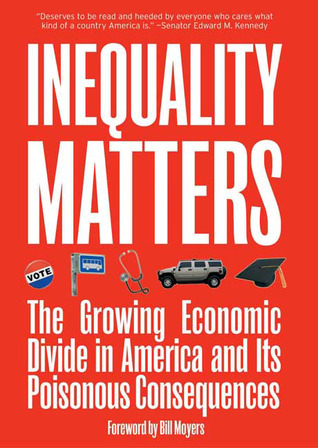
"Inequality Matters: The Growing Economic Divide in America and Its Poisonous Consequences" meticulously examines the alarming rise of economic inequality in the United States. James Lardner delves into the structural changes, policy decisions, and societal shifts that have widened the gap between the rich and the poor, exploring the detrimental impacts this disparity has on social mobility, health outcomes, democratic institutions, and overall national well-being. It's a clear-eyed exploration of how economic stratification erodes the foundations of a just and prosperous society.
This book shares significant thematic ground with Paul Krugman’s "The Conscience of a Liberal." Both works are deeply concerned with the erosion of the American middle class and the political and economic forces that have driven increasing inequality since the post-war era. They both argue passionately for a more equitable society, grounded in social democratic principles and a strong social safety net, as essential for a healthy democracy and economy.
Individuals interested in understanding the root causes and far-reaching effects of economic inequality will find this book particularly insightful. It offers a comprehensive, accessible analysis of a pressing contemporary issue, providing historical context, economic data, and compelling arguments about the urgent need for addressing wealth disparities. Its exploration of the "poisonous consequences" highlights the stakes involved, making a powerful case for engagement and action.
Inequality Matters: The Growing Economic Divide in America and Its Poisonous Consequences
"Inequality Matters: The Growing Economic Divide in America and Its Poisonous Consequences" meticulously examines the alarming rise of economic inequality in the United States. James Lardner delves into the structural changes, policy decisions, and societal shifts that have widened the gap between the rich and the poor, exploring the detrimental impacts this disparity has on social mobility, health outcomes, democratic institutions, and overall national well-being. It's a clear-eyed exploration of how economic stratification erodes the foundations of a just and prosperous society.
This book shares significant thematic ground with Paul Krugman’s "The Conscience of a Liberal." Both works are deeply concerned with the erosion of the American middle class and the political and economic forces that have driven increasing inequality since the post-war era. They both argue passionately for a more equitable society, grounded in social democratic principles and a strong social safety net, as essential for a healthy democracy and economy.
Individuals interested in understanding the root causes and far-reaching effects of economic inequality will find this book particularly insightful. It offers a comprehensive, accessible analysis of a pressing contemporary issue, providing historical context, economic data, and compelling arguments about the urgent need for addressing wealth disparities. Its exploration of the "poisonous consequences" highlights the stakes involved, making a powerful case for engagement and action.
One Market Under God: Extreme Capitalism, Market Populism, and the End of Economic Democracy

"One Market Under God" dissects the late 20th-century phenomenon of "market populism," arguing that it disguised extreme capitalism's true agenda. Thomas Frank reveals how corporate power and deregulation were sold to the public as liberating forces that championed the common person against "elites," ultimately undermining economic democracy and widening inequality. He meticulously traces this ideological marketing campaign, exposing its roots and its profound impact on American society.
Both "One Market Under God" and "The Conscience of a Liberal" rigorously critique the conservative shift in American politics and economics, particularly regarding the role of government and market forces. Each book challenges the prevailing narratives that promoted deregulation and reduced social safety nets, exposing the underlying power dynamics and the detrimental effects on the working and middle classes. They share a commitment to re-examining progressive ideals and advocating for policies that foster greater economic equity.
This book offers a compelling historical and ideological framework for understanding the erosion of economic democracy. It provides a crucial lens through which to analyze contemporary debates about wealth distribution, corporate influence, and the very nature of American populism. Its insights are invaluable for anyone seeking to comprehend the political and economic trajectory that has shaped modern society and sparked current movements for change.
One Market Under God: Extreme Capitalism, Market Populism, and the End of Economic Democracy
"One Market Under God" dissects the late 20th-century phenomenon of "market populism," arguing that it disguised extreme capitalism's true agenda. Thomas Frank reveals how corporate power and deregulation were sold to the public as liberating forces that championed the common person against "elites," ultimately undermining economic democracy and widening inequality. He meticulously traces this ideological marketing campaign, exposing its roots and its profound impact on American society.
Both "One Market Under God" and "The Conscience of a Liberal" rigorously critique the conservative shift in American politics and economics, particularly regarding the role of government and market forces. Each book challenges the prevailing narratives that promoted deregulation and reduced social safety nets, exposing the underlying power dynamics and the detrimental effects on the working and middle classes. They share a commitment to re-examining progressive ideals and advocating for policies that foster greater economic equity.
This book offers a compelling historical and ideological framework for understanding the erosion of economic democracy. It provides a crucial lens through which to analyze contemporary debates about wealth distribution, corporate influence, and the very nature of American populism. Its insights are invaluable for anyone seeking to comprehend the political and economic trajectory that has shaped modern society and sparked current movements for change.
Economic Facts and Fallacies
Thomas Sowell's "Economic Facts and Fallacies" dismantles common economic misconceptions and often politically charged narratives. Sowell, a distinguished economist, scrutinizes widely held beliefs about income disparities, racial differences, urban issues, and academic performance, offering rigorous, data-driven counter-arguments. He emphasizes the distinction between genuine economic principles and emotional or ideological appeals, encouraging a clearer, more rational understanding of complex societal problems.
This book shares a fundamental similarity with Krugman's "The Conscience of a Liberal" in its aspiration to challenge prevailing orthodoxies and influence public discourse on economic and social policy. Both authors leverage their expertise to critically examine commonly accepted ideas, advocating for a particular lens through which to interpret and address societal challenges, albeit from different ideological standpoints. They engage directly with what they perceive as fallacious thinking within their respective political spheres.
This book will appeal to those seeking a robust intellectual challenge to conventional wisdom and a deeper understanding of economic realities. Its value lies in its systematic deconstruction of prevalent fallacies, offering a sophisticated framework for analyzing policy debates and their real-world consequences. It provides ample intellectual ammunition for anyone interested in economics, public policy, or the art of critical thinking.
Economic Facts and Fallacies
Thomas Sowell's "Economic Facts and Fallacies" dismantles common economic misconceptions and often politically charged narratives. Sowell, a distinguished economist, scrutinizes widely held beliefs about income disparities, racial differences, urban issues, and academic performance, offering rigorous, data-driven counter-arguments. He emphasizes the distinction between genuine economic principles and emotional or ideological appeals, encouraging a clearer, more rational understanding of complex societal problems.
This book shares a fundamental similarity with Krugman's "The Conscience of a Liberal" in its aspiration to challenge prevailing orthodoxies and influence public discourse on economic and social policy. Both authors leverage their expertise to critically examine commonly accepted ideas, advocating for a particular lens through which to interpret and address societal challenges, albeit from different ideological standpoints. They engage directly with what they perceive as fallacious thinking within their respective political spheres.
This book will appeal to those seeking a robust intellectual challenge to conventional wisdom and a deeper understanding of economic realities. Its value lies in its systematic deconstruction of prevalent fallacies, offering a sophisticated framework for analyzing policy debates and their real-world consequences. It provides ample intellectual ammunition for anyone interested in economics, public policy, or the art of critical thinking.
End the Fed

Ron Paul's "End the Fed" is a fervent critique of the Federal Reserve System, arguing for its abolition. Paul contends that the Fed's centralized control over monetary policy is unconstitutional, inherently unstable, and a primary cause of economic booms and busts, inflation, and growing national debt. He advocates for a return to a sound money system, often implying a gold standard, and a free market approach to banking, believing this would foster greater economic liberty and stability.
Despite their differing economic ideologies, "End the Fed" shares a core similarity with "The Conscience of a Liberal": both actively challenge established economic and political structures. Krugman critiques the erosion of New Deal liberalism and rising inequality, advocating for government intervention to correct market failures, while Paul critiques the government-backed institution of the Fed, advocating for its removal to unleash free market forces. Both manifest a deep concern for societal well-being and propose radical shifts in policy to achieve their visions of a more just and prosperous society.
This book offers a compelling and passionate argument for a completely different approach to monetary policy, challenging conventional wisdom. It provides a historical perspective on the Federal Reserve and forcefully articulates a libertarian economic viewpoint, inviting critical reflection on the role of central banks and government in the economy. This perspective can provoke thoughtful engagement with fundamental questions about economic freedom, government power, and the stability of financial systems.
End the Fed
Ron Paul's "End the Fed" is a fervent critique of the Federal Reserve System, arguing for its abolition. Paul contends that the Fed's centralized control over monetary policy is unconstitutional, inherently unstable, and a primary cause of economic booms and busts, inflation, and growing national debt. He advocates for a return to a sound money system, often implying a gold standard, and a free market approach to banking, believing this would foster greater economic liberty and stability.
Despite their differing economic ideologies, "End the Fed" shares a core similarity with "The Conscience of a Liberal": both actively challenge established economic and political structures. Krugman critiques the erosion of New Deal liberalism and rising inequality, advocating for government intervention to correct market failures, while Paul critiques the government-backed institution of the Fed, advocating for its removal to unleash free market forces. Both manifest a deep concern for societal well-being and propose radical shifts in policy to achieve their visions of a more just and prosperous society.
This book offers a compelling and passionate argument for a completely different approach to monetary policy, challenging conventional wisdom. It provides a historical perspective on the Federal Reserve and forcefully articulates a libertarian economic viewpoint, inviting critical reflection on the role of central banks and government in the economy. This perspective can provoke thoughtful engagement with fundamental questions about economic freedom, government power, and the stability of financial systems.
The Clash of Economic Ideas

"The Clash of Economic Ideas" by Lawrence H. White explores the intellectual battles that have shaped economic thought, particularly focusing on the contrasting ideologies of the Austrian and Chicago schools of economics. It delves into the historical context and foundational principles behind arguments for and against government intervention, central banking, and free markets, examining how these ideas influenced policy and public discourse from the 1930s onwards.
This book shares thematic DNA with "The Conscience of a Liberal" by Paul Krugman in its dedication to dissecting major economic debates and their societal implications. Both authors, though from different ideological standpoints, are committed to explaining complex economic arguments to a broader audience, emphasizing the intellectual origins and practical consequences of competing economic philosophies. Where Krugman often champions a more interventionist liberalism, White meticulously unpacks the historical arguments for less government involvement.
Those interested in understanding the philosophical underpinnings of contemporary economic policy will find this book particularly illuminating. It offers a sophisticated yet accessible historical account of how different economic theories have vied for dominance, providing essential context for appreciating the ongoing debates about economic freedom, market regulation, and the role of government. Its value lies in offering a clear framework for comprehending the profound impact of intellectual history on our present-day economic landscape.
The Clash of Economic Ideas
"The Clash of Economic Ideas" by Lawrence H. White explores the intellectual battles that have shaped economic thought, particularly focusing on the contrasting ideologies of the Austrian and Chicago schools of economics. It delves into the historical context and foundational principles behind arguments for and against government intervention, central banking, and free markets, examining how these ideas influenced policy and public discourse from the 1930s onwards.
This book shares thematic DNA with "The Conscience of a Liberal" by Paul Krugman in its dedication to dissecting major economic debates and their societal implications. Both authors, though from different ideological standpoints, are committed to explaining complex economic arguments to a broader audience, emphasizing the intellectual origins and practical consequences of competing economic philosophies. Where Krugman often champions a more interventionist liberalism, White meticulously unpacks the historical arguments for less government involvement.
Those interested in understanding the philosophical underpinnings of contemporary economic policy will find this book particularly illuminating. It offers a sophisticated yet accessible historical account of how different economic theories have vied for dominance, providing essential context for appreciating the ongoing debates about economic freedom, market regulation, and the role of government. Its value lies in offering a clear framework for comprehending the profound impact of intellectual history on our present-day economic landscape.
Black Rednecks and White Liberals

Thomas Sowell's "Black Rednecks and White Liberals" is a collection of essays that meticulously examines the historical and cultural origins of various social pathologies and economic disparities. Sowell challenges conventional wisdom, tracing the roots of certain behaviors and attitudes among black Americans, for instance, to influences predating slavery, and critically analyzing the role and impact of "white liberals" across different historical contexts. He emphasizes the importance of empirical data and rational analysis over emotional rhetoric in understanding complex societal issues.
This book shares common ground with Paul Krugman’s “The Conscience of a Liberal” through their shared commitment to dissecting and reinterpreting historical narratives to understand present-day political and economic realities. Both authors are incisive public intellectuals who challenge prevailing orthodoxies within their respective ideological frameworks, employing historical context to make arguments about societal structure and policy. They both use detailed argumentation to advocate for a specific understanding of American society and its challenges.
The book offers a rare opportunity for readers to engage with deeply unconventional yet rigorously argued perspectives on race, culture, and politics. Its value lies in its unflinching dedication to historical accuracy and its willingness to provoke thought by questioning widely accepted explanations. It provides a powerful analytical framework, encouraging a nuanced understanding of systemic issues that transcends simplistic explanations, thus enriching any thoughtful reader's perspective.
Black Rednecks and White Liberals
Thomas Sowell's "Black Rednecks and White Liberals" is a collection of essays that meticulously examines the historical and cultural origins of various social pathologies and economic disparities. Sowell challenges conventional wisdom, tracing the roots of certain behaviors and attitudes among black Americans, for instance, to influences predating slavery, and critically analyzing the role and impact of "white liberals" across different historical contexts. He emphasizes the importance of empirical data and rational analysis over emotional rhetoric in understanding complex societal issues.
This book shares common ground with Paul Krugman’s “The Conscience of a Liberal” through their shared commitment to dissecting and reinterpreting historical narratives to understand present-day political and economic realities. Both authors are incisive public intellectuals who challenge prevailing orthodoxies within their respective ideological frameworks, employing historical context to make arguments about societal structure and policy. They both use detailed argumentation to advocate for a specific understanding of American society and its challenges.
The book offers a rare opportunity for readers to engage with deeply unconventional yet rigorously argued perspectives on race, culture, and politics. Its value lies in its unflinching dedication to historical accuracy and its willingness to provoke thought by questioning widely accepted explanations. It provides a powerful analytical framework, encouraging a nuanced understanding of systemic issues that transcends simplistic explanations, thus enriching any thoughtful reader's perspective.
Economics in America: An Immigrant Economist Explores the Land of Inequality
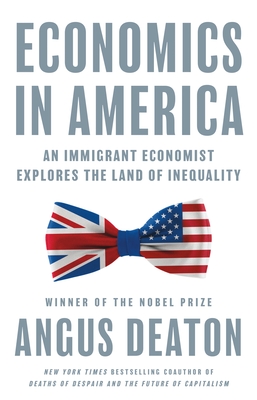
Angus Deaton's "Economics in America" offers a seasoned immigrant economist's perspective on the deep-seated inequalities plaguing the United States. He examines how economic theory and policy decisions have shaped American society, often exacerbating disparities in wealth, health, and opportunity. Deaton critiques conventional economic approaches, providing historical context and cross-country comparisons to illuminate the systemic roots of these issues.
This book shares thematic DNA with Paul Krugman's "The Conscience of a Liberal" by critically analyzing economic systems and their social consequences. Both authors, respected economists, move beyond purely technical discussions to expose how economic policies are inextricably linked to social justice and the well-being of the broader population. Their works highlight how prevailing economic narratives can obscure or justify inequalities.
Those seeking a rigorous yet accessible exploration of American inequality will find this book particularly insightful. Deaton's unique vantage point as an outsider-insider, combined with his Nobel laureate expertise, provides a nuanced understanding of the economic forces at play. It offers valuable perspectives for anyone interested in why the American dream remains elusive for so many and what potential paths exist for a more equitable future.
Economics in America: An Immigrant Economist Explores the Land of Inequality
Angus Deaton's "Economics in America" offers a seasoned immigrant economist's perspective on the deep-seated inequalities plaguing the United States. He examines how economic theory and policy decisions have shaped American society, often exacerbating disparities in wealth, health, and opportunity. Deaton critiques conventional economic approaches, providing historical context and cross-country comparisons to illuminate the systemic roots of these issues.
This book shares thematic DNA with Paul Krugman's "The Conscience of a Liberal" by critically analyzing economic systems and their social consequences. Both authors, respected economists, move beyond purely technical discussions to expose how economic policies are inextricably linked to social justice and the well-being of the broader population. Their works highlight how prevailing economic narratives can obscure or justify inequalities.
Those seeking a rigorous yet accessible exploration of American inequality will find this book particularly insightful. Deaton's unique vantage point as an outsider-insider, combined with his Nobel laureate expertise, provides a nuanced understanding of the economic forces at play. It offers valuable perspectives for anyone interested in why the American dream remains elusive for so many and what potential paths exist for a more equitable future.
What's the Matter with Kansas? How Conservatives Won the Heart of America

*What's the Matter with Kansas?* explores the paradoxical phenomenon of working-class Americans consistently voting against their apparent economic interests, often supporting conservative politicians who advocate policies that seem to benefit corporations and the wealthy. Thomas Frank argues that cultural issues, rather than economic ones, have become the primary drivers of political allegiance for many in the heartland, diverting attention from class-based grievances.
This book shares a fundamental concern with *The Conscience of a Liberal*: both critically examine the decline of the Democratic Party's influence among working-class voters and attribute this shift, in part, to the Republican party's strategic manipulation of cultural anxieties and social issues. Both authors highlight how economic disparities are often obscured by a focus on "moral" values, leading to a political landscape where conservative ideology triumphs even when it seemingly contradicts the material well-being of its constituents.
Anyone seeking to understand the enduring appeal of conservatism in America, particularly among blue-collar populations, will find this a deeply insightful read. It provides a compelling framework for analyzing the disconnect between economic reality and voting patterns, offering a crucial lens through which to comprehend contemporary American politics and the challenges liberal movements face in reconnecting with this demographic.
What's the Matter with Kansas? How Conservatives Won the Heart of America
*What's the Matter with Kansas?* explores the paradoxical phenomenon of working-class Americans consistently voting against their apparent economic interests, often supporting conservative politicians who advocate policies that seem to benefit corporations and the wealthy. Thomas Frank argues that cultural issues, rather than economic ones, have become the primary drivers of political allegiance for many in the heartland, diverting attention from class-based grievances.
This book shares a fundamental concern with *The Conscience of a Liberal*: both critically examine the decline of the Democratic Party's influence among working-class voters and attribute this shift, in part, to the Republican party's strategic manipulation of cultural anxieties and social issues. Both authors highlight how economic disparities are often obscured by a focus on "moral" values, leading to a political landscape where conservative ideology triumphs even when it seemingly contradicts the material well-being of its constituents.
Anyone seeking to understand the enduring appeal of conservatism in America, particularly among blue-collar populations, will find this a deeply insightful read. It provides a compelling framework for analyzing the disconnect between economic reality and voting patterns, offering a crucial lens through which to comprehend contemporary American politics and the challenges liberal movements face in reconnecting with this demographic.
Why You Should Be a Socialist

"Why You Should Be a Socialist" by Nathan J. Robinson advocates for socialist principles not as a radical ideology, but as a pragmatic approach to societal problems. Robinson dissects common misconceptions about socialism, presenting a case for policies like universal healthcare, free education, and workers' rights as rational solutions to inequality and economic instability found within capitalist systems. He builds a compelling argument for fundamental societal restructuring to prioritize collective well-being over individual accumulation.
This book shares significant thematic overlap with Paul Krugman's "The Conscience of a Liberal" in its analytical approach to economic and social issues, advocating for robust governmental intervention to address market failures and social injustices. Both authors champion a more equitable society through progressive policies, challenging the notion of unfettered capitalism as inherently beneficial. They share a commitment to using evidence and reason to dismantle arguments against social welfare and greater economic equality.
The book will appeal to those seeking a contemporary, articulate defense of socialist ideals. It offers a fresh perspective for individuals disillusioned with current economic disparities and interested in alternative frameworks. Its value lies in providing a clear, accessible entry point into understanding modern socialism and its proposed solutions for a more just and prosperous society.
Why You Should Be a Socialist
"Why You Should Be a Socialist" by Nathan J. Robinson advocates for socialist principles not as a radical ideology, but as a pragmatic approach to societal problems. Robinson dissects common misconceptions about socialism, presenting a case for policies like universal healthcare, free education, and workers' rights as rational solutions to inequality and economic instability found within capitalist systems. He builds a compelling argument for fundamental societal restructuring to prioritize collective well-being over individual accumulation.
This book shares significant thematic overlap with Paul Krugman's "The Conscience of a Liberal" in its analytical approach to economic and social issues, advocating for robust governmental intervention to address market failures and social injustices. Both authors champion a more equitable society through progressive policies, challenging the notion of unfettered capitalism as inherently beneficial. They share a commitment to using evidence and reason to dismantle arguments against social welfare and greater economic equality.
The book will appeal to those seeking a contemporary, articulate defense of socialist ideals. It offers a fresh perspective for individuals disillusioned with current economic disparities and interested in alternative frameworks. Its value lies in providing a clear, accessible entry point into understanding modern socialism and its proposed solutions for a more just and prosperous society.
More Books to Explore
Discover more titles that expand on these ideas and themes.
The Revolution: A Manifesto
Inequality Matters: The Growing Economic Divide in America and Its Poisonous Consequences
One Market Under God: Extreme Capitalism, Market Populism, and the End of Economic Democracy
Economic Facts and Fallacies
End the Fed
The Clash of Economic Ideas