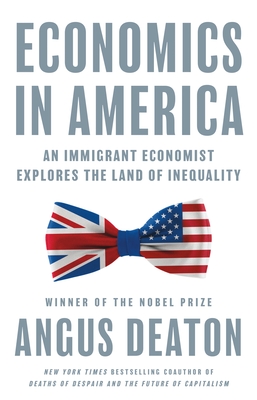
Economics in America: An Immigrant Economist Explores the Land of Inequality
Book Description
Amidst the glittering promise of the American Dream lies a stark reality of deepening inequality and economic strife. Renowned economist Angus Deaton pulls back the curtain, revealing the often invisible forces shaping lives across the nation—from bustling cities to forgotten rural towns. He navigates through data and compelling stories, challenging the systems that dictate wealth and poverty. With each chapter, a gripping exploration unfolds, urging readers to confront the harsh truths of a divided society. Can the land of opportunity find a path toward fairness, or are the disparities destined to widen?
Quick Book Summary
"Economics in America: An Immigrant Economist Explores the Land of Inequality" by Nobel laureate Angus Deaton offers a probing look into how the promise of prosperity has clashed with the reality of widening inequality in the United States. Drawing from both statistical analysis and human stories, Deaton—himself a British immigrant—uses his unique outsider perspective to critique the political and economic systems that drive inequality. He traces the evolution of American capitalism, examines the fading appeal of the American Dream, and investigates how policies have exacerbated disparities, particularly in health, education, and opportunity. Ultimately, Deaton asks whether America can truly live up to its ideals of fairness and mobility, or if persistent structural barriers will deepen its divides.




Summary of Key Ideas
Table of Contents
The Reality Behind the American Dream
Deaton opens with his personal experience as an immigrant who believed in America’s boundless opportunities. However, he quickly uncovers the stark contrast between that optimism and the harsh economic realities many Americans face today. Stories from cities and rural towns illustrate a land where rising productivity no longer translates to inclusive prosperity, and economic mobility is no longer a guarantee. Deaton’s outsider lens allows him to question assumptions that many natives may take for granted, such as the idea that anyone who works hard can succeed.
Roots and Impacts of Economic Inequality
He examines the historical forces and policy choices that have fueled rising inequality. Deaton traces the dismantling of labor protections, changes to tax codes, and the weakening of unions—developments that once supported the middle and working classes. He observes that while America has generated immense wealth, it has also fostered a system where much of that wealth is concentrated among a small elite. This, he argues, is not a natural outcome of globalization or technology, but a result of deliberate policy decisions that favor capital over labor.
The Role of Policy and Institutions
Inequality is manifest not only in incomes but also in vital areas like health and education. Deaton highlights the stark differences in life expectancy and access to quality schooling between the rich and the poor. He draws attention to the opioid crisis, declining life expectancies among certain demographic groups, and the erosion of public goods. These disparities, he asserts, are both symptoms and causes of deep-seated social and political divides, as opportunity becomes more closely tied to one’s social background.
Health and Education Disparities
Deaton explores the influence of institutions—such as political parties, the legal system, and healthcare providers—on economic outcomes. He critiques the role of special interests, lobbying, and regulatory capture in undermining democracy and perpetuating inequality. He stresses how policy, from health insurance design to education funding, shapes who wins and who loses in America. The intersection of economic and political power is revealed as a key driver of persistent inequality.
Paths Toward a Fairer Society
In concluding, Deaton asks what it would take to revitalize the American Dream. He points to reforms in taxation, healthcare, and education, and argues that a renewed commitment to fairness and equal opportunity is possible. Yet, he is realistic about the difficulties of enacting meaningful change in a polarized society. Ultimately, Deaton calls on both citizens and leaders to recognize and confront inequality, warning that the future of American democracy itself may depend on rekindling a more inclusive vision of progress.
Download This Summary
Get a free PDF of this summary instantly — no email required.