10 Books Similar to "The Blank Slate: The Modern Denial of Human Nature"
by Steven Pinker

How the Mind Works

Steven Pinker's "How the Mind Works" offers an extensive exploration of the human mind from a computational and evolutionary perspective. It posits that the mind is a system of organs of computation, designed by natural selection to solve the problems our ancestors faced, explaining everything from vision and language to emotions and social behavior.
This work resonates strongly with "The Blank Slate" because both challenge commonly held assumptions about human nature. "How the Mind Works" provides the detailed scientific underpinning for the innate mental structures and proclivities that "The Blank Slate" argues are often denied. They both highlight the profound influence of evolution on our inherent capabilities and shared human characteristics.
This book will appeal to those curious about the fundamental architecture of thought and behavior. It provides a robust, evidence-based framework for understanding why we think, feel, and act the way we do, offering profound insights into the human condition that are both intellectually stimulating and deeply practical.
How the Mind Works
Steven Pinker's "How the Mind Works" offers an extensive exploration of the human mind from a computational and evolutionary perspective. It posits that the mind is a system of organs of computation, designed by natural selection to solve the problems our ancestors faced, explaining everything from vision and language to emotions and social behavior.
This work resonates strongly with "The Blank Slate" because both challenge commonly held assumptions about human nature. "How the Mind Works" provides the detailed scientific underpinning for the innate mental structures and proclivities that "The Blank Slate" argues are often denied. They both highlight the profound influence of evolution on our inherent capabilities and shared human characteristics.
This book will appeal to those curious about the fundamental architecture of thought and behavior. It provides a robust, evidence-based framework for understanding why we think, feel, and act the way we do, offering profound insights into the human condition that are both intellectually stimulating and deeply practical.
The Language Instinct: How the Mind Creates Language

"The Language Instinct" argues that our capacity for language isn't merely learned, but is a complex, innate ability wired into the human brain. Pinker explores how children acquire grammar effortlessly, the universal principles underlying diverse languages, and how this "instinct" shapes our thought and culture. He debunks myths about language decay and clarifies how scientific understanding of linguistics deepens our appreciation for this fundamental human trait.
This book shares a core intellectual lineage with "The Blank Slate" by challenging the notion that human faculties are purely products of environment and learning. Both works champion the idea of an evolved human nature, countering blank slate theories by presenting evidence for inherent cognitive structures. "The Language Instinct" focuses specifically on language, much as "The Blank Slate" broadly addresses other aspects of human psychology and behavior as having biological underpinnings.
Individuals interested in psychology, linguistics, and the philosophy of mind will find this a fascinating and illuminating read. It offers a profound understanding of one of humanity's most distinguishing features, providing insights into cognitive development and the very structure of human thought. The book's clear, evidence-based arguments offer a compelling re-evaluation of how we understand ourselves and our unique abilities.
The Language Instinct: How the Mind Creates Language
"The Language Instinct" argues that our capacity for language isn't merely learned, but is a complex, innate ability wired into the human brain. Pinker explores how children acquire grammar effortlessly, the universal principles underlying diverse languages, and how this "instinct" shapes our thought and culture. He debunks myths about language decay and clarifies how scientific understanding of linguistics deepens our appreciation for this fundamental human trait.
This book shares a core intellectual lineage with "The Blank Slate" by challenging the notion that human faculties are purely products of environment and learning. Both works champion the idea of an evolved human nature, countering blank slate theories by presenting evidence for inherent cognitive structures. "The Language Instinct" focuses specifically on language, much as "The Blank Slate" broadly addresses other aspects of human psychology and behavior as having biological underpinnings.
Individuals interested in psychology, linguistics, and the philosophy of mind will find this a fascinating and illuminating read. It offers a profound understanding of one of humanity's most distinguishing features, providing insights into cognitive development and the very structure of human thought. The book's clear, evidence-based arguments offer a compelling re-evaluation of how we understand ourselves and our unique abilities.
The Stuff of Thought: Language as a Window into Human Nature

"The Stuff of Thought" delves into how everyday language reveals the intricate workings of the human mind. Pinker explores everything from grammar and politeness to metaphor and slang, showing how the words we choose and the way we structure sentences offer profound insights into our concepts of reality, our emotions, and our social interactions. It's an investigation into the cognitive architecture that underpins communication, dissecting how our innate mental frameworks shape linguistic expression.
This book resonates strongly with "The Blank Slate" because both challenge the notion that the mind is a tabula rasa. While "The Blank Slate" broadly argues against the denial of human nature, "The Stuff of Thought" provides concrete evidence for specific aspects of that nature, using language as its primary lens. Both works demonstrate Pinker’s commitment to understanding the biological and evolutionary roots of human capabilities and behaviors.
This analysis of language will appeal to anyone curious about human cognition and the origins of communication. It offers a fresh perspective on why we speak and think the way we do, illuminating fundamental truths about our shared humanity. Its value lies in demystifying complex linguistic phenomena, offering an accessible yet intellectually rigorous exploration of the mind-language connection.
The Stuff of Thought: Language as a Window into Human Nature
"The Stuff of Thought" delves into how everyday language reveals the intricate workings of the human mind. Pinker explores everything from grammar and politeness to metaphor and slang, showing how the words we choose and the way we structure sentences offer profound insights into our concepts of reality, our emotions, and our social interactions. It's an investigation into the cognitive architecture that underpins communication, dissecting how our innate mental frameworks shape linguistic expression.
This book resonates strongly with "The Blank Slate" because both challenge the notion that the mind is a tabula rasa. While "The Blank Slate" broadly argues against the denial of human nature, "The Stuff of Thought" provides concrete evidence for specific aspects of that nature, using language as its primary lens. Both works demonstrate Pinker’s commitment to understanding the biological and evolutionary roots of human capabilities and behaviors.
This analysis of language will appeal to anyone curious about human cognition and the origins of communication. It offers a fresh perspective on why we speak and think the way we do, illuminating fundamental truths about our shared humanity. Its value lies in demystifying complex linguistic phenomena, offering an accessible yet intellectually rigorous exploration of the mind-language connection.
Nature Via Nurture: Genes, Experience and What Makes Us Human

Matt Ridley's "Nature Via Nurture" explores the intricate interplay between our genes and our experiences, arguing that these two forces are not opposing but deeply entwined in shaping who we become. He dispels the simplistic "nature versus nurture" debate, demonstrating how genetic predispositions are expressed and modified through environmental interaction, and how experience can even alter gene expression. The book illustrates this dynamic through compelling examples from human behavior, psychology, and development.
This book resonates strongly with themes in Steven Pinker's "The Blank Slate," particularly in its challenge to the notion that humans are born as empty vessels shaped solely by culture and upbringing. Both authors contend that a richer understanding of human behavior requires acknowledging our evolved biological underpinnings, advocating for a nuanced view that integrates genetic influence with environmental learning, rather than pitting them against each other.
Anyone interested in the fundamental questions of identity, behavior, and what truly makes us human will find this a fascinating and enlightening read. It offers a sophisticated yet accessible perspective on genetics and development, enriching one’s understanding of individual differences and the complexity of human nature. This book provides a valuable framework for appreciating the inseparable dance between our biology and our life experiences.
Nature Via Nurture: Genes, Experience and What Makes Us Human
Matt Ridley's "Nature Via Nurture" explores the intricate interplay between our genes and our experiences, arguing that these two forces are not opposing but deeply entwined in shaping who we become. He dispels the simplistic "nature versus nurture" debate, demonstrating how genetic predispositions are expressed and modified through environmental interaction, and how experience can even alter gene expression. The book illustrates this dynamic through compelling examples from human behavior, psychology, and development.
This book resonates strongly with themes in Steven Pinker's "The Blank Slate," particularly in its challenge to the notion that humans are born as empty vessels shaped solely by culture and upbringing. Both authors contend that a richer understanding of human behavior requires acknowledging our evolved biological underpinnings, advocating for a nuanced view that integrates genetic influence with environmental learning, rather than pitting them against each other.
Anyone interested in the fundamental questions of identity, behavior, and what truly makes us human will find this a fascinating and enlightening read. It offers a sophisticated yet accessible perspective on genetics and development, enriching one’s understanding of individual differences and the complexity of human nature. This book provides a valuable framework for appreciating the inseparable dance between our biology and our life experiences.
Enlightenment Now: The Case for Reason, Science, Humanism, and Progress

"Enlightenment Now" champions the power of reason, science, humanism, and progress as the foundational pillars for human flourishing. Pinker systematically presents data-driven arguments, demonstrating how these ideals have dramatically improved quality of life across numerous metrics – from health and wealth to peace and happiness – throughout history, offering a robust counter-narrative to prevalent pessimism. It's a forceful advocacy for appreciating the achievements of the Enlightenment and its enduring relevance.
This work resonates strongly with "The Blank Slate" due to their shared commitment to empirically informed perspectives on human nature and society. Both books challenge conventional wisdom and unexamined assumptions, whether it's the denial of innate human tendencies in "The Blank Slate" or the pervasive negativity about the state of the world in "Enlightenment Now." They both use rigorous analysis and scientific evidence to dismantle myths and promote a more accurate understanding of humanity's capabilities and challenges.
This book will appeal to those who appreciate a data-driven defense of reason and a compelling argument for optimism grounded in historical and scientific fact. It offers a refreshing perspective for anyone feeling overwhelmed by negative news cycles or seeking intellectual scaffolding for a more hopeful worldview. It provides not just an argument, but a comprehensive intellectual framework for understanding progress and its underlying drivers.
Enlightenment Now: The Case for Reason, Science, Humanism, and Progress
"Enlightenment Now" champions the power of reason, science, humanism, and progress as the foundational pillars for human flourishing. Pinker systematically presents data-driven arguments, demonstrating how these ideals have dramatically improved quality of life across numerous metrics – from health and wealth to peace and happiness – throughout history, offering a robust counter-narrative to prevalent pessimism. It's a forceful advocacy for appreciating the achievements of the Enlightenment and its enduring relevance.
This work resonates strongly with "The Blank Slate" due to their shared commitment to empirically informed perspectives on human nature and society. Both books challenge conventional wisdom and unexamined assumptions, whether it's the denial of innate human tendencies in "The Blank Slate" or the pervasive negativity about the state of the world in "Enlightenment Now." They both use rigorous analysis and scientific evidence to dismantle myths and promote a more accurate understanding of humanity's capabilities and challenges.
This book will appeal to those who appreciate a data-driven defense of reason and a compelling argument for optimism grounded in historical and scientific fact. It offers a refreshing perspective for anyone feeling overwhelmed by negative news cycles or seeking intellectual scaffolding for a more hopeful worldview. It provides not just an argument, but a comprehensive intellectual framework for understanding progress and its underlying drivers.
The Better Angels of Our Nature: Why Violence Has Declined

“The Better Angels of Our Nature” meticulously documents the startling, long-term decline of violence across human history, from tribal warfare to everyday crime. Pinker marshals vast quantities of data from diverse fields, demonstrating how various forces, including reason, commerce, and the rise of effective governance, have systematically reduced bloodshed and cruelty, painting a historically optimistic, yet empirically grounded portrait of human progress.
This work resonates with "The Blank Slate" by reinforcing Pinker's core argument regarding human nature. Both books challenge romanticized notions – the former, the idea of an innately peaceful savage, the latter, the blank slate itself. "Better Angels" implicitly argues that while humans possess capacities for violence, they also possess faculties for empathy and self-control, and crucially, are shaped by evolving social and cognitive environments, a sophisticated interplay directly relevant to the nature-nurture debate explored in "The Blank Slate."
The profound historical perspective offered in "The Better Angels of Our Nature" provides a powerful antidote to contemporary pessimism. It offers rigorous evidence that humanity is capable of improvement, fostering a nuanced understanding of social change and progress. This insightful analysis encourages critical thinking about societal development and the complex interplay of human psychology and historical trends, offering valuable context for understanding our present and future.
The Better Angels of Our Nature: Why Violence Has Declined
“The Better Angels of Our Nature” meticulously documents the startling, long-term decline of violence across human history, from tribal warfare to everyday crime. Pinker marshals vast quantities of data from diverse fields, demonstrating how various forces, including reason, commerce, and the rise of effective governance, have systematically reduced bloodshed and cruelty, painting a historically optimistic, yet empirically grounded portrait of human progress.
This work resonates with "The Blank Slate" by reinforcing Pinker's core argument regarding human nature. Both books challenge romanticized notions – the former, the idea of an innately peaceful savage, the latter, the blank slate itself. "Better Angels" implicitly argues that while humans possess capacities for violence, they also possess faculties for empathy and self-control, and crucially, are shaped by evolving social and cognitive environments, a sophisticated interplay directly relevant to the nature-nurture debate explored in "The Blank Slate."
The profound historical perspective offered in "The Better Angels of Our Nature" provides a powerful antidote to contemporary pessimism. It offers rigorous evidence that humanity is capable of improvement, fostering a nuanced understanding of social change and progress. This insightful analysis encourages critical thinking about societal development and the complex interplay of human psychology and historical trends, offering valuable context for understanding our present and future.
On Human Nature

Edward O. Wilson's *On Human Nature* explores the biological roots of human behavior and culture, arguing that our species' complex social structures, ethics, and even our capacity for love and aggression are profoundly shaped by evolutionary forces. It delves into how genetics and natural selection have predisposed us with certain traits, challenging the notion of humans as blank slates solely molded by environment.
This aligns closely with Steven Pinker's *The Blank Slate* by directly confronting the idea that human minds are infinitely malleable, free from innate predispositions. Both books champion the scientific understanding of human nature, pushing back against prevailing intellectual trends that downplay or deny the influence of biology on our thoughts, feelings, and actions. They share a core argument: acknowledging our evolutionary heritage is crucial for understanding ourselves and society.
Anyone interested in a deeper, scientifically grounded understanding of human behavior, morality, and society will find this book immensely rewarding. It offers compelling insights into why we are the way we are, providing a robust framework for contemplating fundamental questions about ethics, politics, and the future of our species.
On Human Nature
Edward O. Wilson's *On Human Nature* explores the biological roots of human behavior and culture, arguing that our species' complex social structures, ethics, and even our capacity for love and aggression are profoundly shaped by evolutionary forces. It delves into how genetics and natural selection have predisposed us with certain traits, challenging the notion of humans as blank slates solely molded by environment.
This aligns closely with Steven Pinker's *The Blank Slate* by directly confronting the idea that human minds are infinitely malleable, free from innate predispositions. Both books champion the scientific understanding of human nature, pushing back against prevailing intellectual trends that downplay or deny the influence of biology on our thoughts, feelings, and actions. They share a core argument: acknowledging our evolutionary heritage is crucial for understanding ourselves and society.
Anyone interested in a deeper, scientifically grounded understanding of human behavior, morality, and society will find this book immensely rewarding. It offers compelling insights into why we are the way we are, providing a robust framework for contemplating fundamental questions about ethics, politics, and the future of our species.
Darwin's Dangerous Idea: Evolution and the Meanings of Life
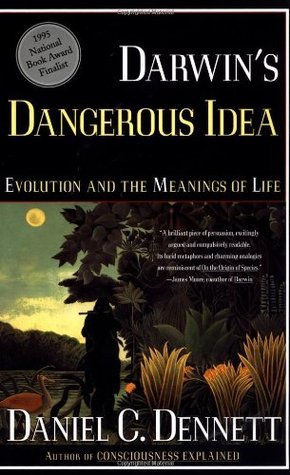
Daniel Dennett's "Darwin's Dangerous Idea" explores the profound implications of Darwinian evolution, not just for biology, but for our understanding of consciousness, design, meaning, and even religion. Dennett argues that natural selection is a powerful "universal acid" that permeates and transforms our conventional notions, offering a complete, mechanistic explanation for the complexity of life without recourse to supernatural intervention or intelligent design. He meticulously deconstructs misconceptions about evolution, advocating for a rigorous, scientific worldview.
Both "Darwin's Dangerous Idea" and Pinker's "The Blank Slate" challenge deeply ingrained, comforting but ultimately unsupported beliefs about humanity. While Pinker tackles the notion of humans as infinitely malleable, Dennett confronts the resistance to a purely naturalistic account of life's origins and purpose. Both authors champion a science-driven understanding of fundamental phenomena, urging readers to embrace the uncomfortable truths revealed by empirical inquiry over intuitive, yet flawed, assumptions. They share a commitment to rigorous rationalism in understanding human nature and existence.
This book will appeal to those seeking a comprehensive, intellectually challenging exploration of evolution's pervasive influence. Its value lies in its unflinching analysis of how Darwin's theory reshapes our philosophical and existential frameworks, offering a coherent worldview grounded in science. It provides a robust defense of materialism and naturalism, empowering individuals to critically examine their own beliefs about purpose, design, and the very essence of life.
Darwin's Dangerous Idea: Evolution and the Meanings of Life
Daniel Dennett's "Darwin's Dangerous Idea" explores the profound implications of Darwinian evolution, not just for biology, but for our understanding of consciousness, design, meaning, and even religion. Dennett argues that natural selection is a powerful "universal acid" that permeates and transforms our conventional notions, offering a complete, mechanistic explanation for the complexity of life without recourse to supernatural intervention or intelligent design. He meticulously deconstructs misconceptions about evolution, advocating for a rigorous, scientific worldview.
Both "Darwin's Dangerous Idea" and Pinker's "The Blank Slate" challenge deeply ingrained, comforting but ultimately unsupported beliefs about humanity. While Pinker tackles the notion of humans as infinitely malleable, Dennett confronts the resistance to a purely naturalistic account of life's origins and purpose. Both authors champion a science-driven understanding of fundamental phenomena, urging readers to embrace the uncomfortable truths revealed by empirical inquiry over intuitive, yet flawed, assumptions. They share a commitment to rigorous rationalism in understanding human nature and existence.
This book will appeal to those seeking a comprehensive, intellectually challenging exploration of evolution's pervasive influence. Its value lies in its unflinching analysis of how Darwin's theory reshapes our philosophical and existential frameworks, offering a coherent worldview grounded in science. It provides a robust defense of materialism and naturalism, empowering individuals to critically examine their own beliefs about purpose, design, and the very essence of life.
Delusions of Gender: How Our Minds, Society, and Neurosexism Create Difference
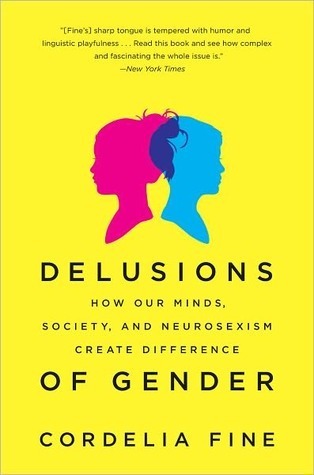
"Delusions of Gender" critiques the pervasive idea that fundamental, innate brain differences explain gender disparities. Cordelia Fine meticulously dissects scientific studies and popular assertions about male and female brains, exposing how biases, cultural assumptions, and "neurosexism" often shape research questions, interpretations, and ultimately, our understanding of gender. She argues that many purported biological differences are either overstated, misinterpreted, or products of social shaping rather than inherent predispositions.
This book resonates with "The Blank Slate" because both challenge prevalent beliefs about human nature and the origins of behavior. Just as Pinker debunks the myth of a mind entirely unshaped by evolution, Fine dismantles the notion of gender as solely determined by an unalterable biological architecture. Both authors champion a nuanced perspective that acknowledges the interplay of biology and environment, and critically examine how ideological stances can distort scientific understanding.
Individuals interested in psychology, sociology, and gender studies will find this book highly illuminating. It offers a powerful framework for critically evaluating claims about sex differences, fostering a deeper understanding of how societal expectations and scientific inquiry can intertwine to create or perpetuate inaccurate narratives. Its rigorous analysis and clear arguments make it a valuable resource for anyone seeking to unravel the complexities of gender and human behavior.
Delusions of Gender: How Our Minds, Society, and Neurosexism Create Difference
"Delusions of Gender" critiques the pervasive idea that fundamental, innate brain differences explain gender disparities. Cordelia Fine meticulously dissects scientific studies and popular assertions about male and female brains, exposing how biases, cultural assumptions, and "neurosexism" often shape research questions, interpretations, and ultimately, our understanding of gender. She argues that many purported biological differences are either overstated, misinterpreted, or products of social shaping rather than inherent predispositions.
This book resonates with "The Blank Slate" because both challenge prevalent beliefs about human nature and the origins of behavior. Just as Pinker debunks the myth of a mind entirely unshaped by evolution, Fine dismantles the notion of gender as solely determined by an unalterable biological architecture. Both authors champion a nuanced perspective that acknowledges the interplay of biology and environment, and critically examine how ideological stances can distort scientific understanding.
Individuals interested in psychology, sociology, and gender studies will find this book highly illuminating. It offers a powerful framework for critically evaluating claims about sex differences, fostering a deeper understanding of how societal expectations and scientific inquiry can intertwine to create or perpetuate inaccurate narratives. Its rigorous analysis and clear arguments make it a valuable resource for anyone seeking to unravel the complexities of gender and human behavior.
Behave: The Biology of Humans at Our Best and Worst
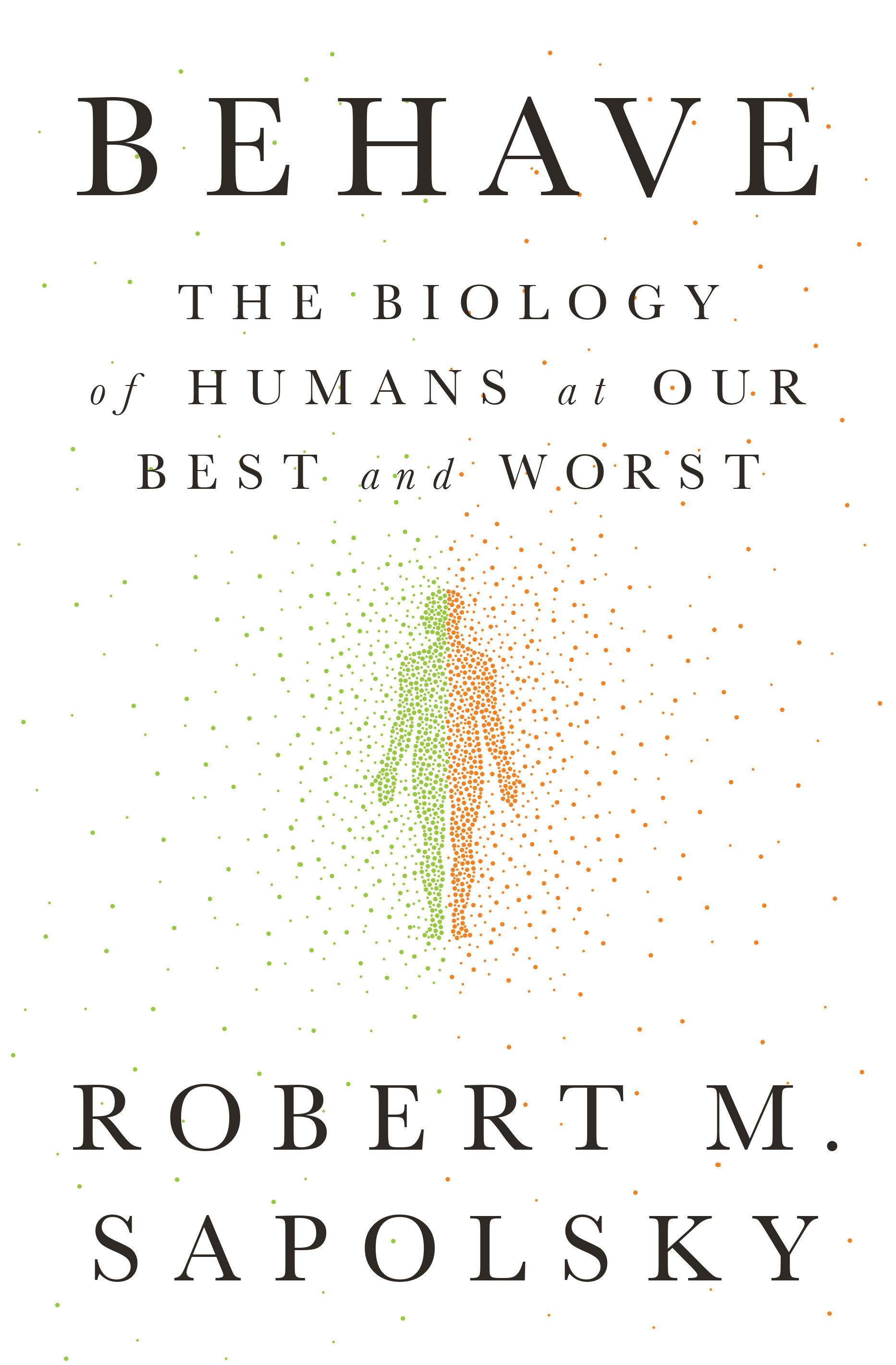
"Behave: The Biology of Humans at Our Best and Worst" meticulously dissects human actions, exploring the intricate web of biological influences that shape our decisions, from the milliseconds before an act to the evolutionary pressures spanning millennia. Sapolsky guides us through neuroscience, endocrinology, genetics, and ecology to understand why we do what we do, ranging from acts of profound altruism to horrifying aggression. It’s a comprehensive journey into the biological underpinnings of behavior, refusing simplistic answers in favor of nuanced, multi-layered explanations.
This work resonates with "The Blank Slate" due to its shared commitment to exploring the biological roots of human nature. Both books challenge the notion that humans are infinitely malleable, entirely products of their environment or culture. Pinker debunks the idea of a "blank slate," arguing for an evolved human nature, and Sapolsky provides the granular, scientific detail for *how* that nature manifests in behavior, often emphasizing the interplay between innate predispositions and environmental factors. Both authors champion a scientifically informed understanding of humanity.
This book offers profound insights into human motivations and societal structures, enhancing one's understanding of ethics, justice, and the very essence of personhood. Its rigorous yet accessible exploration of complex scientific topics empowers a more informed perspective on everyday interactions and global conflicts. It encourages a critical, evidence-based approach to understanding ourselves and others, providing a valuable framework for navigating the complexities of human existence.
Behave: The Biology of Humans at Our Best and Worst
"Behave: The Biology of Humans at Our Best and Worst" meticulously dissects human actions, exploring the intricate web of biological influences that shape our decisions, from the milliseconds before an act to the evolutionary pressures spanning millennia. Sapolsky guides us through neuroscience, endocrinology, genetics, and ecology to understand why we do what we do, ranging from acts of profound altruism to horrifying aggression. It’s a comprehensive journey into the biological underpinnings of behavior, refusing simplistic answers in favor of nuanced, multi-layered explanations.
This work resonates with "The Blank Slate" due to its shared commitment to exploring the biological roots of human nature. Both books challenge the notion that humans are infinitely malleable, entirely products of their environment or culture. Pinker debunks the idea of a "blank slate," arguing for an evolved human nature, and Sapolsky provides the granular, scientific detail for *how* that nature manifests in behavior, often emphasizing the interplay between innate predispositions and environmental factors. Both authors champion a scientifically informed understanding of humanity.
This book offers profound insights into human motivations and societal structures, enhancing one's understanding of ethics, justice, and the very essence of personhood. Its rigorous yet accessible exploration of complex scientific topics empowers a more informed perspective on everyday interactions and global conflicts. It encourages a critical, evidence-based approach to understanding ourselves and others, providing a valuable framework for navigating the complexities of human existence.
More Books to Explore
Discover more titles that expand on these ideas and themes.
How the Mind Works
The Language Instinct: How the Mind Creates Language
The Stuff of Thought: Language as a Window into Human Nature
Nature Via Nurture: Genes, Experience and What Makes Us Human
Enlightenment Now: The Case for Reason, Science, Humanism, and Progress
The Better Angels of Our Nature: Why Violence Has Declined