10 Books Similar to "A Wicked Company: The Forgotten Radicalism of the European Enlightenment"
by Philipp Blom

Radical Enlightenment: Philosophy and the Making of Modernity 1650-1750
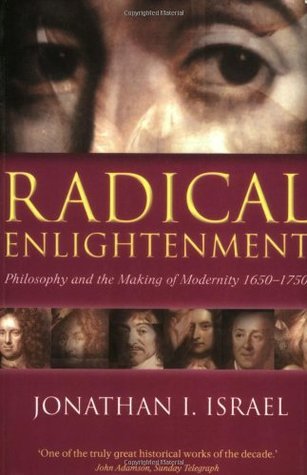
Jonathan Israel's "Radical Enlightenment" painstakingly reconstructs a specific, potent current within the Enlightenment, arguing that a distinct philosophical movement—often associated with Spinoza and his followers—championed secularism, democracy, and individual liberty far more explicitly and earlier than typically recognized. It portrays this "Radical Enlightenment" as the true intellectual wellspring of modernity, often operating underground and challenging established religious and political orthodoxies directly.
This book resonates strongly with "A Wicked Company" because both works champion the idea of a neglected, more extreme, and often suppressed strain of Enlightenment thought. Both challenge the conventional narrative of a largely moderate or conservative Enlightenment, unearthing figures and ideas that pushed boundaries further than frequently acknowledged. Both spotlight the significant, though sometimes hidden, impact of these radical positions on ensuing societal transformations.
This exploration will captivate those interested in intellectual history, political philosophy, and the origins of modern thought. Its rigorous scholarship and provocative thesis offer a re-evaluation of a pivotal historical period, providing a deeper understanding of the foundational ideas that shaped contemporary society and challenging established historical interpretations. The detailed analysis illuminates the enduring power and controversy of radical ideas.
Radical Enlightenment: Philosophy and the Making of Modernity 1650-1750
Jonathan Israel's "Radical Enlightenment" painstakingly reconstructs a specific, potent current within the Enlightenment, arguing that a distinct philosophical movement—often associated with Spinoza and his followers—championed secularism, democracy, and individual liberty far more explicitly and earlier than typically recognized. It portrays this "Radical Enlightenment" as the true intellectual wellspring of modernity, often operating underground and challenging established religious and political orthodoxies directly.
This book resonates strongly with "A Wicked Company" because both works champion the idea of a neglected, more extreme, and often suppressed strain of Enlightenment thought. Both challenge the conventional narrative of a largely moderate or conservative Enlightenment, unearthing figures and ideas that pushed boundaries further than frequently acknowledged. Both spotlight the significant, though sometimes hidden, impact of these radical positions on ensuing societal transformations.
This exploration will captivate those interested in intellectual history, political philosophy, and the origins of modern thought. Its rigorous scholarship and provocative thesis offer a re-evaluation of a pivotal historical period, providing a deeper understanding of the foundational ideas that shaped contemporary society and challenging established historical interpretations. The detailed analysis illuminates the enduring power and controversy of radical ideas.
Enlightenment: Reason, Tolerance, and Humanity
"Enlightenment: Reason, Tolerance, and Humanity" offers a comprehensive exploration of the philosophical tenets and historical impact of the Enlightenment. It delves into the movement's core ideals—the elevation of reason, the advocacy for religious and intellectual tolerance, and the burgeoning concept of universal human rights—examining them through the lens of key thinkers and their contributions to shaping modern thought and societal structures.
Both books share a commitment to re-examining the Enlightenment, moving beyond simplistic narratives. While "A Wicked Company" focuses on the "radical" and often overlooked aspects of the era, "Enlightenment: Reason, Tolerance, and Humanity" provides a broader, yet equally nuanced, look at its central themes and enduring legacy. They both challenge conventional understandings and highlight the complexity and dynamism of this pivotal period.
This work appeals to those seeking a rigorous yet accessible intellectual journey into one of history's most transformative periods. It offers a deeper understanding of the origins of many contemporary values, from democratic governance to individual liberties. The insights gleaned from its pages profoundly illuminate the ongoing relevance of Enlightenment ideals in navigating present-day challenges.
Enlightenment: Reason, Tolerance, and Humanity
"Enlightenment: Reason, Tolerance, and Humanity" offers a comprehensive exploration of the philosophical tenets and historical impact of the Enlightenment. It delves into the movement's core ideals—the elevation of reason, the advocacy for religious and intellectual tolerance, and the burgeoning concept of universal human rights—examining them through the lens of key thinkers and their contributions to shaping modern thought and societal structures.
Both books share a commitment to re-examining the Enlightenment, moving beyond simplistic narratives. While "A Wicked Company" focuses on the "radical" and often overlooked aspects of the era, "Enlightenment: Reason, Tolerance, and Humanity" provides a broader, yet equally nuanced, look at its central themes and enduring legacy. They both challenge conventional understandings and highlight the complexity and dynamism of this pivotal period.
This work appeals to those seeking a rigorous yet accessible intellectual journey into one of history's most transformative periods. It offers a deeper understanding of the origins of many contemporary values, from democratic governance to individual liberties. The insights gleaned from its pages profoundly illuminate the ongoing relevance of Enlightenment ideals in navigating present-day challenges.
Voltaire's Bastards: The Dictatorship of Reason in the West

John Ralston Saul's "Voltaire's Bastards" argues that the Enlightenment's emphasis on pure, abstract reason, divorced from morality and common sense, has led to a modern Western society plagued by technocratic bureaucracies, self-serving experts, and a pervasive sense of meaninglessness. Saul contends that this "dictatorship of reason" has fostered an elite class that prioritizes systems and efficiency over human values and critical thinking, ultimately undermining genuine democratic participation and a vibrant public sphere.
This book shares significant thematic ground with "A Wicked Company" by Philipp Blom. Both works critically examine the legacy of the Enlightenment, albeit from slightly different angles. While Blom highlights the radical, often overlooked, dissenting voices of the era, Saul focuses on the institutionalization and perversion of its dominant rationalist tenets. Both authors challenge conventional understandings of this pivotal historical period, revealing its complexities and unintended consequences.
The book will resonate with individuals who are concerned about the current state of Western society, particularly those who observe a disconnect between governmental actions and public welfare, or feel a sense of disenfranchisement in increasingly complex systems. It offers a powerful intellectual framework for understanding the roots of contemporary societal challenges, providing valuable insights into the historical trajectory of reason and its potential pitfalls.
Voltaire's Bastards: The Dictatorship of Reason in the West
John Ralston Saul's "Voltaire's Bastards" argues that the Enlightenment's emphasis on pure, abstract reason, divorced from morality and common sense, has led to a modern Western society plagued by technocratic bureaucracies, self-serving experts, and a pervasive sense of meaninglessness. Saul contends that this "dictatorship of reason" has fostered an elite class that prioritizes systems and efficiency over human values and critical thinking, ultimately undermining genuine democratic participation and a vibrant public sphere.
This book shares significant thematic ground with "A Wicked Company" by Philipp Blom. Both works critically examine the legacy of the Enlightenment, albeit from slightly different angles. While Blom highlights the radical, often overlooked, dissenting voices of the era, Saul focuses on the institutionalization and perversion of its dominant rationalist tenets. Both authors challenge conventional understandings of this pivotal historical period, revealing its complexities and unintended consequences.
The book will resonate with individuals who are concerned about the current state of Western society, particularly those who observe a disconnect between governmental actions and public welfare, or feel a sense of disenfranchisement in increasingly complex systems. It offers a powerful intellectual framework for understanding the roots of contemporary societal challenges, providing valuable insights into the historical trajectory of reason and its potential pitfalls.
Revolutionary Spring: Europe Aflame and the Fight for a New World, 1848-1849

"Revolutionary Spring" chronicles the tumultuous years of 1848-1849, when a wave of liberal and nationalist revolutions swept across Europe. Christopher Clark expertly untangles the interconnected uprisings in France, Germany, Austria, Italy, and beyond, exploring their diverse motivations – from calls for constitutional government and national self-determination to demands for social justice – and their ultimate, often brutal, suppression. It’s a masterful narrative of political upheaval, ideological clashes, and the enduring struggle for a new societal order.
This book resonates with "A Wicked Company" by exploring a pivotal moment where radical ideas, debated and developed in earlier Enlightenment salons, violently manifested in widespread societal change. Both books delve into periods where established power structures faced existential challenges from burgeoning intellectual and popular movements demanding greater freedoms and a redefinition of the social contract. They showcase how revolutionary thought, once confined to intellectual circles, could ignite continent-wide transformative movements.
Those interested in the evolution of political thought and the dynamics of societal change will find this immensely rewarding. It offers invaluable insights into the enduring legacy of revolutionary movements and how even "failed" revolutions profoundly shape subsequent historical developments. Its detailed yet accessible analysis of complex historical forces provides a crucial lens through which to understand modern political landscapes and the ongoing interplay between protest and power.
Revolutionary Spring: Europe Aflame and the Fight for a New World, 1848-1849
"Revolutionary Spring" chronicles the tumultuous years of 1848-1849, when a wave of liberal and nationalist revolutions swept across Europe. Christopher Clark expertly untangles the interconnected uprisings in France, Germany, Austria, Italy, and beyond, exploring their diverse motivations – from calls for constitutional government and national self-determination to demands for social justice – and their ultimate, often brutal, suppression. It’s a masterful narrative of political upheaval, ideological clashes, and the enduring struggle for a new societal order.
This book resonates with "A Wicked Company" by exploring a pivotal moment where radical ideas, debated and developed in earlier Enlightenment salons, violently manifested in widespread societal change. Both books delve into periods where established power structures faced existential challenges from burgeoning intellectual and popular movements demanding greater freedoms and a redefinition of the social contract. They showcase how revolutionary thought, once confined to intellectual circles, could ignite continent-wide transformative movements.
Those interested in the evolution of political thought and the dynamics of societal change will find this immensely rewarding. It offers invaluable insights into the enduring legacy of revolutionary movements and how even "failed" revolutions profoundly shape subsequent historical developments. Its detailed yet accessible analysis of complex historical forces provides a crucial lens through which to understand modern political landscapes and the ongoing interplay between protest and power.
Passionate Minds

"Passionate Minds" by David Bodanis explores the interwoven lives and groundbreaking ideas of several eighteenth-century French thinkers—Émilie du Châtelet, Voltaire, and the intellectual circle around them. It delves into their efforts to popularize Newtonian physics, challenge religious dogma, and champion reason and scientific inquiry during a period of immense intellectual ferment. The book vividly reconstructs their personal relationships, intellectual collaborations, and the societal impact of their radical beliefs, illustrating how they laid foundational stones for the Enlightenment.
This book resonates strongly with "A Wicked Company" because both works illuminate the forgotten or underestimated radicalism embedded within the Enlightenment. Where Blom uncovers the fierce, often subversive, critiques of established power and tradition, Bodanis focuses on the personal stories and scientific endeavors of individuals who embodied this revolutionary spirit. Both narratives emphasize how Enlightenment figures, through their intellectual prowess and personal courage, actively reshaped understanding of the world and society, often facing significant opposition. They reveal a period far more dynamic and contentious than commonly portrayed.
Anyone interested in the intellectual origins of modernity, the struggles for scientific and philosophical freedom, or the fascinating interplay of personal lives and revolutionary ideas will find "Passionate Minds" compelling. It provides a rich, accessible narrative that humanizes these historical figures, making their profound contributions and personal sacrifices feel immediate and relevant. The book offers a deeper appreciation for the intellectual battles fought to establish the principles of reason and inquiry that underpin contemporary thought.
Passionate Minds
"Passionate Minds" by David Bodanis explores the interwoven lives and groundbreaking ideas of several eighteenth-century French thinkers—Émilie du Châtelet, Voltaire, and the intellectual circle around them. It delves into their efforts to popularize Newtonian physics, challenge religious dogma, and champion reason and scientific inquiry during a period of immense intellectual ferment. The book vividly reconstructs their personal relationships, intellectual collaborations, and the societal impact of their radical beliefs, illustrating how they laid foundational stones for the Enlightenment.
This book resonates strongly with "A Wicked Company" because both works illuminate the forgotten or underestimated radicalism embedded within the Enlightenment. Where Blom uncovers the fierce, often subversive, critiques of established power and tradition, Bodanis focuses on the personal stories and scientific endeavors of individuals who embodied this revolutionary spirit. Both narratives emphasize how Enlightenment figures, through their intellectual prowess and personal courage, actively reshaped understanding of the world and society, often facing significant opposition. They reveal a period far more dynamic and contentious than commonly portrayed.
Anyone interested in the intellectual origins of modernity, the struggles for scientific and philosophical freedom, or the fascinating interplay of personal lives and revolutionary ideas will find "Passionate Minds" compelling. It provides a rich, accessible narrative that humanizes these historical figures, making their profound contributions and personal sacrifices feel immediate and relevant. The book offers a deeper appreciation for the intellectual battles fought to establish the principles of reason and inquiry that underpin contemporary thought.
The Swerve: How the World Became Modern

"The Swerve" recounts the gripping story of Poggio Bracciolini, a Renaissance humanist, who in 1417 discovered a forgotten manuscript of Lucretius's "De rerum natura." This single act of recovery, Greenblatt argues, unleashed a torrent of ideas – Epicurean philosophy, atomism, and a materialist worldview – that fundamentally challenged medieval thought and laid the groundwork for the modern age, from scientific inquiry to individual liberty.
Both books explore pivotal moments when foundational ideas shifted, revealing how seemingly forgotten or suppressed texts and philosophies can dramatically reshape societies. Just as Blom reveals the subversive undercurrents of the Enlightenment, Greenblatt illuminates how ancient radicalism, rediscovered, catalyzed the Renaissance, challenging established power structures and conventional wisdom.
This narrative offers a fascinating exploration of intellectual history, demonstrating the fragile and contingent nature of cultural transmission. It illustrates the enduring power of ideas, even those suppressed for centuries, to inspire profound change and fundamentally alter humanity's perception of the world and its place within it.
The Swerve: How the World Became Modern
"The Swerve" recounts the gripping story of Poggio Bracciolini, a Renaissance humanist, who in 1417 discovered a forgotten manuscript of Lucretius's "De rerum natura." This single act of recovery, Greenblatt argues, unleashed a torrent of ideas – Epicurean philosophy, atomism, and a materialist worldview – that fundamentally challenged medieval thought and laid the groundwork for the modern age, from scientific inquiry to individual liberty.
Both books explore pivotal moments when foundational ideas shifted, revealing how seemingly forgotten or suppressed texts and philosophies can dramatically reshape societies. Just as Blom reveals the subversive undercurrents of the Enlightenment, Greenblatt illuminates how ancient radicalism, rediscovered, catalyzed the Renaissance, challenging established power structures and conventional wisdom.
This narrative offers a fascinating exploration of intellectual history, demonstrating the fragile and contingent nature of cultural transmission. It illustrates the enduring power of ideas, even those suppressed for centuries, to inspire profound change and fundamentally alter humanity's perception of the world and its place within it.
Tom Paine: A Political Life
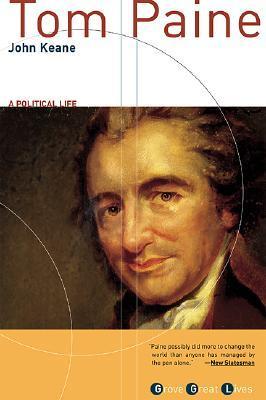
John Keane's "Tom Paine: A Political Life" offers a comprehensive and deeply researched biography of Thomas Paine, the influential Anglo-American political writer and revolutionary. It meticulously charts Paine's journey from humble beginnings to a pivotal figure in both the American and French Revolutions, dissecting his radical ideas on democracy, human rights, and religious freedom, and examining their profound impact on political thought and societal change.
This biography shares significant thematic ground with "A Wicked Company." Both books delve into the Enlightenment's more audacious and often controversial intellectual currents, highlighting individuals whose radical philosophies challenged established power structures and traditional thinking. Just as Blom explores the "forgotten radicalism" of Enlightenment thinkers, Keane illuminates Paine's defiant and progressive worldview, demonstrating how his advocacy for individual liberty and reasoned dissent was fiercely revolutionary for his time.
"Tom Paine: A Political Life" will appeal to those interested in the intellectual foundations of modern democracy, revolutionary history, and the power of ideas to ignite social change. It provides valuable insight into the life of a truly transformative figure, offering a nuanced understanding of his enduring legacy and the complex political landscapes he navigated.
Tom Paine: A Political Life
John Keane's "Tom Paine: A Political Life" offers a comprehensive and deeply researched biography of Thomas Paine, the influential Anglo-American political writer and revolutionary. It meticulously charts Paine's journey from humble beginnings to a pivotal figure in both the American and French Revolutions, dissecting his radical ideas on democracy, human rights, and religious freedom, and examining their profound impact on political thought and societal change.
This biography shares significant thematic ground with "A Wicked Company." Both books delve into the Enlightenment's more audacious and often controversial intellectual currents, highlighting individuals whose radical philosophies challenged established power structures and traditional thinking. Just as Blom explores the "forgotten radicalism" of Enlightenment thinkers, Keane illuminates Paine's defiant and progressive worldview, demonstrating how his advocacy for individual liberty and reasoned dissent was fiercely revolutionary for his time.
"Tom Paine: A Political Life" will appeal to those interested in the intellectual foundations of modern democracy, revolutionary history, and the power of ideas to ignite social change. It provides valuable insight into the life of a truly transformative figure, offering a nuanced understanding of his enduring legacy and the complex political landscapes he navigated.
Descartes' Bones: A Skeletal History of the Conflict Between Faith and Reason

"Descartes' Bones" delves into the fascinating and often macabre journey of René Descartes' remains, using this literal decomposition to metaphorically explore the enduring conflict between scientific inquiry and religious doctrine. Russell Shorto masterfully weaves together biography, philosophy, and history to illustrate how Descartes' legacy, both physical and intellectual, became a battleground for rationality versus faith, stretching from the Enlightenment to modern times.
Both "Descartes' Bones" and "A Wicked Company" illuminate often-overlooked aspects of the European Enlightenment, specifically the radical challenges posed to established systems of thought and power. While Blom focuses on the socio-political implications of philosophical upheaval, Shorto uses Descartes' personal story to anchor a broader narrative about the foundational struggle to reconcile empirical observation with spiritual belief, a core tension that defined, and continues to define, Western intellectual history.
This book offers a compelling narrative for anyone interested in the origins of modern thought, the history of science, or the complex interplay between secular and religious worldviews. Its unique biographical approach humanizes abstract philosophical debates, making the profound intellectual struggles of the Enlightenment accessible and engaging, providing valuable insights into the ongoing dialogue between faith and reason.
Descartes' Bones: A Skeletal History of the Conflict Between Faith and Reason
"Descartes' Bones" delves into the fascinating and often macabre journey of René Descartes' remains, using this literal decomposition to metaphorically explore the enduring conflict between scientific inquiry and religious doctrine. Russell Shorto masterfully weaves together biography, philosophy, and history to illustrate how Descartes' legacy, both physical and intellectual, became a battleground for rationality versus faith, stretching from the Enlightenment to modern times.
Both "Descartes' Bones" and "A Wicked Company" illuminate often-overlooked aspects of the European Enlightenment, specifically the radical challenges posed to established systems of thought and power. While Blom focuses on the socio-political implications of philosophical upheaval, Shorto uses Descartes' personal story to anchor a broader narrative about the foundational struggle to reconcile empirical observation with spiritual belief, a core tension that defined, and continues to define, Western intellectual history.
This book offers a compelling narrative for anyone interested in the origins of modern thought, the history of science, or the complex interplay between secular and religious worldviews. Its unique biographical approach humanizes abstract philosophical debates, making the profound intellectual struggles of the Enlightenment accessible and engaging, providing valuable insights into the ongoing dialogue between faith and reason.
The Birth of the Modern: World Society 1815-1830
Paul Johnson's "The Birth of the Modern" meticulously chronicles the tumultuous yet foundational period between 1815 and 1830. It examines how the societal, political, and cultural aftershocks of the Napoleonic Wars and the Industrial Revolution reshaped the world, leading to the emergence of recognizably modern institutions, ideologies, and global interconnectedness. Johnson explores everything from artistic movements and scientific breakthroughs to political reforms and the rise of new economic powers, painting a vibrant picture of a world in rapid transformation.
This work resonates with Philipp Blom's "A Wicked Company" through its shared focus on the profound shifts in thought and societal structure that underpin modernity. While Blom delves into the forgotten radical ideas of the Enlightenment that sowed the seeds of change, Johnson illustrates the blossoming of those seeds into a new global order. Both books emphasize the often-unforeseen consequences and interconnectedness of revolutionary ideas and actions, demonstrating how intellectual currents translate into tangible historical developments.
It will appeal to those who appreciate a sweeping historical narrative that connects seemingly disparate events into a coherent whole. The detailed analysis of how diverse cultural, political, and technological threads converged to forge the modern world offers deep insights into our contemporary society. The book provides a valuable framework for understanding the origins of many challenges and opportunities we face today.
The Birth of the Modern: World Society 1815-1830
Paul Johnson's "The Birth of the Modern" meticulously chronicles the tumultuous yet foundational period between 1815 and 1830. It examines how the societal, political, and cultural aftershocks of the Napoleonic Wars and the Industrial Revolution reshaped the world, leading to the emergence of recognizably modern institutions, ideologies, and global interconnectedness. Johnson explores everything from artistic movements and scientific breakthroughs to political reforms and the rise of new economic powers, painting a vibrant picture of a world in rapid transformation.
This work resonates with Philipp Blom's "A Wicked Company" through its shared focus on the profound shifts in thought and societal structure that underpin modernity. While Blom delves into the forgotten radical ideas of the Enlightenment that sowed the seeds of change, Johnson illustrates the blossoming of those seeds into a new global order. Both books emphasize the often-unforeseen consequences and interconnectedness of revolutionary ideas and actions, demonstrating how intellectual currents translate into tangible historical developments.
It will appeal to those who appreciate a sweeping historical narrative that connects seemingly disparate events into a coherent whole. The detailed analysis of how diverse cultural, political, and technological threads converged to forge the modern world offers deep insights into our contemporary society. The book provides a valuable framework for understanding the origins of many challenges and opportunities we face today.
The Clockwork Universe: Isaac Newton, the Royal Society, and the Birth of the Modern World

*The Clockwork Universe* vividly reconstructs the intellectual ferment of late 17th-century London, focusing on the interwoven lives of Isaac Newton and the burgeoning Royal Society. It explores how these brilliant minds, amidst religious and political turmoil, meticulously observed and theorized about the natural world, ultimately laying the groundwork for modern science and our understanding of a universe governed by predictable laws—a "clockwork" mechanism. The book delves into their experiments, controversies, and the profound impact of their discoveries.
This book resonates with *A Wicked Company* by examining another pivotal moment in intellectual history that profoundly reshaped Western thought. Both narratives explore how a relatively small group of radical thinkers challenged existing paradigms – *The Clockwork Universe* through scientific inquiry, and *A Wicked Company* through philosophical and political critique. Both works highlight the bravery and intellectual audacity required to dismantle entrenched beliefs and reconstruct a new understanding of the world, whether through scientific revelation or philosophical radicalism.
Anyone fascinated by the origins of modernity will find immense value in this work. It offers a gripping account of scientific discovery, revealing the human drama and intellectual struggles behind monumental breakthroughs. The detailed portrayal of Newton and his contemporaries, coupled with a deep dive into the societal context of their work, provides a profound appreciation for how scientific paradigms shift and how seemingly abstract ideas can utterly transform human perception and future progress.
The Clockwork Universe: Isaac Newton, the Royal Society, and the Birth of the Modern World
*The Clockwork Universe* vividly reconstructs the intellectual ferment of late 17th-century London, focusing on the interwoven lives of Isaac Newton and the burgeoning Royal Society. It explores how these brilliant minds, amidst religious and political turmoil, meticulously observed and theorized about the natural world, ultimately laying the groundwork for modern science and our understanding of a universe governed by predictable laws—a "clockwork" mechanism. The book delves into their experiments, controversies, and the profound impact of their discoveries.
This book resonates with *A Wicked Company* by examining another pivotal moment in intellectual history that profoundly reshaped Western thought. Both narratives explore how a relatively small group of radical thinkers challenged existing paradigms – *The Clockwork Universe* through scientific inquiry, and *A Wicked Company* through philosophical and political critique. Both works highlight the bravery and intellectual audacity required to dismantle entrenched beliefs and reconstruct a new understanding of the world, whether through scientific revelation or philosophical radicalism.
Anyone fascinated by the origins of modernity will find immense value in this work. It offers a gripping account of scientific discovery, revealing the human drama and intellectual struggles behind monumental breakthroughs. The detailed portrayal of Newton and his contemporaries, coupled with a deep dive into the societal context of their work, provides a profound appreciation for how scientific paradigms shift and how seemingly abstract ideas can utterly transform human perception and future progress.
More Books to Explore
Discover more titles that expand on these ideas and themes.
Radical Enlightenment: Philosophy and the Making of Modernity 1650-1750
Enlightenment: Reason, Tolerance, and Humanity
Voltaire's Bastards: The Dictatorship of Reason in the West
Revolutionary Spring: Europe Aflame and the Fight for a New World, 1848-1849
Passionate Minds
The Swerve: How the World Became Modern