10 Books Similar to "The Rise and Fall of the Great Powers: Economic Change and Military Conflict from 1500 to 2000"
by Paul Kennedy

Day of Empire: How Hyperpowers Rise to Global Dominance—and Why They Fall

"Day of Empire" by Amy Chua explores the common patterns and characteristics that have enabled certain "hyperpowers" throughout history, from ancient Persia to modern America, to achieve unprecedented global dominance. Chua argues that these empires rose not through pure military might, but by exhibiting a unique tolerance and openness towards diverse peoples and cultures, integrating them rather than simply conquering them. She then examines how these very strengths can eventually transform into vulnerabilities, leading to their decline as internal divisions or external challenges mount.
This book shares significant thematic overlap with Paul Kennedy's "The Rise and Fall of the Great Powers." Both works meticulously analyze the long-term historical trajectories of powerful nations, seeking to uncover recurring factors behind their ascent to global influence and their eventual decline. While Kennedy emphasizes the economic underpinnings of military power, Chua expands on the crucial role of internal social dynamics and the management of diversity in sustaining or undermining imperial strength.
The comprehensive historical sweep and insightful analysis within "Day of Empire" offer a profound understanding of the cyclical nature of power and empire. It provides valuable context for contemporary geopolitical dynamics, illuminating why some nations succeed in projecting influence on a global scale and why even the most formidable empires ultimately face challenges to their hegemony. The book’s clear thesis, supported by rich historical examples, offers a compelling framework for understanding historical and present-day power shifts.
Day of Empire: How Hyperpowers Rise to Global Dominance—and Why They Fall
"Day of Empire" by Amy Chua explores the common patterns and characteristics that have enabled certain "hyperpowers" throughout history, from ancient Persia to modern America, to achieve unprecedented global dominance. Chua argues that these empires rose not through pure military might, but by exhibiting a unique tolerance and openness towards diverse peoples and cultures, integrating them rather than simply conquering them. She then examines how these very strengths can eventually transform into vulnerabilities, leading to their decline as internal divisions or external challenges mount.
This book shares significant thematic overlap with Paul Kennedy's "The Rise and Fall of the Great Powers." Both works meticulously analyze the long-term historical trajectories of powerful nations, seeking to uncover recurring factors behind their ascent to global influence and their eventual decline. While Kennedy emphasizes the economic underpinnings of military power, Chua expands on the crucial role of internal social dynamics and the management of diversity in sustaining or undermining imperial strength.
The comprehensive historical sweep and insightful analysis within "Day of Empire" offer a profound understanding of the cyclical nature of power and empire. It provides valuable context for contemporary geopolitical dynamics, illuminating why some nations succeed in projecting influence on a global scale and why even the most formidable empires ultimately face challenges to their hegemony. The book’s clear thesis, supported by rich historical examples, offers a compelling framework for understanding historical and present-day power shifts.
The Age of Extremes, 1914-1991
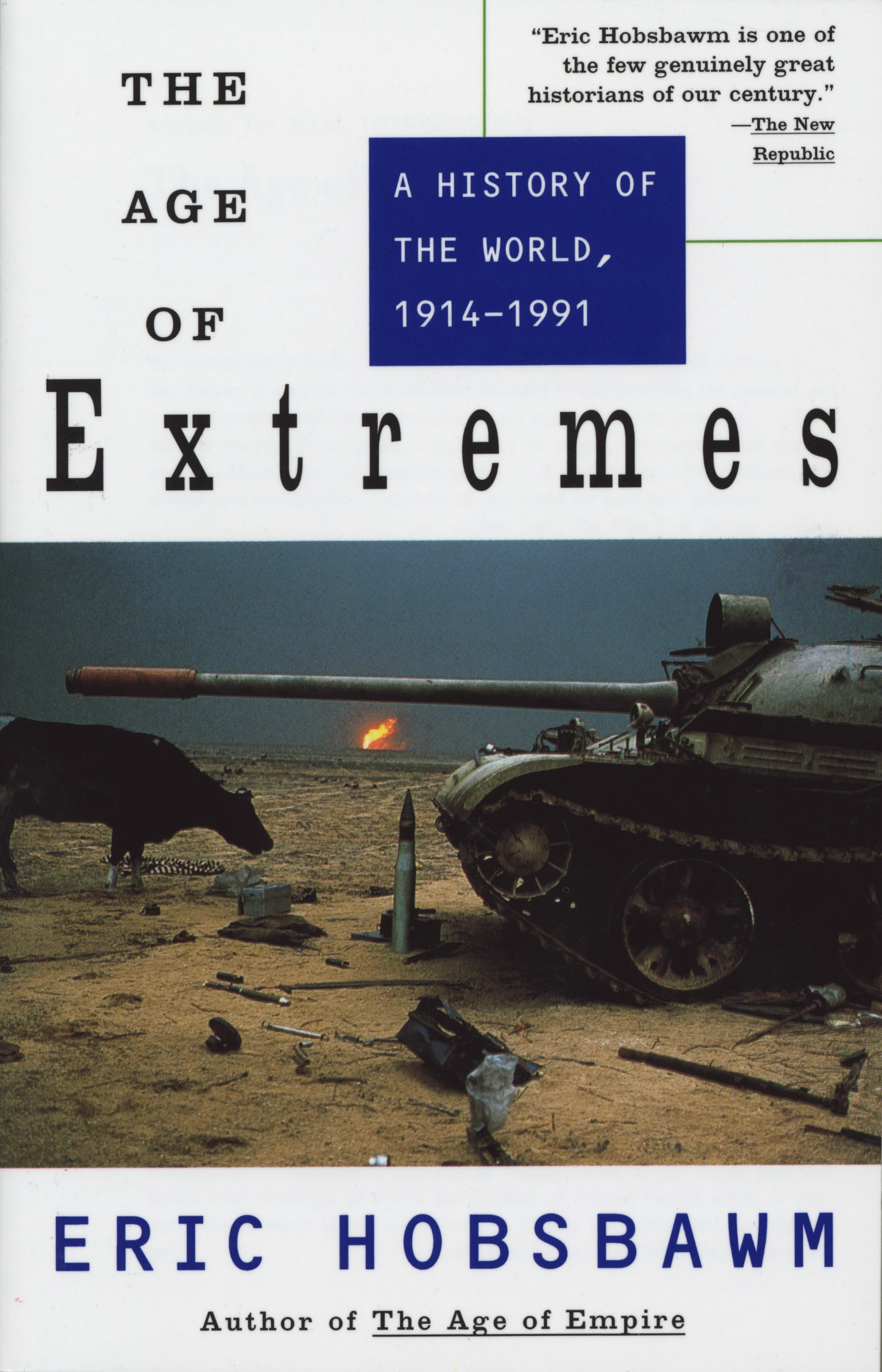
"The Age of Extremes, 1914-1991" by Eric Hobsbawm offers a sweeping historical analysis of the short 20th century, a period defined by world wars, revolutions, the Cold War, and profound societal upheavals. Hobsbawm masterfully dissects the rise and fall of ideologies, the transformation of global powers, and the impact of economic and political forces on humanity, characterizing it as an era of unprecedented conflict and societal change.
This book shares a fundamental intellectual kinship with Paul Kennedy's "The Rise and Fall of the Great Powers." Both works provide grand narratives of global history, examining the intricate interplay between economic strength, military power, and geopolitical influence over extended periods. They both analyze how shifts in these dynamics lead to the ascendancy and decline of nations, albeit Hobsbawm focuses on a more concentrated, tumultuous two-thirds of a century.
Anyone interested in understanding the deep historical roots of today's geopolitical landscape will find immense value in Hobsbawm's powerful synthesis. His incisive analysis illuminates the forces that shaped the modern world, offering critical insights into how and why major international systems emerged, fractured, and were ultimately transformed. It provides a crucial framework for comprehending contemporary international relations and the enduring legacies of the 20th century.
The Age of Extremes, 1914-1991
"The Age of Extremes, 1914-1991" by Eric Hobsbawm offers a sweeping historical analysis of the short 20th century, a period defined by world wars, revolutions, the Cold War, and profound societal upheavals. Hobsbawm masterfully dissects the rise and fall of ideologies, the transformation of global powers, and the impact of economic and political forces on humanity, characterizing it as an era of unprecedented conflict and societal change.
This book shares a fundamental intellectual kinship with Paul Kennedy's "The Rise and Fall of the Great Powers." Both works provide grand narratives of global history, examining the intricate interplay between economic strength, military power, and geopolitical influence over extended periods. They both analyze how shifts in these dynamics lead to the ascendancy and decline of nations, albeit Hobsbawm focuses on a more concentrated, tumultuous two-thirds of a century.
Anyone interested in understanding the deep historical roots of today's geopolitical landscape will find immense value in Hobsbawm's powerful synthesis. His incisive analysis illuminates the forces that shaped the modern world, offering critical insights into how and why major international systems emerged, fractured, and were ultimately transformed. It provides a crucial framework for comprehending contemporary international relations and the enduring legacies of the 20th century.
The Causes of Wars

Michael Howard's "The Causes of Wars" delves into the multifaceted origins of armed conflict, exploring the interplay of political, ideological, social, and psychological factors that contribute to nations resorting to violence. It dissects historical events and theoretical frameworks to provide a nuanced understanding of why wars begin, challenging simplistic explanations and emphasizing the complexity of human decision-making in international relations.
This work resonates with Paul Kennedy's "The Rise and Fall of the Great Powers" due to their shared grand scope and analytical rigor in examining international relations. Both books meticulously trace historical patterns and underlying forces, with Kennedy focusing on the economic and military dynamics of global power shifts, and Howard dissecting the motivations and triggers behind geopolitical confrontations. They both provide comprehensive, long-term historical perspectives on why states interact, sometimes violently.
This book offers a profound understanding of international conflict, benefiting anyone seeking to comprehend the persistent presence of war in human history. It illuminates the intricate web of reasons behind conflict, fostering a more informed perspective on current global challenges and the historical precedents that shape them, proving invaluable for a deeper grasp of geopolitical complexities.
The Causes of Wars
Michael Howard's "The Causes of Wars" delves into the multifaceted origins of armed conflict, exploring the interplay of political, ideological, social, and psychological factors that contribute to nations resorting to violence. It dissects historical events and theoretical frameworks to provide a nuanced understanding of why wars begin, challenging simplistic explanations and emphasizing the complexity of human decision-making in international relations.
This work resonates with Paul Kennedy's "The Rise and Fall of the Great Powers" due to their shared grand scope and analytical rigor in examining international relations. Both books meticulously trace historical patterns and underlying forces, with Kennedy focusing on the economic and military dynamics of global power shifts, and Howard dissecting the motivations and triggers behind geopolitical confrontations. They both provide comprehensive, long-term historical perspectives on why states interact, sometimes violently.
This book offers a profound understanding of international conflict, benefiting anyone seeking to comprehend the persistent presence of war in human history. It illuminates the intricate web of reasons behind conflict, fostering a more informed perspective on current global challenges and the historical precedents that shape them, proving invaluable for a deeper grasp of geopolitical complexities.
The Cold War: A History
"The Cold War: A History" by Martin Walker meticulously chronicles the decades-long global confrontation between the United States and the Soviet Union. It unpacks the ideological and geopolitical struggles that defined the latter half of the 20th century, exploring key events like the Cuban Missile Crisis, proxy wars, the arms race, and the eventual collapse of the Soviet empire, all while analyzing the motivations and strategies of the principal actors.
This book shares thematic DNA with Paul Kennedy's "The Rise and Fall of the Great Powers" through its examination of grand strategy, power dynamics, and the interplay of political, economic, and military forces on a global scale. Both works delve into how nations achieve and maintain, or lose, their dominance, with Walker's focus narrowed to a specific, yet immensely influential, period of intense competition between two superpowers.
Individuals interested in international relations, 20th-century history, and the intricate workings of geopolitical power will find this a highly valuable and engrossing read. It offers a comprehensive understanding of a pivotal era, revealing the complexities of statecraft and the profound impact of ideology on global affairs.
The Cold War: A History
"The Cold War: A History" by Martin Walker meticulously chronicles the decades-long global confrontation between the United States and the Soviet Union. It unpacks the ideological and geopolitical struggles that defined the latter half of the 20th century, exploring key events like the Cuban Missile Crisis, proxy wars, the arms race, and the eventual collapse of the Soviet empire, all while analyzing the motivations and strategies of the principal actors.
This book shares thematic DNA with Paul Kennedy's "The Rise and Fall of the Great Powers" through its examination of grand strategy, power dynamics, and the interplay of political, economic, and military forces on a global scale. Both works delve into how nations achieve and maintain, or lose, their dominance, with Walker's focus narrowed to a specific, yet immensely influential, period of intense competition between two superpowers.
Individuals interested in international relations, 20th-century history, and the intricate workings of geopolitical power will find this a highly valuable and engrossing read. It offers a comprehensive understanding of a pivotal era, revealing the complexities of statecraft and the profound impact of ideology on global affairs.
The Wealth and Poverty of Nations: Why Some Are So Rich and Some So Poor

David Landes's "The Wealth and Poverty of Nations" delves into the intricate historical and cultural factors that have shaped the economic fortunes of diverse societies across the globe. It explores how geography, institutions, innovation, and belief systems have driven prosperity in some regions while contributing to stagnation or decline in others. The book offers a sweeping narrative of economic development and divergence, tracing the origins of wealth and poverty through centuries of human endeavor.
This work resonates strongly with Paul Kennedy's "The Rise and Fall of the Great Powers" due to their shared ambition to explain large-scale historical outcomes through interconnected socio-economic lenses. Both authors meticulously examine the deep-seated drivers of national power and decline, emphasizing how economic strength (or weakness) fundamentally underpins a nation's military and political standing in the world. They both privilege broad, analytical narratives over narrow event-specific accounts.
The book offers a profound understanding of global inequality, providing a rich, empirically-backed perspective on the complex interplay of forces that have determined the economic trajectories of nations. It illuminates enduring patterns of development and underdevelopment, offering valuable context for contemporary global challenges and policy considerations. Its comprehensive scope and insightful analysis make it an essential read for anyone seeking to grasp the monumental disparities in worldwide prosperity.
The Wealth and Poverty of Nations: Why Some Are So Rich and Some So Poor
David Landes's "The Wealth and Poverty of Nations" delves into the intricate historical and cultural factors that have shaped the economic fortunes of diverse societies across the globe. It explores how geography, institutions, innovation, and belief systems have driven prosperity in some regions while contributing to stagnation or decline in others. The book offers a sweeping narrative of economic development and divergence, tracing the origins of wealth and poverty through centuries of human endeavor.
This work resonates strongly with Paul Kennedy's "The Rise and Fall of the Great Powers" due to their shared ambition to explain large-scale historical outcomes through interconnected socio-economic lenses. Both authors meticulously examine the deep-seated drivers of national power and decline, emphasizing how economic strength (or weakness) fundamentally underpins a nation's military and political standing in the world. They both privilege broad, analytical narratives over narrow event-specific accounts.
The book offers a profound understanding of global inequality, providing a rich, empirically-backed perspective on the complex interplay of forces that have determined the economic trajectories of nations. It illuminates enduring patterns of development and underdevelopment, offering valuable context for contemporary global challenges and policy considerations. Its comprehensive scope and insightful analysis make it an essential read for anyone seeking to grasp the monumental disparities in worldwide prosperity.
The Cycles Of American History
Arthur M. Schlesinger Jr.'s "The Cycles of American History" explores recurrent patterns within American political and social life. Drawing on a vast knowledge of history, Schlesinger meticulously traces how the nation swings between periods of public purpose and private interest, government activism and conservative reaction. He identifies discernible rhythms in everything from political ideologies and foreign policy to economic philosophies and cultural trends, suggesting that apparent shifts are often part of a larger historical pendulum swing rather than linear progression. This offers a potent framework for understanding the ebb and flow of American governance and societal priorities.
The similarity to Paul Kennedy's "The Rise and Fall of the Great Powers" lies in their shared exploration of historical patterns and the forces driving national trajectories. Both authors present grand, overarching theses that seek to explain persistent trends over centuries, rather than focusing solely on isolated events. Kennedy examines the interplay of economic strength and military power on a global scale, while Schlesinger applies a similar cyclical lens to the internal dynamics of a single nation. Both works illuminate how underlying structural forces, rather than purely individual actions, shape the course of history.
This book holds significant appeal for anyone seeking a deeper understanding of American political and social evolution. Its analytical rigor and expansive scope provide a valuable interpretive lens for current events, allowing one to contextualize contemporary debates within a richer historical framework. For those interested in the grand narratives of history and the enduring questions of national identity and governance, Schlesinger's insightful analysis offers profound perspectives and a compelling intellectual journey.
The Cycles Of American History
Arthur M. Schlesinger Jr.'s "The Cycles of American History" explores recurrent patterns within American political and social life. Drawing on a vast knowledge of history, Schlesinger meticulously traces how the nation swings between periods of public purpose and private interest, government activism and conservative reaction. He identifies discernible rhythms in everything from political ideologies and foreign policy to economic philosophies and cultural trends, suggesting that apparent shifts are often part of a larger historical pendulum swing rather than linear progression. This offers a potent framework for understanding the ebb and flow of American governance and societal priorities.
The similarity to Paul Kennedy's "The Rise and Fall of the Great Powers" lies in their shared exploration of historical patterns and the forces driving national trajectories. Both authors present grand, overarching theses that seek to explain persistent trends over centuries, rather than focusing solely on isolated events. Kennedy examines the interplay of economic strength and military power on a global scale, while Schlesinger applies a similar cyclical lens to the internal dynamics of a single nation. Both works illuminate how underlying structural forces, rather than purely individual actions, shape the course of history.
This book holds significant appeal for anyone seeking a deeper understanding of American political and social evolution. Its analytical rigor and expansive scope provide a valuable interpretive lens for current events, allowing one to contextualize contemporary debates within a richer historical framework. For those interested in the grand narratives of history and the enduring questions of national identity and governance, Schlesinger's insightful analysis offers profound perspectives and a compelling intellectual journey.
Why the Allies Won

Richard Overy's "Why the Allies Won" meticulously examines the various factors that contributed to the Allied victory in World War II. It goes beyond mere battle narratives, delving into the critical roles of economic might, industrial production, strategic decisions, and the societal resilience of the Allied nations. Overy analyzes how these intertwined elements provided a decisive, long-term advantage over the Axis powers.
The book shares a profound similarity with Paul Kennedy's "The Rise and Fall of the Great Powers" in its core analytical approach. Both authors emphasize the fundamental link between economic capacity, industrial strength, and military success. While Kennedy surveys centuries of grand strategy, Overy applies this same rigorous, empirically-driven analysis to a specific, pivotal conflict, demonstrating how material resources and their effective mobilization ultimately shaped the outcome of the war.
Anyone interested in the deeper mechanics of conflict and the interplay of power will find this book highly illuminating. It provides a sophisticated, evidence-based understanding of how nations leverage their resources to achieve strategic objectives, offering enduring insights into the nature of modern warfare and the foundations of global power. The detailed yet accessible analysis grants a comprehensive grasp of WWII's complexities.
Why the Allies Won
Richard Overy's "Why the Allies Won" meticulously examines the various factors that contributed to the Allied victory in World War II. It goes beyond mere battle narratives, delving into the critical roles of economic might, industrial production, strategic decisions, and the societal resilience of the Allied nations. Overy analyzes how these intertwined elements provided a decisive, long-term advantage over the Axis powers.
The book shares a profound similarity with Paul Kennedy's "The Rise and Fall of the Great Powers" in its core analytical approach. Both authors emphasize the fundamental link between economic capacity, industrial strength, and military success. While Kennedy surveys centuries of grand strategy, Overy applies this same rigorous, empirically-driven analysis to a specific, pivotal conflict, demonstrating how material resources and their effective mobilization ultimately shaped the outcome of the war.
Anyone interested in the deeper mechanics of conflict and the interplay of power will find this book highly illuminating. It provides a sophisticated, evidence-based understanding of how nations leverage their resources to achieve strategic objectives, offering enduring insights into the nature of modern warfare and the foundations of global power. The detailed yet accessible analysis grants a comprehensive grasp of WWII's complexities.
The Prize: The Epic Quest for Oil, Money, and Power

"The Prize" meticulously chronicles the tumultuous history of oil, tracing its evolution from geological curiosity to a geopolitical linchpin. It unveils how this single commodity has shaped economies, fueled conflicts, driven technological innovation, and fundamentally redefined global power structures over the past century and a half, often through the lens of key individuals and companies.
Both books dissect the interplay between resources, economic might, and international influence. Just as Kennedy examines how shifts in national economic output dictate military strength and subsequent global standing, Yergin demonstrates how control over oil reserves and production has been a primary determinant of national prosperity and a critical instrument of foreign policy, directly impacting the rise and fall of nations and empires.
This book offers a compelling narrative for understanding the modern world. It illuminates how resource dependency continues to drive international relations, conflict, and economic policy, providing valuable historical context for contemporary global challenges related to energy security and geopolitical competition. Its depth and breadth make it an essential read for anyone seeking to comprehend the forces that have shaped, and continue to shape, our interconnected planet.
The Prize: The Epic Quest for Oil, Money, and Power
"The Prize" meticulously chronicles the tumultuous history of oil, tracing its evolution from geological curiosity to a geopolitical linchpin. It unveils how this single commodity has shaped economies, fueled conflicts, driven technological innovation, and fundamentally redefined global power structures over the past century and a half, often through the lens of key individuals and companies.
Both books dissect the interplay between resources, economic might, and international influence. Just as Kennedy examines how shifts in national economic output dictate military strength and subsequent global standing, Yergin demonstrates how control over oil reserves and production has been a primary determinant of national prosperity and a critical instrument of foreign policy, directly impacting the rise and fall of nations and empires.
This book offers a compelling narrative for understanding the modern world. It illuminates how resource dependency continues to drive international relations, conflict, and economic policy, providing valuable historical context for contemporary global challenges related to energy security and geopolitical competition. Its depth and breadth make it an essential read for anyone seeking to comprehend the forces that have shaped, and continue to shape, our interconnected planet.
Modern Times: The World from the Twenties to the Nineties

"Modern Times: The World from the Twenties to the Nineties" offers a sweeping intellectual and political history of the 20th century. Johnson delves into the ideologies, personalities, and movements that shaped this turbulent era, from the aftermath of World War I through the Cold War. He examines the rise and fall of totalitarian regimes, the impact of technological advancements, and the complex interplay of ideas that defined global society.
This work resonates with "The Rise and Fall of the Great Powers" due to their shared focus on grand historical narratives and the dynamics of global power. Both authors analyze the drivers of societal change, including economic shifts, military strategies, and ideological conflicts, albeit across different timeframes. Kennedy's structural analysis of long-term trends finds a counterpart in Johnson's examination of the intellectual currents that underpinned 20th-century geopolitical transformations.
This book will appeal to those seeking a comprehensive and thought-provoking analysis of modern history. Its detailed exploration of key events and influential figures provides valuable context for understanding contemporary global affairs. The intellectual rigor and engaging prose ensure it serves as both an educational resource and a compelling narrative, offering profound insights into the forces that continue to shape our world.
Modern Times: The World from the Twenties to the Nineties
"Modern Times: The World from the Twenties to the Nineties" offers a sweeping intellectual and political history of the 20th century. Johnson delves into the ideologies, personalities, and movements that shaped this turbulent era, from the aftermath of World War I through the Cold War. He examines the rise and fall of totalitarian regimes, the impact of technological advancements, and the complex interplay of ideas that defined global society.
This work resonates with "The Rise and Fall of the Great Powers" due to their shared focus on grand historical narratives and the dynamics of global power. Both authors analyze the drivers of societal change, including economic shifts, military strategies, and ideological conflicts, albeit across different timeframes. Kennedy's structural analysis of long-term trends finds a counterpart in Johnson's examination of the intellectual currents that underpinned 20th-century geopolitical transformations.
This book will appeal to those seeking a comprehensive and thought-provoking analysis of modern history. Its detailed exploration of key events and influential figures provides valuable context for understanding contemporary global affairs. The intellectual rigor and engaging prose ensure it serves as both an educational resource and a compelling narrative, offering profound insights into the forces that continue to shape our world.
Why Nations Fail: The Origins of Power, Prosperity, and Poverty

"Why Nations Fail" argues that a nation's prosperity or poverty hinges on its institutions. Inclusive economic and political institutions, which distribute power broadly and offer incentives for innovation, are the bedrock of successful societies. Conversely, extractive institutions, concentrating power and wealth in the hands of a few, inevitably lead to stagnation and decline. The book meticulously illustrates this theory through historical case studies from across the globe, emphasizing that geography, culture, or religion are not destiny; institutions are.
This book shares a fundamental intellectual DNA with Kennedy’s "The Rise and Fall of the Great Powers." Both works seek to identify grand, overarching drivers of national trajectories. While Kennedy focuses on the interplay of economic strength and military heft, Acemoglu and Robinson dive deeper into the root causes of that strength and weakness: institutional design. Both offer a macro-historical lens to understand the dynamics of power and decline, providing analytical frameworks for understanding long-term national performance across centuries.
This deep dive into institutional structures offers a compelling explanation for the vast disparities in global wealth. It provides a powerful framework for understanding not just historical events but also contemporary geopolitical challenges and opportunities. The rigorous historical analysis and the clear, consistent theoretical model make it an invaluable resource for anyone seeking to understand the fundamental forces shaping human societies, offering profound insights into the mechanics of progress and collapse.
Why Nations Fail: The Origins of Power, Prosperity, and Poverty
"Why Nations Fail" argues that a nation's prosperity or poverty hinges on its institutions. Inclusive economic and political institutions, which distribute power broadly and offer incentives for innovation, are the bedrock of successful societies. Conversely, extractive institutions, concentrating power and wealth in the hands of a few, inevitably lead to stagnation and decline. The book meticulously illustrates this theory through historical case studies from across the globe, emphasizing that geography, culture, or religion are not destiny; institutions are.
This book shares a fundamental intellectual DNA with Kennedy’s "The Rise and Fall of the Great Powers." Both works seek to identify grand, overarching drivers of national trajectories. While Kennedy focuses on the interplay of economic strength and military heft, Acemoglu and Robinson dive deeper into the root causes of that strength and weakness: institutional design. Both offer a macro-historical lens to understand the dynamics of power and decline, providing analytical frameworks for understanding long-term national performance across centuries.
This deep dive into institutional structures offers a compelling explanation for the vast disparities in global wealth. It provides a powerful framework for understanding not just historical events but also contemporary geopolitical challenges and opportunities. The rigorous historical analysis and the clear, consistent theoretical model make it an invaluable resource for anyone seeking to understand the fundamental forces shaping human societies, offering profound insights into the mechanics of progress and collapse.
More Books to Explore
Discover more titles that expand on these ideas and themes.
Day of Empire: How Hyperpowers Rise to Global Dominance—and Why They Fall
The Age of Extremes, 1914-1991
The Causes of Wars
The Cold War: A History
The Wealth and Poverty of Nations: Why Some Are So Rich and Some So Poor
The Cycles Of American History