10 Books Similar to "The Last Hero"
by Terry Pratchett

The Last Continent
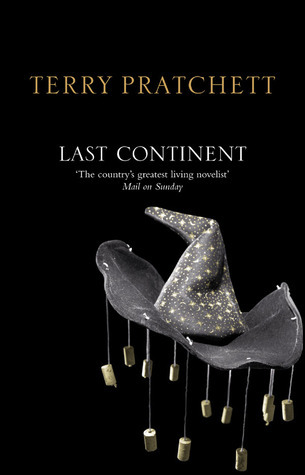
“The Last Continent” sees the wizard Rincewind stranded on the fantastical, parched, and culturally confused continent of Fourecks, a land clearly a parody of Australia. His arrival coincides with a magical drought threatening to end all life on the Discworld, and he inadvertently becomes entangled in a quest to understand and reverse this impending ecological catastrophe. The narrative deftly weaves together themes of creation mythology, the nature of time, and the poignant absurdity of human (and wizardly) endeavors amidst cosmic forces.
The parallels with "The Last Hero" are strong, primarily in their shared focus on exploring foundational Discworld myths and figures through the lens of a grand, seemingly impossible quest. Both novels take beloved characters, Rincewind in *Continent* and the aging Heroes in *Hero*, and place them at the epicentre of world-ending events that ultimately reveal deeper truths about the Discworld’s existence and its inhabitants. They both employ a blend of high stakes and high comedy, using familiar fantasy tropes to comment on real-world concepts like history, environment, and heroism.
This book offers a journey both intellectually stimulating and genuinely amusing. It provides a deeper understanding of the Discworld's underlying magical mechanics and mythology, while also delivering Pratchett's signature wit and acerbic social commentary. The exploration of Fourecks, with its unique flora, fauna, and cultural eccentricities, is a delight, and the resolution of the drought offers both comic satisfaction and profound reflections on responsibility and the interconnectedness of all things.
The Last Continent
“The Last Continent” sees the wizard Rincewind stranded on the fantastical, parched, and culturally confused continent of Fourecks, a land clearly a parody of Australia. His arrival coincides with a magical drought threatening to end all life on the Discworld, and he inadvertently becomes entangled in a quest to understand and reverse this impending ecological catastrophe. The narrative deftly weaves together themes of creation mythology, the nature of time, and the poignant absurdity of human (and wizardly) endeavors amidst cosmic forces.
The parallels with "The Last Hero" are strong, primarily in their shared focus on exploring foundational Discworld myths and figures through the lens of a grand, seemingly impossible quest. Both novels take beloved characters, Rincewind in *Continent* and the aging Heroes in *Hero*, and place them at the epicentre of world-ending events that ultimately reveal deeper truths about the Discworld’s existence and its inhabitants. They both employ a blend of high stakes and high comedy, using familiar fantasy tropes to comment on real-world concepts like history, environment, and heroism.
This book offers a journey both intellectually stimulating and genuinely amusing. It provides a deeper understanding of the Discworld's underlying magical mechanics and mythology, while also delivering Pratchett's signature wit and acerbic social commentary. The exploration of Fourecks, with its unique flora, fauna, and cultural eccentricities, is a delight, and the resolution of the drought offers both comic satisfaction and profound reflections on responsibility and the interconnectedness of all things.
Interesting Times

"Interesting Times" follows the unwitting adventures of Rincewind, the Discworld's most cowardly wizard, as he is mistakenly identified as the "Great Wizzard" destined to lead a communist revolution on the distant Agatean Empire, a land based on feudal China. Amidst political intrigue, martial arts battles, and philosophical debates, Rincewind desperately tries to avoid his heroic destiny, accompanied by a motley crew including Cohen the Barbarian.
Both "Interesting Times" and "The Last Hero" explore the trope of the reluctant hero thrust into a grand, world-altering destiny they’d rather avoid. They share a similar narrative structure of a journey across a vast, exotic landscape, populated by eccentric characters and facing improbable odds. Each book also prominently features an aging, legendary figure—Cohen the Barbarian—grappling with their legacy and the march of time, while simultaneously disrupting established norms through unexpected acts.
This book offers a witty and insightful satire on political ideologies, cultural misunderstandings, and the nature of revolution, all wrapped in Pratchett's signature blend of humor and underlying philosophical depth. Its exploration of courage, identity, and the burden of expectation against a fantastical backdrop provides both engaging entertainment and thoughtful contemplation on human nature and societal structures.
Interesting Times
"Interesting Times" follows the unwitting adventures of Rincewind, the Discworld's most cowardly wizard, as he is mistakenly identified as the "Great Wizzard" destined to lead a communist revolution on the distant Agatean Empire, a land based on feudal China. Amidst political intrigue, martial arts battles, and philosophical debates, Rincewind desperately tries to avoid his heroic destiny, accompanied by a motley crew including Cohen the Barbarian.
Both "Interesting Times" and "The Last Hero" explore the trope of the reluctant hero thrust into a grand, world-altering destiny they’d rather avoid. They share a similar narrative structure of a journey across a vast, exotic landscape, populated by eccentric characters and facing improbable odds. Each book also prominently features an aging, legendary figure—Cohen the Barbarian—grappling with their legacy and the march of time, while simultaneously disrupting established norms through unexpected acts.
This book offers a witty and insightful satire on political ideologies, cultural misunderstandings, and the nature of revolution, all wrapped in Pratchett's signature blend of humor and underlying philosophical depth. Its exploration of courage, identity, and the burden of expectation against a fantastical backdrop provides both engaging entertainment and thoughtful contemplation on human nature and societal structures.
Lords and Ladies

"Lords and Ladies" delves into the disruptive return of the Elves to Lancre, threatening to reclaim their ancient power over both the land and humanity. Granny Weatherwax and Nanny Ogg, alongside the new Queen Magrat, must confront this ancient, seductive evil, which thrives on human fear and ritual, to protect their realm and its inhabitants from a fate worse than death – a world stripped of its messy, vital humanity.
The similarity to "The Last Hero" lies in their shared exploration of fundamental Discworld mythology and confrontations with primal forces. Both books feature a small group of protagonists facing an existential threat that challenges the very fabric of their reality. Where "The Last Hero" confronts the origin of the sun and the nature of creation, "Lords and Ladies" grapples with the terrifying allure and brutal reality of the Discworld's fae, presenting a powerful, almost mythological struggle against an ancient, otherworldly power.
This novel will resonate with those who appreciate Pratchett's deeper explorations of human nature, power, and myth. It offers a compelling blend of humor, profound philosophical inquiry, and genuinely tense stakes, showcasing the strength of community and the wisdom of pragmatic heroism against a glamourous, yet ultimately cruel, foe. Its value lies in its nuanced portrayal of good and evil, and its celebration of ordinary life against the seductive pull of the fantastical.
Lords and Ladies
"Lords and Ladies" delves into the disruptive return of the Elves to Lancre, threatening to reclaim their ancient power over both the land and humanity. Granny Weatherwax and Nanny Ogg, alongside the new Queen Magrat, must confront this ancient, seductive evil, which thrives on human fear and ritual, to protect their realm and its inhabitants from a fate worse than death – a world stripped of its messy, vital humanity.
The similarity to "The Last Hero" lies in their shared exploration of fundamental Discworld mythology and confrontations with primal forces. Both books feature a small group of protagonists facing an existential threat that challenges the very fabric of their reality. Where "The Last Hero" confronts the origin of the sun and the nature of creation, "Lords and Ladies" grapples with the terrifying allure and brutal reality of the Discworld's fae, presenting a powerful, almost mythological struggle against an ancient, otherworldly power.
This novel will resonate with those who appreciate Pratchett's deeper explorations of human nature, power, and myth. It offers a compelling blend of humor, profound philosophical inquiry, and genuinely tense stakes, showcasing the strength of community and the wisdom of pragmatic heroism against a glamourous, yet ultimately cruel, foe. Its value lies in its nuanced portrayal of good and evil, and its celebration of ordinary life against the seductive pull of the fantastical.
Guards! Guards!

"Guards! Guards!" by Terry Pratchett is a standalone novel within the Discworld series, focusing on the Night Watch of Ankh-Morpork, a comically inept and largely ignored police force. Their world is violently upended by the sudden appearance of a dragon and the machinations of a secret society aiming to restore monarchy to the city. The narrative explores themes of civic duty, institutional corruption, and the unexpected heroism found in ordinary, flawed individuals.
The similarity to "The Last Hero" lies in their shared exploration of archetypal heroes and established societal structures. Both books deconstruct heroic narratives; "Guards! Guards!" by examining the concept of a 'heroic' police force, and "The Last Hero" by focusing on the ultimate journey of an aging, legendary figure. Both employ Pratchett's signature blend of poignant observations and satirical humor to question the nature of power, justice, and legend within a fantastical setting.
This novel offers a deeply engaging and thought-provoking experience, blending sharp wit with profound commentary on governance, duty, and the human condition. It develops richly drawn characters whose struggles and triumphs resonate beyond the fantastical elements, providing both immense entertainment and insightful social critique. The accessible yet sophisticated narrative appeals to those who appreciate intelligent humor alongside substantial thematic depth.
Guards! Guards!
"Guards! Guards!" by Terry Pratchett is a standalone novel within the Discworld series, focusing on the Night Watch of Ankh-Morpork, a comically inept and largely ignored police force. Their world is violently upended by the sudden appearance of a dragon and the machinations of a secret society aiming to restore monarchy to the city. The narrative explores themes of civic duty, institutional corruption, and the unexpected heroism found in ordinary, flawed individuals.
The similarity to "The Last Hero" lies in their shared exploration of archetypal heroes and established societal structures. Both books deconstruct heroic narratives; "Guards! Guards!" by examining the concept of a 'heroic' police force, and "The Last Hero" by focusing on the ultimate journey of an aging, legendary figure. Both employ Pratchett's signature blend of poignant observations and satirical humor to question the nature of power, justice, and legend within a fantastical setting.
This novel offers a deeply engaging and thought-provoking experience, blending sharp wit with profound commentary on governance, duty, and the human condition. It develops richly drawn characters whose struggles and triumphs resonate beyond the fantastical elements, providing both immense entertainment and insightful social critique. The accessible yet sophisticated narrative appeals to those who appreciate intelligent humor alongside substantial thematic depth.
Feet of Clay

"Feet of Clay" sees Commander Sam Vimes and the City Watch investigating a series of unusual deaths and a dangerous plot to replace Ankh-Morpork's Patrician with a Golem King. The narrative deftly blends detective procedural with Pratchett's signature social commentary, exploring themes of identity, free will, and the complexities of manufactured life within a rapidly industrializing city.
Both "Feet of Clay" and "The Last Hero" delve into fundamental questions about heroism, purpose, and the nature of authority. While "The Last Hero" examines the twilight of legendary figures and the power of myth, "Feet of Clay" explores the rise of a new kind of heroism – one found in diligence, justice, and the fight against systemic corruption. Both books feature compelling characters grappling with their roles in a changing world and facing monumental challenges.
This book offers a sophisticated exploration of justice, ethics, and the societal implications of progress. Its sharp wit and insightful observations provide a rich reading experience, stimulating thought on our own definitions of leadership and the meaning of sentience. Its layered narrative rewards close attention, offering both engaging mystery and profound philosophical undertones.
Feet of Clay
"Feet of Clay" sees Commander Sam Vimes and the City Watch investigating a series of unusual deaths and a dangerous plot to replace Ankh-Morpork's Patrician with a Golem King. The narrative deftly blends detective procedural with Pratchett's signature social commentary, exploring themes of identity, free will, and the complexities of manufactured life within a rapidly industrializing city.
Both "Feet of Clay" and "The Last Hero" delve into fundamental questions about heroism, purpose, and the nature of authority. While "The Last Hero" examines the twilight of legendary figures and the power of myth, "Feet of Clay" explores the rise of a new kind of heroism – one found in diligence, justice, and the fight against systemic corruption. Both books feature compelling characters grappling with their roles in a changing world and facing monumental challenges.
This book offers a sophisticated exploration of justice, ethics, and the societal implications of progress. Its sharp wit and insightful observations provide a rich reading experience, stimulating thought on our own definitions of leadership and the meaning of sentience. Its layered narrative rewards close attention, offering both engaging mystery and profound philosophical undertones.
Men at Arms

In "Men at Arms," the Ankh-Morpork City Watch expands its ranks to include a diverse collection of new recruits – a troll, a dwarf, and a female werewolf. This expansion, a pragmatic move by the Patrician, sets the stage for a compelling murder mystery woven into the fabric of the city's complex social dynamics. Commander Vimes and his seasoned officers grapple with prejudice, ancient guilds, and the unsettling prospect of a powerful, long-lost artifact falling into the wrong hands, all while the Watch itself struggles for respect and self-definition.
This novel shares a thematic core with "The Last Hero" through its exploration of the changing nature of heroism, duty, and the challenges of established power structures. Both books feature a band of unlikely, often aging, protagonists confronting monumental tasks by challenging traditional notions of their roles. They each highlight the inherent absurdity and profound importance of maintaining order and justice in a chaotic world, even when the systems designed to uphold them are flawed or antiquated.
This book will appeal to those who appreciate a finely crafted mystery combined with insightful social commentary and a vibrant, intelligently conceived world. Its sharp wit, compelling character arcs, and exploration of themes like prejudice, institutional reform, and the meaning of sacrifice offer a rich and rewarding reading experience. The narrative's nuanced approach to morality and the human condition, wrapped in an engaging plot, ensures its lasting value.
Men at Arms
In "Men at Arms," the Ankh-Morpork City Watch expands its ranks to include a diverse collection of new recruits – a troll, a dwarf, and a female werewolf. This expansion, a pragmatic move by the Patrician, sets the stage for a compelling murder mystery woven into the fabric of the city's complex social dynamics. Commander Vimes and his seasoned officers grapple with prejudice, ancient guilds, and the unsettling prospect of a powerful, long-lost artifact falling into the wrong hands, all while the Watch itself struggles for respect and self-definition.
This novel shares a thematic core with "The Last Hero" through its exploration of the changing nature of heroism, duty, and the challenges of established power structures. Both books feature a band of unlikely, often aging, protagonists confronting monumental tasks by challenging traditional notions of their roles. They each highlight the inherent absurdity and profound importance of maintaining order and justice in a chaotic world, even when the systems designed to uphold them are flawed or antiquated.
This book will appeal to those who appreciate a finely crafted mystery combined with insightful social commentary and a vibrant, intelligently conceived world. Its sharp wit, compelling character arcs, and exploration of themes like prejudice, institutional reform, and the meaning of sacrifice offer a rich and rewarding reading experience. The narrative's nuanced approach to morality and the human condition, wrapped in an engaging plot, ensures its lasting value.
Sourcery

*Sourcery* explores the dangerous nature of magic when a powerful "sourcerer," a wizard so potent he’s a living source of magic, is born. The narrative follows Coin, this young sourcerer, as his inherent power destabilizes the Discworld, threatens the fabric of wizardry, and ultimately challenges the very concept of order and free will. It's a tale steeped in the consequences of unchecked power and the allure of ultimate control.
The similarity to *The Last Hero* lies in their shared exploration of destructive archetypes and the potentially catastrophic impact of singular, overwhelming forces. Both books feature extraordinary individuals — the sourcerer Coin and the legendary hero Cohen — whose existence, despite their different motivations, upends established orders and pushes the Discworld to the brink. They both examine the ultimate cost of grand gestures and the difficulty of containing immense power once unleashed, albeit through distinct genre lenses.
This book will appeal to those who enjoy narratives that blend satirical humor with weighty philosophical questions about power, ethics, and the responsibility that comes with exceptional ability. Its value lies in its clever deconstruction of fantasy tropes, offering a thought-provoking, often hilarious, commentary on the nature of heroism, villainy, and the inherent chaos of existence, all while maintaining Pratchett's signature wit and world-building.
Sourcery
*Sourcery* explores the dangerous nature of magic when a powerful "sourcerer," a wizard so potent he’s a living source of magic, is born. The narrative follows Coin, this young sourcerer, as his inherent power destabilizes the Discworld, threatens the fabric of wizardry, and ultimately challenges the very concept of order and free will. It's a tale steeped in the consequences of unchecked power and the allure of ultimate control.
The similarity to *The Last Hero* lies in their shared exploration of destructive archetypes and the potentially catastrophic impact of singular, overwhelming forces. Both books feature extraordinary individuals — the sourcerer Coin and the legendary hero Cohen — whose existence, despite their different motivations, upends established orders and pushes the Discworld to the brink. They both examine the ultimate cost of grand gestures and the difficulty of containing immense power once unleashed, albeit through distinct genre lenses.
This book will appeal to those who enjoy narratives that blend satirical humor with weighty philosophical questions about power, ethics, and the responsibility that comes with exceptional ability. Its value lies in its clever deconstruction of fantasy tropes, offering a thought-provoking, often hilarious, commentary on the nature of heroism, villainy, and the inherent chaos of existence, all while maintaining Pratchett's signature wit and world-building.
Eric
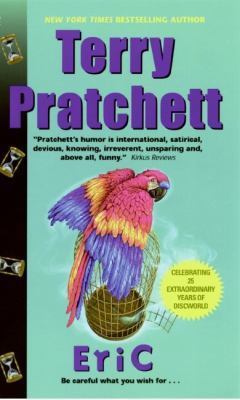
"Eric" introduces Rincewind, the Discworld's most incompetent wizard, who is accidentally summoned by Eric, a thirteen-year-old demonologist. Eric, believing Rincewind to be a powerful demon, desires three wishes: to be immortal, to rule the world, and to possess the most beautiful woman who ever lived. Rincewind, however, can only conjure fragmented and chaotic versions of these desires, leading them both on a chaotic, dimension-hopping adventure through Discworld's history and mythology.
The similarity to "The Last Hero" lies in their shared protagonist and the overarching theme of exploring Discworld's foundational myths and histories through an irreverent lens. Both novels take a familiar character, Rincewind, and thrust him into epic-scale scenarios that satirize classic heroic narratives and creation stories. They deconstruct grand adventures with pragmatic wit and a consistent undercurrent of humorous absurdity, but with a surprising depth when examining archetypes.
This book will appeal to those who enjoy satirical fantasy that challenges traditional tropes and provides a humorous perspective on grand narratives. It offers a valuable entry point into Terry Pratchett's unique Discworld universe, showcasing his imaginative world-building and character development while offering a lighter, more focused narrative than some of the longer entries. The swift pacing and continuous gags provide consistent entertainment, making it an engaging and memorable read.
Eric
"Eric" introduces Rincewind, the Discworld's most incompetent wizard, who is accidentally summoned by Eric, a thirteen-year-old demonologist. Eric, believing Rincewind to be a powerful demon, desires three wishes: to be immortal, to rule the world, and to possess the most beautiful woman who ever lived. Rincewind, however, can only conjure fragmented and chaotic versions of these desires, leading them both on a chaotic, dimension-hopping adventure through Discworld's history and mythology.
The similarity to "The Last Hero" lies in their shared protagonist and the overarching theme of exploring Discworld's foundational myths and histories through an irreverent lens. Both novels take a familiar character, Rincewind, and thrust him into epic-scale scenarios that satirize classic heroic narratives and creation stories. They deconstruct grand adventures with pragmatic wit and a consistent undercurrent of humorous absurdity, but with a surprising depth when examining archetypes.
This book will appeal to those who enjoy satirical fantasy that challenges traditional tropes and provides a humorous perspective on grand narratives. It offers a valuable entry point into Terry Pratchett's unique Discworld universe, showcasing his imaginative world-building and character development while offering a lighter, more focused narrative than some of the longer entries. The swift pacing and continuous gags provide consistent entertainment, making it an engaging and memorable read.
Soul Music

"Soul Music" delves into the disruptive, transformative power of rock and roll when it mysteriously arrives on the Discworld. A young Death, having temporarily abandoned his duties, finds himself drawn to the music and its impact, while Susan Sto Helit, his granddaughter, reluctantly steps into his scythe-wielding role. The narrative explores themes of rebellion, artistic passion, and the eternal struggle between order and chaos, all set against a backdrop of burgeoning musical phenomenon and societal upheaval.
The similarity to "The Last Hero" lies in their shared exploration of fundamental Discworld concepts through the lens of adventure and discovery. Both novels feature iconic characters embarking on grand quests that fundamentally challenge established norms and personal understanding. "Soul Music" interrogates the nature of destiny and the allure of the new, just as "The Last Hero" re-examines heroism and the finality of existence. Both are character-driven journeys that leverage fantastical premises to explore profound human experiences.
This book offers a captivating experience for those who appreciate satirical fantasy that probes deep philosophical questions. It provides insight into the liberating and sometimes destructive force of artistic movements and the personal growth that arises when individuals are forced to confront their inherited roles. Its engaging narrative, combined with Pratchett's signature wit and astute social commentary, makes it a valuable and thought-provoking read that resonates long after the final page.
Soul Music
"Soul Music" delves into the disruptive, transformative power of rock and roll when it mysteriously arrives on the Discworld. A young Death, having temporarily abandoned his duties, finds himself drawn to the music and its impact, while Susan Sto Helit, his granddaughter, reluctantly steps into his scythe-wielding role. The narrative explores themes of rebellion, artistic passion, and the eternal struggle between order and chaos, all set against a backdrop of burgeoning musical phenomenon and societal upheaval.
The similarity to "The Last Hero" lies in their shared exploration of fundamental Discworld concepts through the lens of adventure and discovery. Both novels feature iconic characters embarking on grand quests that fundamentally challenge established norms and personal understanding. "Soul Music" interrogates the nature of destiny and the allure of the new, just as "The Last Hero" re-examines heroism and the finality of existence. Both are character-driven journeys that leverage fantastical premises to explore profound human experiences.
This book offers a captivating experience for those who appreciate satirical fantasy that probes deep philosophical questions. It provides insight into the liberating and sometimes destructive force of artistic movements and the personal growth that arises when individuals are forced to confront their inherited roles. Its engaging narrative, combined with Pratchett's signature wit and astute social commentary, makes it a valuable and thought-provoking read that resonates long after the final page.
The Dark Side of the Sun

"The Dark Side of the Sun" explores a complex galactic civilization where a strict mathematical and astrological system dictates individual lives, from birth to death. It follows a young man, genetically engineered for perfection, as he navigates a universe teeming with fantastical aliens and arcane prophecies, ultimately questioning the rigid order of his society.
The similarity to "The Last Hero" lies in their shared exploration of grand, universe-spanning narratives infused with Pratchett's signature wit and philosophical undercurrents. Both books feature quests driven by destiny or impending doom, challenging established power structures and exploring the resilience of the individual against seemingly insurmountable forces. They both merge epic fantasy tropes with sharp satirical commentary.
This book offers a compelling narrative for those who appreciate richly imagined worlds and thoughtful critiques of societal conventions. It provides an engaging escape into a unique cosmic tapestry while prompting reflection on free will, determinism, and the human search for meaning within a vast, often absurd, existence. The blend of adventure and intellectual depth makes it a rewarding read.
The Dark Side of the Sun
"The Dark Side of the Sun" explores a complex galactic civilization where a strict mathematical and astrological system dictates individual lives, from birth to death. It follows a young man, genetically engineered for perfection, as he navigates a universe teeming with fantastical aliens and arcane prophecies, ultimately questioning the rigid order of his society.
The similarity to "The Last Hero" lies in their shared exploration of grand, universe-spanning narratives infused with Pratchett's signature wit and philosophical undercurrents. Both books feature quests driven by destiny or impending doom, challenging established power structures and exploring the resilience of the individual against seemingly insurmountable forces. They both merge epic fantasy tropes with sharp satirical commentary.
This book offers a compelling narrative for those who appreciate richly imagined worlds and thoughtful critiques of societal conventions. It provides an engaging escape into a unique cosmic tapestry while prompting reflection on free will, determinism, and the human search for meaning within a vast, often absurd, existence. The blend of adventure and intellectual depth makes it a rewarding read.
More Books to Explore
Discover more titles that expand on these ideas and themes.
The Last Continent
Interesting Times
Lords and Ladies
Guards! Guards!
Feet of Clay
Men at Arms