10 Books Similar to "Native Tongue"
by Suzette Haden Elgin
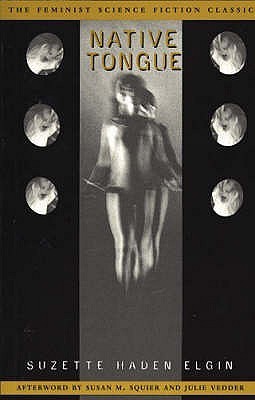
The Gate to Women's Country
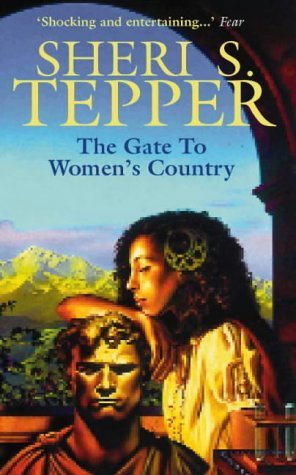
"The Gate to Women's Country" depicts a post-apocalyptic society where women reside in fortified towns, meticulously managing agriculture, education, and healing. Men, divided into "soldiers" living outside the gates and "servitors" castrated and kept within, are largely excluded from governance and procreation. The novel follows young Styrling as she navigates this rigid societal structure, grappling with its deeply entrenched gender roles and the hidden truths about her community's origins and future.
This novel shares a remarkable thematic kinship with "Native Tongue" through its exploration of a constructed society built upon enforced gender segregation and the deliberate manipulation of language and culture as tools of control and resistance. Both works foreground female-led communities striving for self-determination and the intentional creation of alternative social orders in response to patriarchal oppression. The intricate world-building and philosophical depth concerning gender dynamics are notably parallel.
This book offers a compelling narrative for those interested in speculative fiction that critically examines societal structures, feminist utopias, and the implications of radical social engineering. Its sophisticated portrayal of power dynamics, ethical dilemmas, and the enduring human struggle for autonomy provides rich ground for contemplation and discussion, making it a thought-provoking and valuable read.
The Gate to Women's Country
"The Gate to Women's Country" depicts a post-apocalyptic society where women reside in fortified towns, meticulously managing agriculture, education, and healing. Men, divided into "soldiers" living outside the gates and "servitors" castrated and kept within, are largely excluded from governance and procreation. The novel follows young Styrling as she navigates this rigid societal structure, grappling with its deeply entrenched gender roles and the hidden truths about her community's origins and future.
This novel shares a remarkable thematic kinship with "Native Tongue" through its exploration of a constructed society built upon enforced gender segregation and the deliberate manipulation of language and culture as tools of control and resistance. Both works foreground female-led communities striving for self-determination and the intentional creation of alternative social orders in response to patriarchal oppression. The intricate world-building and philosophical depth concerning gender dynamics are notably parallel.
This book offers a compelling narrative for those interested in speculative fiction that critically examines societal structures, feminist utopias, and the implications of radical social engineering. Its sophisticated portrayal of power dynamics, ethical dilemmas, and the enduring human struggle for autonomy provides rich ground for contemplation and discussion, making it a thought-provoking and valuable read.
After Long Silence

*After Long Silence* centers on the planet of Beauty, inhabited by the "gargoyles"—siliceous, crystalline beings who communicate through empathic resonance. Humans, initially hostile, have established themselves, exploiting the planet's resources and the gargoyles' unique abilities. The narrative follows an inquisitive human xenolinguist drawn into the gargoyles' complex society and charged with uncovering their true nature and past, which has profound implications for both species.
The thematic parallels with *Native Tongue* are striking, primarily in their shared exploration of language as a tool for power, societal control, and liberation. Both novels feature protagonists who delve into a newly discovered or suppressed language, ultimately revealing its capacity to reshape understanding and challenge established patriarchal structures. They also examine the devastating impacts of human colonization and the ethical responsibilities inherent in cross-cultural communication.
This novel offers a rich intellectual experience, engaging with concepts of non-human intelligence, linguistic anthropology, and the ethics of exploitation. It provides a thoughtful meditation on the power of communication to bridge divides or perpetuate injustice, leaving one to consider the profound implications of genuine understanding between disparate cultures.
After Long Silence
*After Long Silence* centers on the planet of Beauty, inhabited by the "gargoyles"—siliceous, crystalline beings who communicate through empathic resonance. Humans, initially hostile, have established themselves, exploiting the planet's resources and the gargoyles' unique abilities. The narrative follows an inquisitive human xenolinguist drawn into the gargoyles' complex society and charged with uncovering their true nature and past, which has profound implications for both species.
The thematic parallels with *Native Tongue* are striking, primarily in their shared exploration of language as a tool for power, societal control, and liberation. Both novels feature protagonists who delve into a newly discovered or suppressed language, ultimately revealing its capacity to reshape understanding and challenge established patriarchal structures. They also examine the devastating impacts of human colonization and the ethical responsibilities inherent in cross-cultural communication.
This novel offers a rich intellectual experience, engaging with concepts of non-human intelligence, linguistic anthropology, and the ethics of exploitation. It provides a thoughtful meditation on the power of communication to bridge divides or perpetuate injustice, leaving one to consider the profound implications of genuine understanding between disparate cultures.
Shon'jir

"Shon'jir" immerses readers in the intricate politics and cultures of the Atevi, an alien species on a distant planet, through the eyes of Bren Cameron, the sole human diplomat. As the *paidhi*, or translator, Cameron navigates a complex society structured by language, ritual, and honor, constantly striving to prevent interstellar conflict while understanding the nuances of Atevi thought processes, which differ profoundly from human logic and emotion.
This novel resonates with "Native Tongue" because both works expertly explore the profound impact of language on culture, power dynamics, and individual identity. Just as Elgin examines how the patriarchal control of language restricts women and the potential of a new language to liberate, Cherryh demonstrates how the Atevi language, with its precise emotional registers and strict social protocols, shapes every aspect of their existence – and how its misinterpretation can lead to catastrophic misunderstandings. Both authors highlight the critical role of linguistic agency in shaping societies and personal realities.
Engaging with "Shon'jir" offers a deep dive into anthropological science fiction, appealing to those who appreciate meticulously crafted world-building and intellectual challenges. The narrative provides insight into cross-cultural communication complexities, the ethical responsibilities of interpretation, and the subtle ways language can be wielded as a tool for both connection and control. It's a thoughtful exploration of difference and the persistent human — or alien — struggle for understanding.
Shon'jir
"Shon'jir" immerses readers in the intricate politics and cultures of the Atevi, an alien species on a distant planet, through the eyes of Bren Cameron, the sole human diplomat. As the *paidhi*, or translator, Cameron navigates a complex society structured by language, ritual, and honor, constantly striving to prevent interstellar conflict while understanding the nuances of Atevi thought processes, which differ profoundly from human logic and emotion.
This novel resonates with "Native Tongue" because both works expertly explore the profound impact of language on culture, power dynamics, and individual identity. Just as Elgin examines how the patriarchal control of language restricts women and the potential of a new language to liberate, Cherryh demonstrates how the Atevi language, with its precise emotional registers and strict social protocols, shapes every aspect of their existence – and how its misinterpretation can lead to catastrophic misunderstandings. Both authors highlight the critical role of linguistic agency in shaping societies and personal realities.
Engaging with "Shon'jir" offers a deep dive into anthropological science fiction, appealing to those who appreciate meticulously crafted world-building and intellectual challenges. The narrative provides insight into cross-cultural communication complexities, the ethical responsibilities of interpretation, and the subtle ways language can be wielded as a tool for both connection and control. It's a thoughtful exploration of difference and the persistent human — or alien — struggle for understanding.
Hestia
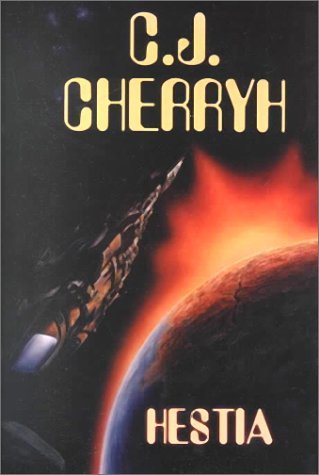
"Hestia" by C.J. Cherryh explores the rigid societal structures and profound cultural isolation confronting a male protagonist on a distant, resource-rich planet. He is tasked with managing resource extraction while navigating the stark differences between his human civilization and the technologically primitive, yet deeply spiritual, alien inhabitants. The narrative delves into his struggle to understand and communicate with these beings, whose existence is intrinsically linked to the planet's ecology, and his growing disillusionment with his own species' exploitative tendencies.
Both "Native Tongue" and "Hestia" feature protagonists grappling with profound linguistic and cultural divides as central to their conflict. Just as "Native Tongue" meticulously constructs a new language as a tool for female empowerment and resistance against patriarchy, "Hestia" meticulously details the arduous process of cross-species communication and cultural assimilation. Both novels highlight the transformative power of language and the devastating consequences of its absence or manipulation.
This novel will appeal to those who appreciate thoughtful science fiction that prioritizes social commentary and intricate world-building over action. Its exploration of post-colonial themes, the ethics of resource exploitation, and the complexities of interspecies understanding offers a compelling intellectual journey. The slow-burn development of cross-cultural relationships and the protagonist's internal struggles provide a deeply engaging and emotionally resonant experience.
Hestia
"Hestia" by C.J. Cherryh explores the rigid societal structures and profound cultural isolation confronting a male protagonist on a distant, resource-rich planet. He is tasked with managing resource extraction while navigating the stark differences between his human civilization and the technologically primitive, yet deeply spiritual, alien inhabitants. The narrative delves into his struggle to understand and communicate with these beings, whose existence is intrinsically linked to the planet's ecology, and his growing disillusionment with his own species' exploitative tendencies.
Both "Native Tongue" and "Hestia" feature protagonists grappling with profound linguistic and cultural divides as central to their conflict. Just as "Native Tongue" meticulously constructs a new language as a tool for female empowerment and resistance against patriarchy, "Hestia" meticulously details the arduous process of cross-species communication and cultural assimilation. Both novels highlight the transformative power of language and the devastating consequences of its absence or manipulation.
This novel will appeal to those who appreciate thoughtful science fiction that prioritizes social commentary and intricate world-building over action. Its exploration of post-colonial themes, the ethics of resource exploitation, and the complexities of interspecies understanding offers a compelling intellectual journey. The slow-burn development of cross-cultural relationships and the protagonist's internal struggles provide a deeply engaging and emotionally resonant experience.
Adulthood Rites

"Adulthood Rites" delves into the life of Akin, a human male raised by an alien species, the Oankali, after Earth's destruction. He grapples with his dual heritage – human aggression and Oankali communal intelligence – as he seeks to reconcile the past with the future, navigating his species' desperate need for survival within the Oankali's transformative influence. The novel explores themes of identity, species hybridization, and the nature of humanity in the face of inevitable change.
Both "Adulthood Rites" and "Native Tongue" center on the profound impact of language and communication on societal structures and individual identity, particularly within the context of alien-human interaction. They explore the manipulation and creation of language as a tool for power or liberation, and how distinct communication systems shape perceived gender roles and societal hierarchy. Each book features protagonists who challenge established norms through their understanding and innovative use of language.
This novel offers a compelling exploration of evolution, adaptation, and what it means to be human when the definition of "human" itself is fluid. Its examination of biological and cultural integration provides a rich intellectual landscape, prompting reflection on our own societal biases and the potential for a radically different future. It also presents a nuanced and thought-provoking perspective on overcoming ingrained prejudices and forging new paths for survival.
Adulthood Rites
"Adulthood Rites" delves into the life of Akin, a human male raised by an alien species, the Oankali, after Earth's destruction. He grapples with his dual heritage – human aggression and Oankali communal intelligence – as he seeks to reconcile the past with the future, navigating his species' desperate need for survival within the Oankali's transformative influence. The novel explores themes of identity, species hybridization, and the nature of humanity in the face of inevitable change.
Both "Adulthood Rites" and "Native Tongue" center on the profound impact of language and communication on societal structures and individual identity, particularly within the context of alien-human interaction. They explore the manipulation and creation of language as a tool for power or liberation, and how distinct communication systems shape perceived gender roles and societal hierarchy. Each book features protagonists who challenge established norms through their understanding and innovative use of language.
This novel offers a compelling exploration of evolution, adaptation, and what it means to be human when the definition of "human" itself is fluid. Its examination of biological and cultural integration provides a rich intellectual landscape, prompting reflection on our own societal biases and the potential for a radically different future. It also presents a nuanced and thought-provoking perspective on overcoming ingrained prejudices and forging new paths for survival.
Lexicon

"Lexicon" by Max Barry plunges into a world where language isn't just communication, but a weapon. The story centers on a young woman, Emily, recruited into a clandestine academy that trains individuals to manipulate people's minds through precise, targeted words. As she uncovers the deeper secrets of this organization and its horrifying potential, she finds herself in the crosshairs of a global conspiracy, racing against time to prevent a cataclysmic misuse of linguistic power.
The similarity to "Native Tongue" lies in their shared exploration of language as a fundamental force—not merely a tool, but an active agent in shaping reality and power dynamics. Both novels confront the idea of a specially trained, often secretive, group harnessing linguistic principles for a distinct purpose. While Elgin focuses on a new language designed to empower women, Barry delves into existing language's potential for control, but both interrogate the societal implications of linguistic innovation and strategic communication.
This book offers a compelling blend of thrilling psychological suspense and thoughtful speculation on the nature of persuasion and control. It delivers a fast-paced narrative that forces engagement with profound questions about free will, the ethics of manipulation, and the hidden power embedded within the words we use every day. Its intricate plot and sharp commentary make it a deeply satisfying and thought-provoking read.
Lexicon
"Lexicon" by Max Barry plunges into a world where language isn't just communication, but a weapon. The story centers on a young woman, Emily, recruited into a clandestine academy that trains individuals to manipulate people's minds through precise, targeted words. As she uncovers the deeper secrets of this organization and its horrifying potential, she finds herself in the crosshairs of a global conspiracy, racing against time to prevent a cataclysmic misuse of linguistic power.
The similarity to "Native Tongue" lies in their shared exploration of language as a fundamental force—not merely a tool, but an active agent in shaping reality and power dynamics. Both novels confront the idea of a specially trained, often secretive, group harnessing linguistic principles for a distinct purpose. While Elgin focuses on a new language designed to empower women, Barry delves into existing language's potential for control, but both interrogate the societal implications of linguistic innovation and strategic communication.
This book offers a compelling blend of thrilling psychological suspense and thoughtful speculation on the nature of persuasion and control. It delivers a fast-paced narrative that forces engagement with profound questions about free will, the ethics of manipulation, and the hidden power embedded within the words we use every day. Its intricate plot and sharp commentary make it a deeply satisfying and thought-provoking read.
Woman on the Edge of Time

"Woman on the Edge of Time" centers on Consuelo Ramos, a Latina woman involuntarily committed to a mental institution, who connects with a future utopian society through her mind. This future, Mattapoisett, is an egalitarian, gender-neutral community, offering a stark contrast to Consuelo's harsh 1970s reality. The novel explores themes of societal control, mental health, and the potential for radical social change, often through Consuelo's harrowing experiences and her hopeful glimpses into a better world.
It shares common ground with "Native Tongue" through its exploration of language as a tool for societal transformation and liberation. Both novels feature protagonists navigating oppressive systems, dreaming of or actively working towards a more equitable future. "Woman on the Edge of Time," like "Native Tongue," posits that dismantling patriarchal structures and reimagining social constructs are essential for true human flourishing.
This novel will resonate with those interested in speculative fiction that critically examines gender roles, power dynamics, and the pursuit of social justice. Its unflinching portrayal of institutional abuse alongside its hopeful vision of a re-imagined future offers valuable insights into societal reform and the enduring power of human agency. The book prompts contemplation on how language and societal structures shape our realities.
Woman on the Edge of Time
"Woman on the Edge of Time" centers on Consuelo Ramos, a Latina woman involuntarily committed to a mental institution, who connects with a future utopian society through her mind. This future, Mattapoisett, is an egalitarian, gender-neutral community, offering a stark contrast to Consuelo's harsh 1970s reality. The novel explores themes of societal control, mental health, and the potential for radical social change, often through Consuelo's harrowing experiences and her hopeful glimpses into a better world.
It shares common ground with "Native Tongue" through its exploration of language as a tool for societal transformation and liberation. Both novels feature protagonists navigating oppressive systems, dreaming of or actively working towards a more equitable future. "Woman on the Edge of Time," like "Native Tongue," posits that dismantling patriarchal structures and reimagining social constructs are essential for true human flourishing.
This novel will resonate with those interested in speculative fiction that critically examines gender roles, power dynamics, and the pursuit of social justice. Its unflinching portrayal of institutional abuse alongside its hopeful vision of a re-imagined future offers valuable insights into societal reform and the enduring power of human agency. The book prompts contemplation on how language and societal structures shape our realities.
Kutath

*Kutath* by C.J. Cherryh delves into complex interstellar politics and cultural immersion, focusing on a human diplomat, Sten Duncan, who must navigate the intricate societal structures and alien psychologies of the endangered Kutath species aboard a generations-long starship. The narrative explores themes of interspecies communication, the preservation of unique cultures, and the ethical dilemmas of intervention.
The parallels with *Native Tongue* are striking, particularly in their shared emphasis on language as a fundamental tool for understanding, control, and resistance. Both novels meticulously craft alien languages (or in *Native Tongue*'s case, a constructed female language) that are not merely communication methods but embody distinct worldviews and cultural values. The protagonists in both stories are deeply embedded in these linguistic and cultural struggles, with their survival and the fate of their respective societies hinging on their ability to master or manipulate these intricate systems.
The book offers a compelling exploration of linguistic anthropology and political intrigue. Its intricate world-building and nuanced character development will resonate with those who appreciate science fiction that prioritizes intellectual engagement and cultural exploration over action-driven plots. The insights into the power of language and the challenges of intercultural understanding provide lasting value, prompting reflection on our own societal structures and communication paradigms.
Kutath
*Kutath* by C.J. Cherryh delves into complex interstellar politics and cultural immersion, focusing on a human diplomat, Sten Duncan, who must navigate the intricate societal structures and alien psychologies of the endangered Kutath species aboard a generations-long starship. The narrative explores themes of interspecies communication, the preservation of unique cultures, and the ethical dilemmas of intervention.
The parallels with *Native Tongue* are striking, particularly in their shared emphasis on language as a fundamental tool for understanding, control, and resistance. Both novels meticulously craft alien languages (or in *Native Tongue*'s case, a constructed female language) that are not merely communication methods but embody distinct worldviews and cultural values. The protagonists in both stories are deeply embedded in these linguistic and cultural struggles, with their survival and the fate of their respective societies hinging on their ability to master or manipulate these intricate systems.
The book offers a compelling exploration of linguistic anthropology and political intrigue. Its intricate world-building and nuanced character development will resonate with those who appreciate science fiction that prioritizes intellectual engagement and cultural exploration over action-driven plots. The insights into the power of language and the challenges of intercultural understanding provide lasting value, prompting reflection on our own societal structures and communication paradigms.
Forty Thousand in Gehenna

"Forty Thousand in Gehenna" chronicles the colonization of an alien world by humans, primarily a genetically engineered substrata known as "duplicates." Marooned and largely forgotten by Earth, these colonists must forge a society and culture from scratch under harsh conditions, leading to the development of unique social structures, loyalties, and communication methods as they adapt to their strange environment and its native sentient life.
The similarities with "Native Tongue" stem from their shared exploration of language's transformative power and its role in shaping social constructs. Both novels feature marginalized or oppressed groups (women in "Native Tongue," duplicates in "Forty Thousand") who, through necessity and ingenuity, develop innovative linguistic systems to assert their agency and redefine their world, ultimately challenging dominant power structures.
This book will appeal to those who appreciate thoughtful science fiction examining societal evolution, cultural adaptation, and the profound influence of language on identity. Its detailed world-building and nuanced portrayal of humanity's struggle to survive and thrive against overwhelming odds offer a compelling narrative that resonates with themes of resilience, community, and the creation of new meaning in a forgotten corner of the universe.
Forty Thousand in Gehenna
"Forty Thousand in Gehenna" chronicles the colonization of an alien world by humans, primarily a genetically engineered substrata known as "duplicates." Marooned and largely forgotten by Earth, these colonists must forge a society and culture from scratch under harsh conditions, leading to the development of unique social structures, loyalties, and communication methods as they adapt to their strange environment and its native sentient life.
The similarities with "Native Tongue" stem from their shared exploration of language's transformative power and its role in shaping social constructs. Both novels feature marginalized or oppressed groups (women in "Native Tongue," duplicates in "Forty Thousand") who, through necessity and ingenuity, develop innovative linguistic systems to assert their agency and redefine their world, ultimately challenging dominant power structures.
This book will appeal to those who appreciate thoughtful science fiction examining societal evolution, cultural adaptation, and the profound influence of language on identity. Its detailed world-building and nuanced portrayal of humanity's struggle to survive and thrive against overwhelming odds offer a compelling narrative that resonates with themes of resilience, community, and the creation of new meaning in a forgotten corner of the universe.
Parable of the Talents
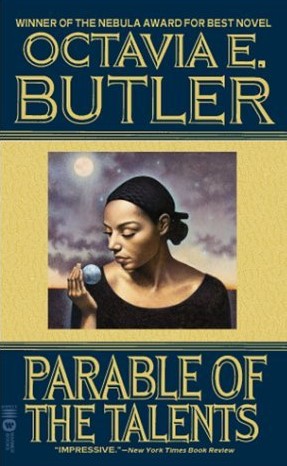
*Parable of the Talents* continues Octavia E. Butler’s dystopian narrative, following Lauren Olamina’s daughter, Larkin, through a fracturing future America. The novel explores the rise of a Christian fundamentalist, authoritarian government, the struggle to rebuild society after environmental and economic collapse, and the search for community and purpose amidst oppression. It’s a powerful examination of belief, survival, and the enduring human spirit.
Both novels delve into societies grappling with profound systemic oppression and the search for liberating forms of communication and social organization. *Parable of the Talents*, like *Native Tongue*, centers a female protagonist’s intellectual and spiritual journey against a backdrop of restrictive societal norms and the deliberate suppression of individual autonomy, particularly for women. Both explore the power of language—in *Native Tongue*'s case, the creation of a new language; in *Parable*, the manipulation of existing rhetoric—to shape, control, or liberate thought and action.
This novel offers a deeply insightful and timely reflection on societal polarization, the dangers of religious extremism, and the resilience required to forge new ways of living. Its exploration of leadership, community building, and ethical dilemmas in a broken world provides substantial food for thought, prompting contemplation on freedom, responsibility, and the potential for hope even in dire circumstances.
Parable of the Talents
*Parable of the Talents* continues Octavia E. Butler’s dystopian narrative, following Lauren Olamina’s daughter, Larkin, through a fracturing future America. The novel explores the rise of a Christian fundamentalist, authoritarian government, the struggle to rebuild society after environmental and economic collapse, and the search for community and purpose amidst oppression. It’s a powerful examination of belief, survival, and the enduring human spirit.
Both novels delve into societies grappling with profound systemic oppression and the search for liberating forms of communication and social organization. *Parable of the Talents*, like *Native Tongue*, centers a female protagonist’s intellectual and spiritual journey against a backdrop of restrictive societal norms and the deliberate suppression of individual autonomy, particularly for women. Both explore the power of language—in *Native Tongue*'s case, the creation of a new language; in *Parable*, the manipulation of existing rhetoric—to shape, control, or liberate thought and action.
This novel offers a deeply insightful and timely reflection on societal polarization, the dangers of religious extremism, and the resilience required to forge new ways of living. Its exploration of leadership, community building, and ethical dilemmas in a broken world provides substantial food for thought, prompting contemplation on freedom, responsibility, and the potential for hope even in dire circumstances.
More Books to Explore
Discover more titles that expand on these ideas and themes.
The Gate to Women's Country
After Long Silence
Shon'jir
Hestia
Adulthood Rites
Lexicon