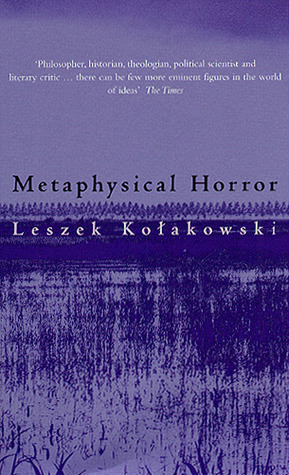
10 Books Similar to "Metaphysical Horror"
by Leszek Kołakowski
The Outsider

"The Outsider" by Colin Wilson explores the lives and philosophies of individuals throughout history who felt alienated from conventional society. These figures, ranging from artists to philosophers, grappled with a profound sense of meaninglessness and an urgent desire for a deeper, more authentic existence beyond the mundane. Wilson examines their struggles against conformity and their attempts to forge new paths of understanding and self-realization.
This work resonates with Leszek Kołakowski's "Metaphysical Horror" in its core exploration of existential unease. Both books delve into the fundamental human encounter with a world that often appears bereft of inherent meaning, pushing individuals to confront the void and question their place within it. They share a focus on the intellectual and emotional responses to this unsettling realization, examining the internal landscapes of those profoundly affected.
The book offers a compelling intellectual journey for those who contemplate profound questions about meaning, alienation, and individual purpose. It provides a rich tapestry of historical and philosophical thought, presenting diverse perspectives on the human condition. Engaging with these ideas can offer valuable insights into the ongoing search for authenticity and a potent antidote to passive acceptance of the commonplace.
The Outsider
"The Outsider" by Colin Wilson explores the lives and philosophies of individuals throughout history who felt alienated from conventional society. These figures, ranging from artists to philosophers, grappled with a profound sense of meaninglessness and an urgent desire for a deeper, more authentic existence beyond the mundane. Wilson examines their struggles against conformity and their attempts to forge new paths of understanding and self-realization.
This work resonates with Leszek Kołakowski's "Metaphysical Horror" in its core exploration of existential unease. Both books delve into the fundamental human encounter with a world that often appears bereft of inherent meaning, pushing individuals to confront the void and question their place within it. They share a focus on the intellectual and emotional responses to this unsettling realization, examining the internal landscapes of those profoundly affected.
The book offers a compelling intellectual journey for those who contemplate profound questions about meaning, alienation, and individual purpose. It provides a rich tapestry of historical and philosophical thought, presenting diverse perspectives on the human condition. Engaging with these ideas can offer valuable insights into the ongoing search for authenticity and a potent antidote to passive acceptance of the commonplace.
History and Utopia

Emil Cioran's "History and Utopia" is a profound and often bleak meditation on humanity's relentless, yet inherently flawed, pursuit of societal perfection. Through a series of incisive essays, Cioran dissects the intoxicating allure and destructive consequences of utopian ideals, questioning the very foundations of progress and the human itch to impose order on a chaotic world. It's a work that dares to suggest the futility embedded within our grandest collective ambitions, offering a stark, unsentimental perspective on the cyclical nature of hope and disillusionment.
This book resonates deeply with Leszek Kołakowski's "Metaphysical Horror" due to their shared philosophical pessimism and keen examination of the human condition's inherent anxieties. Both authors confront the uncomfortable truths of existence, exploring the limits of human reason and the pervasive sense of meaninglessness that can arise from grappling with ultimate reality. They share a skepticism towards grand narratives and an unflinching willingness to expose the darker undercurrents of human thought and aspiration.
Anyone drawn to existential philosophy, critical historical analysis, and a bracing intellectual challenge will appreciate "History and Utopia." It offers a powerful antidote to uncritical optimism, provoking thought on the dangers of ideological fervor and the persistent, often tragic, gap between human striving and achievable reality. The book serves as a vital mirror, reflecting our collective dreams and their inevitable distortions, thereby enriching one's understanding of both history and the individual's place within its unfolding drama.
History and Utopia
Emil Cioran's "History and Utopia" is a profound and often bleak meditation on humanity's relentless, yet inherently flawed, pursuit of societal perfection. Through a series of incisive essays, Cioran dissects the intoxicating allure and destructive consequences of utopian ideals, questioning the very foundations of progress and the human itch to impose order on a chaotic world. It's a work that dares to suggest the futility embedded within our grandest collective ambitions, offering a stark, unsentimental perspective on the cyclical nature of hope and disillusionment.
This book resonates deeply with Leszek Kołakowski's "Metaphysical Horror" due to their shared philosophical pessimism and keen examination of the human condition's inherent anxieties. Both authors confront the uncomfortable truths of existence, exploring the limits of human reason and the pervasive sense of meaninglessness that can arise from grappling with ultimate reality. They share a skepticism towards grand narratives and an unflinching willingness to expose the darker undercurrents of human thought and aspiration.
Anyone drawn to existential philosophy, critical historical analysis, and a bracing intellectual challenge will appreciate "History and Utopia." It offers a powerful antidote to uncritical optimism, provoking thought on the dangers of ideological fervor and the persistent, often tragic, gap between human striving and achievable reality. The book serves as a vital mirror, reflecting our collective dreams and their inevitable distortions, thereby enriching one's understanding of both history and the individual's place within its unfolding drama.
The Occult

"The Occult" by Colin Wilson is a sprawling intellectual exploration of humanity's long-standing fascination with hidden knowledge and extraordinary human potential. It delves into mysticism, parapsychology, magic, and various esoteric traditions, attempting to synthesize a coherent understanding of phenomena often dismissed as superstition. Wilson meticulously examines historical accounts, legendary figures, and theoretical frameworks, suggesting a latent human faculty for expanded consciousness and perception beyond conventional science.
This work resonates with "Metaphysical Horror" due to its shared fundamental inquiry into the limits of human understanding and the unsettling aspects of existence that defy easy explanation. Both books confront the boundaries of the ordinary, exploring terrains where rationality falters and the unknown exerts its profound influence. While Kołakowski focuses on the philosophical and existential dread arising from these limits, Wilson seeks to categorize and rationalize the various human attempts to *engage* with that unknown, yet both acknowledge its pervasive and often disquieting presence.
The book will appeal to those who intellectualize the uncanny and are drawn to big-picture syntheses of disparate knowledge. It offers a comprehensive, if idiosyncratic, framework for understanding mankind's perennial quest for meaning beyond the mundane, serving as both an insightful historical survey and a thought-provoking challenge to conventional thought, encouraging a re-evaluation of what is considered possible within the human experience.
The Occult
"The Occult" by Colin Wilson is a sprawling intellectual exploration of humanity's long-standing fascination with hidden knowledge and extraordinary human potential. It delves into mysticism, parapsychology, magic, and various esoteric traditions, attempting to synthesize a coherent understanding of phenomena often dismissed as superstition. Wilson meticulously examines historical accounts, legendary figures, and theoretical frameworks, suggesting a latent human faculty for expanded consciousness and perception beyond conventional science.
This work resonates with "Metaphysical Horror" due to its shared fundamental inquiry into the limits of human understanding and the unsettling aspects of existence that defy easy explanation. Both books confront the boundaries of the ordinary, exploring terrains where rationality falters and the unknown exerts its profound influence. While Kołakowski focuses on the philosophical and existential dread arising from these limits, Wilson seeks to categorize and rationalize the various human attempts to *engage* with that unknown, yet both acknowledge its pervasive and often disquieting presence.
The book will appeal to those who intellectualize the uncanny and are drawn to big-picture syntheses of disparate knowledge. It offers a comprehensive, if idiosyncratic, framework for understanding mankind's perennial quest for meaning beyond the mundane, serving as both an insightful historical survey and a thought-provoking challenge to conventional thought, encouraging a re-evaluation of what is considered possible within the human experience.
Deathbound Subjectivity
"Deathbound Subjectivity" delves into the human experience of finitude, exploring how our awareness of mortality shapes consciousness, ethics, and our relations with others. Lingis examines the visceral and often terrifying ways death is woven into the very fabric of subjective existence, moving beyond abstract philosophical discussions to confront the raw immediacy of our limited time. He scrutinizes how this inescapable endpoint dictates meaning, value, and our engagement with the world.
This work resonates strongly with Kołakowski's "Metaphysical Horror" through their shared exploration of fundamental existential anxieties. Both texts confront the inherent discomfort and terror ingrained in the human condition – the vastness of the universe, our own ephemerality, and the often-unanswerable questions of being. They both navigate the chasm between human aspiration and ultimate limitation, albeit through different lenses, uniting in their unflinching gaze at existential dread.
The book offers a profound re-evaluation of life, not as a denial of death, but as an embrace of its shaping power. It fosters a deeper understanding of human vulnerability and resilience, encouraging a more authentic engagement with existence. The insights provided can enrich one's personal philosophy and offer a compelling framework for understanding the deeper currents of human motivation and our shared confrontation with the inevitable.
Deathbound Subjectivity
"Deathbound Subjectivity" delves into the human experience of finitude, exploring how our awareness of mortality shapes consciousness, ethics, and our relations with others. Lingis examines the visceral and often terrifying ways death is woven into the very fabric of subjective existence, moving beyond abstract philosophical discussions to confront the raw immediacy of our limited time. He scrutinizes how this inescapable endpoint dictates meaning, value, and our engagement with the world.
This work resonates strongly with Kołakowski's "Metaphysical Horror" through their shared exploration of fundamental existential anxieties. Both texts confront the inherent discomfort and terror ingrained in the human condition – the vastness of the universe, our own ephemerality, and the often-unanswerable questions of being. They both navigate the chasm between human aspiration and ultimate limitation, albeit through different lenses, uniting in their unflinching gaze at existential dread.
The book offers a profound re-evaluation of life, not as a denial of death, but as an embrace of its shaping power. It fosters a deeper understanding of human vulnerability and resilience, encouraging a more authentic engagement with existence. The insights provided can enrich one's personal philosophy and offer a compelling framework for understanding the deeper currents of human motivation and our shared confrontation with the inevitable.
A Short History of Decay

Emil Cioran's "A Short History of Decay" is a collection of aphorisms and essays delving into the inherent futility of existence, the nature of suffering, and the pervasive sense of disillusionment with civilization and its promises. It dissects human frailty, the illusion of progress, and the inescapable presence of decay in all facets of life, ultimately questioning the very foundations of meaning and purpose.
The similarity to "Metaphysical Horror" lies in their shared existential core. Both Kołakowski and Cioran engage with profound philosophical despair, grappling with the absence of ultimate meaning, the irrationality of the universe, and the human condition's inherent limitations. They offer no easy answers, instead confronting the reader with uncomfortable truths about existence and the elusive nature of happiness or certainty.
This book will appeal to those who appreciate unflinching intellectual honesty and a poetic, yet unsparing, exploration of dark philosophical themes. Its value lies in its ability to articulate profound anxieties and insights often left unexamined, offering a cathartic and intellectually stimulating experience for anyone who has contemplated the deeper, often unsettling, questions of life.
A Short History of Decay
Emil Cioran's "A Short History of Decay" is a collection of aphorisms and essays delving into the inherent futility of existence, the nature of suffering, and the pervasive sense of disillusionment with civilization and its promises. It dissects human frailty, the illusion of progress, and the inescapable presence of decay in all facets of life, ultimately questioning the very foundations of meaning and purpose.
The similarity to "Metaphysical Horror" lies in their shared existential core. Both Kołakowski and Cioran engage with profound philosophical despair, grappling with the absence of ultimate meaning, the irrationality of the universe, and the human condition's inherent limitations. They offer no easy answers, instead confronting the reader with uncomfortable truths about existence and the elusive nature of happiness or certainty.
This book will appeal to those who appreciate unflinching intellectual honesty and a poetic, yet unsparing, exploration of dark philosophical themes. Its value lies in its ability to articulate profound anxieties and insights often left unexamined, offering a cathartic and intellectually stimulating experience for anyone who has contemplated the deeper, often unsettling, questions of life.
Minima Moralia: Reflections on a Damaged Life
"Minima Moralia" offers a fragmented, incisive critique of post-war Western society, reflecting on how capitalism and mass culture have warped individual experience and ethical life. Adorno meticulously dissects the subtle ways social and economic systems penetrate private life, leading to alienation, diminished autonomy, and the erosion of authentic human connection, all presented through aphoristic essays.
The similarity to "Metaphysical Horror" lies in their shared exploration of profound existential unease stemming from the human condition and societal structures. Both works grapple with fundamental questions of meaning, absurdity, and the insidious ways contemporary life can thwart genuine flourishing. They articulate a deep-seated discomfort with the state of the world, albeit through different philosophical lenses.
This book will appeal to those seeking a rigorous, unsparing intellectual engagement with the hidden pathologies of modern existence. Its insights into alienation, consumerism, and the challenges of maintaining ethical integrity in a complex world remain remarkably pertinent. It provides a powerful framework for understanding not just history, but also the persistent dilemmas of contemporary life, offering both intellectual stimulation and a profound sense of recognition.
Minima Moralia: Reflections on a Damaged Life
"Minima Moralia" offers a fragmented, incisive critique of post-war Western society, reflecting on how capitalism and mass culture have warped individual experience and ethical life. Adorno meticulously dissects the subtle ways social and economic systems penetrate private life, leading to alienation, diminished autonomy, and the erosion of authentic human connection, all presented through aphoristic essays.
The similarity to "Metaphysical Horror" lies in their shared exploration of profound existential unease stemming from the human condition and societal structures. Both works grapple with fundamental questions of meaning, absurdity, and the insidious ways contemporary life can thwart genuine flourishing. They articulate a deep-seated discomfort with the state of the world, albeit through different philosophical lenses.
This book will appeal to those seeking a rigorous, unsparing intellectual engagement with the hidden pathologies of modern existence. Its insights into alienation, consumerism, and the challenges of maintaining ethical integrity in a complex world remain remarkably pertinent. It provides a powerful framework for understanding not just history, but also the persistent dilemmas of contemporary life, offering both intellectual stimulation and a profound sense of recognition.
The Captive Mind
*The Captive Mind* dissects the intellectual and moral compromises made by prominent East European writers and thinkers under Soviet totalitarianism. Miłosz, through case studies of four composite individuals, explores the psychological pressures of forced ideological conversion, the seductive power of "Ketman" (public conformity with private dissent), and the profound distortions of truth and identity imposed by a monolithic state. It’s a chilling examination of how individuals rationalize their surrender to an oppressive system.
Both books delve into the profound disorientation and spiritual unease that arises when fundamental truths and personal autonomy are undermined. While Kołakowski’s *Metaphysical Horror* explores the existential void inherent in human consciousness and the collapse of objective meaning, Miłosz’s work presents a more concrete, political manifestation of this horror: the systematic mental and moral subjugation that leaves individuals feeling alienated from their own minds and souls. Both authors pinpoint the erosion of individual integrity as a source of deep, unsettling dread.
This book offers a powerful, enduring insight into the human capacity for self-deception and the insidious nature of ideological control. Its analysis of intellectual capitulation and the struggle for authenticity remains highly relevant in understanding contemporary political and social pressures. It provides a sobering reflection on the fragility of individual freedom and the psychological costs of living under duress, offering profound lessons on maintaining personal and intellectual integrity in challenging times.
The Captive Mind
*The Captive Mind* dissects the intellectual and moral compromises made by prominent East European writers and thinkers under Soviet totalitarianism. Miłosz, through case studies of four composite individuals, explores the psychological pressures of forced ideological conversion, the seductive power of "Ketman" (public conformity with private dissent), and the profound distortions of truth and identity imposed by a monolithic state. It’s a chilling examination of how individuals rationalize their surrender to an oppressive system.
Both books delve into the profound disorientation and spiritual unease that arises when fundamental truths and personal autonomy are undermined. While Kołakowski’s *Metaphysical Horror* explores the existential void inherent in human consciousness and the collapse of objective meaning, Miłosz’s work presents a more concrete, political manifestation of this horror: the systematic mental and moral subjugation that leaves individuals feeling alienated from their own minds and souls. Both authors pinpoint the erosion of individual integrity as a source of deep, unsettling dread.
This book offers a powerful, enduring insight into the human capacity for self-deception and the insidious nature of ideological control. Its analysis of intellectual capitulation and the struggle for authenticity remains highly relevant in understanding contemporary political and social pressures. It provides a sobering reflection on the fragility of individual freedom and the psychological costs of living under duress, offering profound lessons on maintaining personal and intellectual integrity in challenging times.
On the Heights of Despair

"On the Heights of Despair" is a profound, aphoristic exploration of human suffering, nihilism, and the inherent futility of existence. Cioran dissects despair not as an emotion to be overcome, but as a fundamental, perhaps even cherished, state of being that reveals uncomfortable truths about consciousness and the universe's indifference. It's a raw, unflinching look into the abyss of meaninglessness and the paradoxical beauty found within it.
This work resonates with "Metaphysical Horror" through its shared thematic landscape: the existential dread stemming from the human condition’s ultimate absurdity and the universe's inherent lack of teleology. Both authors grapple with the disquieting realization that there is no inherent purpose or comforting structure, leading to a profound sense of cosmic unease rather than just psychological anxiety.
It appeals to those who appreciate philosophical introspection and dark existentialism. Its candid exploration of suffering and futility offers a cathartic experience for individuals grappling with similar questions, providing intellectual validation and a sense of shared understanding. The book's stark honesty and poetic despair make it a valuable companion for contemplating the deeper, unsettling aspects of reality.
On the Heights of Despair
"On the Heights of Despair" is a profound, aphoristic exploration of human suffering, nihilism, and the inherent futility of existence. Cioran dissects despair not as an emotion to be overcome, but as a fundamental, perhaps even cherished, state of being that reveals uncomfortable truths about consciousness and the universe's indifference. It's a raw, unflinching look into the abyss of meaninglessness and the paradoxical beauty found within it.
This work resonates with "Metaphysical Horror" through its shared thematic landscape: the existential dread stemming from the human condition’s ultimate absurdity and the universe's inherent lack of teleology. Both authors grapple with the disquieting realization that there is no inherent purpose or comforting structure, leading to a profound sense of cosmic unease rather than just psychological anxiety.
It appeals to those who appreciate philosophical introspection and dark existentialism. Its candid exploration of suffering and futility offers a cathartic experience for individuals grappling with similar questions, providing intellectual validation and a sense of shared understanding. The book's stark honesty and poetic despair make it a valuable companion for contemplating the deeper, unsettling aspects of reality.
Apocalypse Culture II
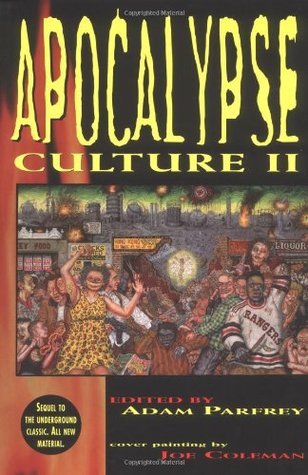
*Apocalypse Culture II* is a provocative anthology exploring the fringes of human experience and societal collapse. It compiles essays, interviews, and artworks that delve into transgressive art, extreme ideologies, bizarre subcultures, and the dark underbelly of modernity. The book provides an unflinching look at the absurd, the grotesque, and the terrifying aspects of existence often overlooked or suppressed by mainstream narratives.
This collection shares thematic resonance with *Metaphysical Horror* by examining the underlying anxieties and existential dread that permeate human consciousness. Both books confront the inherent meaninglessness, contingency, and profound strangeness of the world, albeit through different lenses. While Kołakowski uses philosophical inquiry to dissect the nature of evil and the absurd, *Apocalypse Culture II* showcases its manifestations in contemporary culture, depicting the raw, unfiltered human responses to a universe devoid of inherent purpose.
The book will appeal to those who appreciate a challenging and intellectually stimulating exploration of uncomfortable truths. It offers a unique perspective on societal decay and human folly, providing critical insights into the forces that shape our collective anxieties. Its diverse range of voices and perspectives fosters a deeper understanding of the human condition and the lengths to which individuals and groups will go to find meaning, or simply to express their alienation, in a world often perceived as chaotic and indifferent.
Apocalypse Culture II
*Apocalypse Culture II* is a provocative anthology exploring the fringes of human experience and societal collapse. It compiles essays, interviews, and artworks that delve into transgressive art, extreme ideologies, bizarre subcultures, and the dark underbelly of modernity. The book provides an unflinching look at the absurd, the grotesque, and the terrifying aspects of existence often overlooked or suppressed by mainstream narratives.
This collection shares thematic resonance with *Metaphysical Horror* by examining the underlying anxieties and existential dread that permeate human consciousness. Both books confront the inherent meaninglessness, contingency, and profound strangeness of the world, albeit through different lenses. While Kołakowski uses philosophical inquiry to dissect the nature of evil and the absurd, *Apocalypse Culture II* showcases its manifestations in contemporary culture, depicting the raw, unfiltered human responses to a universe devoid of inherent purpose.
The book will appeal to those who appreciate a challenging and intellectually stimulating exploration of uncomfortable truths. It offers a unique perspective on societal decay and human folly, providing critical insights into the forces that shape our collective anxieties. Its diverse range of voices and perspectives fosters a deeper understanding of the human condition and the lengths to which individuals and groups will go to find meaning, or simply to express their alienation, in a world often perceived as chaotic and indifferent.
Literature and Evil
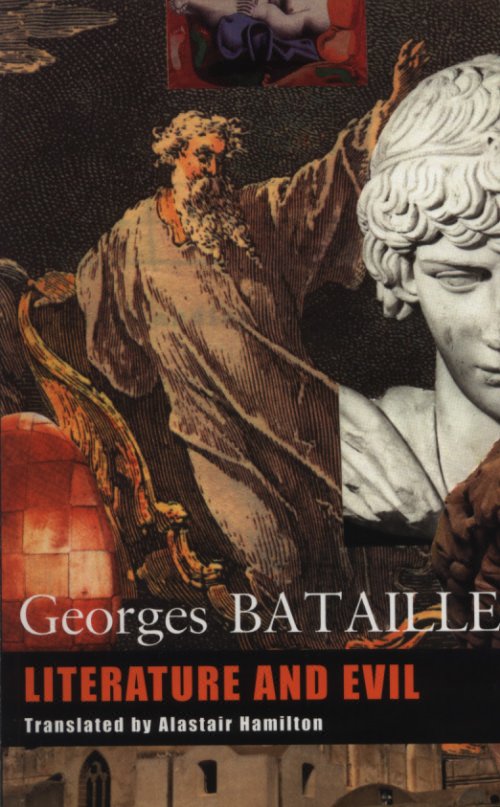
"Literature and Evil" by Georges Bataille explores how literature, particularly tragic or transgressive narratives, engages with the human experience of evil, not as a moral failing but as an inherent element in the quest for sovereignty, excess, and an understanding of limits. Bataille argues that literature can provide a space where individuals confront the destructive and the sacred, often through taboo subjects, to achieve an ecstatic, albeit dangerous, insight.
This exploration of evil's inherent, almost metaphysical, presence in human experience directly parallels Kołakowski's "Metaphysical Horror." Both authors delve into the unsettling aspects of existence, examining how profound unease, dread, or transgressive acts are not mere aberrations but fundamental to consciousness and our understanding of reality, challenging conventional notions of good and evil.
This book will appeal to those interested in the darker, more unsettling dimensions of philosophy and literary theory. It provides a unique lens through which to analyze the profound impact of literature that confronts the abyss, offering intellectual stimulation for anyone seeking to understand the often-disturbing interplay between human creativity, suffering, and the boundaries of meaning.
Literature and Evil
"Literature and Evil" by Georges Bataille explores how literature, particularly tragic or transgressive narratives, engages with the human experience of evil, not as a moral failing but as an inherent element in the quest for sovereignty, excess, and an understanding of limits. Bataille argues that literature can provide a space where individuals confront the destructive and the sacred, often through taboo subjects, to achieve an ecstatic, albeit dangerous, insight.
This exploration of evil's inherent, almost metaphysical, presence in human experience directly parallels Kołakowski's "Metaphysical Horror." Both authors delve into the unsettling aspects of existence, examining how profound unease, dread, or transgressive acts are not mere aberrations but fundamental to consciousness and our understanding of reality, challenging conventional notions of good and evil.
This book will appeal to those interested in the darker, more unsettling dimensions of philosophy and literary theory. It provides a unique lens through which to analyze the profound impact of literature that confronts the abyss, offering intellectual stimulation for anyone seeking to understand the often-disturbing interplay between human creativity, suffering, and the boundaries of meaning.
More Books to Explore
Discover more titles that expand on these ideas and themes.
The Outsider
History and Utopia
The Occult
Deathbound Subjectivity
A Short History of Decay
Minima Moralia: Reflections on a Damaged Life