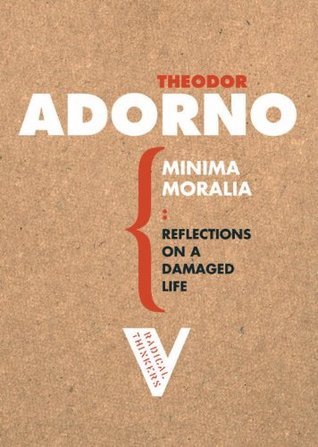
Minima Moralia: Reflections on a Damaged Life
Book Description
A shattered world echoes with the haunting reflections of a life under siege. In *Minima Moralia: Reflections on a Damaged Life*, Theodor W. Adorno confronts the crises of existence with piercing insights that challenge the fabric of modern society. Each aphorism lays bare the struggles of the individual caught in a web of alienation and despair, illuminating the silent battles waged in everyday life. As society's values crumble, can true meaning emerge from the ruins? Experience a philosophical journey that confronts the darkness—are we merely products of our environment, or can we reclaim our humanity?
Quick Book Summary
"Minima Moralia: Reflections on a Damaged Life" by Theodor W. Adorno is a profound collection of aphorisms and philosophical meditations written during and after his exile from Nazi Germany. In these reflections, Adorno examines the fractured state of modern life, shaped by the traumas of totalitarianism, mass culture, and the pervasive reach of capitalism. He explores how individuals are alienated and rendered powerless in the face of social forces beyond their control. Adorno’s writing is both deeply personal and analytically rigorous, drawing connections between private suffering and historical catastrophe. He interrogates daily experiences—work, love, education—revealing how even the most intimate aspects of life are manipulated by broader societal dynamics. Ultimately, Adorno issues a sharp critique of contemporary values, questioning whether authentic humanity can survive amid the ruins of modernity.




Summary of Key Ideas
Table of Contents
Alienation and the Fragmentation of the Self
Adorno opens "Minima Moralia" by situating the individual in a society marked by alienation and estrangement. He laments the inability of people to feel at home in the world, a consequence of both historical cataclysms and the evolution of capitalism. The self, once considered autonomous, is fractured by external pressures that limit honesty and spontaneity. Even personal relationships are colored by these forces, making authentic connection increasingly rare. Each aphorism is both a personal confession and a theoretical intervention, linking private unhappiness to the objective social conditions that produce it.
Critique of Mass Culture and Commodification
Throughout the book, Adorno attacks the pervasive influence of mass culture. He observes how cultural products become commodities, stripping them of critical value and turning art into mere entertainment. This commodification not only flattens aesthetic experience but also conditions individuals to accept superficial pleasures in place of true fulfillment. The culture industry, Adorno argues, is an instrument of social control: by standardizing tastes and stifling dissent, it destroys the potential for genuine creativity and critical thought.
The Impact of Totalitarianism and Trauma
Adorno’s experience of exile and the shadow of totalitarianism permeate the text. He considers the psychological toll of living under regimes that demand conformity and punish deviation. Traumatic events—wars, genocides, and systematic oppression—reshape both the collective psyche and everyday interactions. Adorno contends that these wounds are not erased in peaceful times but persist as latent anxieties and distrust. This damaged life is characterized by a sense of vulnerability, as people struggle to navigate hostile environments that discourage hope and solidarity.
Everyday Life under Late Capitalism
The routines of daily life come under close scrutiny. Adorno dissects the ways in which late capitalist society transforms work, play, and interpersonal relationships. Mechanization and bureaucratic rationality, he argues, erode individuality and spontaneity, reducing even leisure to an extension of productive labor. Social norms enforce conformity and limit authentic expression, leaving little space for reflection or resistance. Thus, the very structure of daily existence perpetuates the damaged state Adorno critiques.
Possibilities for Redemption and Resistance
Yet, amid pervasive gloom, Adorno preserves a possibility for emancipation. Through critical thought and self-reflection, individuals can resist the pressures of conformity and commodification. While he acknowledges the overwhelming obstacles, Adorno insists on the duty to remain conscious of suffering and injustice. In resisting both resignation and cynicism, individuals can envision a more humane society—even if its realization remains uncertain. Thus, "Minima Moralia" is not only a diagnosis of damage but a call to keep hope alive through critique and compassion.
Download This Summary
Get a free PDF of this summary instantly — no email required.