10 Books Similar to "Future Shock"
by Alvin Toffler

Technological Bluff

"Technological Bluff" by Jacques Ellul critiques the pervasive modern belief that technology inherently solves all human problems and is a neutral force. Ellul argues that technology has become an autonomous system, driving societal changes often without ethical consideration or genuine human benefit, leading to a dangerous complacency and a loss of critical judgment regarding its actual impact and limitations. He exposes the self-deception in viewing technological progress as synonymous with human progress.
Both "Technological Bluff" and "Future Shock" explore the overwhelming and disorienting effects of rapid technological advancement on society and individuals. While Toffler focuses on the psychological overload and inability to adapt to accelerated change, Ellul delves into the deeper, ideological acceptance of technology as an unstoppable and inherently beneficial force, regardless of its consequences. They both highlight how technological acceleration creates a disconnect from traditional values and human-centric living.
This book offers a profound and challenging perspective for anyone grappling with the complexities of modern technological society. It provides a robust framework for dissecting the unquestioned assumptions surrounding progress and innovation, empowering individuals to critically evaluate technology's true role and its often-unseen ethical implications. Its insights encourage a more deliberate and human-centered approach to technological development and integration.
Technological Bluff
"Technological Bluff" by Jacques Ellul critiques the pervasive modern belief that technology inherently solves all human problems and is a neutral force. Ellul argues that technology has become an autonomous system, driving societal changes often without ethical consideration or genuine human benefit, leading to a dangerous complacency and a loss of critical judgment regarding its actual impact and limitations. He exposes the self-deception in viewing technological progress as synonymous with human progress.
Both "Technological Bluff" and "Future Shock" explore the overwhelming and disorienting effects of rapid technological advancement on society and individuals. While Toffler focuses on the psychological overload and inability to adapt to accelerated change, Ellul delves into the deeper, ideological acceptance of technology as an unstoppable and inherently beneficial force, regardless of its consequences. They both highlight how technological acceleration creates a disconnect from traditional values and human-centric living.
This book offers a profound and challenging perspective for anyone grappling with the complexities of modern technological society. It provides a robust framework for dissecting the unquestioned assumptions surrounding progress and innovation, empowering individuals to critically evaluate technology's true role and its often-unseen ethical implications. Its insights encourage a more deliberate and human-centered approach to technological development and integration.
The Age of Spiritual Machines

"The Age of Spiritual Machines" explores humanity's trajectory towards a future where artificial intelligence surpasses human intellect, delving into the potential for machines to achieve consciousness, emotional complexity, and even spirituality. Kurzweil meticulously outlines his vision for how technological evolution, particularly in computing power and nanotechnology, will profoundly reshape society, work, biology, and our very definition of existence.
This book echoes "Future Shock" in its core premise: the accelerating pace of technological and societal change will overwhelm individuals and institutions, forcing radical adaptations. Both authors anticipate a future vastly different from the present, driven by innovation, and analyze the psychological and sociological ramifications of living in an era of unprecedented transformation. They share a focus on how rapid advancement fundamentally alters human experience.
This analysis offers a compelling opportunity to grapple with the profound implications of our technological future. It provides a detailed, provocative framework for understanding artificial intelligence and its potential to redefine human civilization, prompting critical reflection on ethics, identity, and the nature of intelligence itself. The insights within are invaluable for anyone seeking to comprehend the forces shaping our world and prepare for the challenges and opportunities ahead.
The Age of Spiritual Machines
"The Age of Spiritual Machines" explores humanity's trajectory towards a future where artificial intelligence surpasses human intellect, delving into the potential for machines to achieve consciousness, emotional complexity, and even spirituality. Kurzweil meticulously outlines his vision for how technological evolution, particularly in computing power and nanotechnology, will profoundly reshape society, work, biology, and our very definition of existence.
This book echoes "Future Shock" in its core premise: the accelerating pace of technological and societal change will overwhelm individuals and institutions, forcing radical adaptations. Both authors anticipate a future vastly different from the present, driven by innovation, and analyze the psychological and sociological ramifications of living in an era of unprecedented transformation. They share a focus on how rapid advancement fundamentally alters human experience.
This analysis offers a compelling opportunity to grapple with the profound implications of our technological future. It provides a detailed, provocative framework for understanding artificial intelligence and its potential to redefine human civilization, prompting critical reflection on ethics, identity, and the nature of intelligence itself. The insights within are invaluable for anyone seeking to comprehend the forces shaping our world and prepare for the challenges and opportunities ahead.
Homo Deus: A History of Tomorrow

"Homo Deus: A History of Tomorrow" explores humanity's next grand projects after conquering famine, plague, and war: achieving immortality, happiness, and god-like abilities through biotechnology and artificial intelligence. Harari speculates on the implications of dataism as a new religion, the potential obsolescence of Homo Sapiens, and the emergence of a new species of "Homo Deus," a being fundamentally different from current humans. It’s a sweeping historical and philosophical examination of our likely future.
This book resonates with "Future Shock" because both works delve into the profound societal and individual disruptions caused by accelerating change. While Toffler focused on the overwhelming psychological and social impact of rapid technological and cultural shifts on existing structures, Harari extrapolates further, envisioning a future where these changes fundamentally alter the very definition of humanity and our place in the world. Both predict unprecedented transformations and their far-reaching consequences.
This book will appeal to those who ponder humanity's trajectory and the ethical dilemmas presented by emergent technologies. Its value lies in provoking critical thought about our collective future, challenging preconceived notions about human purpose, and preparing individuals for the potential upheavals and opportunities that biotechnology and AI will inevitably bring. It offers a crucial framework for understanding the profound shifts already underway and those on the horizon.
Homo Deus: A History of Tomorrow
"Homo Deus: A History of Tomorrow" explores humanity's next grand projects after conquering famine, plague, and war: achieving immortality, happiness, and god-like abilities through biotechnology and artificial intelligence. Harari speculates on the implications of dataism as a new religion, the potential obsolescence of Homo Sapiens, and the emergence of a new species of "Homo Deus," a being fundamentally different from current humans. It’s a sweeping historical and philosophical examination of our likely future.
This book resonates with "Future Shock" because both works delve into the profound societal and individual disruptions caused by accelerating change. While Toffler focused on the overwhelming psychological and social impact of rapid technological and cultural shifts on existing structures, Harari extrapolates further, envisioning a future where these changes fundamentally alter the very definition of humanity and our place in the world. Both predict unprecedented transformations and their far-reaching consequences.
This book will appeal to those who ponder humanity's trajectory and the ethical dilemmas presented by emergent technologies. Its value lies in provoking critical thought about our collective future, challenging preconceived notions about human purpose, and preparing individuals for the potential upheavals and opportunities that biotechnology and AI will inevitably bring. It offers a crucial framework for understanding the profound shifts already underway and those on the horizon.
Abundance: The Future Is Better Than You Think
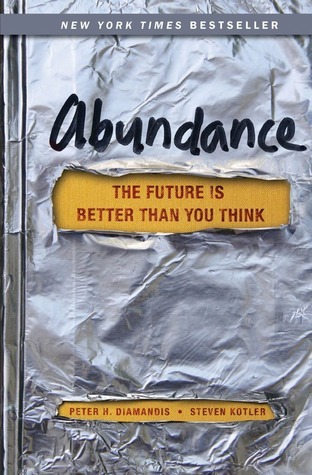
"Abundance: The Future Is Better Than You Think" posits that humanity is on the cusp of an era of unprecedented prosperity, driven by converging technologies like AI, robotics, and biotechnology. Diamandis argues that these innovations, combined with exponential growth in areas like communication and energy, will allow us to overcome scarcity and provide for the needs of everyone on the planet, creating a world where poverty and chronic disease are largely eradicated.
This book shares thematic DNA with "Future Shock" in its profound exploration of societal transformation driven by technology. Both analyze how rapid technological advancement impacts human experience and the fabric of society. While Toffler focused on the disruptive, disorienting effects of accelerated change, Diamandis offers a counterpoint, emphasizing the potential for positive, even transformative, outcomes from equally rapid progress.
The book offers a compelling and optimistic vision of the future, providing a powerful antidote to pervasive pessimism. Its detailed exploration of emerging technologies and their potential applications offers a valuable framework for understanding the forces shaping our world, enabling a more informed and hopeful perspective on global challenges.
Abundance: The Future Is Better Than You Think
"Abundance: The Future Is Better Than You Think" posits that humanity is on the cusp of an era of unprecedented prosperity, driven by converging technologies like AI, robotics, and biotechnology. Diamandis argues that these innovations, combined with exponential growth in areas like communication and energy, will allow us to overcome scarcity and provide for the needs of everyone on the planet, creating a world where poverty and chronic disease are largely eradicated.
This book shares thematic DNA with "Future Shock" in its profound exploration of societal transformation driven by technology. Both analyze how rapid technological advancement impacts human experience and the fabric of society. While Toffler focused on the disruptive, disorienting effects of accelerated change, Diamandis offers a counterpoint, emphasizing the potential for positive, even transformative, outcomes from equally rapid progress.
The book offers a compelling and optimistic vision of the future, providing a powerful antidote to pervasive pessimism. Its detailed exploration of emerging technologies and their potential applications offers a valuable framework for understanding the forces shaping our world, enabling a more informed and hopeful perspective on global challenges.
Rise of the Robots: Technology and the Threat of a Jobless Future
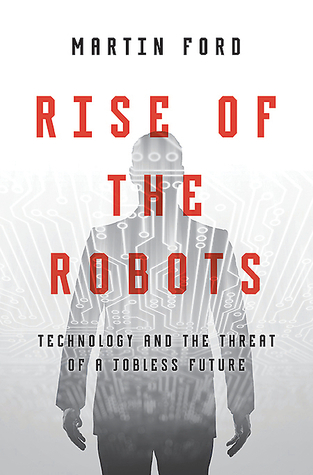
Martin Ford's "Rise of the Robots" meticulously examines the growing threat automation and artificial intelligence pose to employment across various sectors. Ford argues that this technological revolution is fundamentally different from past industrial shifts, as it threatens to displace not just manual labor, but also a significant portion of white-collar and skilled jobs, potentially leading to widespread economic disruption and increasing inequality unless proactive measures are taken.
The book shares a profound thematic kinship with Toffler's "Future Shock" by exploring the disruptive potential of rapid technological advancement on human society. Both authors delve into the psychological and societal implications of accelerating change, with Toffler focusing on information overload and adaptability, and Ford zeroing in on the economic and social upheaval caused by intelligent machines challenging traditional work structures. Both works serve as a clarion call for contemporary society to grapple with unprecedented technological shifts.
Individuals concerned about the future of work, economic stability, and the societal impact of artificial intelligence will find this a compelling read. It offers a well-researched and accessible analysis that provides a critical framework for understanding the challenges ahead. Its value lies in provoking vital conversations and inspiring thought about potential solutions to ensure a more equitable and stable future.
Rise of the Robots: Technology and the Threat of a Jobless Future
Martin Ford's "Rise of the Robots" meticulously examines the growing threat automation and artificial intelligence pose to employment across various sectors. Ford argues that this technological revolution is fundamentally different from past industrial shifts, as it threatens to displace not just manual labor, but also a significant portion of white-collar and skilled jobs, potentially leading to widespread economic disruption and increasing inequality unless proactive measures are taken.
The book shares a profound thematic kinship with Toffler's "Future Shock" by exploring the disruptive potential of rapid technological advancement on human society. Both authors delve into the psychological and societal implications of accelerating change, with Toffler focusing on information overload and adaptability, and Ford zeroing in on the economic and social upheaval caused by intelligent machines challenging traditional work structures. Both works serve as a clarion call for contemporary society to grapple with unprecedented technological shifts.
Individuals concerned about the future of work, economic stability, and the societal impact of artificial intelligence will find this a compelling read. It offers a well-researched and accessible analysis that provides a critical framework for understanding the challenges ahead. Its value lies in provoking vital conversations and inspiring thought about potential solutions to ensure a more equitable and stable future.
Revenge of the Tipping Point: Overstories, Superspreaders, and the Rise of Social Engineering
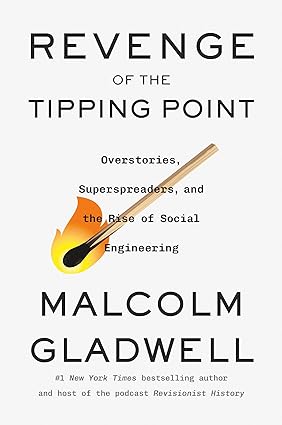
"Revenge of the Tipping Point" explores how seemingly small, often undetected factors can snowball into significant societal shifts. Gladwell delves into "overstories"—the underlying narratives shaping our perceptions—and "superspreaders"—the individuals or mechanisms that amplify these narratives. He then connects these concepts to the increasing sophistication of "social engineering," analyzing how these forces are deliberately or inadvertently used to influence collective behavior and belief.
This work resonates with "Future Shock" by examining the accelerating pace of change and its profound impact on individuals and society. Both books dissect the mechanics of rapid transformation, albeit through different lenses. While Toffler focused on technology's role in overwhelming human adaptation, Gladwell investigates the intricate, often hidden, forces that trigger widespread social and cultural upheaval.
This book offers a compelling framework for understanding the complexities of contemporary society. It provides insights into why certain ideas gain traction, how trends emerge, and the subtle yet powerful ways our collective reality is shaped. The analysis encourages a more discerning approach to information and empowers a deeper comprehension of the dynamics influencing our world.
Revenge of the Tipping Point: Overstories, Superspreaders, and the Rise of Social Engineering
"Revenge of the Tipping Point" explores how seemingly small, often undetected factors can snowball into significant societal shifts. Gladwell delves into "overstories"—the underlying narratives shaping our perceptions—and "superspreaders"—the individuals or mechanisms that amplify these narratives. He then connects these concepts to the increasing sophistication of "social engineering," analyzing how these forces are deliberately or inadvertently used to influence collective behavior and belief.
This work resonates with "Future Shock" by examining the accelerating pace of change and its profound impact on individuals and society. Both books dissect the mechanics of rapid transformation, albeit through different lenses. While Toffler focused on technology's role in overwhelming human adaptation, Gladwell investigates the intricate, often hidden, forces that trigger widespread social and cultural upheaval.
This book offers a compelling framework for understanding the complexities of contemporary society. It provides insights into why certain ideas gain traction, how trends emerge, and the subtle yet powerful ways our collective reality is shaped. The analysis encourages a more discerning approach to information and empowers a deeper comprehension of the dynamics influencing our world.
Technology as Magic
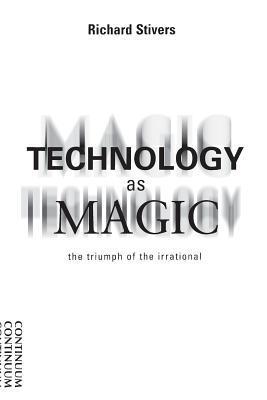
Richard Stivers' "Technology as Magic" probes how modern technology has permeated our consciousness, shaping our perceptions and expectations much like ancient magical beliefs. He argues that we often attribute powers to technology that are beyond its actual mechanistic capabilities, viewing it as a transcendent force that can solve all problems, rather than a tool with inherent limitations and potential for misuse. This perspective highlights a societal tendency to defer to technological solutions without critical inquiry.
The book shares a profound thematic kinship with "Future Shock" by exploring the societal impact of rapid technological advancement. Both Toffler and Stivers illuminate how technology, by fundamentally altering our environment and the pace of change, can destabilize individuals and cultures. While Toffler focused on overwhelming change, Stivers zeroes in on the often unexamined psychological and cultural consequences of our technological devotion, echoing Toffler's concern for human adaptation to a swiftly evolving world.
This book offers a compelling lens through which to understand contemporary society's complex relationship with innovation. It provides a valuable framework for critically assessing the pervasive influence of technology and encourages a more discerning engagement with scientific and technical progress, fostering a deeper understanding of our own roles in shaping the future.
Technology as Magic
Richard Stivers' "Technology as Magic" probes how modern technology has permeated our consciousness, shaping our perceptions and expectations much like ancient magical beliefs. He argues that we often attribute powers to technology that are beyond its actual mechanistic capabilities, viewing it as a transcendent force that can solve all problems, rather than a tool with inherent limitations and potential for misuse. This perspective highlights a societal tendency to defer to technological solutions without critical inquiry.
The book shares a profound thematic kinship with "Future Shock" by exploring the societal impact of rapid technological advancement. Both Toffler and Stivers illuminate how technology, by fundamentally altering our environment and the pace of change, can destabilize individuals and cultures. While Toffler focused on overwhelming change, Stivers zeroes in on the often unexamined psychological and cultural consequences of our technological devotion, echoing Toffler's concern for human adaptation to a swiftly evolving world.
This book offers a compelling lens through which to understand contemporary society's complex relationship with innovation. It provides a valuable framework for critically assessing the pervasive influence of technology and encourages a more discerning engagement with scientific and technical progress, fostering a deeper understanding of our own roles in shaping the future.
21 Lessons for the 21st Century

Yuval Noah Harari's "21 Lessons for the 21st Century" delves into the most pressing issues facing humanity today, from the rise of AI and biotechnology to the challenges of fake news and global warming. It's a thought-provoking exploration of how individuals and societies can navigate a rapidly changing world, offering frameworks for understanding complex problems and encouraging proactive engagement with the future rather than passive acceptance.
This book echoes Alvin Toffler's "Future Shock" in its profound concern for humanity's ability to adapt to accelerating change. Both authors highlight the disorienting effects of rapid societal shifts and their impact on individuals, institutions, and our collective well-being. Harari, like Toffler, serves as a perceptive diagnostician, articulating the scale and nature of upcoming challenges with remarkable clarity, urging us to understand and prepare for an unpredictable future.
The book offers immense value by fostering critical thinking about the present and future. It equips individuals with intellectual tools to understand the forces shaping their lives, promoting a more informed and empowered citizenry. Its accessible yet profound analysis of contemporary dilemmas makes it an essential guide for anyone seeking to comprehend and actively participate in the 21st century's unfolding narrative.
21 Lessons for the 21st Century
Yuval Noah Harari's "21 Lessons for the 21st Century" delves into the most pressing issues facing humanity today, from the rise of AI and biotechnology to the challenges of fake news and global warming. It's a thought-provoking exploration of how individuals and societies can navigate a rapidly changing world, offering frameworks for understanding complex problems and encouraging proactive engagement with the future rather than passive acceptance.
This book echoes Alvin Toffler's "Future Shock" in its profound concern for humanity's ability to adapt to accelerating change. Both authors highlight the disorienting effects of rapid societal shifts and their impact on individuals, institutions, and our collective well-being. Harari, like Toffler, serves as a perceptive diagnostician, articulating the scale and nature of upcoming challenges with remarkable clarity, urging us to understand and prepare for an unpredictable future.
The book offers immense value by fostering critical thinking about the present and future. It equips individuals with intellectual tools to understand the forces shaping their lives, promoting a more informed and empowered citizenry. Its accessible yet profound analysis of contemporary dilemmas makes it an essential guide for anyone seeking to comprehend and actively participate in the 21st century's unfolding narrative.
Who Owns the Future?
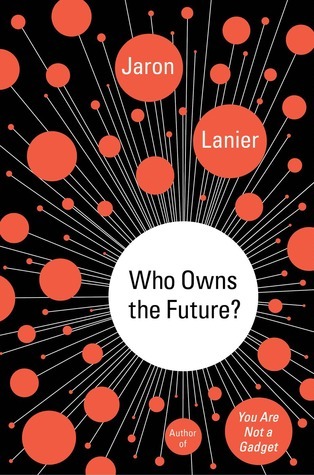
Jaron Lanier's "Who Owns the Future?" contends that the digital economy, while seemingly free, centralizes wealth and power in the hands of a few "Siren Servers" – massive data aggregators like Google and Facebook. He argues that the uncompensated data voluntarily provided by users, often called "free information," is actually the raw material for these tech giants, creating a new form of digital feudalism. Lanier proposes a radical solution: a universal system of micropayments for all online contributions, empowering individuals to reclaim ownership and compensation for their digital labor and data.
The book shares a profound kinship with "Future Shock" in its prescient analysis of disruptive societal shifts driven by technological advancement. Both authors identify fundamental structural changes in how societies organize themselves and the accompanying psychological and economic impacts. While Toffler focused on the overwhelming pace of change, Lanier zeroes in on the economic reordering caused by pervasive digital technologies, much as Toffler examined the effects of industrial and informational acceleration. Both works function as early warnings, urging a re-evaluation of established norms before new paradigms become entrenched and irreversible.
This book will resonate with anyone grappling with the implications of the digital age. It offers a fresh, provocative perspective on the often-unseen power dynamics at play in our online lives, providing a framework for understanding why so much wealth is being generated at the top while the middle class struggles. Its clear articulation of a potential remedy – paying for data – provides a tangible vision for a more equitable digital future, offering both a critical diagnosis and a hopeful, actionable prescription.
Who Owns the Future?
Jaron Lanier's "Who Owns the Future?" contends that the digital economy, while seemingly free, centralizes wealth and power in the hands of a few "Siren Servers" – massive data aggregators like Google and Facebook. He argues that the uncompensated data voluntarily provided by users, often called "free information," is actually the raw material for these tech giants, creating a new form of digital feudalism. Lanier proposes a radical solution: a universal system of micropayments for all online contributions, empowering individuals to reclaim ownership and compensation for their digital labor and data.
The book shares a profound kinship with "Future Shock" in its prescient analysis of disruptive societal shifts driven by technological advancement. Both authors identify fundamental structural changes in how societies organize themselves and the accompanying psychological and economic impacts. While Toffler focused on the overwhelming pace of change, Lanier zeroes in on the economic reordering caused by pervasive digital technologies, much as Toffler examined the effects of industrial and informational acceleration. Both works function as early warnings, urging a re-evaluation of established norms before new paradigms become entrenched and irreversible.
This book will resonate with anyone grappling with the implications of the digital age. It offers a fresh, provocative perspective on the often-unseen power dynamics at play in our online lives, providing a framework for understanding why so much wealth is being generated at the top while the middle class struggles. Its clear articulation of a potential remedy – paying for data – provides a tangible vision for a more equitable digital future, offering both a critical diagnosis and a hopeful, actionable prescription.
Reality Isn't What It Used to Be
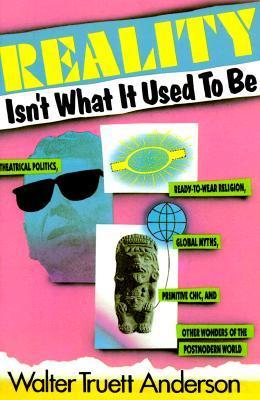
"Reality Isn't What It Used to Be" explores the dissolution of shared, objective reality in modern society, examining how diverse interpretations, virtual experiences, and the proliferation of information have fragmented our collective understanding of truth. Anderson argues that this loss of a singular reality profoundly impacts our social, political, and personal lives, forcing us to navigate a world of competing narratives and fluid identities.
This book resonates with "Future Shock" because both works dissect the destabilizing effects of accelerated change on human society. While Toffler focused on the disorientation caused by rapid technological and social shifts, Anderson extends this by analyzing how these shifts specifically erode our foundational sense of reality. Both authors tackle the psychological and societal implications of a world transforming at an unprecedented pace.
It will appeal to those seeking to understand the complex forces shaping contemporary discourse and individual perspectives. The book offers a crucial framework for comprehending phenomena like post-truth politics, the impact of social media, and identity formation in an increasingly interconnected yet fractured world, providing valuable insights into navigating these challenges.
Reality Isn't What It Used to Be
"Reality Isn't What It Used to Be" explores the dissolution of shared, objective reality in modern society, examining how diverse interpretations, virtual experiences, and the proliferation of information have fragmented our collective understanding of truth. Anderson argues that this loss of a singular reality profoundly impacts our social, political, and personal lives, forcing us to navigate a world of competing narratives and fluid identities.
This book resonates with "Future Shock" because both works dissect the destabilizing effects of accelerated change on human society. While Toffler focused on the disorientation caused by rapid technological and social shifts, Anderson extends this by analyzing how these shifts specifically erode our foundational sense of reality. Both authors tackle the psychological and societal implications of a world transforming at an unprecedented pace.
It will appeal to those seeking to understand the complex forces shaping contemporary discourse and individual perspectives. The book offers a crucial framework for comprehending phenomena like post-truth politics, the impact of social media, and identity formation in an increasingly interconnected yet fractured world, providing valuable insights into navigating these challenges.
More Books to Explore
Discover more titles that expand on these ideas and themes.
Technological Bluff
The Age of Spiritual Machines
Homo Deus: A History of Tomorrow
Abundance: The Future Is Better Than You Think
Rise of the Robots: Technology and the Threat of a Jobless Future
Revenge of the Tipping Point: Overstories, Superspreaders, and the Rise of Social Engineering