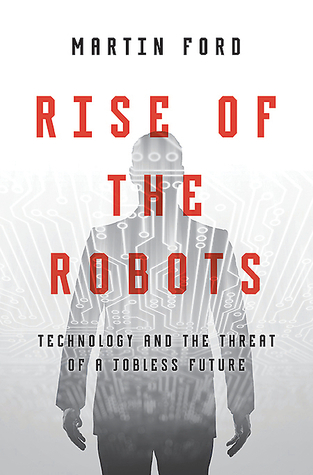
Rise of the Robots: Technology and the Threat of a Jobless Future
Book Description
Machines are rising, and humanity’s grip on the future is slipping. In 'Rise of the Robots', Martin Ford boldly explores the relentless advance of technology and its profound implications for jobs and society. As automation threatens to reshape industries and eliminate millions of jobs, uncertainty looms over the workforce of tomorrow. Can society adapt in time to harness the power of innovation, or are we marching towards a dystopian reality where humans are sidelined? This gripping examination challenges conventional thinking and sparks a crucial conversation: is the age of robots our greatest opportunity or our darkest nightmare?
Quick Book Summary
"Rise of the Robots" by Martin Ford examines how advances in robotics and artificial intelligence are poised to dramatically reshape the economic landscape, threatening to automate countless jobs across all sectors. Ford delves into the accelerating pace of technological progress, emphasizing how even skilled professionals are at risk of displacement. He highlights the resulting inequality and social upheaval as automation erodes traditional employment structures. The book explores potential solutions to these challenges, including universal basic income and new educational paradigms, while warning that failing to adapt could lead to severe economic and societal consequences. Ford’s work serves as both a stark warning and a call to action, urging society to reimagine work, value, and progress in the age of intelligent machines.





Summary of Key Ideas
Table of Contents
Acceleration of Automation and AI
Technological advancements in robotics and artificial intelligence have reached a point where machines are becoming increasingly capable of performing not only routine manual labor but also complex cognitive tasks. Ford shows that these innovations, propelled by exponential growth in computing power and machine learning algorithms, are no longer limited to factory floors or low-skilled roles. AI-driven systems are encroaching on professions previously considered safe, including law, journalism, and medicine, suggesting a future where few occupations are immune to automation’s reach.
Impact on the Labor Market and Middle Class
The spread of automation poses a profound threat to the labor market, particularly the middle class. As machines replace human workers for both physical and mental tasks, traditional pathways to economic security become precarious. Ford highlights how past technological revolutions, such as the Industrial Revolution, eventually created new types of employment, but warns that the scale and speed of current innovations may not allow enough time for displaced workers to retrain or transition to new industries. The resulting structural unemployment could lead to widespread social and economic dislocation.
Inequality and Economic Disruption
One of the most crucial consequences of the rise of robots is the exacerbation of economic inequality. The benefits of automation are largely concentrated among capital owners and highly skilled technologists, leaving the majority at risk of stagnating wages and diminishing opportunities. Ford examines the growing gap between productivity and job creation, noting how the concentration of wealth threatens to weaken consumer demand and undermine the broader economy. The book underscores the need to address this imbalance to maintain social stability and prevent further polarization.
Potential Policy Solutions
Ford discusses a range of potential policy solutions to mitigate the risks of mass automation. He advocates for ideas like universal basic income (UBI) to ensure a safety net for those displaced by technology and to preserve consumer purchasing power. He also explores the need for tax reforms, strengthened social programs, and collective action to manage the economic transition. While these proposals are subject to debate, Ford argues that proactive policies are essential to guide society through an uncertain future dominated by machines.
Reimagining Education and Human Purpose
Beyond immediate economic concerns, "Rise of the Robots" challenges readers to reconsider the purpose of work and the value of human contribution in an age of intelligent automation. Ford calls for a reinvention of education systems to foster creative and interpersonal skills that machines struggle to replicate. He suggests that society must redefine fulfilment and meaning outside traditional employment, paving the way for new roles and relationships between humans and technology. Ultimately, Ford urges society to seize the opportunities presented by automation, but only with thoughtful adaptation and forward-thinking policy measures.
Download This Summary
Get a free PDF of this summary instantly — no email required.