10 Books Similar to "All Life is Problem Solving"
by Karl Popper

The Open Society and Its Enemies - Volume Two: Hegel and Marx

"The Open Society and Its Enemies - Volume Two: Hegel and Marx" critiques historical determinism, specifically the philosophies of Hegel and Marx, arguing their theories inadvertently lead to totalitarianism. Popper meticulously dissects their ideas, demonstrating how attempts to predict and control the future based on presumed historical laws undermine individual liberty and rational discourse, advocating instead for a society built on open criticism and democratic values.
Both books, at their core, champion the vital role of critical thinking and problem-solving in human progress and societal development. While "All Life is Problem Solving" offers a broader philosophical exploration of this concept, "The Open Society" applies it to political philosophy, illustrating how a rejection of open inquiry and a belief in inevitable historical outcomes are inherently problematic and dangerous.
This book offers a compelling intellectual journey, challenging assumptions about history and political power. It provides a robust defense of individual freedom and the scientific method applied to social issues, offering profound insights into the origins of totalitarian thought. Its enduring relevance lies in its ability to equip citizens with the intellectual tools to recognize and resist ideologies that threaten open societies.
The Open Society and Its Enemies - Volume Two: Hegel and Marx
"The Open Society and Its Enemies - Volume Two: Hegel and Marx" critiques historical determinism, specifically the philosophies of Hegel and Marx, arguing their theories inadvertently lead to totalitarianism. Popper meticulously dissects their ideas, demonstrating how attempts to predict and control the future based on presumed historical laws undermine individual liberty and rational discourse, advocating instead for a society built on open criticism and democratic values.
Both books, at their core, champion the vital role of critical thinking and problem-solving in human progress and societal development. While "All Life is Problem Solving" offers a broader philosophical exploration of this concept, "The Open Society" applies it to political philosophy, illustrating how a rejection of open inquiry and a belief in inevitable historical outcomes are inherently problematic and dangerous.
This book offers a compelling intellectual journey, challenging assumptions about history and political power. It provides a robust defense of individual freedom and the scientific method applied to social issues, offering profound insights into the origins of totalitarian thought. Its enduring relevance lies in its ability to equip citizens with the intellectual tools to recognize and resist ideologies that threaten open societies.
The Open Society and Its Enemies - Volume One: The Spell of Plato

"The Open Society and Its Enemies - Volume One: The Spell of Plato" critically examines Plato's political philosophy, arguing that his influential ideas, particularly regarding the ideal state ruled by philosopher-kings, inadvertently paved the way for totalitarian thought. Popper exposes how Plato's yearning for an unchanging, perfect society undermines individual liberty and rational discourse, advocating instead for a dynamic, "open" society characterized by fallibility, criticism, and gradual reform.
This book resonates with themes in "All Life is Problem Solving" by consistently applying Popper's core epistemological principles to political theory. Both works emphasize that knowledge progresses through confronting and correcting errors, and that societal advancement hinges on continuously identifying and solving problems, rather than seeking ultimate, unshakeable truths or perfect solutions. They share the conviction that dogmatism, whether in science or politics, hinders progress.
Individuals interested in political philosophy, the history of ideas, and foundational arguments for liberal democracy will find this work profoundly insightful. It offers a powerful intellectual defense of critical thinking and democratic values against authoritarian tendencies, providing a robust framework for understanding the dangers of utopian political visions and the enduring importance of intellectual humility and societal self-correction.
The Open Society and Its Enemies - Volume One: The Spell of Plato
"The Open Society and Its Enemies - Volume One: The Spell of Plato" critically examines Plato's political philosophy, arguing that his influential ideas, particularly regarding the ideal state ruled by philosopher-kings, inadvertently paved the way for totalitarian thought. Popper exposes how Plato's yearning for an unchanging, perfect society undermines individual liberty and rational discourse, advocating instead for a dynamic, "open" society characterized by fallibility, criticism, and gradual reform.
This book resonates with themes in "All Life is Problem Solving" by consistently applying Popper's core epistemological principles to political theory. Both works emphasize that knowledge progresses through confronting and correcting errors, and that societal advancement hinges on continuously identifying and solving problems, rather than seeking ultimate, unshakeable truths or perfect solutions. They share the conviction that dogmatism, whether in science or politics, hinders progress.
Individuals interested in political philosophy, the history of ideas, and foundational arguments for liberal democracy will find this work profoundly insightful. It offers a powerful intellectual defense of critical thinking and democratic values against authoritarian tendencies, providing a robust framework for understanding the dangers of utopian political visions and the enduring importance of intellectual humility and societal self-correction.
Introduction to the Philosophy of Science
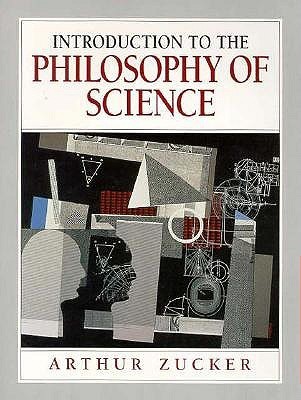
Arthur Zucker's "Introduction to the Philosophy of Science" offers a foundational yet engaging exploration of how science works, the methods it employs, and the assumptions underlying its pursuit of knowledge. It dissects core philosophical questions like what constitutes a scientific explanation, how theories are confirmed or rejected, and the nature of scientific progress itself. This book simplifies complex concepts, making the intricate world of scientific inquiry accessible to those curious about its intellectual underpinnings.
The similarity to Popper's "All Life is Problem Solving" lies in their shared emphasis on the critical, iterative nature of inquiry. Both authors view knowledge acquisition, whether in daily life or scientific research, as a process of identifying problems, proposing solutions, and then rigorously testing and refining those solutions. Zucker, like Popper, champions the idea that falsifiability – the ability to be disproven – is a hallmark of good scientific theories, and that progress emerges from a dialectic of conjecture and refutation.
This book will appeal to individuals seeking a deeper understanding of scientific thought, beyond just its findings. It provides a robust framework for assessing claims, understanding scientific debates, and appreciating the intellectual rigor behind modern science. Its value lies in empowering readers with a critical lens through which to view scientific information, fostering informed skepticism and a more nuanced appreciation of how we come to know what we know.
Introduction to the Philosophy of Science
Arthur Zucker's "Introduction to the Philosophy of Science" offers a foundational yet engaging exploration of how science works, the methods it employs, and the assumptions underlying its pursuit of knowledge. It dissects core philosophical questions like what constitutes a scientific explanation, how theories are confirmed or rejected, and the nature of scientific progress itself. This book simplifies complex concepts, making the intricate world of scientific inquiry accessible to those curious about its intellectual underpinnings.
The similarity to Popper's "All Life is Problem Solving" lies in their shared emphasis on the critical, iterative nature of inquiry. Both authors view knowledge acquisition, whether in daily life or scientific research, as a process of identifying problems, proposing solutions, and then rigorously testing and refining those solutions. Zucker, like Popper, champions the idea that falsifiability – the ability to be disproven – is a hallmark of good scientific theories, and that progress emerges from a dialectic of conjecture and refutation.
This book will appeal to individuals seeking a deeper understanding of scientific thought, beyond just its findings. It provides a robust framework for assessing claims, understanding scientific debates, and appreciating the intellectual rigor behind modern science. Its value lies in empowering readers with a critical lens through which to view scientific information, fostering informed skepticism and a more nuanced appreciation of how we come to know what we know.
The Problems of Philosophy

Bertrand Russell's "The Problems of Philosophy" serves as a foundational introduction to philosophical inquiry, exploring fundamental questions about knowledge, existence, and reality. Russell presents complex ideas, such as idealism, skepticism, and the nature of truth, in a remarkably accessible manner, inviting readers to grapple with the core challenges that have preoccupied thinkers for centuries.
This work resonates with Karl Popper's "All Life is Problem Solving" through their shared emphasis on the human endeavor to understand and navigate the world's complexities. Both books assert that grappling with fundamental questions, whether scientific or philosophical, is an inherent and essential aspect of human existence. Russell demonstrates that philosophy, at its heart, is a process of identifying and attempting to resolve conceptual problems.
The book's enduring appeal lies in its invitation to intellectual engagement. It offers a structured yet stimulating exploration of timeless questions, empowering individuals to think critically about their own perceptions and beliefs. Engaging with Russell's arguments provides a valuable framework for understanding the nature of inquiry and the ongoing human quest for knowledge.
The Problems of Philosophy
Bertrand Russell's "The Problems of Philosophy" serves as a foundational introduction to philosophical inquiry, exploring fundamental questions about knowledge, existence, and reality. Russell presents complex ideas, such as idealism, skepticism, and the nature of truth, in a remarkably accessible manner, inviting readers to grapple with the core challenges that have preoccupied thinkers for centuries.
This work resonates with Karl Popper's "All Life is Problem Solving" through their shared emphasis on the human endeavor to understand and navigate the world's complexities. Both books assert that grappling with fundamental questions, whether scientific or philosophical, is an inherent and essential aspect of human existence. Russell demonstrates that philosophy, at its heart, is a process of identifying and attempting to resolve conceptual problems.
The book's enduring appeal lies in its invitation to intellectual engagement. It offers a structured yet stimulating exploration of timeless questions, empowering individuals to think critically about their own perceptions and beliefs. Engaging with Russell's arguments provides a valuable framework for understanding the nature of inquiry and the ongoing human quest for knowledge.
Naturalizing Epistemology

Hilary Kornblith's "Naturalizing Epistemology" fundamentally reorients our understanding of knowledge acquisition. Instead of viewing epistemology as a purely abstract, philosophical pursuit separate from scientific inquiry, it argues that understanding how we know things should be grounded in empirical studies of cognition, psychology, and neuroscience. It treats knowledge-seeking as a natural process, not a transcendental one, asking how creatures like us actually come to form justified beliefs, rather than how a perfectly rational, idealized agent *should* form them.
This perspective shares significant common ground with Karl Popper's "All Life is Problem Solving." Both works emphasize that knowledge isn't simply accumulated but actively constructed through a process of trial and error, conjecture and refutation. Popper's view that life itself is a constant series of problems to be solved, leading to adaptation and growth, mirrors Kornblith's naturalistic approach to epistemology, where cognitive processes evolve to solve the problems of survival and understanding in a complex world. Both see learning as an adaptive response to environmental challenges.
This book offers a compelling and vital reframing of philosophical questions. It shows how rigorous scientific investigation can enrich and deepen our understanding of profound intellectual problems previously confined to abstract philosophical speculation. It provides a robust, evidence-based foundation for thinking about knowledge, reason, and human cognition, making it incredibly relevant for anyone interested in the intersection of philosophy and the sciences, or the very nature of human understanding.
Naturalizing Epistemology
Hilary Kornblith's "Naturalizing Epistemology" fundamentally reorients our understanding of knowledge acquisition. Instead of viewing epistemology as a purely abstract, philosophical pursuit separate from scientific inquiry, it argues that understanding how we know things should be grounded in empirical studies of cognition, psychology, and neuroscience. It treats knowledge-seeking as a natural process, not a transcendental one, asking how creatures like us actually come to form justified beliefs, rather than how a perfectly rational, idealized agent *should* form them.
This perspective shares significant common ground with Karl Popper's "All Life is Problem Solving." Both works emphasize that knowledge isn't simply accumulated but actively constructed through a process of trial and error, conjecture and refutation. Popper's view that life itself is a constant series of problems to be solved, leading to adaptation and growth, mirrors Kornblith's naturalistic approach to epistemology, where cognitive processes evolve to solve the problems of survival and understanding in a complex world. Both see learning as an adaptive response to environmental challenges.
This book offers a compelling and vital reframing of philosophical questions. It shows how rigorous scientific investigation can enrich and deepen our understanding of profound intellectual problems previously confined to abstract philosophical speculation. It provides a robust, evidence-based foundation for thinking about knowledge, reason, and human cognition, making it incredibly relevant for anyone interested in the intersection of philosophy and the sciences, or the very nature of human understanding.
The Structure of Scientific Revolutions

Thomas Kuhn's "The Structure of Scientific Revolutions" fundamentally reshaped our understanding of scientific progress. It argues that science doesn't advance through a steady accumulation of facts, but rather through periods of "normal science" operating within an accepted paradigm, punctuated by "scientific revolutions." These revolutions occur when anomalies challenge the established paradigm, leading to a crisis and eventually the adoption of a new, incommensurable worldview – a complete shift in how phenomena are observed and interpreted.
This work resonates with Popper’s "All Life is Problem Solving" through their shared emphasis on the dynamic, often disruptive, nature of progress. Both authors conceptualize advancement not as a smooth, linear ascent, but as a continuous process of challenging existing frameworks in response to problems or anomalies. For Kuhn, it's the paradigm encountering resistance; for Popper, it's our theories facing refutation. Both see the identification and resolution of problems as the engine of intellectual evolution.
Anyone interested in the history of ideas, the philosophy of science, or even the mechanics of societal change will find this book profoundly insightful. It offers a powerful framework for understanding how belief systems, whether scientific or otherwise, are formed, persist, and ultimately transform. It reveals the profoundly human element within what often appears to be an objective, detached endeavor, providing a critical lens for examining how knowledge itself evolves.
The Structure of Scientific Revolutions
Thomas Kuhn's "The Structure of Scientific Revolutions" fundamentally reshaped our understanding of scientific progress. It argues that science doesn't advance through a steady accumulation of facts, but rather through periods of "normal science" operating within an accepted paradigm, punctuated by "scientific revolutions." These revolutions occur when anomalies challenge the established paradigm, leading to a crisis and eventually the adoption of a new, incommensurable worldview – a complete shift in how phenomena are observed and interpreted.
This work resonates with Popper’s "All Life is Problem Solving" through their shared emphasis on the dynamic, often disruptive, nature of progress. Both authors conceptualize advancement not as a smooth, linear ascent, but as a continuous process of challenging existing frameworks in response to problems or anomalies. For Kuhn, it's the paradigm encountering resistance; for Popper, it's our theories facing refutation. Both see the identification and resolution of problems as the engine of intellectual evolution.
Anyone interested in the history of ideas, the philosophy of science, or even the mechanics of societal change will find this book profoundly insightful. It offers a powerful framework for understanding how belief systems, whether scientific or otherwise, are formed, persist, and ultimately transform. It reveals the profoundly human element within what often appears to be an objective, detached endeavor, providing a critical lens for examining how knowledge itself evolves.
Religion and Science

Bertrand Russell's "Religion and Science" delves into the historical and philosophical conflicts, as well as the potential convergences, between religious dogma and scientific inquiry. It explores how these two powerful forces have shaped human understanding, often clashing over explanations of the universe, morality, and the nature of truth, while examining their evolving relationship and impact on society.
This book resonates with themes in "All Life is Problem Solving" because both emphasize critical thinking and the continuous pursuit of knowledge to address fundamental human challenges. Russell, much like Popper, champions a rigorous, evidence-based approach to understanding the world, viewing both religious and scientific inquiry as attempts to grapple with profound existential questions and improve our grasp of reality. Each work illustrates how humans confront intellectual and practical problems, whether through empirical observation or spiritual introspection.
This work appeals to intellectually curious individuals interested in the foundational struggles between faith and reason, and how these dialogues have informed our cultural and intellectual lineage. It offers a sophisticated yet accessible framework for contemplating complex societal issues, fostering a deeper appreciation for the ongoing human endeavor to make sense of existence, and providing valuable insights into the methodologies and limitations of different modes of inquiry.
Religion and Science
Bertrand Russell's "Religion and Science" delves into the historical and philosophical conflicts, as well as the potential convergences, between religious dogma and scientific inquiry. It explores how these two powerful forces have shaped human understanding, often clashing over explanations of the universe, morality, and the nature of truth, while examining their evolving relationship and impact on society.
This book resonates with themes in "All Life is Problem Solving" because both emphasize critical thinking and the continuous pursuit of knowledge to address fundamental human challenges. Russell, much like Popper, champions a rigorous, evidence-based approach to understanding the world, viewing both religious and scientific inquiry as attempts to grapple with profound existential questions and improve our grasp of reality. Each work illustrates how humans confront intellectual and practical problems, whether through empirical observation or spiritual introspection.
This work appeals to intellectually curious individuals interested in the foundational struggles between faith and reason, and how these dialogues have informed our cultural and intellectual lineage. It offers a sophisticated yet accessible framework for contemplating complex societal issues, fostering a deeper appreciation for the ongoing human endeavor to make sense of existence, and providing valuable insights into the methodologies and limitations of different modes of inquiry.
The Meaning of It All: Thoughts of a Citizen-Scientist
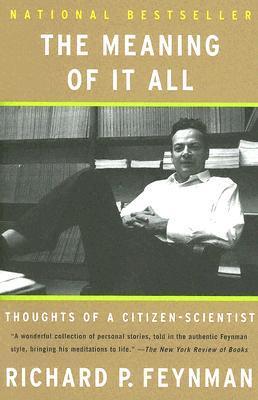
"The Meaning of It All: Thoughts of a Citizen-Scientist" presents Richard Feynman's unvarnished reflections on science, society, religion, and the human condition. Drawn from a series of public lectures, it explores the scientific method not just as a technique for understanding the natural world, but as a framework for approaching truth and uncertainty in all aspects of life. Feynman champions a skeptical, open-minded approach, emphasizing curiosity, critical thinking, and the importance of questioning established dogma. It offers a distillation of his philosophical outlook, grounded in empirical observation and intellectual honesty.
This book shares a core philosophical kinship with Karl Popper's "All Life is Problem Solving." Both works are fundamentally concerned with the process of discovery and intellectual growth through the identification and attempted resolution of problems. Feynman, like Popper, views learning and progress as an iterative cycle of conjecture and refutation, where ideas are tested and either refined or discarded. They both advocate for intellectual humility and a persistent engagement with the unknown, positioning the scientific attitude as a universal tool for navigating complexity.
This collection provides profound insights into the mind of one of history's most brilliant scientists, offering a refreshing perspective on challenging conventional wisdom. It encourages a deeper engagement with the world through a lens of scientific inquiry and intellectual integrity, fostering critical thinking skills applicable across disciplines. Its accessible yet profound discussions offer intellectual nourishment, prompting individuals to cultivate their own problem-solving capabilities and embrace a spirit of continuous questioning.
The Meaning of It All: Thoughts of a Citizen-Scientist
"The Meaning of It All: Thoughts of a Citizen-Scientist" presents Richard Feynman's unvarnished reflections on science, society, religion, and the human condition. Drawn from a series of public lectures, it explores the scientific method not just as a technique for understanding the natural world, but as a framework for approaching truth and uncertainty in all aspects of life. Feynman champions a skeptical, open-minded approach, emphasizing curiosity, critical thinking, and the importance of questioning established dogma. It offers a distillation of his philosophical outlook, grounded in empirical observation and intellectual honesty.
This book shares a core philosophical kinship with Karl Popper's "All Life is Problem Solving." Both works are fundamentally concerned with the process of discovery and intellectual growth through the identification and attempted resolution of problems. Feynman, like Popper, views learning and progress as an iterative cycle of conjecture and refutation, where ideas are tested and either refined or discarded. They both advocate for intellectual humility and a persistent engagement with the unknown, positioning the scientific attitude as a universal tool for navigating complexity.
This collection provides profound insights into the mind of one of history's most brilliant scientists, offering a refreshing perspective on challenging conventional wisdom. It encourages a deeper engagement with the world through a lens of scientific inquiry and intellectual integrity, fostering critical thinking skills applicable across disciplines. Its accessible yet profound discussions offer intellectual nourishment, prompting individuals to cultivate their own problem-solving capabilities and embrace a spirit of continuous questioning.
The Demon-Haunted World: Science as a Candle in the Dark

"The Demon-Haunted World: Science as a Candle in the Dark" by Carl Sagan champions scientific thinking as a vital tool for navigating a world often clouded by pseudoscience, superstition, and irrationality. Sagan urges readers to embrace critical inquiry, skepticism, and verifiable evidence to distinguish fact from fiction, defending reasoned thought against the allure of comforting falsehoods and manipulative claims. He explores historical and contemporary examples of irrationality while illustrating how the scientific method empowers us to understand and improve our reality.
This book shares a foundational similarity with "All Life is Problem Solving" in its core advocacy for an active, critical engagement with experience. Both authors posit that human existence inherently involves confronting and addressing challenges. While Popper frames this through the lens of knowledge growth and falsification, Sagan demonstrates how scientific methodology provides the most robust framework for identifying, analyzing, and ultimately solving the problems posed by misinformation and a lack of empirical understanding. Both works emphasize the ongoing, iterative nature of inquiry.
The book will resonate with individuals seeking intellectual clarity and a robust framework for evaluating information in an increasingly complex world. It offers practical insights into critical thinking and media literacy, empowering one to resist manipulation and make informed decisions. Its eloquent defense of reason and evidence provides a refreshing counterpoint to the prevalence of unsubstantiated beliefs, making it an essential guide for anyone committed to a more rational and enlightened society.
The Demon-Haunted World: Science as a Candle in the Dark
"The Demon-Haunted World: Science as a Candle in the Dark" by Carl Sagan champions scientific thinking as a vital tool for navigating a world often clouded by pseudoscience, superstition, and irrationality. Sagan urges readers to embrace critical inquiry, skepticism, and verifiable evidence to distinguish fact from fiction, defending reasoned thought against the allure of comforting falsehoods and manipulative claims. He explores historical and contemporary examples of irrationality while illustrating how the scientific method empowers us to understand and improve our reality.
This book shares a foundational similarity with "All Life is Problem Solving" in its core advocacy for an active, critical engagement with experience. Both authors posit that human existence inherently involves confronting and addressing challenges. While Popper frames this through the lens of knowledge growth and falsification, Sagan demonstrates how scientific methodology provides the most robust framework for identifying, analyzing, and ultimately solving the problems posed by misinformation and a lack of empirical understanding. Both works emphasize the ongoing, iterative nature of inquiry.
The book will resonate with individuals seeking intellectual clarity and a robust framework for evaluating information in an increasingly complex world. It offers practical insights into critical thinking and media literacy, empowering one to resist manipulation and make informed decisions. Its eloquent defense of reason and evidence provides a refreshing counterpoint to the prevalence of unsubstantiated beliefs, making it an essential guide for anyone committed to a more rational and enlightened society.
Open Socrates: The Case for a Philosophical Life
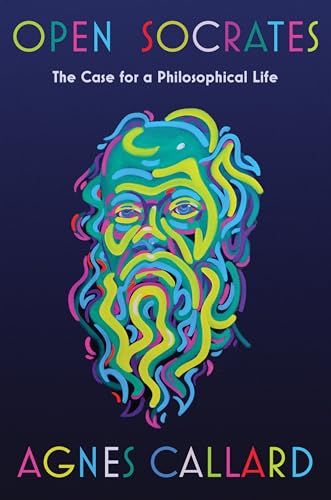
"Open Socrates" by Agnes Callard champions the philosophical life not as a dry academic pursuit, but as a dynamic process of relentless self-improvement and intellectual growth. It argues that genuine engagement with philosophical questions fundamentally reshapes one's being, pushing individuals to continually re-evaluate their understanding of the world and their place within it. Callard frames philosophy as an active, transformative endeavor, an ongoing journey of aspiration rather than a static body of knowledge.
This perspective resonates strongly with Karl Popper's "All Life is Problem Solving." Both books underscore the fundamental role of critical inquiry and problem-solving in human existence. Popper sees life as a continuous series of conjectures and refutations, a constant effort to identify and overcome problems. Callard, similarly, presents philosophy as a structured, intentional, and transformative form of problem-solving—where the "problems" are often one's own assumptions, beliefs, and limitations. Both authors advocate for a life defined by active intellectual engagement and a willingness to confront and revise one's understanding.
The book will appeal to those who seek a deeper, more purposeful way of living, beyond mere accumulation or comfort. It offers a compelling argument for intellectual rigor as a path to personal betterment and a richer understanding of reality, providing a framework for transforming curiosity into a meaningful way of life.
Open Socrates: The Case for a Philosophical Life
"Open Socrates" by Agnes Callard champions the philosophical life not as a dry academic pursuit, but as a dynamic process of relentless self-improvement and intellectual growth. It argues that genuine engagement with philosophical questions fundamentally reshapes one's being, pushing individuals to continually re-evaluate their understanding of the world and their place within it. Callard frames philosophy as an active, transformative endeavor, an ongoing journey of aspiration rather than a static body of knowledge.
This perspective resonates strongly with Karl Popper's "All Life is Problem Solving." Both books underscore the fundamental role of critical inquiry and problem-solving in human existence. Popper sees life as a continuous series of conjectures and refutations, a constant effort to identify and overcome problems. Callard, similarly, presents philosophy as a structured, intentional, and transformative form of problem-solving—where the "problems" are often one's own assumptions, beliefs, and limitations. Both authors advocate for a life defined by active intellectual engagement and a willingness to confront and revise one's understanding.
The book will appeal to those who seek a deeper, more purposeful way of living, beyond mere accumulation or comfort. It offers a compelling argument for intellectual rigor as a path to personal betterment and a richer understanding of reality, providing a framework for transforming curiosity into a meaningful way of life.
More Books to Explore
Discover more titles that expand on these ideas and themes.
The Open Society and Its Enemies - Volume Two: Hegel and Marx
The Open Society and Its Enemies - Volume One: The Spell of Plato
Introduction to the Philosophy of Science
The Problems of Philosophy
Naturalizing Epistemology
The Structure of Scientific Revolutions