10 Books Similar to "Two Women"
by Alberto Moravia

Roman Tales

"Roman Tales" offers a vibrant, often unvarnished, snapshot of post-war Rome through a collection of short stories. Each narrative, typically told from the perspective of a working-class Roman, explores themes of survival, love, petty crime, and the ever-present struggle against poverty and injustice, all set against the backdrop of the city's unique charm and grit.
The collection shares a significant thematic and stylistic kinship with "Two Women." Both works foreground the experiences of ordinary Italians navigating profound social and economic upheaval. Moravia's keen eye for depicting resilient, often morally ambiguous, characters grappling with difficult circumstances, and his unflinching portrayal of human nature under duress, are hallmarks of both books. The authentic, grounded dialogue and observational realism create a consistent authorial voice.
"Roman Tales" will undoubtedly appeal to those who appreciate a narrative that delves into the human condition with both poignancy and a subtle, dark humor. It provides a rich cultural immersion, offering insights into Italian life and the enduring spirit of its people during a pivotal historical period. The collection's value lies in its honest character portrayals and its evocative depiction of a city and its inhabitants facing an uncertain future.
Roman Tales
"Roman Tales" offers a vibrant, often unvarnished, snapshot of post-war Rome through a collection of short stories. Each narrative, typically told from the perspective of a working-class Roman, explores themes of survival, love, petty crime, and the ever-present struggle against poverty and injustice, all set against the backdrop of the city's unique charm and grit.
The collection shares a significant thematic and stylistic kinship with "Two Women." Both works foreground the experiences of ordinary Italians navigating profound social and economic upheaval. Moravia's keen eye for depicting resilient, often morally ambiguous, characters grappling with difficult circumstances, and his unflinching portrayal of human nature under duress, are hallmarks of both books. The authentic, grounded dialogue and observational realism create a consistent authorial voice.
"Roman Tales" will undoubtedly appeal to those who appreciate a narrative that delves into the human condition with both poignancy and a subtle, dark humor. It provides a rich cultural immersion, offering insights into Italian life and the enduring spirit of its people during a pivotal historical period. The collection's value lies in its honest character portrayals and its evocative depiction of a city and its inhabitants facing an uncertain future.
Agostino
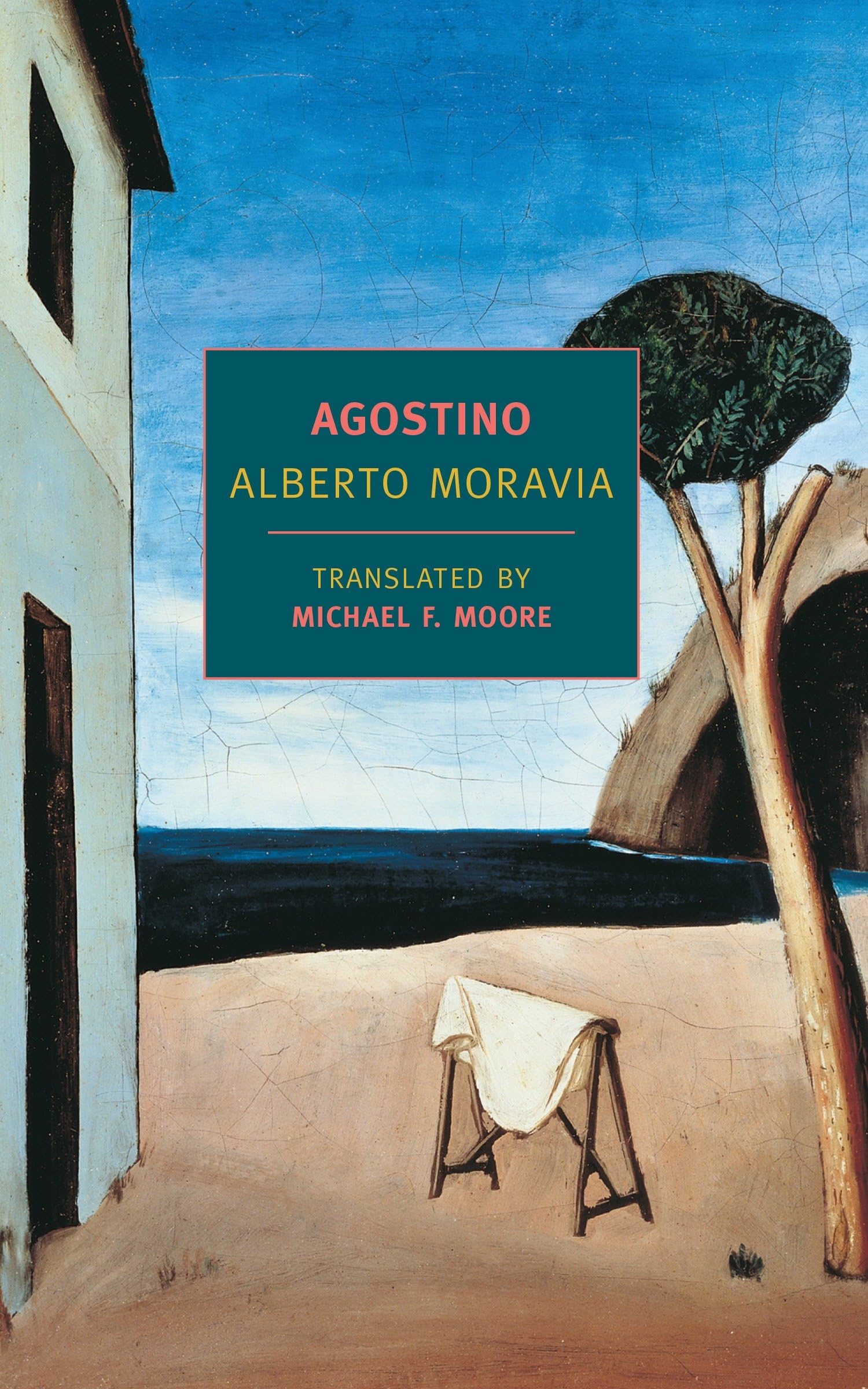
"Agostino" explores the tumultuous summer of a thirteen-year-old boy, Agostino, as he navigates the complex and unsettling world of adult sexuality and social hierarchy. Following his father's death, Agostino and his beautiful, young mother vacation at the beach, where the boy's innocent perspective is gradually shattered by unsettling encounters with older men, his mother's nascent romantic life, and his own burgeoning, confused desires. It's a poignant exploration of loss of innocence, sexual awakening, and the uncomfortable realities of class and power dynamics.
This novella echoes "Two Women" through its keen psychological insights into a young protagonist’s perspective on adult behavior and challenging circumstances. Both novels feature adolescents grappling with a world shifted by external events – war in "Two Women," and bereavement and blossoming sexuality in "Agostino" – leading to a profound re-evaluation of their relationships and their place within society. Moravia's characteristic unflinching portrayal of human nature, particularly its more uncomfortable aspects, is evident in both works.
"Agostino" offers a powerful and nuanced examination of adolescence, desire, and the often-painful transition from childhood innocence to a more complex understanding of the world. Its exploration of uncomfortable truths, particularly around nascent sexuality and societal roles, provides a thought-provoking and emotionally resonant experience. The book's literary merit lies in its precise character observation and its willingness to confront difficult subject matter with honesty.
Agostino
"Agostino" explores the tumultuous summer of a thirteen-year-old boy, Agostino, as he navigates the complex and unsettling world of adult sexuality and social hierarchy. Following his father's death, Agostino and his beautiful, young mother vacation at the beach, where the boy's innocent perspective is gradually shattered by unsettling encounters with older men, his mother's nascent romantic life, and his own burgeoning, confused desires. It's a poignant exploration of loss of innocence, sexual awakening, and the uncomfortable realities of class and power dynamics.
This novella echoes "Two Women" through its keen psychological insights into a young protagonist’s perspective on adult behavior and challenging circumstances. Both novels feature adolescents grappling with a world shifted by external events – war in "Two Women," and bereavement and blossoming sexuality in "Agostino" – leading to a profound re-evaluation of their relationships and their place within society. Moravia's characteristic unflinching portrayal of human nature, particularly its more uncomfortable aspects, is evident in both works.
"Agostino" offers a powerful and nuanced examination of adolescence, desire, and the often-painful transition from childhood innocence to a more complex understanding of the world. Its exploration of uncomfortable truths, particularly around nascent sexuality and societal roles, provides a thought-provoking and emotionally resonant experience. The book's literary merit lies in its precise character observation and its willingness to confront difficult subject matter with honesty.
Contempt

"Contempt" explores the emotional disintegration of a marriage between a screenwriter, Riccardo, and his wife, Emilia, during the production of a film adaptation of Homer's *Odyssey*. As Riccardo compromises his artistic integrity for commercial gain, Emilia’s affection and respect for him gradually erode, leaving him bewildered by her seemingly inexplicable coldness. The novel masterfully dissects the nuances of their crumbling relationship against the backdrop of artistic compromise and the commercialization of art.
Both novels delve deeply into the psychological complexities of their female protagonists, grappling with existential crises induced by relationship dynamics and societal pressures. Like Cesira in "Two Women" who struggles with the moral aftermath of wartime trauma and her daughter's shifting values, Emilia in "Contempt" undergoes a profound internal transformation as her ideals clash with her husband's choices, leading to a loss of innocence and a re-evaluation of her self-worth. Moravia's incisive examination of female interiority and the impact of external events on personal identity is a shared thematic cornerstone.
This novel offers a compelling and introspective look at the fragility of love, the corrupting influence of ambition, and the profound disconnect that can arise between individuals. It provides a nuanced study of human vulnerability and the often-unspoken reasons behind emotional estrangement, offering valuable insights into the complexities of human relationships and the internal cost of compromise.
Contempt
"Contempt" explores the emotional disintegration of a marriage between a screenwriter, Riccardo, and his wife, Emilia, during the production of a film adaptation of Homer's *Odyssey*. As Riccardo compromises his artistic integrity for commercial gain, Emilia’s affection and respect for him gradually erode, leaving him bewildered by her seemingly inexplicable coldness. The novel masterfully dissects the nuances of their crumbling relationship against the backdrop of artistic compromise and the commercialization of art.
Both novels delve deeply into the psychological complexities of their female protagonists, grappling with existential crises induced by relationship dynamics and societal pressures. Like Cesira in "Two Women" who struggles with the moral aftermath of wartime trauma and her daughter's shifting values, Emilia in "Contempt" undergoes a profound internal transformation as her ideals clash with her husband's choices, leading to a loss of innocence and a re-evaluation of her self-worth. Moravia's incisive examination of female interiority and the impact of external events on personal identity is a shared thematic cornerstone.
This novel offers a compelling and introspective look at the fragility of love, the corrupting influence of ambition, and the profound disconnect that can arise between individuals. It provides a nuanced study of human vulnerability and the often-unspoken reasons behind emotional estrangement, offering valuable insights into the complexities of human relationships and the internal cost of compromise.
The Conformist

*The Conformist* delves into the life of Marcello Clerici, a man deeply burdened by a childhood trauma and an overwhelming desire for normalcy and acceptance. He believes that by conforming to societal expectations, even if it means embracing fascism as a political ideology, he can expunge his past and become a "normal" individual. The novel explores his internal struggles as he navigates his personal life, his marriage, and his politically motivated mission to assassinate his former anti-fascist professor, all while grappling with his true nature.
Both *The Conformist* and *Two Women* feature protagonists grappling with the pervasive moral compromises and psychological scars inflicted by war and oppressive political regimes. While Cesira in *Two Women* endures the immediate, visceral impact of invasion and violence, Marcello in *The Conformist* is molded by a more insidious, ideological oppression. Both novels explore the complex interplay between individual resilience, personal morality, and the corrupting forces of their respective historical contexts, forcing their characters into difficult, often morally ambiguous, choices.
This book will appeal to those who appreciate profound psychological exploration within a compelling historical setting. It offers a nuanced examination of identity, conformity, and the search for authentic selfhood in a world riddled with political and personal hypocrisy. The intricate character development and the sharp, incisive commentary on human nature provide a rich and thought-provoking experience, reflecting on the lasting impact of societal pressures and the often-elusive quest for integrity.
The Conformist
*The Conformist* delves into the life of Marcello Clerici, a man deeply burdened by a childhood trauma and an overwhelming desire for normalcy and acceptance. He believes that by conforming to societal expectations, even if it means embracing fascism as a political ideology, he can expunge his past and become a "normal" individual. The novel explores his internal struggles as he navigates his personal life, his marriage, and his politically motivated mission to assassinate his former anti-fascist professor, all while grappling with his true nature.
Both *The Conformist* and *Two Women* feature protagonists grappling with the pervasive moral compromises and psychological scars inflicted by war and oppressive political regimes. While Cesira in *Two Women* endures the immediate, visceral impact of invasion and violence, Marcello in *The Conformist* is molded by a more insidious, ideological oppression. Both novels explore the complex interplay between individual resilience, personal morality, and the corrupting forces of their respective historical contexts, forcing their characters into difficult, often morally ambiguous, choices.
This book will appeal to those who appreciate profound psychological exploration within a compelling historical setting. It offers a nuanced examination of identity, conformity, and the search for authentic selfhood in a world riddled with political and personal hypocrisy. The intricate character development and the sharp, incisive commentary on human nature provide a rich and thought-provoking experience, reflecting on the lasting impact of societal pressures and the often-elusive quest for integrity.
Boredom

Alberto Moravia's "Boredom" delves into the psyche of Dino, a young Roman painter from a wealthy background, who grapples with an existential ennui that renders life utterly meaningless. His struggle manifests in a desperate, often self-destructive, attempt to possess his young, enigmatic mistress, Cecilia, in the hopes that her reality might momentarily pierce his pervasive apathy. The novel explores the suffocating weight of wealth and privilege, and the profound void that can persist despite material abundance.
"Boredom" shares with "Two Women" a deep exploration of the female protagonist's inner world, though their circumstances differ greatly. Both novels feature protagonists attempting to navigate a world that feels increasingly detached or hostile, with Moravia's signature unflinching gaze on their emotional and psychological landscapes. Both masterfully portray the complexities of human relationships under duress, be it war-torn survival or existential despair.
This novel will appeal to those seeking a candid and intellectually stimulating examination of the human condition, particularly the often-unacknowledged struggles of the affluent. Its incisive critique of modern alienation and consumerism remains remarkably relevant, offering valuable insights into the psychological toll of perceived meaninglessness. More specifically, it allows for a profound internal journey into the character, allowing for connection and understanding of deeper psychological forces.
Boredom
Alberto Moravia's "Boredom" delves into the psyche of Dino, a young Roman painter from a wealthy background, who grapples with an existential ennui that renders life utterly meaningless. His struggle manifests in a desperate, often self-destructive, attempt to possess his young, enigmatic mistress, Cecilia, in the hopes that her reality might momentarily pierce his pervasive apathy. The novel explores the suffocating weight of wealth and privilege, and the profound void that can persist despite material abundance.
"Boredom" shares with "Two Women" a deep exploration of the female protagonist's inner world, though their circumstances differ greatly. Both novels feature protagonists attempting to navigate a world that feels increasingly detached or hostile, with Moravia's signature unflinching gaze on their emotional and psychological landscapes. Both masterfully portray the complexities of human relationships under duress, be it war-torn survival or existential despair.
This novel will appeal to those seeking a candid and intellectually stimulating examination of the human condition, particularly the often-unacknowledged struggles of the affluent. Its incisive critique of modern alienation and consumerism remains remarkably relevant, offering valuable insights into the psychological toll of perceived meaninglessness. More specifically, it allows for a profound internal journey into the character, allowing for connection and understanding of deeper psychological forces.
Arturo's Island

"Arturo's Island" tells the story of Arturo Gerace, a young boy growing up in almost complete isolation on a small island off the coast of Naples. His father, a mysterious and often absent figure whom Arturo idolizes, largely leaves him to his own devices. The narrative explores Arturo's solitary childhood, his burgeoning sexuality, and the shattering disillusionment that comes with the arrival of his father's new, young wife, whom Arturo initially sees as an intruder and later develops complex, forbidden feelings for. It’s a powerful coming-of-age story set against a wild, untamed backdrop.
The similarity to "Two Women" lies in their shared exploration of pivotal female perspectives, often in challenging or morally ambiguous circumstances, within the context of war's aftermath or societal upheaval. Both novels delve into the complexities of familial relationships, the loss of innocence, and the profound impact of dramatic life changes on individuals, particularly young women or those grappling with their emerging identities. They both offer intimate psychological portraits, unflinchingly examining love, desire, and survival.
This book will appeal to those who appreciate deeply character-driven narratives focused on psychological realism and the intricacies of human emotion. It offers a poignant, introspective look at youth, idealization, and the painful process of confronting harsh realities. Its literary merit, particularly its lyrical prose and rich exploration of themes like abandonment, burgeoning sexuality, and the nature of father-son relationships, makes it a valuable read for anyone interested in Italian modernism and the universal experience of growing up.
Arturo's Island
"Arturo's Island" tells the story of Arturo Gerace, a young boy growing up in almost complete isolation on a small island off the coast of Naples. His father, a mysterious and often absent figure whom Arturo idolizes, largely leaves him to his own devices. The narrative explores Arturo's solitary childhood, his burgeoning sexuality, and the shattering disillusionment that comes with the arrival of his father's new, young wife, whom Arturo initially sees as an intruder and later develops complex, forbidden feelings for. It’s a powerful coming-of-age story set against a wild, untamed backdrop.
The similarity to "Two Women" lies in their shared exploration of pivotal female perspectives, often in challenging or morally ambiguous circumstances, within the context of war's aftermath or societal upheaval. Both novels delve into the complexities of familial relationships, the loss of innocence, and the profound impact of dramatic life changes on individuals, particularly young women or those grappling with their emerging identities. They both offer intimate psychological portraits, unflinchingly examining love, desire, and survival.
This book will appeal to those who appreciate deeply character-driven narratives focused on psychological realism and the intricacies of human emotion. It offers a poignant, introspective look at youth, idealization, and the painful process of confronting harsh realities. Its literary merit, particularly its lyrical prose and rich exploration of themes like abandonment, burgeoning sexuality, and the nature of father-son relationships, makes it a valuable read for anyone interested in Italian modernism and the universal experience of growing up.
Bread and Wine

"Bread and Wine" tells the story of Pietro Spina, an Italian communist revolutionary who, forced to flee Mussolini's fascist regime, returns to his homeland disguised as a priest. He struggles to reconnect with the populace, many of whom have become apathetic or resigned under the dictatorship, while secretly organizing resistance. The novel explores themes of faith, cynicism, political disillusionment, and the enduring human spirit in oppressive times.
The similarity to "Two Women" lies in their shared exploration of individuals navigating the brutal realities of war and authoritarianism in rural Italy. Both novels depict the resilience and moral compromises ordinary people are forced to make against overwhelming external forces. They delve into the psychological impact of conflict on the common person, portraying a landscape where traditional values are challenged and redefined by survival. Each protagonist, in their own way, seeks meaning and a path forward amidst widespread suffering and societal breakdown.
This novel will appeal to those who appreciate powerful narratives examining moral dilemmas and the human condition under duress. It offers profound insights into political resistance, the nature of belief, and the difficult choices people make to preserve their humanity. The book's historical context provides a valuable lens through which to understand past struggles and their echoes in contemporary society, fostering reflection on courage, community, and the costs of freedom.
Bread and Wine
"Bread and Wine" tells the story of Pietro Spina, an Italian communist revolutionary who, forced to flee Mussolini's fascist regime, returns to his homeland disguised as a priest. He struggles to reconnect with the populace, many of whom have become apathetic or resigned under the dictatorship, while secretly organizing resistance. The novel explores themes of faith, cynicism, political disillusionment, and the enduring human spirit in oppressive times.
The similarity to "Two Women" lies in their shared exploration of individuals navigating the brutal realities of war and authoritarianism in rural Italy. Both novels depict the resilience and moral compromises ordinary people are forced to make against overwhelming external forces. They delve into the psychological impact of conflict on the common person, portraying a landscape where traditional values are challenged and redefined by survival. Each protagonist, in their own way, seeks meaning and a path forward amidst widespread suffering and societal breakdown.
This novel will appeal to those who appreciate powerful narratives examining moral dilemmas and the human condition under duress. It offers profound insights into political resistance, the nature of belief, and the difficult choices people make to preserve their humanity. The book's historical context provides a valuable lens through which to understand past struggles and their echoes in contemporary society, fostering reflection on courage, community, and the costs of freedom.
The Twenty-three Days of the City of Alba
"The Twenty-three Days of the City of Alba" vividly chronicles the partisan resistance in Italy during World War II, specifically focusing on the recapture and brief liberation of the town of Alba. Fenoglio presents a collection of vignettes illustrating the stark realities, moral ambiguities, and courageous acts of the anti-fascist fighters, often with a raw, unvarnished depiction of combat and its human cost.
This work resonates with "Two Women" through its powerful exploration of individuals navigating the brutal landscape of wartime Italy. Both novels unflinchingly portray the profound psychological and emotional toll of conflict on ordinary people, particularly women and children, and the erosion of societal norms under extreme duress. Both authors utilize a realistic narrative style, avoiding overt melodrama to instead focus on the intimate, often harrowing, human experience of war.
This book offers a compelling window into a pivotal historical moment, providing insight into the resilience of the human spirit in the face of unimaginable adversity. Its stark realism and intimate character portraits invite reflection on themes of survival, morality, and the enduring impact of conflict, making it a valuable addition to anyone's literary understanding of 20th-century history and human nature.
The Twenty-three Days of the City of Alba
"The Twenty-three Days of the City of Alba" vividly chronicles the partisan resistance in Italy during World War II, specifically focusing on the recapture and brief liberation of the town of Alba. Fenoglio presents a collection of vignettes illustrating the stark realities, moral ambiguities, and courageous acts of the anti-fascist fighters, often with a raw, unvarnished depiction of combat and its human cost.
This work resonates with "Two Women" through its powerful exploration of individuals navigating the brutal landscape of wartime Italy. Both novels unflinchingly portray the profound psychological and emotional toll of conflict on ordinary people, particularly women and children, and the erosion of societal norms under extreme duress. Both authors utilize a realistic narrative style, avoiding overt melodrama to instead focus on the intimate, often harrowing, human experience of war.
This book offers a compelling window into a pivotal historical moment, providing insight into the resilience of the human spirit in the face of unimaginable adversity. Its stark realism and intimate character portraits invite reflection on themes of survival, morality, and the enduring impact of conflict, making it a valuable addition to anyone's literary understanding of 20th-century history and human nature.
Not All Bastards Are from Vienna

"Not All Bastards Are from Vienna" is a darkly humorous yet poignant novel set during World War I, centered on the struggles of a Venetian family caught in the crossfire of Italian and Austro-Hungarian forces. It explores themes of survival, moral compromise, and the desperate measures people take to protect their loved ones and way of life amidst the absurdity and brutality of war.
It shares striking similarities with "Two Women" through its focus on the resilience of ordinary people – particularly women – navigating a wartime landscape that upends societal norms and challenges personal ethics. Both novels depict the devastating impact of conflict on civilian populations, forcing characters to confront difficult choices and endure profound loss, often through the eyes of a protagonist determined to preserve their family's integrity.
This book will appeal to those who appreciate war narratives that delve beyond battlefield heroics to portray the human cost and moral complexities suffered by those on the home front. Its exploration of survival tactics, the breakdown of civil order, and the enduring strength of the human spirit offers a valuable and thought-provoking perspective on historical conflict and its lasting psychological scars.
Not All Bastards Are from Vienna
"Not All Bastards Are from Vienna" is a darkly humorous yet poignant novel set during World War I, centered on the struggles of a Venetian family caught in the crossfire of Italian and Austro-Hungarian forces. It explores themes of survival, moral compromise, and the desperate measures people take to protect their loved ones and way of life amidst the absurdity and brutality of war.
It shares striking similarities with "Two Women" through its focus on the resilience of ordinary people – particularly women – navigating a wartime landscape that upends societal norms and challenges personal ethics. Both novels depict the devastating impact of conflict on civilian populations, forcing characters to confront difficult choices and endure profound loss, often through the eyes of a protagonist determined to preserve their family's integrity.
This book will appeal to those who appreciate war narratives that delve beyond battlefield heroics to portray the human cost and moral complexities suffered by those on the home front. Its exploration of survival tactics, the breakdown of civil order, and the enduring strength of the human spirit offers a valuable and thought-provoking perspective on historical conflict and its lasting psychological scars.
Twice Born

"Twice Born" follows Gemma, a middle-aged Italian woman living in Rome, as she revisits Sarajevo with her son, Pietro. The trip forces her to confront the traumatic memories of her youth during the Bosnian War, specifically her passionate and volatile relationship with Pietro's father, Diego, an American photographer. The narrative deftly weaves between Gemma's present-day struggle as a mother and her past experiences of love, loss, and the devastating impact of war on personal lives and relationships.
Both novels compellingly explore the fierce, protective instinct of a mother facing the brutalities of war and societal upheaval. Like Moravia's "Two Women," "Twice Born" delves into the moral complexities and emotional scars left by conflict, examining how individuals, particularly women, navigate unimaginable adversity and the choices they make to survive and protect their children. The core similarity lies in the raw, unflinching portrayal of maternal love enduring through profound suffering and the lingering psychological effects of extreme violence.
This book offers a powerful and moving exploration of love, sacrifice, and the enduring legacy of war. It presents a deeply human story that resonates with themes of resilience, identity, and the ways in which historical events shape personal destinies. The rich character development and evocative setting provide a compelling narrative that is both thought-provoking and emotionally engaging, offering insights into human endurance and the complexities of familial bonds against a backdrop of geopolitical turmoil.
Twice Born
"Twice Born" follows Gemma, a middle-aged Italian woman living in Rome, as she revisits Sarajevo with her son, Pietro. The trip forces her to confront the traumatic memories of her youth during the Bosnian War, specifically her passionate and volatile relationship with Pietro's father, Diego, an American photographer. The narrative deftly weaves between Gemma's present-day struggle as a mother and her past experiences of love, loss, and the devastating impact of war on personal lives and relationships.
Both novels compellingly explore the fierce, protective instinct of a mother facing the brutalities of war and societal upheaval. Like Moravia's "Two Women," "Twice Born" delves into the moral complexities and emotional scars left by conflict, examining how individuals, particularly women, navigate unimaginable adversity and the choices they make to survive and protect their children. The core similarity lies in the raw, unflinching portrayal of maternal love enduring through profound suffering and the lingering psychological effects of extreme violence.
This book offers a powerful and moving exploration of love, sacrifice, and the enduring legacy of war. It presents a deeply human story that resonates with themes of resilience, identity, and the ways in which historical events shape personal destinies. The rich character development and evocative setting provide a compelling narrative that is both thought-provoking and emotionally engaging, offering insights into human endurance and the complexities of familial bonds against a backdrop of geopolitical turmoil.
More Books to Explore
Discover more titles that expand on these ideas and themes.
Roman Tales
Agostino
Contempt
The Conformist
Boredom
Arturo's Island