10 Books Similar to "The Wisdom of Crowds"
by James Surowiecki
The Art of Thinking Clearly

"The Art of Thinking Clearly" by Rolf Dobelli is a practical guide to recognizing and avoiding common cognitive biases and logical fallacies that distort our judgment. It breaks down these mental shortcuts into easily digestible chapters, offering real-world examples and historical anecdotes to illustrate how flawed thinking patterns lead to poor decisions in everyday life, business, and personal relationships.
This book shares thematic ground with "The Wisdom of Crowds" because both fundamentally explore how humans process information and make choices, albeit from different angles. While Surowiecki champions the collective intelligence of groups, Dobelli alerts us to the individual pitfalls that can undermine rational thought. Both authors aim to improve decision-making by revealing the hidden mechanisms behind human judgment, offering insights into why we err and how to navigate complexity more effectively.
The book will appeal to individuals seeking to sharpen their critical thinking skills and make more informed choices. Its clear, concise explanations and actionable insights equip one with tools to identify and counteract erroneous mental habits, leading to greater personal effectiveness and better outcomes in various aspects of life. Its value lies in demystifying complex psychological concepts, making them accessible and immediately applicable for practical self-improvement.
The Art of Thinking Clearly
"The Art of Thinking Clearly" by Rolf Dobelli is a practical guide to recognizing and avoiding common cognitive biases and logical fallacies that distort our judgment. It breaks down these mental shortcuts into easily digestible chapters, offering real-world examples and historical anecdotes to illustrate how flawed thinking patterns lead to poor decisions in everyday life, business, and personal relationships.
This book shares thematic ground with "The Wisdom of Crowds" because both fundamentally explore how humans process information and make choices, albeit from different angles. While Surowiecki champions the collective intelligence of groups, Dobelli alerts us to the individual pitfalls that can undermine rational thought. Both authors aim to improve decision-making by revealing the hidden mechanisms behind human judgment, offering insights into why we err and how to navigate complexity more effectively.
The book will appeal to individuals seeking to sharpen their critical thinking skills and make more informed choices. Its clear, concise explanations and actionable insights equip one with tools to identify and counteract erroneous mental habits, leading to greater personal effectiveness and better outcomes in various aspects of life. Its value lies in demystifying complex psychological concepts, making them accessible and immediately applicable for practical self-improvement.
The Paradox of Choice: Why More Is Less
"The Paradox of Choice" explores how an abundance of options, far from liberating us, can ironically lead to increased anxiety, decision paralysis, and dissatisfaction. Barry Schwartz argues that while we believe more choice is always better, it often results in cognitive overload, escalating expectations, and a greater likelihood of regret over the unchosen alternatives, ultimately diminishing our overall well-being.
Both books delve into the complexities of human decision-making and its societal implications. While Surowiecki champions the collective intelligence of diverse groups, Schwartz examines the individual psychological burden imposed by an overwhelming array of choices. They converge on the idea that our assumptions about "more is better" in isolation don't always hold true, whether considering the inputs to a collective judgment or the perceived benefits of personal freedom.
This book offers profound insights into navigating modern consumer culture and personal choices. It provides a framework for understanding why we often feel less content despite having more options than ever before, empowering individuals to make more deliberate and satisfying decisions by recognizing the detrimental effects of excessive choice. Its value lies in illuminating a pervasive societal challenge and offering pathways to greater contentment.
The Paradox of Choice: Why More Is Less
"The Paradox of Choice" explores how an abundance of options, far from liberating us, can ironically lead to increased anxiety, decision paralysis, and dissatisfaction. Barry Schwartz argues that while we believe more choice is always better, it often results in cognitive overload, escalating expectations, and a greater likelihood of regret over the unchosen alternatives, ultimately diminishing our overall well-being.
Both books delve into the complexities of human decision-making and its societal implications. While Surowiecki champions the collective intelligence of diverse groups, Schwartz examines the individual psychological burden imposed by an overwhelming array of choices. They converge on the idea that our assumptions about "more is better" in isolation don't always hold true, whether considering the inputs to a collective judgment or the perceived benefits of personal freedom.
This book offers profound insights into navigating modern consumer culture and personal choices. It provides a framework for understanding why we often feel less content despite having more options than ever before, empowering individuals to make more deliberate and satisfying decisions by recognizing the detrimental effects of excessive choice. Its value lies in illuminating a pervasive societal challenge and offering pathways to greater contentment.
Thinking, Fast and Slow
"Thinking, Fast and Slow" explores the two systems that drive our thought processes: System 1, which is fast, intuitive, and emotional, and System 2, which is slower, more deliberate, and logical. Daniel Kahneman, a Nobel laureate in economics, details how these systems interact, often leading to both brilliant insights and predictable biases in judgment and decision-making across various aspects of life, from finance to everyday choices.
This book shares thematic resonance with "The Wisdom of Crowds" by investigating how individual cognitive processes, whether aggregated or singular, influence outcomes. Both works delve into the mechanisms behind human judgment, highlighting the inherent strengths and weaknesses in our approaches to problem-solving and prediction. While Surowiecki focuses on the collective, Kahneman dissects the individual mind, yet both reveal the surprising rationality and irrationality embedded within human decision systems.
This work offers profound insights into how we think and decide, empowering one to recognize and potentially mitigate cognitive biases in their own life and observe them in others. Its practical applications range from improving personal decision-making to understanding public behavior and market dynamics, making it a valuable resource for anyone interested in psychology, economics, or simply understanding the human mind better.
Thinking, Fast and Slow
"Thinking, Fast and Slow" explores the two systems that drive our thought processes: System 1, which is fast, intuitive, and emotional, and System 2, which is slower, more deliberate, and logical. Daniel Kahneman, a Nobel laureate in economics, details how these systems interact, often leading to both brilliant insights and predictable biases in judgment and decision-making across various aspects of life, from finance to everyday choices.
This book shares thematic resonance with "The Wisdom of Crowds" by investigating how individual cognitive processes, whether aggregated or singular, influence outcomes. Both works delve into the mechanisms behind human judgment, highlighting the inherent strengths and weaknesses in our approaches to problem-solving and prediction. While Surowiecki focuses on the collective, Kahneman dissects the individual mind, yet both reveal the surprising rationality and irrationality embedded within human decision systems.
This work offers profound insights into how we think and decide, empowering one to recognize and potentially mitigate cognitive biases in their own life and observe them in others. Its practical applications range from improving personal decision-making to understanding public behavior and market dynamics, making it a valuable resource for anyone interested in psychology, economics, or simply understanding the human mind better.
Blink: The Power of Thinking Without Thinking

"Blink: The Power of Thinking Without Thinking" delves into the fascinating world of rapid cognition, exploring how our unconscious minds make instantaneous judgments and decisions, often with surprising accuracy. Gladwell presents compelling case studies of experts in various fields who rely on "thin-slicing"—the ability to find patterns and make predictions based on very little information—to achieve remarkable outcomes. It's about trusting our gut instincts when those instincts are informed by experience and expertise.
This book shares thematic DNA with "The Wisdom of Crowds" by examining non-traditional forms of intelligence and decision-making. While Surowiecki focuses on the collective wisdom of groups, Gladwell spotlights the power of individual, often subconscious, intuition. Both authors challenge conventional notions of rationality, demonstrating how seemingly irrational or spontaneous processes can yield insightful and effective results. They both argue that valuable knowledge isn't always derived through slow, deliberate analysis.
This exploration of intuition's power offers a valuable perspective on human decision-making. It encourages a deeper understanding of how we form opinions and make choices, providing insights applicable to professional and personal contexts. The engaging narrative and real-world examples make complex psychological concepts accessible, offering a fresh lens through which to view our own cognitive processes and the world around us.
Blink: The Power of Thinking Without Thinking
"Blink: The Power of Thinking Without Thinking" delves into the fascinating world of rapid cognition, exploring how our unconscious minds make instantaneous judgments and decisions, often with surprising accuracy. Gladwell presents compelling case studies of experts in various fields who rely on "thin-slicing"—the ability to find patterns and make predictions based on very little information—to achieve remarkable outcomes. It's about trusting our gut instincts when those instincts are informed by experience and expertise.
This book shares thematic DNA with "The Wisdom of Crowds" by examining non-traditional forms of intelligence and decision-making. While Surowiecki focuses on the collective wisdom of groups, Gladwell spotlights the power of individual, often subconscious, intuition. Both authors challenge conventional notions of rationality, demonstrating how seemingly irrational or spontaneous processes can yield insightful and effective results. They both argue that valuable knowledge isn't always derived through slow, deliberate analysis.
This exploration of intuition's power offers a valuable perspective on human decision-making. It encourages a deeper understanding of how we form opinions and make choices, providing insights applicable to professional and personal contexts. The engaging narrative and real-world examples make complex psychological concepts accessible, offering a fresh lens through which to view our own cognitive processes and the world around us.
Never Go With Your Gut: How Pioneering Leaders Make the Best Decisions and Avoid Business Disasters
"Never Go With Your Gut" challenges the common belief that intuition is a reliable guide in leadership. Instead, it advocates for a systematic, evidence-based approach to decision-making, urging leaders to overcome cognitive biases and employ strategies that foster objective analysis. The book provides practical frameworks and methodologies to help executives and professionals make demonstrably better choices, avoid preventable blunders, and drive successful outcomes, even in high-stakes environments.
This book shares thematic common ground with "The Wisdom of Crowds" in its exploration of optimal decision-making. While Surowiecki highlights the collective intelligence of diverse groups, Tsipursky focuses on the individual leader’s potential for flawed judgment and offers corrective strategies. Both works dissect the mechanics of good and bad decisions, emphasizing rational processes over unexamined instincts to achieve superior results.
The appeal of this book lies in its direct applicability to crucial professional challenges. It equips leaders with actionable tools to enhance their decision-making prowess, foster innovation, and mitigate risks. Anyone seeking to transcend subjective biases and cultivate a more rigorous, data-informed approach to leadership will find its insights invaluable for navigating complex business landscapes and achieving measurable success.
Never Go With Your Gut: How Pioneering Leaders Make the Best Decisions and Avoid Business Disasters
"Never Go With Your Gut" challenges the common belief that intuition is a reliable guide in leadership. Instead, it advocates for a systematic, evidence-based approach to decision-making, urging leaders to overcome cognitive biases and employ strategies that foster objective analysis. The book provides practical frameworks and methodologies to help executives and professionals make demonstrably better choices, avoid preventable blunders, and drive successful outcomes, even in high-stakes environments.
This book shares thematic common ground with "The Wisdom of Crowds" in its exploration of optimal decision-making. While Surowiecki highlights the collective intelligence of diverse groups, Tsipursky focuses on the individual leader’s potential for flawed judgment and offers corrective strategies. Both works dissect the mechanics of good and bad decisions, emphasizing rational processes over unexamined instincts to achieve superior results.
The appeal of this book lies in its direct applicability to crucial professional challenges. It equips leaders with actionable tools to enhance their decision-making prowess, foster innovation, and mitigate risks. Anyone seeking to transcend subjective biases and cultivate a more rigorous, data-informed approach to leadership will find its insights invaluable for navigating complex business landscapes and achieving measurable success.
How We Decide
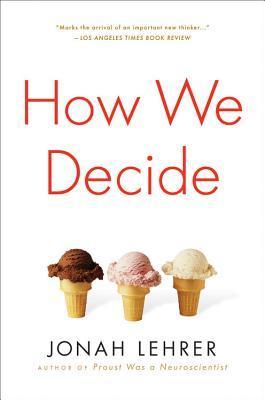
"How We Decide" delves into the intricate mechanisms of human decision-making, exploring the interplay between our rational and emotional minds. Jonah Lehrer synthesizes cutting-edge neuroscience and psychology to reveal how we navigate complex choices, from mundane daily selections to life-altering dilemmas. The book illuminates the surprising ways our brains process information, identifying both the strengths and inherent biases in our cognitive processes.
This work echoes "The Wisdom of Crowds" in its foundational premise: that collective and individual intelligence, while powerful, are also susceptible to specific pitfalls. Both books dissect how information is processed and decisions are formed, whether by a single individual or a group. While Surowiecki focuses on the aggregate, Lehrer meticulously examines the micro-level, demonstrating how individual cognitive biases and emotional states can either enhance or hinder optimal outcomes, much like a flawed individual contributes to a flawed crowd.
"How We Decide" offers profound insights into improving personal decision-making and understanding the choices of others. Its exploration of cognitive faculties and error potential provides a practical framework for self-improvement and navigating professional challenges. Anyone seeking to enhance their critical thinking, understand human behavior more deeply, or simply make better choices in their own lives will benefit from this exploration of the mind's complexities.
How We Decide
"How We Decide" delves into the intricate mechanisms of human decision-making, exploring the interplay between our rational and emotional minds. Jonah Lehrer synthesizes cutting-edge neuroscience and psychology to reveal how we navigate complex choices, from mundane daily selections to life-altering dilemmas. The book illuminates the surprising ways our brains process information, identifying both the strengths and inherent biases in our cognitive processes.
This work echoes "The Wisdom of Crowds" in its foundational premise: that collective and individual intelligence, while powerful, are also susceptible to specific pitfalls. Both books dissect how information is processed and decisions are formed, whether by a single individual or a group. While Surowiecki focuses on the aggregate, Lehrer meticulously examines the micro-level, demonstrating how individual cognitive biases and emotional states can either enhance or hinder optimal outcomes, much like a flawed individual contributes to a flawed crowd.
"How We Decide" offers profound insights into improving personal decision-making and understanding the choices of others. Its exploration of cognitive faculties and error potential provides a practical framework for self-improvement and navigating professional challenges. Anyone seeking to enhance their critical thinking, understand human behavior more deeply, or simply make better choices in their own lives will benefit from this exploration of the mind's complexities.
The Art of Choosing
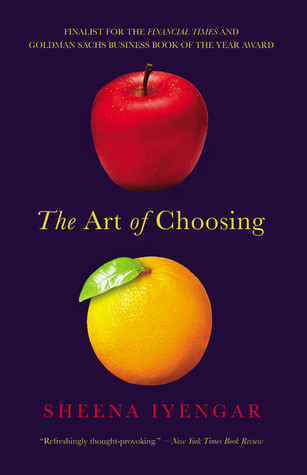
"The Art of Choosing" by Sheena Iyengar delves into the complex cognitive and emotional processes behind our decisions, exploring why we choose what we do, the consequences of those choices, and the factors that influence both our satisfaction and our regret. It unpacks the psychology of choice, from trivial daily selections to life-altering dilemmas.
This work resonates with "The Wisdom of Crowds" because both fundamentally examine decision-making processes, albeit from different angles. While Surowiecki focuses on the collective intelligence of diverse groups, Iyengar scrutinizes individual choice and its inherent biases and complexities. Both recognize that effective decision-making often hinges on understanding underlying human behaviors and the environments in which choices are made, offering insights into how to optimize outcomes.
The book offers compelling insights into human behavior and decision science, making it a valuable read for anyone seeking to improve their personal or professional choices. It provides actionable frameworks for navigating the overwhelming landscape of options we face daily, alongside a deeper understanding of what truly drives our preferences and satisfaction.
The Art of Choosing
"The Art of Choosing" by Sheena Iyengar delves into the complex cognitive and emotional processes behind our decisions, exploring why we choose what we do, the consequences of those choices, and the factors that influence both our satisfaction and our regret. It unpacks the psychology of choice, from trivial daily selections to life-altering dilemmas.
This work resonates with "The Wisdom of Crowds" because both fundamentally examine decision-making processes, albeit from different angles. While Surowiecki focuses on the collective intelligence of diverse groups, Iyengar scrutinizes individual choice and its inherent biases and complexities. Both recognize that effective decision-making often hinges on understanding underlying human behaviors and the environments in which choices are made, offering insights into how to optimize outcomes.
The book offers compelling insights into human behavior and decision science, making it a valuable read for anyone seeking to improve their personal or professional choices. It provides actionable frameworks for navigating the overwhelming landscape of options we face daily, alongside a deeper understanding of what truly drives our preferences and satisfaction.
Algorithms to Live By: The Computer Science of Human Decisions
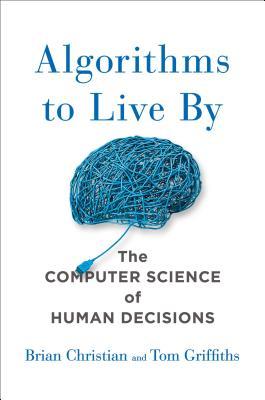
"Algorithms to Live By" explores how computer science principles—like optimal stopping, caching, and scheduling—can be applied to everyday human decisions. It demystifies complex algorithmic logic, translating it into practical strategies for challenges ranging from organizing a closet to choosing a life partner. The book posits that many of life's dilemmas have already been "solved" by computer scientists, offering elegant, mathematically sound approaches to decision-making.
This book shares "The Wisdom of Crowds'" core premise: that sophisticated problems often yield to surprisingly elegant, sometimes counter-intuitive, solutions found by leveraging broader insights. While Surowiecki focuses on collective intelligence, Christian delves into applying computational thinking to individual choices, demonstrating how structured approaches, much like a well-designed algorithm, can lead to better outcomes. Both argue for moving beyond pure intuition to more effective, evidence-based methods.
Anyone intrigued by optimizing personal productivity, making smarter choices, or simply understanding the underlying logic of efficient systems will find this compelling. It offers not just abstract theory, but actionable frameworks to improve decision-making in personal and professional life. The insights provided can genuinely enhance one's approach to common dilemmas, making complex situations feel more manageable and their resolutions more robust.
Algorithms to Live By: The Computer Science of Human Decisions
"Algorithms to Live By" explores how computer science principles—like optimal stopping, caching, and scheduling—can be applied to everyday human decisions. It demystifies complex algorithmic logic, translating it into practical strategies for challenges ranging from organizing a closet to choosing a life partner. The book posits that many of life's dilemmas have already been "solved" by computer scientists, offering elegant, mathematically sound approaches to decision-making.
This book shares "The Wisdom of Crowds'" core premise: that sophisticated problems often yield to surprisingly elegant, sometimes counter-intuitive, solutions found by leveraging broader insights. While Surowiecki focuses on collective intelligence, Christian delves into applying computational thinking to individual choices, demonstrating how structured approaches, much like a well-designed algorithm, can lead to better outcomes. Both argue for moving beyond pure intuition to more effective, evidence-based methods.
Anyone intrigued by optimizing personal productivity, making smarter choices, or simply understanding the underlying logic of efficient systems will find this compelling. It offers not just abstract theory, but actionable frameworks to improve decision-making in personal and professional life. The insights provided can genuinely enhance one's approach to common dilemmas, making complex situations feel more manageable and their resolutions more robust.
Social Intelligence: The New Science of Human Relationships

Daniel Goleman's "Social Intelligence" delves into the intricate neuroscience and psychological mechanisms underpinning human connection. It explores how our brains are wired for interaction, examining concepts like empathy, attunement, and social synchrony. The book illuminates how these often-unconscious processes shape our relationships, influence our well-being, and ultimately impact complex social systems.
Both books explore the powerful, often emergent properties of interconnected individuals. While "The Wisdom of Crowds" champions collective intelligence through diverse, decentralized groups, "Social Intelligence" examines the *micro-mechanisms* of individual interactions that form the bedrock of those same groups. Each work highlights how seemingly disparate human elements coalesce to produce outcomes greater than the sum of their parts, whether in decision-making or relational networks.
This book offers a compelling lens for understanding ourselves and our interactions. It provides actionable insights into improving personal and professional relationships by unveiling the hidden dynamics of social cognition. The clarity it brings to the science of human connection can empower individuals to navigate social landscapes more effectively and foster more meaningful, productive bonds.
Social Intelligence: The New Science of Human Relationships
Daniel Goleman's "Social Intelligence" delves into the intricate neuroscience and psychological mechanisms underpinning human connection. It explores how our brains are wired for interaction, examining concepts like empathy, attunement, and social synchrony. The book illuminates how these often-unconscious processes shape our relationships, influence our well-being, and ultimately impact complex social systems.
Both books explore the powerful, often emergent properties of interconnected individuals. While "The Wisdom of Crowds" champions collective intelligence through diverse, decentralized groups, "Social Intelligence" examines the *micro-mechanisms* of individual interactions that form the bedrock of those same groups. Each work highlights how seemingly disparate human elements coalesce to produce outcomes greater than the sum of their parts, whether in decision-making or relational networks.
This book offers a compelling lens for understanding ourselves and our interactions. It provides actionable insights into improving personal and professional relationships by unveiling the hidden dynamics of social cognition. The clarity it brings to the science of human connection can empower individuals to navigate social landscapes more effectively and foster more meaningful, productive bonds.
The Logic of Collective Action: Public Goods and the Theory of Groups

Mancur Olson's "The Logic of Collective Action" meticulously deconstructs the paradox of groups failing to act in their collective interest, even when everyone would benefit. He argues that large groups rarely cooperate voluntarily to achieve common goals, particularly when the benefits are shared among all, because individuals rationally choose to free-ride on the efforts of others. This economic perspective explains why public goods, like clean air or national defense, often require external incentives or coercion to be provided.
This book shares a fundamental intellectual curiosity with "The Wisdom of Crowds": how groups function and make decisions. While Surowiecki highlights instances where group intelligence surpasses individual acumen, Olson delves into the systemic challenges inherent in achieving collective action, even when the "wisdom" is clear. Both books examine the mechanics of collective behavior, albeit from distinct yet complementary angles – one focusing on emergent intelligence, the other on inherent motivational hurdles.
This analysis provides a foundational understanding of why certain social and political problems persist, offering profound insights into the dynamics of activism, policy-making, and organizational behavior. It equips individuals with a critical lens to evaluate group endeavors, understanding the subtle forces that either facilitate or obstruct collective success. Its rigorous framework clarifies a pervasive human dilemma.
The Logic of Collective Action: Public Goods and the Theory of Groups
Mancur Olson's "The Logic of Collective Action" meticulously deconstructs the paradox of groups failing to act in their collective interest, even when everyone would benefit. He argues that large groups rarely cooperate voluntarily to achieve common goals, particularly when the benefits are shared among all, because individuals rationally choose to free-ride on the efforts of others. This economic perspective explains why public goods, like clean air or national defense, often require external incentives or coercion to be provided.
This book shares a fundamental intellectual curiosity with "The Wisdom of Crowds": how groups function and make decisions. While Surowiecki highlights instances where group intelligence surpasses individual acumen, Olson delves into the systemic challenges inherent in achieving collective action, even when the "wisdom" is clear. Both books examine the mechanics of collective behavior, albeit from distinct yet complementary angles – one focusing on emergent intelligence, the other on inherent motivational hurdles.
This analysis provides a foundational understanding of why certain social and political problems persist, offering profound insights into the dynamics of activism, policy-making, and organizational behavior. It equips individuals with a critical lens to evaluate group endeavors, understanding the subtle forces that either facilitate or obstruct collective success. Its rigorous framework clarifies a pervasive human dilemma.
More Books to Explore
Discover more titles that expand on these ideas and themes.
The Art of Thinking Clearly
The Paradox of Choice: Why More Is Less
Thinking, Fast and Slow
Blink: The Power of Thinking Without Thinking
Never Go With Your Gut: How Pioneering Leaders Make the Best Decisions and Avoid Business Disasters
How We Decide