10 Books Similar to "The Selfish Gene"
by Richard Dawkins
The Extended Phenotype: The Long Reach of the Gene

"The Extended Phenotype: The Long Reach of the Gene" explores the revolutionary idea that a gene's influence isn't limited to the organism it resides in. Instead, its effects can extend far beyond the individual, shaping aspects of the environment, other organisms, and even complex structures like beaver dams or caddisfly cases. It argues that these external manifestations are just as much a product of genetic programming as an eye or a wing.
This book builds directly on "The Selfish Gene" by expanding its central premise. While "The Selfish Gene" introduced the gene as the fundamental unit of selection, "The Extended Phenotype" demonstrates the astonishing breadth of that gene's impact. It’s essentially a deeper dive into the mechanisms and implications suggested by the earlier work, illustrating how genetic replication drives a pervasive and often unexpected reach.
Those who engaged with the conceptual boldness of "The Selfish Gene" will appreciate this book's intellectual rigor and expansive vision. It offers a profound shift in perspective on evolution, organism-environment interactions, and the very definition of a "phenotype." The insights gained provide a richer understanding of natural selection's subtle and far-reaching hand.
The Extended Phenotype: The Long Reach of the Gene
"The Extended Phenotype: The Long Reach of the Gene" explores the revolutionary idea that a gene's influence isn't limited to the organism it resides in. Instead, its effects can extend far beyond the individual, shaping aspects of the environment, other organisms, and even complex structures like beaver dams or caddisfly cases. It argues that these external manifestations are just as much a product of genetic programming as an eye or a wing.
This book builds directly on "The Selfish Gene" by expanding its central premise. While "The Selfish Gene" introduced the gene as the fundamental unit of selection, "The Extended Phenotype" demonstrates the astonishing breadth of that gene's impact. It’s essentially a deeper dive into the mechanisms and implications suggested by the earlier work, illustrating how genetic replication drives a pervasive and often unexpected reach.
Those who engaged with the conceptual boldness of "The Selfish Gene" will appreciate this book's intellectual rigor and expansive vision. It offers a profound shift in perspective on evolution, organism-environment interactions, and the very definition of a "phenotype." The insights gained provide a richer understanding of natural selection's subtle and far-reaching hand.
River Out of Eden: A Darwinian View of Life

"River Out of Eden" offers a concise yet comprehensive overview of evolution, primarily focusing on the concept of DNA as a digital river of information flowing through generations. Dawkins explores the fundamental mechanisms of natural selection, demonstrating how life's intricate complexity arises from simple, iterative processes of replication and mutation, without recourse to supernatural intervention. He illuminates the deep common ancestry of all living things, tracing the lineage back to a universal progenitor.
This book shares a foundational philosophical and scientific kinship with "The Selfish Gene." Both works champion a gene-centric view of evolution, positing that DNA is the primary driver and beneficiary of natural selection. They articulate how individual organisms serve as temporary vehicles for the transmission of these enduring genetic units, effectively expanding upon the core principles of evolutionary biology established in the earlier work.
Anyone intrigued by the mechanics of life and its origins will find this an illuminating read. It provides a crystal-clear, accessible explanation of Darwinian principles, offering a powerful framework for understanding biological diversity and the interconnectedness of all species. The book demystifies complex scientific ideas, leaving the audience with a deeper appreciation for the elegance and power of natural selection.
River Out of Eden: A Darwinian View of Life
"River Out of Eden" offers a concise yet comprehensive overview of evolution, primarily focusing on the concept of DNA as a digital river of information flowing through generations. Dawkins explores the fundamental mechanisms of natural selection, demonstrating how life's intricate complexity arises from simple, iterative processes of replication and mutation, without recourse to supernatural intervention. He illuminates the deep common ancestry of all living things, tracing the lineage back to a universal progenitor.
This book shares a foundational philosophical and scientific kinship with "The Selfish Gene." Both works champion a gene-centric view of evolution, positing that DNA is the primary driver and beneficiary of natural selection. They articulate how individual organisms serve as temporary vehicles for the transmission of these enduring genetic units, effectively expanding upon the core principles of evolutionary biology established in the earlier work.
Anyone intrigued by the mechanics of life and its origins will find this an illuminating read. It provides a crystal-clear, accessible explanation of Darwinian principles, offering a powerful framework for understanding biological diversity and the interconnectedness of all species. The book demystifies complex scientific ideas, leaving the audience with a deeper appreciation for the elegance and power of natural selection.
The Blind Watchmaker: Why the Evidence of Evolution Reveals a Universe Without Design
"The Blind Watchmaker" dismantles the argument for a divine creator based on the complexity of living organisms. Dawkins lucidly explains how natural selection, through a gradual, unguided process, can generate intricate designs that appear purposefully engineered. It's a profound exploration of evolution's power to create complexity without an intelligent designer, likening it to a "blind" watchmaker – a purely mechanistic process.
This book shares thematic core with "The Selfish Gene" by extending its central idea. Both works champion natural selection as the fundamental driver of biological phenomena. While "The Selfish Gene" focuses on replicating genes as the unit of selection, "The Blind Watchmaker" expands to illustrate how this gene-centric view accounts for the apparent design and adaptation we observe in entire organisms. Both aim to dispel anthropocentric and teleological interpretations of life.
The clear and compelling arguments offered will appeal to those seeking a deeper understanding of evolution and its implications. The book provides a powerful counter-narrative to creationist perspectives, offering a rigorous and accessible scientific explanation for life's diversity and complexity. Its accessible prose and intellectual rigor make it a valuable resource for anyone interested in the philosophy of science and the grand sweep of biological history.
The Blind Watchmaker: Why the Evidence of Evolution Reveals a Universe Without Design
"The Blind Watchmaker" dismantles the argument for a divine creator based on the complexity of living organisms. Dawkins lucidly explains how natural selection, through a gradual, unguided process, can generate intricate designs that appear purposefully engineered. It's a profound exploration of evolution's power to create complexity without an intelligent designer, likening it to a "blind" watchmaker – a purely mechanistic process.
This book shares thematic core with "The Selfish Gene" by extending its central idea. Both works champion natural selection as the fundamental driver of biological phenomena. While "The Selfish Gene" focuses on replicating genes as the unit of selection, "The Blind Watchmaker" expands to illustrate how this gene-centric view accounts for the apparent design and adaptation we observe in entire organisms. Both aim to dispel anthropocentric and teleological interpretations of life.
The clear and compelling arguments offered will appeal to those seeking a deeper understanding of evolution and its implications. The book provides a powerful counter-narrative to creationist perspectives, offering a rigorous and accessible scientific explanation for life's diversity and complexity. Its accessible prose and intellectual rigor make it a valuable resource for anyone interested in the philosophy of science and the grand sweep of biological history.
On Human Nature

"On Human Nature" by Edward O. Wilson explores the biological underpinnings of human behavior, society, and culture. Wilson, a renowned entomologist, argues that many of our actions and social structures, from altruism to aggression, are deeply rooted in our evolutionary history and genetic predispositions, offering a scientific lens through which to understand the "whys" of human existence.
This work resonates with "The Selfish Gene" because both books champion a gene-centric view of evolution. While Dawkins focuses on individual genes as the primary replicators driving evolution, Wilson extends this perspective to explain complex human phenomena, positing that our behaviors, like those of other species, are ultimately selected for their ability to propagate our genes. Both authors challenge conventional notions by emphasizing the profound influence of biological imperatives on our seemingly unique human consciousness.
The book offers a compelling intellectual journey into the origins of our most fundamental traits. It provides a robust, evidence-based framework for understanding everything from ethical decision-making to the formation of religions, making it an invaluable resource for anyone seeking a deeper, scientifically informed grasp of human nature and society.
On Human Nature
"On Human Nature" by Edward O. Wilson explores the biological underpinnings of human behavior, society, and culture. Wilson, a renowned entomologist, argues that many of our actions and social structures, from altruism to aggression, are deeply rooted in our evolutionary history and genetic predispositions, offering a scientific lens through which to understand the "whys" of human existence.
This work resonates with "The Selfish Gene" because both books champion a gene-centric view of evolution. While Dawkins focuses on individual genes as the primary replicators driving evolution, Wilson extends this perspective to explain complex human phenomena, positing that our behaviors, like those of other species, are ultimately selected for their ability to propagate our genes. Both authors challenge conventional notions by emphasizing the profound influence of biological imperatives on our seemingly unique human consciousness.
The book offers a compelling intellectual journey into the origins of our most fundamental traits. It provides a robust, evidence-based framework for understanding everything from ethical decision-making to the formation of religions, making it an invaluable resource for anyone seeking a deeper, scientifically informed grasp of human nature and society.
Darwin's Dangerous Idea: Evolution and the Meanings of Life
"Darwin's Dangerous Idea" delves into the profound implications of Darwinian evolution, not just as a biological theory, but as a universal acid that dissolves traditional notions of meaning, purpose, and design. Dennett argues that evolution by natural selection is an algorithmic process capable of generating intricate complexity without a guiding intelligence, challenging deeply held beliefs about creation and consciousness.
This book resonates with "The Selfish Gene" in its emphasis on gene-centric evolution and the explanatory power of natural selection. Both authors champion a rigorously scientific, materialist view of life, demystifying biological phenomena and dismantling anthropocentric biases. They share a commitment to demonstrating how complex "design" can arise from simple, recursive processes.
Anyone intrigued by the philosophical consequences of evolution and desiring a deeper understanding of its reach beyond biology will value this work. It provides a robust conceptual framework for understanding the mechanisms of change, offering intellectual liberation from teleological thinking and empowering a more scientific and comprehensive worldview.
Darwin's Dangerous Idea: Evolution and the Meanings of Life
"Darwin's Dangerous Idea" delves into the profound implications of Darwinian evolution, not just as a biological theory, but as a universal acid that dissolves traditional notions of meaning, purpose, and design. Dennett argues that evolution by natural selection is an algorithmic process capable of generating intricate complexity without a guiding intelligence, challenging deeply held beliefs about creation and consciousness.
This book resonates with "The Selfish Gene" in its emphasis on gene-centric evolution and the explanatory power of natural selection. Both authors champion a rigorously scientific, materialist view of life, demystifying biological phenomena and dismantling anthropocentric biases. They share a commitment to demonstrating how complex "design" can arise from simple, recursive processes.
Anyone intrigued by the philosophical consequences of evolution and desiring a deeper understanding of its reach beyond biology will value this work. It provides a robust conceptual framework for understanding the mechanisms of change, offering intellectual liberation from teleological thinking and empowering a more scientific and comprehensive worldview.
Ever Since Darwin: Reflections in Natural History

"Ever Since Darwin" compiles Stephen Jay Gould’s thought-provoking essays on evolutionary biology, offering insightful perspectives on the history of life, the nature of scientific inquiry, and the cultural implications of Darwinian ideas. Gould delves into topics ranging from the tempo and mode of evolution to the biases inherent in scientific interpretations, all presented with his characteristic intellectual rigor and vivid prose.
The similarity to "The Selfish Gene" lies in their shared exploration of fundamental evolutionary principles and their accessibility to a broad audience. Both books serve as essential introductions to evolutionary thought, challenging conventional wisdom and encouraging deeper engagement with scientific concepts. While Dawkins focuses on gene-centric selection, Gould broadens the scope to encompass macroevolutionary patterns and the historical contingency of life's development, providing a complementary lens.
This collection will appeal to individuals interested in evolutionary science and the philosophy of biology. It offers a sophisticated yet understandable analysis of how evolution works and how we understand it, providing a richer, more nuanced appreciation of life's diversity and complexity. Gould's masterful articulation of complex ideas makes these essays both enlightening and a pleasure to read, fostering critical thinking about the natural world.
Ever Since Darwin: Reflections in Natural History
"Ever Since Darwin" compiles Stephen Jay Gould’s thought-provoking essays on evolutionary biology, offering insightful perspectives on the history of life, the nature of scientific inquiry, and the cultural implications of Darwinian ideas. Gould delves into topics ranging from the tempo and mode of evolution to the biases inherent in scientific interpretations, all presented with his characteristic intellectual rigor and vivid prose.
The similarity to "The Selfish Gene" lies in their shared exploration of fundamental evolutionary principles and their accessibility to a broad audience. Both books serve as essential introductions to evolutionary thought, challenging conventional wisdom and encouraging deeper engagement with scientific concepts. While Dawkins focuses on gene-centric selection, Gould broadens the scope to encompass macroevolutionary patterns and the historical contingency of life's development, providing a complementary lens.
This collection will appeal to individuals interested in evolutionary science and the philosophy of biology. It offers a sophisticated yet understandable analysis of how evolution works and how we understand it, providing a richer, more nuanced appreciation of life's diversity and complexity. Gould's masterful articulation of complex ideas makes these essays both enlightening and a pleasure to read, fostering critical thinking about the natural world.
Chance and Necessity: An Essay on the Natural Philosophy of Modern Biology

"Chance and Necessity" explores the profound implications of molecular biology on our understanding of life's origins and purpose. Monod argues that life arose through random molecular accidents (chance), and its subsequent evolution is governed by the unchanging laws of physics and chemistry (necessity). This perspective dismantles teleological notions, asserting that inherent purpose or design in biological systems is an illusion.
This book resonates with "The Selfish Gene" due to their shared commitment to a rigorously reductionist, materialistic view of biology. Both authors emphasize the non-purposive nature of genetic action, albeit from different angles. Where Dawkins focuses on genes as replicators driving evolution, Monod delves into the molecular basis of this process, stripping away anthropocentric interpretations.
Readers interested in the philosophical underpinnings of modern biology will find this work immensely valuable. It offers a powerful, articulate challenge to traditional views of life, urging a re-evaluation of concepts like purpose and meaning in a scientific context. Its intellectual rigor and unflinching conclusions make it a seminal text for engaging with the deeper questions posed by biology.
Chance and Necessity: An Essay on the Natural Philosophy of Modern Biology
"Chance and Necessity" explores the profound implications of molecular biology on our understanding of life's origins and purpose. Monod argues that life arose through random molecular accidents (chance), and its subsequent evolution is governed by the unchanging laws of physics and chemistry (necessity). This perspective dismantles teleological notions, asserting that inherent purpose or design in biological systems is an illusion.
This book resonates with "The Selfish Gene" due to their shared commitment to a rigorously reductionist, materialistic view of biology. Both authors emphasize the non-purposive nature of genetic action, albeit from different angles. Where Dawkins focuses on genes as replicators driving evolution, Monod delves into the molecular basis of this process, stripping away anthropocentric interpretations.
Readers interested in the philosophical underpinnings of modern biology will find this work immensely valuable. It offers a powerful, articulate challenge to traditional views of life, urging a re-evaluation of concepts like purpose and meaning in a scientific context. Its intellectual rigor and unflinching conclusions make it a seminal text for engaging with the deeper questions posed by biology.
Genome: The Autobiography of a Species in 23 Chapters

"Genome: The Autobiography of a Species in 23 Chapters" by Matt Ridley delves into the human genome, dedicating a chapter to each of our 23 chromosome pairs. Through this structure, Ridley explores the profound influence of specific genes on human traits, behaviors, and diseases, weaving in evolutionary history, cultural impact, and the ethical implications of genetic understanding. It's a scientific narrative made accessible, illustrating how our genetic code tells the story of humanity.
This book shares a fundamental similarity with "The Selfish Gene" in its commitment to explaining profound biological concepts and their far-reaching consequences in an engaging, non-technical manner. Both authors champion the gene-centric view of evolution and biological drives, demystifying complex genetic mechanisms and their ultimate effects on life. They both successfully bridge the gap between rigorous science and a general audience.
The book will appeal through its fascinating exploration of what makes us human, offering a deep dive into the very blueprint of life. It provides insights into personal health, inherited aptitudes, and the broader evolutionary journey of our species. The accessible explanations empower individuals with a deeper understanding of biology's role in shaping both individual lives and human civilization, making complex science both understandable and profoundly relevant.
Genome: The Autobiography of a Species in 23 Chapters
"Genome: The Autobiography of a Species in 23 Chapters" by Matt Ridley delves into the human genome, dedicating a chapter to each of our 23 chromosome pairs. Through this structure, Ridley explores the profound influence of specific genes on human traits, behaviors, and diseases, weaving in evolutionary history, cultural impact, and the ethical implications of genetic understanding. It's a scientific narrative made accessible, illustrating how our genetic code tells the story of humanity.
This book shares a fundamental similarity with "The Selfish Gene" in its commitment to explaining profound biological concepts and their far-reaching consequences in an engaging, non-technical manner. Both authors champion the gene-centric view of evolution and biological drives, demystifying complex genetic mechanisms and their ultimate effects on life. They both successfully bridge the gap between rigorous science and a general audience.
The book will appeal through its fascinating exploration of what makes us human, offering a deep dive into the very blueprint of life. It provides insights into personal health, inherited aptitudes, and the broader evolutionary journey of our species. The accessible explanations empower individuals with a deeper understanding of biology's role in shaping both individual lives and human civilization, making complex science both understandable and profoundly relevant.
Nature Via Nurture: Genes, Experience and What Makes Us Human

"Nature Via Nurture" by Matt Ridley explores the intricate dance between our genetic predispositions and environmental influences. It argues against a simple "nature versus nurture" dichotomy, demonstrating how genes are not static blueprints but dynamic elements that respond to experience. Ridley illustrates how our surroundings, upbringing, and choices actively shape how our genes express themselves, ultimately determining who we become.
This book resonates with "The Selfish Gene" by delving into the fundamental mechanisms that drive life and behavior. Both authors explore the biological underpinnings of individual traits and societal structures, albeit from slightly different angles. While Dawkins focuses on the gene's imperative for replication, Ridley expands this by illustrating how those genes are constantly negotiating with the environment to achieve their ends. Both works challenge conventional wisdom regarding human agency and determinism.
The value of "Nature Via Nurture" lies in its nuanced perspective on human development. It offers a sophisticated, yet accessible, understanding of how our biology and lived experiences intertwine, moving beyond simplistic explanations. Individuals seeking to comprehend the complex origins of human behavior, intelligence, and personality will gain profound insights into the ongoing conversation between our inherent make-up and the world around us.
Nature Via Nurture: Genes, Experience and What Makes Us Human
"Nature Via Nurture" by Matt Ridley explores the intricate dance between our genetic predispositions and environmental influences. It argues against a simple "nature versus nurture" dichotomy, demonstrating how genes are not static blueprints but dynamic elements that respond to experience. Ridley illustrates how our surroundings, upbringing, and choices actively shape how our genes express themselves, ultimately determining who we become.
This book resonates with "The Selfish Gene" by delving into the fundamental mechanisms that drive life and behavior. Both authors explore the biological underpinnings of individual traits and societal structures, albeit from slightly different angles. While Dawkins focuses on the gene's imperative for replication, Ridley expands this by illustrating how those genes are constantly negotiating with the environment to achieve their ends. Both works challenge conventional wisdom regarding human agency and determinism.
The value of "Nature Via Nurture" lies in its nuanced perspective on human development. It offers a sophisticated, yet accessible, understanding of how our biology and lived experiences intertwine, moving beyond simplistic explanations. Individuals seeking to comprehend the complex origins of human behavior, intelligence, and personality will gain profound insights into the ongoing conversation between our inherent make-up and the world around us.
Evolution for Everyone: How Darwin's Theory Can Change the Way We Think About Our Lives
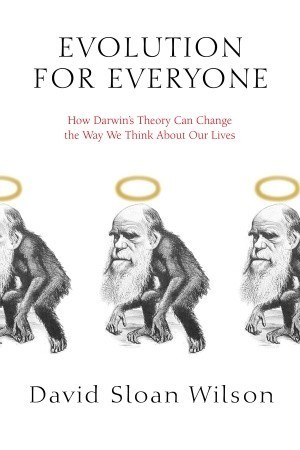
"Evolution for Everyone" by David Sloan Wilson explores how evolutionary theory isn't just about fossils and biology; it's a powerful lens for understanding human behavior, culture, ethics, and even economics. Wilson argues that evolutionary principles can be applied to nearly every aspect of our lives, offering profound insights into the origins and functions of everything from our social structures to our individual motivations. He demystifies complex scientific concepts, making them accessible and relevant to a broader audience.
This book shares a fundamental intellectual kinship with "The Selfish Gene." Both works champion the explanatory power of evolution beyond traditional biological contexts. While Dawkins focuses on gene-centric selection, Wilson extends the application to diverse human phenomena, maintaining the core idea that evolutionary processes shape much of what we observe in the world, including aspects of "altruism" and cooperation that might initially seem counter-intuitive from a purely selfish gene perspective. Both authors aim to show how Darwinian thought can illuminate complex patterns.
Individuals interested in a deeper, more integrated understanding of human nature and society will value this book. It equips one with a robust framework for critically analyzing various societal issues and personal experiences through a scientific, yet broadly applicable, lens. The book provides intellectual tools for understanding why we behave the way we do, why societies are structured as they are, and how we might approach challenges more effectively, fostering a more nuanced and informed perspective on the human condition.
Evolution for Everyone: How Darwin's Theory Can Change the Way We Think About Our Lives
"Evolution for Everyone" by David Sloan Wilson explores how evolutionary theory isn't just about fossils and biology; it's a powerful lens for understanding human behavior, culture, ethics, and even economics. Wilson argues that evolutionary principles can be applied to nearly every aspect of our lives, offering profound insights into the origins and functions of everything from our social structures to our individual motivations. He demystifies complex scientific concepts, making them accessible and relevant to a broader audience.
This book shares a fundamental intellectual kinship with "The Selfish Gene." Both works champion the explanatory power of evolution beyond traditional biological contexts. While Dawkins focuses on gene-centric selection, Wilson extends the application to diverse human phenomena, maintaining the core idea that evolutionary processes shape much of what we observe in the world, including aspects of "altruism" and cooperation that might initially seem counter-intuitive from a purely selfish gene perspective. Both authors aim to show how Darwinian thought can illuminate complex patterns.
Individuals interested in a deeper, more integrated understanding of human nature and society will value this book. It equips one with a robust framework for critically analyzing various societal issues and personal experiences through a scientific, yet broadly applicable, lens. The book provides intellectual tools for understanding why we behave the way we do, why societies are structured as they are, and how we might approach challenges more effectively, fostering a more nuanced and informed perspective on the human condition.
More Books to Explore
Discover more titles that expand on these ideas and themes.
The Extended Phenotype: The Long Reach of the Gene
River Out of Eden: A Darwinian View of Life
The Blind Watchmaker: Why the Evidence of Evolution Reveals a Universe Without Design
On Human Nature
Darwin's Dangerous Idea: Evolution and the Meanings of Life
Ever Since Darwin: Reflections in Natural History