10 Books Similar to "The Running Man"
by Richard Bachman

The Long Walk

"The Long Walk" depicts a dystopian survival game where one hundred teenage boys must maintain a walking pace above four miles per hour. Any deviation, such as slowing down or stopping, elicits warnings; repeated infractions or collapsing result in immediate, fatal consequences. The last boy walking wins a vague "Prize" and lifelong security. It’s a grueling, psychological endurance test, stripped bare of frills or complex world-building.
The similarities to "The Running Man" are striking, particularly in their central premise of a televised, deadly competition where a working-class protagonist is forced to participate for survival and a grand prize. Both novels explore the desperation of the marginalized, the voyeuristic hunger of a dystopian society, and the thin line between individual perseverance and utter dehumanization. They share a relentless, high-stakes narrative drive.
This novel will resonate deeply with those who appreciate stark, character-driven thrillers that explore the darkest corners of human nature under extreme duress. It offers a powerful, unflinching examination of existential dread, the price of freedom, and the profound resilience or ultimate breakdown of the human spirit when faced with an impossible, life-or-death ultimatum. Its themes of survival, societal cruelty, and individual rebellion remain remarkably potent.
The Long Walk
"The Long Walk" depicts a dystopian survival game where one hundred teenage boys must maintain a walking pace above four miles per hour. Any deviation, such as slowing down or stopping, elicits warnings; repeated infractions or collapsing result in immediate, fatal consequences. The last boy walking wins a vague "Prize" and lifelong security. It’s a grueling, psychological endurance test, stripped bare of frills or complex world-building.
The similarities to "The Running Man" are striking, particularly in their central premise of a televised, deadly competition where a working-class protagonist is forced to participate for survival and a grand prize. Both novels explore the desperation of the marginalized, the voyeuristic hunger of a dystopian society, and the thin line between individual perseverance and utter dehumanization. They share a relentless, high-stakes narrative drive.
This novel will resonate deeply with those who appreciate stark, character-driven thrillers that explore the darkest corners of human nature under extreme duress. It offers a powerful, unflinching examination of existential dread, the price of freedom, and the profound resilience or ultimate breakdown of the human spirit when faced with an impossible, life-or-death ultimatum. Its themes of survival, societal cruelty, and individual rebellion remain remarkably potent.
The Regulators

"The Regulators" plunges readers into the suburban nightmare of Wentworth, Ohio, where a seemingly ordinary street is transformed into a chaotic and violent landscape by an unknown, malevolent force. Residents find their homes and lives warped by grotesque, cartoonish monsters and increasingly surreal events, all stemming from the twisted imagination of a disturbed child's repressed memories and dark psychic power. It's a relentless descent into madness, where reality itself becomes a weapon.
The similarity to "The Running Man" lies in the pervasive sense of a rigged game and the terrifying loss of control experienced by the protagonists. Both novels feature individuals trapped in a sadistic spectacle they cannot escape, where their survival hinges on navigating an artificially constructed and deadly environment. The arbitrary violence and constant threat of annihilation, often at the whim of an unseen or incomprehensible authority, create a shared sense of high-stakes, dystopian terror.
This book offers a chilling exploration of the fragility of reality and the destructive power of suppressed trauma. Its intense pacing and visceral horror provide an immersive, adrenaline-fueled experience. The novel’s delve into the dark corners of the human psyche and its unflinching portrayal of chaos make it a compelling read for those who appreciate psychological thrillers and dark fantasy, ultimately prompting reflection on the nature of evil and the breakdown of order.
The Regulators
"The Regulators" plunges readers into the suburban nightmare of Wentworth, Ohio, where a seemingly ordinary street is transformed into a chaotic and violent landscape by an unknown, malevolent force. Residents find their homes and lives warped by grotesque, cartoonish monsters and increasingly surreal events, all stemming from the twisted imagination of a disturbed child's repressed memories and dark psychic power. It's a relentless descent into madness, where reality itself becomes a weapon.
The similarity to "The Running Man" lies in the pervasive sense of a rigged game and the terrifying loss of control experienced by the protagonists. Both novels feature individuals trapped in a sadistic spectacle they cannot escape, where their survival hinges on navigating an artificially constructed and deadly environment. The arbitrary violence and constant threat of annihilation, often at the whim of an unseen or incomprehensible authority, create a shared sense of high-stakes, dystopian terror.
This book offers a chilling exploration of the fragility of reality and the destructive power of suppressed trauma. Its intense pacing and visceral horror provide an immersive, adrenaline-fueled experience. The novel’s delve into the dark corners of the human psyche and its unflinching portrayal of chaos make it a compelling read for those who appreciate psychological thrillers and dark fantasy, ultimately prompting reflection on the nature of evil and the breakdown of order.
Roadwork

"Roadwork" plunges into the psychological breakdown of Barton Dawes, an ordinary man who, faced with the demolition of his home and workplace for a new highway, makes the increasingly irrational decision to refuse to move. He descends into a spiral of defiance, isolating himself, embracing nihilism, and ultimately sabotaging the very system he feels is destroying his life. It’s a bleak, yet compelling, exploration of individual resistance against an overwhelming, impersonal force.
The similarities with "The Running Man" are striking, primarily through their shared thematic core of an individual battling an unstoppable, dehumanizing system. Both protagonists, Ben Richards and Barton Dawes, are pushed to their breaking points by societal pressures and a lack of agency, leading them to engage in self-destructive acts of rebellion against an established authority. Both narratives also share a gritty, desperate tone and ultimately explore the futility and tragic consequences of such solitary resistance.
This novel will appeal to those who appreciate examination of the human psyche under extreme duress and the devastating impact of societal indifference. Its value lies in its unflinching portrayal of existential dread and the search for meaning in a world determined to erase personal identity. It's a powerful statement on the potential for despair and the lengths to which an individual might go when cornered, offering a dark but insightful reflection on autonomy and resistance.
Roadwork
"Roadwork" plunges into the psychological breakdown of Barton Dawes, an ordinary man who, faced with the demolition of his home and workplace for a new highway, makes the increasingly irrational decision to refuse to move. He descends into a spiral of defiance, isolating himself, embracing nihilism, and ultimately sabotaging the very system he feels is destroying his life. It’s a bleak, yet compelling, exploration of individual resistance against an overwhelming, impersonal force.
The similarities with "The Running Man" are striking, primarily through their shared thematic core of an individual battling an unstoppable, dehumanizing system. Both protagonists, Ben Richards and Barton Dawes, are pushed to their breaking points by societal pressures and a lack of agency, leading them to engage in self-destructive acts of rebellion against an established authority. Both narratives also share a gritty, desperate tone and ultimately explore the futility and tragic consequences of such solitary resistance.
This novel will appeal to those who appreciate examination of the human psyche under extreme duress and the devastating impact of societal indifference. Its value lies in its unflinching portrayal of existential dread and the search for meaning in a world determined to erase personal identity. It's a powerful statement on the potential for despair and the lengths to which an individual might go when cornered, offering a dark but insightful reflection on autonomy and resistance.
Rage

"Rage" chronicles a high school senior named Charlie Decker who, after being expelled, returns to his advanced algebra class, takes his teacher and classmates hostage, and then orchestrates a chilling, psychologically manipulative standoff. The narrative delves deep into Charlie's fractured psyche and the unsettling dynamics that unfold within the confined classroom, exploring trauma, resentment, and the unraveling of adolescent control.
The similarity to "The Running Man" lies in their shared exploration of individuals pushed to extreme measures within a high-stakes, life-or-death scenario, often amplified by a voyeuristic, almost game-show-like element (though more contained in "Rage"). Both protagonists act as catalysts for chaos, forcing those around them to confront uncomfortable truths, and both narratives dissect the societal pressures and personal grievances that can lead to such explosive acts of rebellion. The psychological intensity and the focus on an anti-hero figure are central to both works.
This book will appeal to those who appreciate a raw, unflinching examination of adolescent rage and its devastating consequences. It offers a disturbing yet compelling look into mental illness, the breakdown of authority, and the potent, often misunderstood, forces driving extreme behavior. The psychological depth and unflinching portrayal of human darkness within a relatable setting provide considerable thematic value for contemplating societal issues and individual agency.
Rage
"Rage" chronicles a high school senior named Charlie Decker who, after being expelled, returns to his advanced algebra class, takes his teacher and classmates hostage, and then orchestrates a chilling, psychologically manipulative standoff. The narrative delves deep into Charlie's fractured psyche and the unsettling dynamics that unfold within the confined classroom, exploring trauma, resentment, and the unraveling of adolescent control.
The similarity to "The Running Man" lies in their shared exploration of individuals pushed to extreme measures within a high-stakes, life-or-death scenario, often amplified by a voyeuristic, almost game-show-like element (though more contained in "Rage"). Both protagonists act as catalysts for chaos, forcing those around them to confront uncomfortable truths, and both narratives dissect the societal pressures and personal grievances that can lead to such explosive acts of rebellion. The psychological intensity and the focus on an anti-hero figure are central to both works.
This book will appeal to those who appreciate a raw, unflinching examination of adolescent rage and its devastating consequences. It offers a disturbing yet compelling look into mental illness, the breakdown of authority, and the potent, often misunderstood, forces driving extreme behavior. The psychological depth and unflinching portrayal of human darkness within a relatable setting provide considerable thematic value for contemplating societal issues and individual agency.
Thinner

*Thinner* tells the chilling story of Billy Halleck, an obese lawyer who, after a hit-and-run accident involving a Romani elder, is cursed to rapidly and uncontrollably lose weight. As his body wastes away, Halleck races against time to lift the supernatural hex, exposing the dark underbelly of justice and personal responsibility. It's a visceral exploration of consequences and the terrifying breakdown of the familiar.
The book shares a compelling thematic and narrative kinship with *The Running Man* through its focus on an individual trapped in a desperate, life-or-death struggle against a seemingly implacable, external force. Both protagonists are stripped of their societal standing and thrust into survival scenarios where the stakes are absolute, forcing them to confront their own failings and the corrupt systems around them. The relentless, high-tension pacing and the exploration of societal decay are hallmarks of both novels.
This novel will appeal to those who appreciate intense psychological thrillers and cautionary tales that delve into moral dilemmas and the fragility of human existence. Its exploration of guilt, revenge, and the breakdown of civil order offers a potent, thought-provoking experience, providing a cathartic journey through a man’s horrific transformation and his fight for redemption.
Thinner
*Thinner* tells the chilling story of Billy Halleck, an obese lawyer who, after a hit-and-run accident involving a Romani elder, is cursed to rapidly and uncontrollably lose weight. As his body wastes away, Halleck races against time to lift the supernatural hex, exposing the dark underbelly of justice and personal responsibility. It's a visceral exploration of consequences and the terrifying breakdown of the familiar.
The book shares a compelling thematic and narrative kinship with *The Running Man* through its focus on an individual trapped in a desperate, life-or-death struggle against a seemingly implacable, external force. Both protagonists are stripped of their societal standing and thrust into survival scenarios where the stakes are absolute, forcing them to confront their own failings and the corrupt systems around them. The relentless, high-tension pacing and the exploration of societal decay are hallmarks of both novels.
This novel will appeal to those who appreciate intense psychological thrillers and cautionary tales that delve into moral dilemmas and the fragility of human existence. Its exploration of guilt, revenge, and the breakdown of civil order offers a potent, thought-provoking experience, providing a cathartic journey through a man’s horrific transformation and his fight for redemption.
The Bachman Books
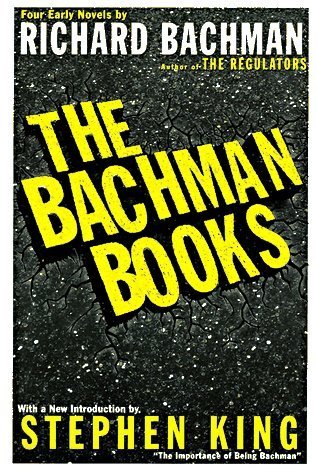
"The Bachman Books" is a collection of four early novels by Stephen King, written under his pseudonym Richard Bachman. It compiles "Rage," "The Long Walk," "Roadwork," and "The Running Man" into a single volume, offering a raw, often bleak, exploration of societal pressures, extreme survival scenarios, and the human psyche pushed to its breaking point. Each story stands independently but collectively showcases Bachman's distinctive voice – stripped-down, urgent, and unflinchingly dark.
This compilation is similar to "The Running Man" because the latter is one of its core components. Moreover, the overarching themes of dystopian control, individuals battling an oppressive system, and the high stakes of life-or-death competition resonate across all the included works. The shared authorship and narrative sensibilities create a cohesive experience where the stark realities and existential dread of "The Running Man" are echoed and amplified by the other novellas.
This collection provides considerable value. It offers a unique insight into the formative years of a literary master, revealing common threads and stylistic choices that would later define King's vast career. It allows for a deeper appreciation of the psychological depth and social commentary embedded in these high-tension narratives, making it essential for anyone interested in suspense, dystopian fiction, or the evolution of King's literary voice.
The Bachman Books
"The Bachman Books" is a collection of four early novels by Stephen King, written under his pseudonym Richard Bachman. It compiles "Rage," "The Long Walk," "Roadwork," and "The Running Man" into a single volume, offering a raw, often bleak, exploration of societal pressures, extreme survival scenarios, and the human psyche pushed to its breaking point. Each story stands independently but collectively showcases Bachman's distinctive voice – stripped-down, urgent, and unflinchingly dark.
This compilation is similar to "The Running Man" because the latter is one of its core components. Moreover, the overarching themes of dystopian control, individuals battling an oppressive system, and the high stakes of life-or-death competition resonate across all the included works. The shared authorship and narrative sensibilities create a cohesive experience where the stark realities and existential dread of "The Running Man" are echoed and amplified by the other novellas.
This collection provides considerable value. It offers a unique insight into the formative years of a literary master, revealing common threads and stylistic choices that would later define King's vast career. It allows for a deeper appreciation of the psychological depth and social commentary embedded in these high-tension narratives, making it essential for anyone interested in suspense, dystopian fiction, or the evolution of King's literary voice.
Execution
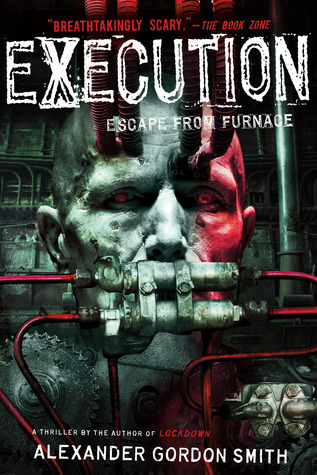
*Execution* follows teenagers condemned for heinous crimes who are offered a horrifying choice: face capital punishment or participate in a deadly reality show. This broadcast, viewed by a bloodthirsty audience, forces them to confront orchestrated dangers and each other, all while fighting for a distant hope of freedom.
The core similarity to *The Running Man* lies in the high-stakes, televised death game premise. Both narratives pit a desperate protagonist against a system that profits from human suffering, forcing them into a brutal spectacle where survival is contingent on outwitting both the game masters and other contestants, all under the scrutinizing gaze of a global audience.
This novel will appeal to those drawn to dystopian thrillers and critiques of societal voyeurism. Its exploration of morality under extreme duress, the nature of justice, and the corrupting influence of entertainment offers valuable insights, sparking contemplation about media ethics and the human capacity for both cruelty and resilience.
Execution
*Execution* follows teenagers condemned for heinous crimes who are offered a horrifying choice: face capital punishment or participate in a deadly reality show. This broadcast, viewed by a bloodthirsty audience, forces them to confront orchestrated dangers and each other, all while fighting for a distant hope of freedom.
The core similarity to *The Running Man* lies in the high-stakes, televised death game premise. Both narratives pit a desperate protagonist against a system that profits from human suffering, forcing them into a brutal spectacle where survival is contingent on outwitting both the game masters and other contestants, all under the scrutinizing gaze of a global audience.
This novel will appeal to those drawn to dystopian thrillers and critiques of societal voyeurism. Its exploration of morality under extreme duress, the nature of justice, and the corrupting influence of entertainment offers valuable insights, sparking contemplation about media ethics and the human capacity for both cruelty and resilience.
The Shockwave Rider
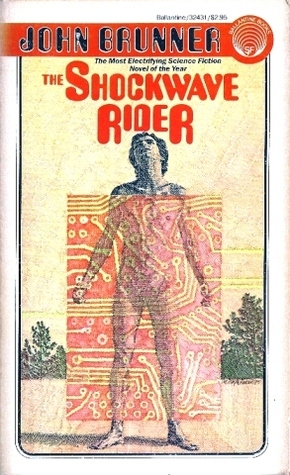
"The Shockwave Rider" envisions a dystopian future where absolute control of information dictates societal power. It follows Nickie Haflinger, a brilliant but rebellious data-processing prodigy who uses his mastery of networks to exploit vulnerabilities in the system and ultimately challenge the pervasive surveillance state. The narrative delves into themes of identity, freedom, and the revolutionary potential of information.
The similarity to "The Running Man" lies in their shared exploration of individuals battling oppressive, technologically advanced authorities within a high-stakes, survivalist context. Both protagonists are hunted figures, outliers who directly confront the established order, forced to run and improvise to stay alive while simultaneously exposing the cruelties of their respective societies. The tension and underlying commentary on societal control resonate strongly across both novels.
This book will appeal to those who appreciate prescient science fiction that delves into the ramifications of unchallenged technological advancement and authoritarianism. Its exploration of data privacy and individual agency remains remarkably relevant, offering critical insights into the potential trajectory of digital societies. It provides valuable food for thought on the delicate balance between security and freedom, and the enduring human spirit in the face of insurmountable odds.
The Shockwave Rider
"The Shockwave Rider" envisions a dystopian future where absolute control of information dictates societal power. It follows Nickie Haflinger, a brilliant but rebellious data-processing prodigy who uses his mastery of networks to exploit vulnerabilities in the system and ultimately challenge the pervasive surveillance state. The narrative delves into themes of identity, freedom, and the revolutionary potential of information.
The similarity to "The Running Man" lies in their shared exploration of individuals battling oppressive, technologically advanced authorities within a high-stakes, survivalist context. Both protagonists are hunted figures, outliers who directly confront the established order, forced to run and improvise to stay alive while simultaneously exposing the cruelties of their respective societies. The tension and underlying commentary on societal control resonate strongly across both novels.
This book will appeal to those who appreciate prescient science fiction that delves into the ramifications of unchallenged technological advancement and authoritarianism. Its exploration of data privacy and individual agency remains remarkably relevant, offering critical insights into the potential trajectory of digital societies. It provides valuable food for thought on the delicate balance between security and freedom, and the enduring human spirit in the face of insurmountable odds.
Cell

Stephen King's "Cell" chronicles an artist's desperate journey through a post-apocalyptic New England. A mysterious pulse transmitted through cell phones instantly transforms most of humanity into mindless, violent drones, leaving survivors fighting for their lives against their former neighbors and a collapsing civilization. The narrative delves into the breakdown of society and the primal struggle for survival.
This novel shares thematic DNA with "The Running Man" through its exploration of a dystopian, high-stakes fight for existence within a shattered society. Both feature protagonists navigating a hostile landscape against overwhelming odds, driven by a primal need to survive and protect loved ones. The oppressive, ever-present threat of a ubiquitous societal control (the game show vs. the "pulse" that controls cell-phone users) connects the core conflicts.
The narrative provides a compelling examination of human resilience in the face of sudden, cataclysmic societal collapse. Its fast-paced action and exploration of what defines humanity when civilization crumbles offer both thrilling entertainment and thought-provoking insights into survival, community, and the ever-present danger of technology.
Cell
Stephen King's "Cell" chronicles an artist's desperate journey through a post-apocalyptic New England. A mysterious pulse transmitted through cell phones instantly transforms most of humanity into mindless, violent drones, leaving survivors fighting for their lives against their former neighbors and a collapsing civilization. The narrative delves into the breakdown of society and the primal struggle for survival.
This novel shares thematic DNA with "The Running Man" through its exploration of a dystopian, high-stakes fight for existence within a shattered society. Both feature protagonists navigating a hostile landscape against overwhelming odds, driven by a primal need to survive and protect loved ones. The oppressive, ever-present threat of a ubiquitous societal control (the game show vs. the "pulse" that controls cell-phone users) connects the core conflicts.
The narrative provides a compelling examination of human resilience in the face of sudden, cataclysmic societal collapse. Its fast-paced action and exploration of what defines humanity when civilization crumbles offer both thrilling entertainment and thought-provoking insights into survival, community, and the ever-present danger of technology.
Blaze
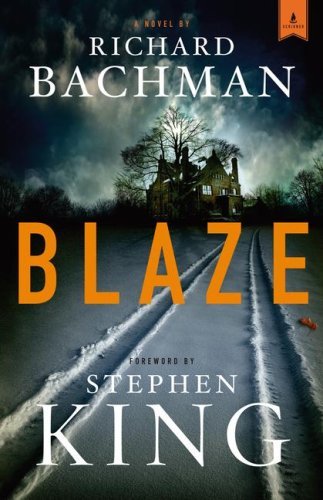
"Blaze" centers on a mentally handicapped man named Clayton Blaisdell, known as Blaze, who, after his partner's death, attempts to execute a kidnapping scheme the two had meticulously planned. Haunted by his deceased accomplice's lingering presence and instructions, Blaze navigates the complexities of abduction, child care, and evading law enforcement, all while his intellectual limitations constantly threaten to derail the operation.
Its similarity to "The Running Man" lies in the pervasive sense of a protagonist operating on the fringes of society, driven by desperation and a fragmented past. Both novels present a character pushed to extremes, caught in a high-stakes, seemingly unwinnable situation, and forced to confront the moral and psychological consequences of their actions. The raw, unflinching portrayal of human struggle against overwhelming odds and systemic disregard is a shared thematic cornerstone.
This novel will appeal to those who appreciate a gritty, character-driven narrative exploring the darker aspects of the human condition and the lengths to which individuals will go for survival or perceived purpose. It offers a valuable study of vulnerability and manipulation, showcasing the profound impact of past trauma on present choices, and the devastating cycle of poverty and mental health challenges.
Blaze
"Blaze" centers on a mentally handicapped man named Clayton Blaisdell, known as Blaze, who, after his partner's death, attempts to execute a kidnapping scheme the two had meticulously planned. Haunted by his deceased accomplice's lingering presence and instructions, Blaze navigates the complexities of abduction, child care, and evading law enforcement, all while his intellectual limitations constantly threaten to derail the operation.
Its similarity to "The Running Man" lies in the pervasive sense of a protagonist operating on the fringes of society, driven by desperation and a fragmented past. Both novels present a character pushed to extremes, caught in a high-stakes, seemingly unwinnable situation, and forced to confront the moral and psychological consequences of their actions. The raw, unflinching portrayal of human struggle against overwhelming odds and systemic disregard is a shared thematic cornerstone.
This novel will appeal to those who appreciate a gritty, character-driven narrative exploring the darker aspects of the human condition and the lengths to which individuals will go for survival or perceived purpose. It offers a valuable study of vulnerability and manipulation, showcasing the profound impact of past trauma on present choices, and the devastating cycle of poverty and mental health challenges.
More Books to Explore
Discover more titles that expand on these ideas and themes.
The Long Walk
The Regulators
Roadwork
Rage
Thinner
The Bachman Books