10 Books Similar to "The Outsider"
by Colin Wilson

The Occult

*The Occult* delves into the history and philosophy of magical and mystical traditions, examining figures like Nostradamus, Jung, and Gurdjieff to uncover an underlying human impulse towards expanded consciousness and hidden knowledge. Wilson scrutinizes ancient rituals, psychic phenomena, and esoteric systems, seeking commonalities in humanity's quest for deeper meaning beyond conventional understanding.
Its similarity to *The Outsider* lies in Wilson's consistent exploration of exceptional individuals—those who feel fundamentally disconnected from ordinary reality. While *The Outsider* focuses on existential alienation and psychological struggle, *The Occult* shifts to those who actively pursue alternate states of being or perceive hidden dimensions, positioning them as "outsiders" to mainstream thought. Both books investigate radical forms of human experience and the drive to transcend perceived limitations.
This book will appeal to those intrigued by the unexplored aspects of human potential and the historical tapestry of esoteric thought. It offers a structured intellectual journey through subjects often dismissed or sensationalized, providing a framework for understanding complex spiritual and philosophical movements. The value lies in its erudite perspective, connecting diverse historical figures and practices under a unifying theme of human aspiration towards greater insight and power.
The Occult
*The Occult* delves into the history and philosophy of magical and mystical traditions, examining figures like Nostradamus, Jung, and Gurdjieff to uncover an underlying human impulse towards expanded consciousness and hidden knowledge. Wilson scrutinizes ancient rituals, psychic phenomena, and esoteric systems, seeking commonalities in humanity's quest for deeper meaning beyond conventional understanding.
Its similarity to *The Outsider* lies in Wilson's consistent exploration of exceptional individuals—those who feel fundamentally disconnected from ordinary reality. While *The Outsider* focuses on existential alienation and psychological struggle, *The Occult* shifts to those who actively pursue alternate states of being or perceive hidden dimensions, positioning them as "outsiders" to mainstream thought. Both books investigate radical forms of human experience and the drive to transcend perceived limitations.
This book will appeal to those intrigued by the unexplored aspects of human potential and the historical tapestry of esoteric thought. It offers a structured intellectual journey through subjects often dismissed or sensationalized, providing a framework for understanding complex spiritual and philosophical movements. The value lies in its erudite perspective, connecting diverse historical figures and practices under a unifying theme of human aspiration towards greater insight and power.
Man's Search for Himself

"Man's Search for Himself" by Rollo May is a profound exploration of modern anxiety, alienation, and the individual's struggle to find meaning and identity in a complex, often overwhelming world. May delves into the psychological roots of these feelings, examining how societal pressures and the loss of traditional values contribute to a sense of powerlessness and confusion, ultimately advocating for self-awareness and personal responsibility as pathways to inner strength and authenticity.
This book resonates with "The Outsider" by Colin Wilson because both authors explore the experience of existential angst and alienation from different yet complementary angles. Where Wilson identifies a specific type of individual—the "outsider" who feels detached from conventional society—May focuses on the broader psychological condition of feeling lost and disconnected that afflicts many, regardless of their social categorization. Both works champion the individual's journey towards self-understanding and meaning in the face of widespread spiritual and emotional malaise.
This book offers a rich, introspective journey into the core of human experience. It equips one with a deeper understanding of personal anxieties and offers practical insights for cultivating a more integrated and purposeful self. It is a guide for navigating the complexities of modern existence, providing solace and direction for those grappling with questions of identity and belonging.
Man's Search for Himself
"Man's Search for Himself" by Rollo May is a profound exploration of modern anxiety, alienation, and the individual's struggle to find meaning and identity in a complex, often overwhelming world. May delves into the psychological roots of these feelings, examining how societal pressures and the loss of traditional values contribute to a sense of powerlessness and confusion, ultimately advocating for self-awareness and personal responsibility as pathways to inner strength and authenticity.
This book resonates with "The Outsider" by Colin Wilson because both authors explore the experience of existential angst and alienation from different yet complementary angles. Where Wilson identifies a specific type of individual—the "outsider" who feels detached from conventional society—May focuses on the broader psychological condition of feeling lost and disconnected that afflicts many, regardless of their social categorization. Both works champion the individual's journey towards self-understanding and meaning in the face of widespread spiritual and emotional malaise.
This book offers a rich, introspective journey into the core of human experience. It equips one with a deeper understanding of personal anxieties and offers practical insights for cultivating a more integrated and purposeful self. It is a guide for navigating the complexities of modern existence, providing solace and direction for those grappling with questions of identity and belonging.
The Rebel

"The Rebel" by Albert Camus is a profound philosophical exploration of human rebellion throughout history. Camus argues that true rebellion isn't nihilistic destruction but a constructive act stemming from a recognition of inherent human dignity and a refusal to be oppressed. He traces this impulse from mythological figures to revolutionary movements, ultimately advocating for a form of rebellion that acknowledges limits and embraces solidarity rather than fanaticism.
The book shares significant thematic overlap with Colin Wilson's "The Outsider." Both works delve into the nature of individuals who feel alienated from societal norms and conventions, examining their struggles for meaning and purpose in a world they perceive as absurd or oppressive. Each author investigates the psychological and philosophical underpinnings of this alienation and the various ways individuals attempt to transcend it, whether through existential questioning or active defiance.
This work offers intellectual stimulation for those grappling with contemporary societal challenges and the enduring questions of human freedom and justice. It provides a historical and philosophical framework for understanding the impulse to resist and a nuanced perspective on the virtues and pitfalls of revolutionary ideals, encouraging a thoughtful engagement with our collective human condition.
The Rebel
"The Rebel" by Albert Camus is a profound philosophical exploration of human rebellion throughout history. Camus argues that true rebellion isn't nihilistic destruction but a constructive act stemming from a recognition of inherent human dignity and a refusal to be oppressed. He traces this impulse from mythological figures to revolutionary movements, ultimately advocating for a form of rebellion that acknowledges limits and embraces solidarity rather than fanaticism.
The book shares significant thematic overlap with Colin Wilson's "The Outsider." Both works delve into the nature of individuals who feel alienated from societal norms and conventions, examining their struggles for meaning and purpose in a world they perceive as absurd or oppressive. Each author investigates the psychological and philosophical underpinnings of this alienation and the various ways individuals attempt to transcend it, whether through existential questioning or active defiance.
This work offers intellectual stimulation for those grappling with contemporary societal challenges and the enduring questions of human freedom and justice. It provides a historical and philosophical framework for understanding the impulse to resist and a nuanced perspective on the virtues and pitfalls of revolutionary ideals, encouraging a thoughtful engagement with our collective human condition.
Minima Moralia: Reflections on a Damaged Life
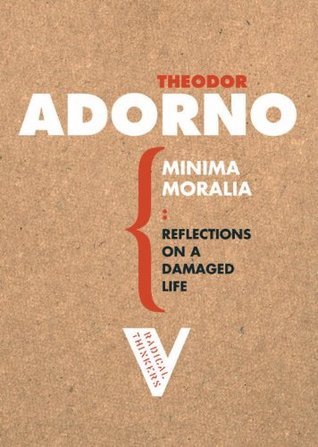
"Minima Moralia" offers a series of incisive philosophical aphorisms and essays, capturing the intellectual and moral decay of post-war European society. Adorno critiques the commodification of culture, the alienation of the individual, and the erosion of authentic experience, revealing how grand ideological failures manifest in the minutiae of everyday life. It’s a profound meditation on navigating a fractured world where genuine human connection and meaning feel increasingly tenuous.
The similarity to "The Outsider" lies in their shared exploration of alienation and societal disillusionment. While Wilson's "outsider" grapples with existential meaninglessness and a sense of being fundamentally detached, Adorno's reflections portray an individual deeply embedded in, yet intellectually and emotionally estranged from, a pathological society. Both authors dissect the symptoms and causes of profound human discontent stemming from a perceived lack of authenticity and purpose in the modern age.
This work appeals to those who appreciate critical social commentary and introspective philosophy. Its sharp observations illuminate the subtle ways societal pressures and historical forces shape individual consciousness. Engaging with Adorno's thought provides a powerful framework for understanding contemporary discontents and fosters a deeper appreciation for critical thinking about culture, politics, and personal experience, offering intellectual nourishment to those seeking profound insights into the human condition.
Minima Moralia: Reflections on a Damaged Life
"Minima Moralia" offers a series of incisive philosophical aphorisms and essays, capturing the intellectual and moral decay of post-war European society. Adorno critiques the commodification of culture, the alienation of the individual, and the erosion of authentic experience, revealing how grand ideological failures manifest in the minutiae of everyday life. It’s a profound meditation on navigating a fractured world where genuine human connection and meaning feel increasingly tenuous.
The similarity to "The Outsider" lies in their shared exploration of alienation and societal disillusionment. While Wilson's "outsider" grapples with existential meaninglessness and a sense of being fundamentally detached, Adorno's reflections portray an individual deeply embedded in, yet intellectually and emotionally estranged from, a pathological society. Both authors dissect the symptoms and causes of profound human discontent stemming from a perceived lack of authenticity and purpose in the modern age.
This work appeals to those who appreciate critical social commentary and introspective philosophy. Its sharp observations illuminate the subtle ways societal pressures and historical forces shape individual consciousness. Engaging with Adorno's thought provides a powerful framework for understanding contemporary discontents and fosters a deeper appreciation for critical thinking about culture, politics, and personal experience, offering intellectual nourishment to those seeking profound insights into the human condition.
The Undiscovered Self

"The Undiscovered Self" by C.G. Jung explores the critical imbalance between the individual and the collective in modern society. Jung argues that widespread alienation and potential for mass delusion stem from individuals' failure to integrate their unconscious minds with their conscious identities, leading them to be easily absorbed by collective movements and ideologies. He posits that true societal health depends on each person cultivating a robust, integrated sense of self.
This work resonates with "The Outsider" through its shared focus on the individual's struggle against societal pressures and the search for authentic meaning beyond conventional norms. Both texts grapple with the feeling of estrangement and the imperative to forge a unique identity in a world that often demands conformity, highlighting the internal journey required for self-realization.
The book offers a profound understanding of psychological and societal dynamics. It provides invaluable insights into navigating the complexities of personal identity in an increasingly homogenized world, empowering individuals to recognize the importance of their inner landscape in maintaining both personal integrity and democratic freedom.
The Undiscovered Self
"The Undiscovered Self" by C.G. Jung explores the critical imbalance between the individual and the collective in modern society. Jung argues that widespread alienation and potential for mass delusion stem from individuals' failure to integrate their unconscious minds with their conscious identities, leading them to be easily absorbed by collective movements and ideologies. He posits that true societal health depends on each person cultivating a robust, integrated sense of self.
This work resonates with "The Outsider" through its shared focus on the individual's struggle against societal pressures and the search for authentic meaning beyond conventional norms. Both texts grapple with the feeling of estrangement and the imperative to forge a unique identity in a world that often demands conformity, highlighting the internal journey required for self-realization.
The book offers a profound understanding of psychological and societal dynamics. It provides invaluable insights into navigating the complexities of personal identity in an increasingly homogenized world, empowering individuals to recognize the importance of their inner landscape in maintaining both personal integrity and democratic freedom.
Lost in the Cosmos: The Last Self-Help Book

Walker Percy’s "Lost in the Cosmos" ingeniously masquerades as a self-help manual, but it's a profound philosophical inquiry into the perplexing nature of human existence in the modern age. Through a series of thought experiments, multiple-choice questions, and often satirical vignettes, Percy dissects the alienated self, the search for meaning, and humanity's unique predicament within the universe, probing concepts like alienation, identity, and the spiritual void of contemporary life.
The kinship between Percy’s work and "The Outsider" lies in their shared exploration of individuals grappling with profound existential estrangement. Both books examine the sense of being "out of joint" with the world, the struggle to find authentic meaning in a seemingly absurd universe, and the intellectual and spiritual crises that arise from such disillusionment. They offer frameworks for understanding the psyche of those who feel deeply disconnected from conventional society and its norms.
This book offers a compelling intellectual journey for anyone who has ever felt a fundamental disconnect with the world around them. It provides sophisticated and often humorous avenues for self-reflection, offering not easy answers, but rather a robust set of questions and perspectives that illuminate the complexities of the human condition and the enduring quest for purpose. Its blend of wit, philosophy, and accessible prose makes it a valuable resource for introspective minds seeking deeper understanding.
Lost in the Cosmos: The Last Self-Help Book
Walker Percy’s "Lost in the Cosmos" ingeniously masquerades as a self-help manual, but it's a profound philosophical inquiry into the perplexing nature of human existence in the modern age. Through a series of thought experiments, multiple-choice questions, and often satirical vignettes, Percy dissects the alienated self, the search for meaning, and humanity's unique predicament within the universe, probing concepts like alienation, identity, and the spiritual void of contemporary life.
The kinship between Percy’s work and "The Outsider" lies in their shared exploration of individuals grappling with profound existential estrangement. Both books examine the sense of being "out of joint" with the world, the struggle to find authentic meaning in a seemingly absurd universe, and the intellectual and spiritual crises that arise from such disillusionment. They offer frameworks for understanding the psyche of those who feel deeply disconnected from conventional society and its norms.
This book offers a compelling intellectual journey for anyone who has ever felt a fundamental disconnect with the world around them. It provides sophisticated and often humorous avenues for self-reflection, offering not easy answers, but rather a robust set of questions and perspectives that illuminate the complexities of the human condition and the enduring quest for purpose. Its blend of wit, philosophy, and accessible prose makes it a valuable resource for introspective minds seeking deeper understanding.
Native Realm: A Search for Self-Definition

"Native Realm" is Czesław Miłosz’s extraordinary memoir that intertwines his personal autobiography with a vast intellectual and historical landscape. It charts his upbringing in Lithuania, his experiences during a tumultuous 20th century marked by war and ideology, and his profound reflections on identity, belonging, and the search for authentic selfhood against a backdrop of shifting national and cultural allegiances.
This work echoes "The Outsider" in its relentless pursuit of meaning and identity amidst societal dislocation. Both books explore the individual's struggle to transcend conventional norms and facile explanations, seeking a deeper truth about their place in the world. Miłosz, like Wilson's "outsider," grapples with existential questions, alienation, and the burden of consciousness, examining how external forces shape, yet fail to fully define, the human spirit.
It will appeal to those who value a rigorous examination of self and society. It offers profound insights into the human condition, particularly the challenges of maintaining integrity and individuality in complex historical periods. Its blend of personal narrative, philosophical inquiry, and historical commentary provides both intellectual stimulation and a deeply moving exploration of what it means to be human in an imperfect world.
Native Realm: A Search for Self-Definition
"Native Realm" is Czesław Miłosz’s extraordinary memoir that intertwines his personal autobiography with a vast intellectual and historical landscape. It charts his upbringing in Lithuania, his experiences during a tumultuous 20th century marked by war and ideology, and his profound reflections on identity, belonging, and the search for authentic selfhood against a backdrop of shifting national and cultural allegiances.
This work echoes "The Outsider" in its relentless pursuit of meaning and identity amidst societal dislocation. Both books explore the individual's struggle to transcend conventional norms and facile explanations, seeking a deeper truth about their place in the world. Miłosz, like Wilson's "outsider," grapples with existential questions, alienation, and the burden of consciousness, examining how external forces shape, yet fail to fully define, the human spirit.
It will appeal to those who value a rigorous examination of self and society. It offers profound insights into the human condition, particularly the challenges of maintaining integrity and individuality in complex historical periods. Its blend of personal narrative, philosophical inquiry, and historical commentary provides both intellectual stimulation and a deeply moving exploration of what it means to be human in an imperfect world.
A Short History of Decay

Emil Cioran's "A Short History of Decay" is a collection of aphorisms and essays exploring the pervasive human condition of disillusionment, the futility of existence, and the seductive allure of nihilism. Cioran dissects philosophical and spiritual anxieties, presenting a stark, often poetic, meditation on humanity's intrinsic flaws and inevitable decline.
This work resonates with "The Outsider" through its shared focus on societal alienation and the individual's struggle against conventional meaning. Both authors delve into the psyche of those who feel estranged from the world, challenging accepted norms and exposing the underlying anxieties of modern life. They explore the intellectual and emotional landscapes of individuals who perceive a profound lack within established systems.
This book will appeal to those who appreciate profound, unflinching philosophical inquiry into the depths of human despair and intellectual rebellion. It offers a challenging yet deeply insightful perspective on existential questions, providing a provocative counterpoint to conventional thought for individuals seeking literature that pushes intellectual boundaries and articulates profound, often unsettling, truths.
A Short History of Decay
Emil Cioran's "A Short History of Decay" is a collection of aphorisms and essays exploring the pervasive human condition of disillusionment, the futility of existence, and the seductive allure of nihilism. Cioran dissects philosophical and spiritual anxieties, presenting a stark, often poetic, meditation on humanity's intrinsic flaws and inevitable decline.
This work resonates with "The Outsider" through its shared focus on societal alienation and the individual's struggle against conventional meaning. Both authors delve into the psyche of those who feel estranged from the world, challenging accepted norms and exposing the underlying anxieties of modern life. They explore the intellectual and emotional landscapes of individuals who perceive a profound lack within established systems.
This book will appeal to those who appreciate profound, unflinching philosophical inquiry into the depths of human despair and intellectual rebellion. It offers a challenging yet deeply insightful perspective on existential questions, providing a provocative counterpoint to conventional thought for individuals seeking literature that pushes intellectual boundaries and articulates profound, often unsettling, truths.
Neither Victims Nor Executioners

Albert Camus's "Neither Victims Nor Executioners" is a powerful essay advocating for a global moral awakening to end the cycle of violence and oppression. Written in the aftermath of World War II, it's a plea for individuals and nations to reject both blind subjugation and retaliatory aggression, urging instead for a constructive, non-violent approach to resolving conflict and establishing justice. Camus argues that true liberation lies in breaking free from the simplistic binary of victimhood and perpetration.
The essay resonates with "The Outsider" through its profound exploration of alienation and the individual's struggle against an absurd or inherently unjust world. Both works delve into the feeling of being dislocated and the search for authentic meaning in a society that often feels meaningless or even hostile. Camus's call for a conscious refusal of predetermined roles mirrors Wilson's outsider figure, who often stands apart from societal norms in their quest for understanding and self-realization.
This work appeals through its timeless relevance to issues of war, human rights, and personal responsibility. It offers a compelling framework for ethical engagement, encouraging critical thought about one's role in a complex world and inspiring a proactive stance against injustice without resorting to further dehumanization. Its insights into moral courage and the pursuit of a just society offer enduring value for anyone grappling with contemporary global challenges.
Neither Victims Nor Executioners
Albert Camus's "Neither Victims Nor Executioners" is a powerful essay advocating for a global moral awakening to end the cycle of violence and oppression. Written in the aftermath of World War II, it's a plea for individuals and nations to reject both blind subjugation and retaliatory aggression, urging instead for a constructive, non-violent approach to resolving conflict and establishing justice. Camus argues that true liberation lies in breaking free from the simplistic binary of victimhood and perpetration.
The essay resonates with "The Outsider" through its profound exploration of alienation and the individual's struggle against an absurd or inherently unjust world. Both works delve into the feeling of being dislocated and the search for authentic meaning in a society that often feels meaningless or even hostile. Camus's call for a conscious refusal of predetermined roles mirrors Wilson's outsider figure, who often stands apart from societal norms in their quest for understanding and self-realization.
This work appeals through its timeless relevance to issues of war, human rights, and personal responsibility. It offers a compelling framework for ethical engagement, encouraging critical thought about one's role in a complex world and inspiring a proactive stance against injustice without resorting to further dehumanization. Its insights into moral courage and the pursuit of a just society offer enduring value for anyone grappling with contemporary global challenges.
The Captive Mind
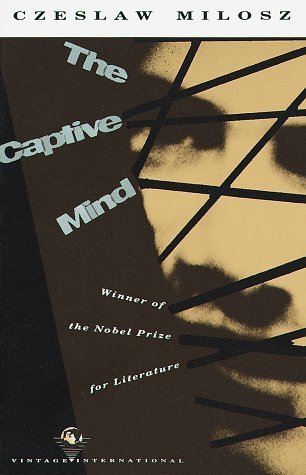
"The Captive Mind" delves into the psychological and intellectual dilemmas faced by Eastern European intellectuals who lived under totalitarian communist regimes. Miłosz explores how individuals, often brilliant and sensitive, grapple with ideological pressure, public conformity, and the erosion of personal truth, even when their inner convictions remain unyielding. It's a profound examination of the human mind under extreme duress, revealing the mechanisms of propaganda and the subtle compromises made.
This book resonates with "The Outsider" through its profound exploration of alienation and the individual's struggle against societal norms and overwhelming ideologies. Both works scrutinize individuals who feel profoundly disconnected from the prevailing societal consciousness, whether that disconnect stems from existential angst or political subjugation. Miłosz's "captives" are outsiders by circumstances, forced to navigate a world that demands intellectual submission, mirroring Wilson's analysis of figures who stand beyond conventional thought.
Its enduring appeal lies in its insightful analysis of intellectual freedom and the human spirit's resilience. It offers a vital historical lens on totalitarianism but also speaks to universal themes of authenticity, conformity, and the search for truth in any oppressive environment. The book provides a powerful testament to the enduring importance of independent thought and moral courage, offering a profound understanding of psychological survival.
The Captive Mind
"The Captive Mind" delves into the psychological and intellectual dilemmas faced by Eastern European intellectuals who lived under totalitarian communist regimes. Miłosz explores how individuals, often brilliant and sensitive, grapple with ideological pressure, public conformity, and the erosion of personal truth, even when their inner convictions remain unyielding. It's a profound examination of the human mind under extreme duress, revealing the mechanisms of propaganda and the subtle compromises made.
This book resonates with "The Outsider" through its profound exploration of alienation and the individual's struggle against societal norms and overwhelming ideologies. Both works scrutinize individuals who feel profoundly disconnected from the prevailing societal consciousness, whether that disconnect stems from existential angst or political subjugation. Miłosz's "captives" are outsiders by circumstances, forced to navigate a world that demands intellectual submission, mirroring Wilson's analysis of figures who stand beyond conventional thought.
Its enduring appeal lies in its insightful analysis of intellectual freedom and the human spirit's resilience. It offers a vital historical lens on totalitarianism but also speaks to universal themes of authenticity, conformity, and the search for truth in any oppressive environment. The book provides a powerful testament to the enduring importance of independent thought and moral courage, offering a profound understanding of psychological survival.
More Books to Explore
Discover more titles that expand on these ideas and themes.
The Occult
Man's Search for Himself
The Rebel
Minima Moralia: Reflections on a Damaged Life
The Undiscovered Self
Lost in the Cosmos: The Last Self-Help Book