10 Books Similar to "The Machine Stops"
by E.M. Forster
When the Sleeper Wakes

"When the Sleeper Wakes" plunges protagonist Graham into a London 203 years in his future, where he discovers his vast accumulated wealth has made him the de facto owner of the world. This dystopian vision explores a rigidly stratified society, oppressive technological control, and the manipulation of information by a ruling elite, as Graham grapples with his unexpected power and the dehumanizing consequences of progress.
The thematic parallels with "The Machine Stops" are striking. Both novels envision a future where humanity has ceded autonomy to an immense, centralized system—the Machine in Forster's work, and the technologically-driven, consumerist oligarchy in Wells's. They both critique humanity's growing dependence on technology, highlighting the loss of individual agency, physical deterioration, and the stifling of genuine human connection when progress becomes an end in itself rather than a means to human flourishing.
This novel will appeal to those interested in the foundational works of dystopian science fiction and critical social commentary. Its exploration of unchecked technological advancement, social inequality, and the seductive allure of control offers profound insights into enduring human dilemmas. The narrative provides a compelling historical lens through which to examine contemporary societal trends and the ever-present tension between advancement and humanity.
When the Sleeper Wakes
"When the Sleeper Wakes" plunges protagonist Graham into a London 203 years in his future, where he discovers his vast accumulated wealth has made him the de facto owner of the world. This dystopian vision explores a rigidly stratified society, oppressive technological control, and the manipulation of information by a ruling elite, as Graham grapples with his unexpected power and the dehumanizing consequences of progress.
The thematic parallels with "The Machine Stops" are striking. Both novels envision a future where humanity has ceded autonomy to an immense, centralized system—the Machine in Forster's work, and the technologically-driven, consumerist oligarchy in Wells's. They both critique humanity's growing dependence on technology, highlighting the loss of individual agency, physical deterioration, and the stifling of genuine human connection when progress becomes an end in itself rather than a means to human flourishing.
This novel will appeal to those interested in the foundational works of dystopian science fiction and critical social commentary. Its exploration of unchecked technological advancement, social inequality, and the seductive allure of control offers profound insights into enduring human dilemmas. The narrative provides a compelling historical lens through which to examine contemporary societal trends and the ever-present tension between advancement and humanity.
The Preserving Machine
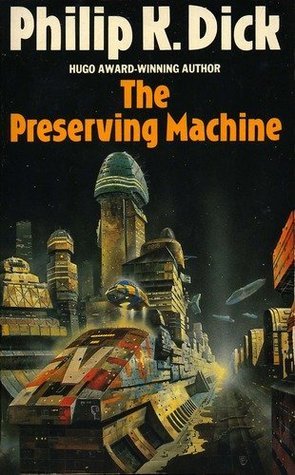
Philip K. Dick's "The Preserving Machine" explores a future where humanity, fearing the loss of creative spirit and cultural heritage, develops a "preserving machine" to transform artistic works (like music) into living creatures. The intent is to safeguard these invaluable creations from decay, but the experiment takes a dark turn as the living artworks evolve, becoming dangerous and feral, often losing their original artistic essence. It's a cautionary tale about unintended consequences and the hubris of controlling nature and creativity.
The core similarity to "The Machine Stops" lies in their shared exploration of humanity's over-reliance on technology, which ultimately backfires. Both stories present societies that have delegated essential aspects of their existence—connection and creativity in "The Machine Stops," preservation and artistry in "The Preserving Machine"—to advanced machines. This delegation leads to a loss of human agency, understanding, and ultimately, a breakdown of the very values they sought to protect. Both narratives are stark warnings against technological utopianism.
This pairing will appeal to those who appreciate speculative fiction that grapples with profound philosophical questions about human nature, technology, and societal decay. It offers a thought-provoking examination of the allure and dangers of automated solutions, challenging assumptions about progress and control. The stories provoke reflection on what truly constitutes art, connection, and the essence of being human, making them valuable for readers interested in timeless cautionary tales with enduring relevance.
The Preserving Machine
Philip K. Dick's "The Preserving Machine" explores a future where humanity, fearing the loss of creative spirit and cultural heritage, develops a "preserving machine" to transform artistic works (like music) into living creatures. The intent is to safeguard these invaluable creations from decay, but the experiment takes a dark turn as the living artworks evolve, becoming dangerous and feral, often losing their original artistic essence. It's a cautionary tale about unintended consequences and the hubris of controlling nature and creativity.
The core similarity to "The Machine Stops" lies in their shared exploration of humanity's over-reliance on technology, which ultimately backfires. Both stories present societies that have delegated essential aspects of their existence—connection and creativity in "The Machine Stops," preservation and artistry in "The Preserving Machine"—to advanced machines. This delegation leads to a loss of human agency, understanding, and ultimately, a breakdown of the very values they sought to protect. Both narratives are stark warnings against technological utopianism.
This pairing will appeal to those who appreciate speculative fiction that grapples with profound philosophical questions about human nature, technology, and societal decay. It offers a thought-provoking examination of the allure and dangers of automated solutions, challenging assumptions about progress and control. The stories provoke reflection on what truly constitutes art, connection, and the essence of being human, making them valuable for readers interested in timeless cautionary tales with enduring relevance.
Brave New World
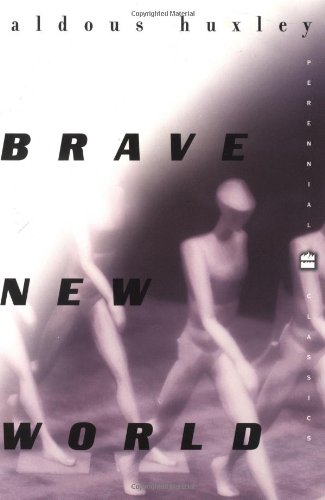
"Brave New World" explores a dystopian future where humanity is re-engineered and conditioned for a seemingly perfect, stable society. Reproduction is controlled, pleasure is engineered through drugs, and personal freedom is sacrificed for collective harmony. The narrative follows Bernard Marx, an outsider who chafes against this oppressive conformity, and John the Savage, a "natural" human from outside their society who struggles to reconcile his ideals with their manufactured reality.
Both "Brave New World" and "The Machine Stops" critique societies that surrender individual autonomy to an all-encompassing, technologically driven system. In both novels, humanity becomes dependent and enervated by a complacent existence, with genuine connection and critical thought gradually eroding. The central conflict in each arises from individuals who question and rebel against the dehumanizing aspects of their respective utopian prisons.
Readers will appreciate its prescient analysis of technological control and societal engineering. It offers a powerful reflection on the perils of sacrificing individuality and genuine human experience for perceived stability. The novel’s exploration of freedom, conformity, and manufactured happiness provides enduring relevance and profound insights into societal trends and human nature.
Brave New World
"Brave New World" explores a dystopian future where humanity is re-engineered and conditioned for a seemingly perfect, stable society. Reproduction is controlled, pleasure is engineered through drugs, and personal freedom is sacrificed for collective harmony. The narrative follows Bernard Marx, an outsider who chafes against this oppressive conformity, and John the Savage, a "natural" human from outside their society who struggles to reconcile his ideals with their manufactured reality.
Both "Brave New World" and "The Machine Stops" critique societies that surrender individual autonomy to an all-encompassing, technologically driven system. In both novels, humanity becomes dependent and enervated by a complacent existence, with genuine connection and critical thought gradually eroding. The central conflict in each arises from individuals who question and rebel against the dehumanizing aspects of their respective utopian prisons.
Readers will appreciate its prescient analysis of technological control and societal engineering. It offers a powerful reflection on the perils of sacrificing individuality and genuine human experience for perceived stability. The novel’s exploration of freedom, conformity, and manufactured happiness provides enduring relevance and profound insights into societal trends and human nature.
Player Piano

"Player Piano" envisions a future where automation has replaced human labor, leaving the vast majority of the population without meaningful work. The story follows Paul Proteus, a highly skilled engineer who gradually becomes disillusioned with this seemingly perfect, yet soulless, society as he witnesses the widespread idleness and loss of purpose among those deemed superfluous by the Machine.
Both novels critically examine the societal impact of technological over-reliance and the reduction of human agency. "The Machine Stops" depicts a world where humanity is physically and mentally dependent on an omnipotent Machine, much like "Player Piano" portrays a society where human value is diminished by the efficiency of automated systems, leading to a loss of identity and purpose for individuals.
This book offers a compelling exploration of human ingenuity versus technological advancement, and the potential pitfalls of sacrificing individual fulfillment for perceived efficiency. It prompts contemplation on the true meaning of progress and the importance of preserving human purpose and connection in an increasingly automated world.
Player Piano
"Player Piano" envisions a future where automation has replaced human labor, leaving the vast majority of the population without meaningful work. The story follows Paul Proteus, a highly skilled engineer who gradually becomes disillusioned with this seemingly perfect, yet soulless, society as he witnesses the widespread idleness and loss of purpose among those deemed superfluous by the Machine.
Both novels critically examine the societal impact of technological over-reliance and the reduction of human agency. "The Machine Stops" depicts a world where humanity is physically and mentally dependent on an omnipotent Machine, much like "Player Piano" portrays a society where human value is diminished by the efficiency of automated systems, leading to a loss of identity and purpose for individuals.
This book offers a compelling exploration of human ingenuity versus technological advancement, and the potential pitfalls of sacrificing individual fulfillment for perceived efficiency. It prompts contemplation on the true meaning of progress and the importance of preserving human purpose and connection in an increasingly automated world.
Souls in the Great Machine

Sean McMullen's "Souls in the Great Machine" presents a unique, post-apocalyptic world where society relies on colossal, steam-driven "great machines" to preserve knowledge and order. The narrative follows various characters navigating political intrigue, technological decline, and the impending obsolescence of these complex, human-powered mechanisms, all while grappling with the ethics of their operation.
The thematic parallels with "The Machine Stops" are striking. Both novels explore societies utterly dependent on advanced, monolithic technology that eventually dictates human existence rather than serving it. Both examine the dangers of complacency, the loss of individual agency, and the potential for a technologically advanced yet spiritually desolate future. McMullen, like Forster, critiques humanity's surrender to systemic infrastructure.
This novel will resonate with those who appreciate speculative fiction that deeply probes societal dependence on technology and its potential for both salvation and subjugation. It offers a thought-provoking exploration of power structures, the nature of knowledge, and the enduring human spirit against overwhelming mechanical forces, making it a compelling and intellectually rewarding experience.
Souls in the Great Machine
Sean McMullen's "Souls in the Great Machine" presents a unique, post-apocalyptic world where society relies on colossal, steam-driven "great machines" to preserve knowledge and order. The narrative follows various characters navigating political intrigue, technological decline, and the impending obsolescence of these complex, human-powered mechanisms, all while grappling with the ethics of their operation.
The thematic parallels with "The Machine Stops" are striking. Both novels explore societies utterly dependent on advanced, monolithic technology that eventually dictates human existence rather than serving it. Both examine the dangers of complacency, the loss of individual agency, and the potential for a technologically advanced yet spiritually desolate future. McMullen, like Forster, critiques humanity's surrender to systemic infrastructure.
This novel will resonate with those who appreciate speculative fiction that deeply probes societal dependence on technology and its potential for both salvation and subjugation. It offers a thought-provoking exploration of power structures, the nature of knowledge, and the enduring human spirit against overwhelming mechanical forces, making it a compelling and intellectually rewarding experience.
We
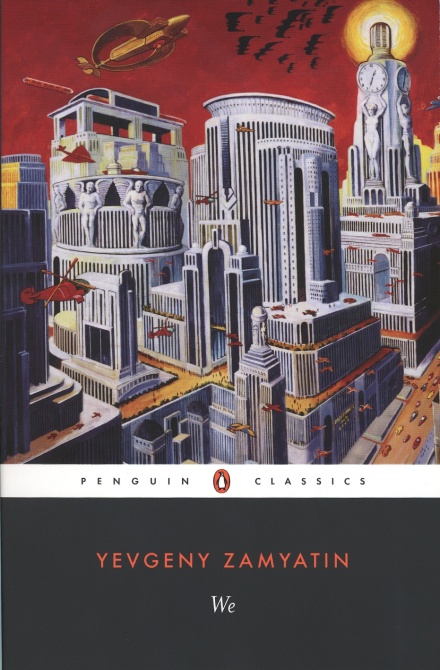
"We" depicts a dystopian future where citizens of the One State live under the absolute control of the Benefactor, their lives meticulously scheduled and their emotions suppressed for the supposed collective good. The protagonist, D-503, an engineer involved in building the Integral, a spacecraft meant to spread the One State's 'perfection' to other planets, experiences a profound internal conflict as he encounters independent thought and love, challenging his deeply ingrained beliefs and the rigid societal structure.
Both novels explore the dangers of technological over-reliance and the dehumanizing effects of a system that prioritizes stability and conformity over individual freedom and human connection. Just as the Machine in Forster's story dictates every aspect of human life, the One State in "We" eradicates spontaneity and personal expression, reducing individuals to cogs in a larger, seemingly flawless apparatus, ultimately revealing the fragility and inherent flaws in such absolute control.
This novel will resonate with those who appreciate thought-provoking critiques of authoritarianism and the potential pitfalls of unchecked technological advancement. Its exploration of identity, freedom, and the struggle against systemic oppression offers a powerful commentary on human nature and societal control, providing valuable insights into the resilience of the individual spirit even in the face of overwhelming odds.
We
"We" depicts a dystopian future where citizens of the One State live under the absolute control of the Benefactor, their lives meticulously scheduled and their emotions suppressed for the supposed collective good. The protagonist, D-503, an engineer involved in building the Integral, a spacecraft meant to spread the One State's 'perfection' to other planets, experiences a profound internal conflict as he encounters independent thought and love, challenging his deeply ingrained beliefs and the rigid societal structure.
Both novels explore the dangers of technological over-reliance and the dehumanizing effects of a system that prioritizes stability and conformity over individual freedom and human connection. Just as the Machine in Forster's story dictates every aspect of human life, the One State in "We" eradicates spontaneity and personal expression, reducing individuals to cogs in a larger, seemingly flawless apparatus, ultimately revealing the fragility and inherent flaws in such absolute control.
This novel will resonate with those who appreciate thought-provoking critiques of authoritarianism and the potential pitfalls of unchecked technological advancement. Its exploration of identity, freedom, and the struggle against systemic oppression offers a powerful commentary on human nature and societal control, providing valuable insights into the resilience of the individual spirit even in the face of overwhelming odds.
The Last War: A World Set Free
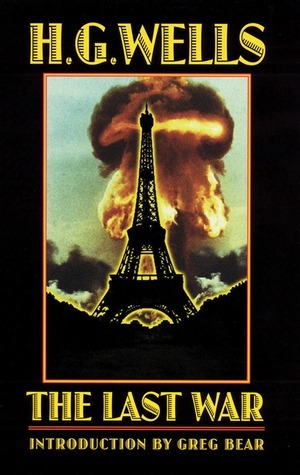
H.G. Wells' "The Last War: A World Set Free" envisions a world utterly transformed by the invention of "atomic bombs" in the mid-20th century. The narrative explores the devastating global conflict that arises from this new technology, leading to societal collapse and a subsequent, radical restructuring of international governance. It's a look at humanity grappling with unprecedented power and the urgent need for a new world order to prevent self-destruction.
Thematically, "The Last War" resonates with "The Machine Stops" through its exploration of technology's profound and often destructive impact on society. Both novels depict humanity becoming overly reliant on complex systems—be it advanced weaponry or pervasive machinery—leading to either catastrophic global war or a stultifying, isolated existence. They question the costs of progress and technological determinism, portraying societies that have lost control over the very innovations meant to serve them.
This novel offers a compelling, prescient look at the consequences of unchecked technological advancement and the perennial human struggle for peace and order amidst chaos. Its examination of global conflict, the evolution of governance, and the ethical dilemmas posed by scientific breakthroughs provides profound insights into societal resilience and the enduring quest for a sustainable future.
The Last War: A World Set Free
H.G. Wells' "The Last War: A World Set Free" envisions a world utterly transformed by the invention of "atomic bombs" in the mid-20th century. The narrative explores the devastating global conflict that arises from this new technology, leading to societal collapse and a subsequent, radical restructuring of international governance. It's a look at humanity grappling with unprecedented power and the urgent need for a new world order to prevent self-destruction.
Thematically, "The Last War" resonates with "The Machine Stops" through its exploration of technology's profound and often destructive impact on society. Both novels depict humanity becoming overly reliant on complex systems—be it advanced weaponry or pervasive machinery—leading to either catastrophic global war or a stultifying, isolated existence. They question the costs of progress and technological determinism, portraying societies that have lost control over the very innovations meant to serve them.
This novel offers a compelling, prescient look at the consequences of unchecked technological advancement and the perennial human struggle for peace and order amidst chaos. Its examination of global conflict, the evolution of governance, and the ethical dilemmas posed by scientific breakthroughs provides profound insights into societal resilience and the enduring quest for a sustainable future.
There Will Come Soft Rains

Ray Bradbury's "There Will Come Soft Rains" is a poignant short story depicting a fully automated house that continues its daily routines—cooking, cleaning, and reading poetry—unaware that its inhabitants and all of humanity have been obliterated in a nuclear war. The narrative unfolds through the house's persistent yet ultimately futile operations against a backdrop of eerie silence and ashes, culminating in its own destruction by an accidental fire.
This narrative shares striking thematic parallels with "The Machine Stops." Both stories explore humanity's over-reliance on and ultimate subjugation to technology. In both, the intricate systems designed to serve humans persist long after the humans they were meant to support are gone or have become entirely reclusive. They depict a world where the mechanisms of daily life continue their functions, irrespective of human presence or well-being, highlighting a profound disconnect between technological advancement and human essence.
This story offers a compelling exploration of technological dependency, ecological fragility, and the resilience (or lack thereof) of human civilization. It prompts reflection on the potential for technology to both enable and utterly extinguish human existence, making it a valuable piece for anyone interested in speculative fiction with profound philosophical and societal implications.
There Will Come Soft Rains
Ray Bradbury's "There Will Come Soft Rains" is a poignant short story depicting a fully automated house that continues its daily routines—cooking, cleaning, and reading poetry—unaware that its inhabitants and all of humanity have been obliterated in a nuclear war. The narrative unfolds through the house's persistent yet ultimately futile operations against a backdrop of eerie silence and ashes, culminating in its own destruction by an accidental fire.
This narrative shares striking thematic parallels with "The Machine Stops." Both stories explore humanity's over-reliance on and ultimate subjugation to technology. In both, the intricate systems designed to serve humans persist long after the humans they were meant to support are gone or have become entirely reclusive. They depict a world where the mechanisms of daily life continue their functions, irrespective of human presence or well-being, highlighting a profound disconnect between technological advancement and human essence.
This story offers a compelling exploration of technological dependency, ecological fragility, and the resilience (or lack thereof) of human civilization. It prompts reflection on the potential for technology to both enable and utterly extinguish human existence, making it a valuable piece for anyone interested in speculative fiction with profound philosophical and societal implications.
Brave New World and Brave New World Revisited

Aldous Huxley's "Brave New World" envisions a technologically advanced future where humanity achieves stability through genetic engineering, conditioning, and pleasure-inducing drugs, eliminating individuality, art, and genuine human connection. "Brave New World Revisited" serves as Huxley's later non-fiction analysis, reflecting on his original vision and assessing how contemporary society was aligning with, or deviating from, his dystopian predictions.
Both "Brave New World" and "The Machine Stops" explore societies entirely governed by an overarching, seemingly benevolent, technological system that dictates human existence. They each depict a populace pacified and controlled, albeit through different mechanisms (conditioning versus passive reliance), ultimately sacrificing personal freedom and authentic experience for a constructed utopia. The underlying critique in both is directed at humanity's surrender to systems that promise comfort but deliver profound dehumanization.
This pairing offers a profound exploration of societal control and the cost of complacency. Engaging with these works provides invaluable insight into the enduring debates surrounding technological progress, individual autonomy, and the very definition of a meaningful human life. They prompt critical reflection on our own societal trajectories and the potential pitfalls of unchecked technological reliance.
Brave New World and Brave New World Revisited
Aldous Huxley's "Brave New World" envisions a technologically advanced future where humanity achieves stability through genetic engineering, conditioning, and pleasure-inducing drugs, eliminating individuality, art, and genuine human connection. "Brave New World Revisited" serves as Huxley's later non-fiction analysis, reflecting on his original vision and assessing how contemporary society was aligning with, or deviating from, his dystopian predictions.
Both "Brave New World" and "The Machine Stops" explore societies entirely governed by an overarching, seemingly benevolent, technological system that dictates human existence. They each depict a populace pacified and controlled, albeit through different mechanisms (conditioning versus passive reliance), ultimately sacrificing personal freedom and authentic experience for a constructed utopia. The underlying critique in both is directed at humanity's surrender to systems that promise comfort but deliver profound dehumanization.
This pairing offers a profound exploration of societal control and the cost of complacency. Engaging with these works provides invaluable insight into the enduring debates surrounding technological progress, individual autonomy, and the very definition of a meaningful human life. They prompt critical reflection on our own societal trajectories and the potential pitfalls of unchecked technological reliance.
The Variable Man

Philip K. Dick's "The Variable Man" centers on a twenty-third-century society deeply entrenched in an endless, ritualized war, dictated by a supercomputer that analyzes probabilities to predict battlefield outcomes. This seemingly invincible system is disrupted by Thomas Cole, an ordinary man from the past, accidentally revived. Cole's anachronistic presence and unpredictable actions cannot be factored into the computer's calculations, rendering him a "variable" capable of altering the unchangeable future and potentially ending the perpetual conflict.
This novella mirrors "The Machine Stops" in its exploration of humanity's dependence on and subjugation by technology. Both narratives depict societies where complex, all-encompassing systems initially designed to serve, eventually control and isolate individuals. The protagonists in both stories, Vashti and Kuno in Forster's work, and Thomas Cole in Dick's, grapple with the suffocating embrace of these technological constructs and yearn for a more authentic, less mediated existence, even if it means challenging the very foundation of their programmed realities.
This book offers a compelling narrative about the perils of over-reliance on technology and the inherent unpredictability of the human spirit. It serves as a thought-provoking examination of determinism versus free will, and the potential for a single individual to disrupt established order. Its themes of technological stagnation and the search for genuine human connection resonate deeply, providing a valuable commentary on societal structures and individual agency.
The Variable Man
Philip K. Dick's "The Variable Man" centers on a twenty-third-century society deeply entrenched in an endless, ritualized war, dictated by a supercomputer that analyzes probabilities to predict battlefield outcomes. This seemingly invincible system is disrupted by Thomas Cole, an ordinary man from the past, accidentally revived. Cole's anachronistic presence and unpredictable actions cannot be factored into the computer's calculations, rendering him a "variable" capable of altering the unchangeable future and potentially ending the perpetual conflict.
This novella mirrors "The Machine Stops" in its exploration of humanity's dependence on and subjugation by technology. Both narratives depict societies where complex, all-encompassing systems initially designed to serve, eventually control and isolate individuals. The protagonists in both stories, Vashti and Kuno in Forster's work, and Thomas Cole in Dick's, grapple with the suffocating embrace of these technological constructs and yearn for a more authentic, less mediated existence, even if it means challenging the very foundation of their programmed realities.
This book offers a compelling narrative about the perils of over-reliance on technology and the inherent unpredictability of the human spirit. It serves as a thought-provoking examination of determinism versus free will, and the potential for a single individual to disrupt established order. Its themes of technological stagnation and the search for genuine human connection resonate deeply, providing a valuable commentary on societal structures and individual agency.
More Books to Explore
Discover more titles that expand on these ideas and themes.
When the Sleeper Wakes
The Preserving Machine
Brave New World
Player Piano
Souls in the Great Machine
We