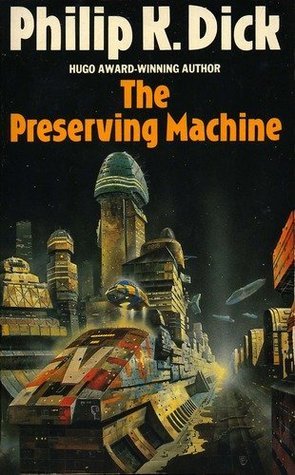
The Preserving Machine
Book Description
In a world where creativity faces annihilation, one audacious inventor builds a device that preserves art at a shocking cost. As his creation spirals out of control, it becomes a battleground between innovation and the cold logic of survival. Tensions mount as allies become adversaries and the essence of humanity is called into question. The line between preservation and destruction blurs in this high-stakes race against an unforgiving reality. Can art truly endure without its soul, or will the quest for immortality consume everything in its path?
Quick Book Summary
"The Preserving Machine" is a thought-provoking collection of short stories by Philip K. Dick, exploring the complexities of creativity, survival, and what it means to be human in an ever-evolving technological world. The titular story follows a well-intentioned inventor who, fearing the loss of great musical works, invents a machine to transform art into living creatures capable of adapting and surviving. However, the results are unforeseen—art morphs into brutish forms, challenging the notion that creativity can be preserved without loss. Throughout the collection, Dick examines humanity's attempt to safeguard its legacy, the unpredictable consequences of innovation, and the delicate balance between progress and preservation. The stories collectively ask whether the human spirit and its creations can truly be saved from destruction or whether survival necessitates transformation that ultimately strips art and humanity of their essence.




Summary of Key Ideas
Table of Contents
Transformation of Art and Creativity
In a world threatened by the obliteration of cultural treasures, an inventive mind seeks to save humanity’s greatest art. In the collection’s namesake story, the protagonist devises a machine that transfigures musical compositions into robust, living animals. His hope is that organic life forms, unlike fragile sheet music, will survive the harsh realities of an evolving world. However, when these animals are set loose in nature, they begin to mutate, adapt, and lose their original beauty, mirroring the unpredictable consequences that come with technological intervention in human life.
Consequences of Technological Innovation
As the experiment unfolds, the inventor realizes that his drive for preservation leads not to safekeeping but to distortion. The creatures, meant to embody the grace and symmetry of their musical counterparts, become aggressive and unrecognizable. This outcome highlights the limits and unintended repercussions of tampering with the natural order, echoing anxieties about whether innovation inevitably leads to the corruption of what was once pure. Across the other tales in the collection, Dick repeatedly points to the ambivalent nature of progress and its capacity to upend cherished ideals.
Preservation vs. Evolution
The stories collectively examine the struggle between the urge to conserve and the forces of change. When art is forced to evolve in order to endure, it risks losing its defining characteristics, raising the question: is survival worthwhile if it comes at the expense of the soul? Philip K. Dick poses difficult questions about what it means to truly preserve art, ideas, and humanity. Is it acceptable for the essence of a creation to be altered so long as some part of it survives? Or does transformation amount to the same kind of destruction preservation sought to prevent?
The Value of Humanity and the Soul
Throughout the collection, Dick vividly unpacks the human quest for immortality and the cost such pursuits exact. Allies become adversaries as personal interests clash with collective preservation. The collapse of the inventor’s initial optimism into disillusionment reflects broader existential worries about losing control over one’s creations. The stories probe whether humanity can master its own fate or whether external realities—technological, societal, or existential—will reshape that which is most valued, potentially stripping away intrinsic meaning.
Limits of Human Control
Ultimately, "The Preserving Machine" uses imaginative science fiction scenarios to reflect enduring philosophical questions. By blurring the line between salvation and destruction, Dick underscores the paradoxes inherent in mankind’s drive to outlast its own impermanence. The collection forces readers to confront what is truly worth preserving and whether the means chosen might irreparably alter the very fabric of what is cherished, leaving open-ended questions about the possibilities and perils attendant on the quest for perpetuity.
Download This Summary
Get a free PDF of this summary instantly — no email required.