10 Books Similar to "The Happiness Hypothesis: Finding Modern Truth in Ancient Wisdom"
by Jonathan Haidt
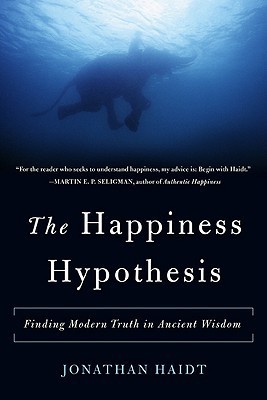
Stumbling on Happiness

"Stumbling on Happiness" delves into the fascinating world of human foresight and affect, exploring why we are remarkably bad at predicting what will make us happy in the future. Daniel Gilbert, a social psychologist, meticulously unpacks the cognitive biases and illusions that lead us astray, revealing how our brains construct a simulated future that often bears little resemblance to actual experience. It’s a compelling examination of our intrinsic human tendency to misjudge our emotional reactions to future events.
This work resonates with "The Happiness Hypothesis" by sharing a fundamental curiosity about the nature of human well-being and the factors that genuinely contribute to it. Both books bridge the gap between ancient philosophical inquiries into happiness and contemporary scientific understanding, albeit through different lenses. While Haidt integrates ancient wisdom with modern psychology, Gilbert focuses more acutely on the predictive errors inherent in our attempts to engineer our own contentment. Both ultimately aim to illuminate the true pathways to a fulfilling life by dissecting common misconceptions.
The book will appeal to anyone seeking a deeper understanding of human nature and the often-baffling mechanics of our minds. Its rigorous yet accessible approach to cognitive psychology offers profound insights into personal decision-making, emotional regulation, and future planning. Engaging with Gilbert's arguments provides valuable tools for challenging one's own assumptions about happiness and making more informed choices that align with genuine, rather than imagined, satisfaction.
Stumbling on Happiness
"Stumbling on Happiness" delves into the fascinating world of human foresight and affect, exploring why we are remarkably bad at predicting what will make us happy in the future. Daniel Gilbert, a social psychologist, meticulously unpacks the cognitive biases and illusions that lead us astray, revealing how our brains construct a simulated future that often bears little resemblance to actual experience. It’s a compelling examination of our intrinsic human tendency to misjudge our emotional reactions to future events.
This work resonates with "The Happiness Hypothesis" by sharing a fundamental curiosity about the nature of human well-being and the factors that genuinely contribute to it. Both books bridge the gap between ancient philosophical inquiries into happiness and contemporary scientific understanding, albeit through different lenses. While Haidt integrates ancient wisdom with modern psychology, Gilbert focuses more acutely on the predictive errors inherent in our attempts to engineer our own contentment. Both ultimately aim to illuminate the true pathways to a fulfilling life by dissecting common misconceptions.
The book will appeal to anyone seeking a deeper understanding of human nature and the often-baffling mechanics of our minds. Its rigorous yet accessible approach to cognitive psychology offers profound insights into personal decision-making, emotional regulation, and future planning. Engaging with Gilbert's arguments provides valuable tools for challenging one's own assumptions about happiness and making more informed choices that align with genuine, rather than imagined, satisfaction.
Authentic Happiness: Using the New Positive Psychology to Realize Your Potential for Lasting Fulfillment
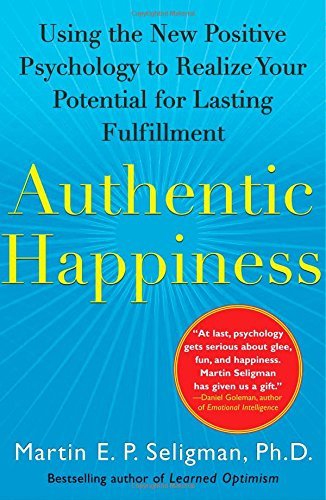
"Authentic Happiness" by Martin E.P. Seligman introduces the field of Positive Psychology, moving beyond just alleviating suffering to actively building well-being. It details how individuals can identify and utilize their signature strengths – deeply ingrained positive traits – to enhance their satisfaction in work, love, and leisure, leading to a more meaningful and fulfilling life. The book offers practical exercises and frameworks for cultivating lasting happiness.
Both books explore the nature of happiness and human flourishing. Like "The Happiness Hypothesis," Seligman's work bridges ancient philosophical insights with modern scientific understanding. Haidt examines timeless wisdom through a scientific lens, while Seligman provides a scientific framework for achieving what ancient philosophers, implicitly or explicitly, sought: a good life. They both move beyond fleeting pleasures to investigate deeper, more sustainable forms of well-being.
This book holds significant value for those seeking actionable strategies to improve their lives. It offers a structured approach to self-improvement rooted in research, providing concrete tools for understanding and enhancing personal strengths. For anyone interested in practical applications of psychology to achieve greater life satisfaction, its insights are both illuminating and empowering.
Authentic Happiness: Using the New Positive Psychology to Realize Your Potential for Lasting Fulfillment
"Authentic Happiness" by Martin E.P. Seligman introduces the field of Positive Psychology, moving beyond just alleviating suffering to actively building well-being. It details how individuals can identify and utilize their signature strengths – deeply ingrained positive traits – to enhance their satisfaction in work, love, and leisure, leading to a more meaningful and fulfilling life. The book offers practical exercises and frameworks for cultivating lasting happiness.
Both books explore the nature of happiness and human flourishing. Like "The Happiness Hypothesis," Seligman's work bridges ancient philosophical insights with modern scientific understanding. Haidt examines timeless wisdom through a scientific lens, while Seligman provides a scientific framework for achieving what ancient philosophers, implicitly or explicitly, sought: a good life. They both move beyond fleeting pleasures to investigate deeper, more sustainable forms of well-being.
This book holds significant value for those seeking actionable strategies to improve their lives. It offers a structured approach to self-improvement rooted in research, providing concrete tools for understanding and enhancing personal strengths. For anyone interested in practical applications of psychology to achieve greater life satisfaction, its insights are both illuminating and empowering.
The Pursuit of Happiness: Discovering the Pathway to Fulfillment, Well-Being, and Enduring Personal Joy

David G. Myers' "The Pursuit of Happiness" distills cutting-edge psychological and social scientific research, alongside philosophical insights, to illuminate the fundamental components of human well-being. It explores what genuinely contributes to lasting contentment, dispelling common misconceptions about happiness and offering evidence-based strategies for cultivating a more fulfilling life.
This book aligns with "The Happiness Hypothesis" by sharing a core objective: to provide a nuanced understanding of happiness through the integration of scientific inquiry and timeless wisdom. Both authors meticulously examine the nature of happiness, drawing connections between empirical findings and enduring truths, thereby offering a comprehensive perspective beyond simplistic self-help tropes.
Individuals seeking a robust, evidence-backed exploration of happiness and how to achieve it will find this work profoundly insightful. It empowers with practical, informed perspectives on what truly fosters joy and satisfaction, enabling a more intentional and successful navigation of life's challenges and opportunities.
The Pursuit of Happiness: Discovering the Pathway to Fulfillment, Well-Being, and Enduring Personal Joy
David G. Myers' "The Pursuit of Happiness" distills cutting-edge psychological and social scientific research, alongside philosophical insights, to illuminate the fundamental components of human well-being. It explores what genuinely contributes to lasting contentment, dispelling common misconceptions about happiness and offering evidence-based strategies for cultivating a more fulfilling life.
This book aligns with "The Happiness Hypothesis" by sharing a core objective: to provide a nuanced understanding of happiness through the integration of scientific inquiry and timeless wisdom. Both authors meticulously examine the nature of happiness, drawing connections between empirical findings and enduring truths, thereby offering a comprehensive perspective beyond simplistic self-help tropes.
Individuals seeking a robust, evidence-backed exploration of happiness and how to achieve it will find this work profoundly insightful. It empowers with practical, informed perspectives on what truly fosters joy and satisfaction, enabling a more intentional and successful navigation of life's challenges and opportunities.
The How of Happiness: A Scientific Approach to Getting the Life You Want
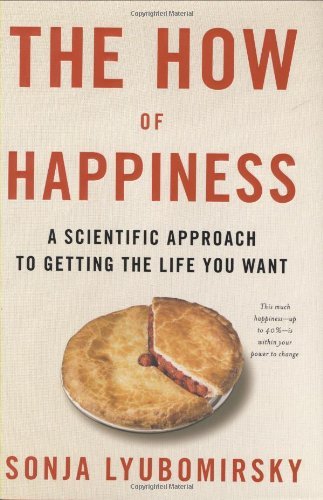
"The How of Happiness" by Sonja Lyubomirsky translates decades of scientific research into practical strategies for increasing personal well-being. It moves beyond abstract theories, offering a clear, evidence-based roadmap built on the idea that habitual behaviors and intentional activities are key drivers of lasting happiness. Lyubomirsky provides a framework for understanding and implementing specific happiness-boosting practices, empowering individuals to actively cultivate a more fulfilling life.
This book shares a core ambition with Jonathan Haidt's "The Happiness Hypothesis": both explore the fundamental nature of happiness and offer actionable insights for its pursuit. While Haidt bridges ancient philosophy with modern psychology, Lyubomirsky, like Haidt, meticulously synthesizes scientific findings to demystify happiness and present a pragmatic guide for its attainment. Both emphasize that happiness isn't a passive state but an active endeavor.
Individuals seeking empirically-supported methods for enhancing their life satisfaction will appreciate this book. Its actionable advice, grounded in rigorous research, offers a dependable resource for personal growth. The clear articulation of strategies empowers one to apply scientific principles directly to everyday life, fostering a more positive and enduring sense of well-being.
The How of Happiness: A Scientific Approach to Getting the Life You Want
"The How of Happiness" by Sonja Lyubomirsky translates decades of scientific research into practical strategies for increasing personal well-being. It moves beyond abstract theories, offering a clear, evidence-based roadmap built on the idea that habitual behaviors and intentional activities are key drivers of lasting happiness. Lyubomirsky provides a framework for understanding and implementing specific happiness-boosting practices, empowering individuals to actively cultivate a more fulfilling life.
This book shares a core ambition with Jonathan Haidt's "The Happiness Hypothesis": both explore the fundamental nature of happiness and offer actionable insights for its pursuit. While Haidt bridges ancient philosophy with modern psychology, Lyubomirsky, like Haidt, meticulously synthesizes scientific findings to demystify happiness and present a pragmatic guide for its attainment. Both emphasize that happiness isn't a passive state but an active endeavor.
Individuals seeking empirically-supported methods for enhancing their life satisfaction will appreciate this book. Its actionable advice, grounded in rigorous research, offers a dependable resource for personal growth. The clear articulation of strategies empowers one to apply scientific principles directly to everyday life, fostering a more positive and enduring sense of well-being.
The Happiness Advantage: The Seven Principles of Positive Psychology That Fuel Success and Performance at Work

"The Happiness Advantage" by Shawn Achor focuses on how positive psychology can be leveraged to achieve greater success and performance, particularly in professional environments. Achor argues that rather than success breeding happiness, happiness actually precedes and fuels success. He outlines seven practical principles, such as the "Happiness Advantage" (train your brain to be more positive) and the "Fulcrum and the Lever" (adjust your mindset to gain power), demonstrating how cultivating a positive outlook and habits can significantly boost productivity, engagement, and overall achievement.
This book shares common ground with "The Happiness Hypothesis" in its exploration of the roots and mechanisms of well-being, albeit with a more contemporary and practical application. Both authors delve into the interplay between ancient wisdom and modern scientific understanding of human psychology, seeking actionable insights to improve an individual's state. While Haidt takes a broader philosophical view, Achor applies similar principles to the realm of personal and professional efficacy.
This work appeals to individuals seeking concrete, research-backed strategies to enhance their performance and satisfaction in their careers and lives. Its practical framework offers actionable steps, making it a valuable resource for anyone looking to cultivate a more resilient, positive mindset that drives tangible results. It offers a clear pathway to translate psychological insights into real-world advantages.
The Happiness Advantage: The Seven Principles of Positive Psychology That Fuel Success and Performance at Work
"The Happiness Advantage" by Shawn Achor focuses on how positive psychology can be leveraged to achieve greater success and performance, particularly in professional environments. Achor argues that rather than success breeding happiness, happiness actually precedes and fuels success. He outlines seven practical principles, such as the "Happiness Advantage" (train your brain to be more positive) and the "Fulcrum and the Lever" (adjust your mindset to gain power), demonstrating how cultivating a positive outlook and habits can significantly boost productivity, engagement, and overall achievement.
This book shares common ground with "The Happiness Hypothesis" in its exploration of the roots and mechanisms of well-being, albeit with a more contemporary and practical application. Both authors delve into the interplay between ancient wisdom and modern scientific understanding of human psychology, seeking actionable insights to improve an individual's state. While Haidt takes a broader philosophical view, Achor applies similar principles to the realm of personal and professional efficacy.
This work appeals to individuals seeking concrete, research-backed strategies to enhance their performance and satisfaction in their careers and lives. Its practical framework offers actionable steps, making it a valuable resource for anyone looking to cultivate a more resilient, positive mindset that drives tangible results. It offers a clear pathway to translate psychological insights into real-world advantages.
The Coddling of the American Mind: How Good Intentions and Bad Ideas Are Setting up a Generation for Failure
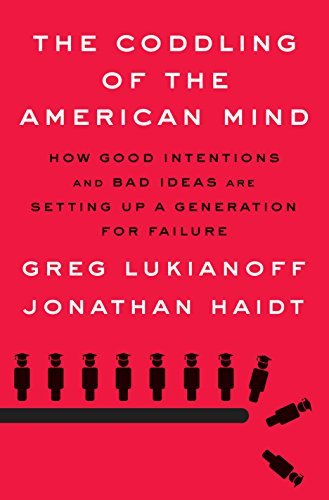
"The Coddling of the American Mind" examines how certain societal trends—namely an overemphasis on safetyism, emotional reasoning, and a "us vs. them" mentality—are impacting young people, particularly college students. Haidt argues that these well-intentioned approaches inadvertently foster fragility, intolerance, and anxiety, hindering intellectual development and open discourse.
Both books, while distinct in focus, share Haidt's signature approach of blending psychological research with philosophical and sociological insights. "Coddling" extends the same critical, evidence-based lens to contemporary social phenomena that "Happiness Hypothesis" applies to understanding human well-being through ancient wisdom. The core analytical method—diagnosing societal challenges by examining human psychology and cultural forces—is a strong through-line.
This book offers a compelling analysis of current cultural anxieties and offers a framework for understanding divisive conversations. It provides practical insights for fostering resilience and promoting healthy intellectual engagement, equipping individuals to navigate a complex world with greater understanding and agency.
The Coddling of the American Mind: How Good Intentions and Bad Ideas Are Setting up a Generation for Failure
"The Coddling of the American Mind" examines how certain societal trends—namely an overemphasis on safetyism, emotional reasoning, and a "us vs. them" mentality—are impacting young people, particularly college students. Haidt argues that these well-intentioned approaches inadvertently foster fragility, intolerance, and anxiety, hindering intellectual development and open discourse.
Both books, while distinct in focus, share Haidt's signature approach of blending psychological research with philosophical and sociological insights. "Coddling" extends the same critical, evidence-based lens to contemporary social phenomena that "Happiness Hypothesis" applies to understanding human well-being through ancient wisdom. The core analytical method—diagnosing societal challenges by examining human psychology and cultural forces—is a strong through-line.
This book offers a compelling analysis of current cultural anxieties and offers a framework for understanding divisive conversations. It provides practical insights for fostering resilience and promoting healthy intellectual engagement, equipping individuals to navigate a complex world with greater understanding and agency.
The Antidote: Happiness for People Who Can't Stand Positive Thinking

"The Antidote" challenges the pervasive "positive thinking" dogma, arguing that our relentless pursuit of happiness often backfires. Oliver Burkeman explores ancient philosophies and modern psychology to demonstrate how embracing uncertainty, pessimism, and negative emotions can paradoxically lead to a more resilient and genuine sense of well-being. It's a nuanced exploration of contentment found not in avoiding adversity, but in confronting it.
Both books delve into a sophisticated understanding of human flourishing, moving beyond simplistic self-help tropes. Haidt's "The Happiness Hypothesis" synthesizes ancient wisdom with contemporary science to dissect the components of a meaningful life, while Burkeman similarly draws on historical thought to critique modern approaches to happiness. They share an intellectual rigor and a rejection of superficial solutions, instead seeking deeper, more sustainable pathways to contentment.
This book offers a refreshing counter-narrative for anyone feeling alienated by shallow optimism or the pressure to constantly be "happy." It validates those who find comfort in realism and offers practical, thought-provoking strategies for navigating life's inherent difficulties. It provides a robust framework for building a more authentic and enduring sense of peace, appealing to the intellectually curious who seek substance over platitudes.
The Antidote: Happiness for People Who Can't Stand Positive Thinking
"The Antidote" challenges the pervasive "positive thinking" dogma, arguing that our relentless pursuit of happiness often backfires. Oliver Burkeman explores ancient philosophies and modern psychology to demonstrate how embracing uncertainty, pessimism, and negative emotions can paradoxically lead to a more resilient and genuine sense of well-being. It's a nuanced exploration of contentment found not in avoiding adversity, but in confronting it.
Both books delve into a sophisticated understanding of human flourishing, moving beyond simplistic self-help tropes. Haidt's "The Happiness Hypothesis" synthesizes ancient wisdom with contemporary science to dissect the components of a meaningful life, while Burkeman similarly draws on historical thought to critique modern approaches to happiness. They share an intellectual rigor and a rejection of superficial solutions, instead seeking deeper, more sustainable pathways to contentment.
This book offers a refreshing counter-narrative for anyone feeling alienated by shallow optimism or the pressure to constantly be "happy." It validates those who find comfort in realism and offers practical, thought-provoking strategies for navigating life's inherent difficulties. It provides a robust framework for building a more authentic and enduring sense of peace, appealing to the intellectually curious who seek substance over platitudes.
Joy: The Happiness That Comes from Within
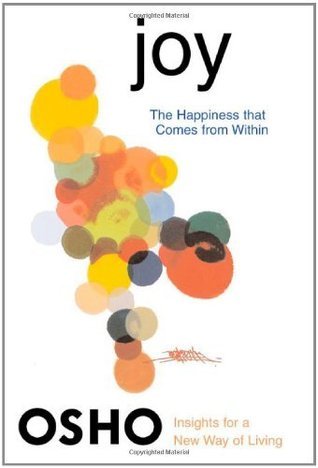
"Joy: The Happiness That Comes from Within" by Osho delves into the nature of true happiness, asserting it's an internal state cultivated through self-awareness and presence, rather than an external achievement. Osho guides individuals toward understanding and discarding the mental constructs and societal pressures that hinder authentic joy, emphasizing mindfulness, meditation, and a direct experience of life.
This book shares significant common ground with "The Happiness Hypothesis" by exploring foundational principles of well-being that transcend superficial gratification. Both texts bridge ancient philosophical insights with contemporary psychological understanding, dissecting the components of a fulfilling life. While Haidt integrates modern science with ancient wisdom, Osho draws heavily on Eastern spiritual traditions to arrive at similar conclusions regarding the internal genesis of lasting contentment.
This exploration into profound happiness will appeal to those seeking a deeper, more sustainable sense of fulfillment. It offers practical pathways and profound perspectives on cultivating inner peace and joy, providing a valuable counterpoint to consumerist or achievement-driven definitions of happiness. The book empowers individuals to look inward for lasting satisfaction, offering a transformative understanding of personal well-being.
Joy: The Happiness That Comes from Within
"Joy: The Happiness That Comes from Within" by Osho delves into the nature of true happiness, asserting it's an internal state cultivated through self-awareness and presence, rather than an external achievement. Osho guides individuals toward understanding and discarding the mental constructs and societal pressures that hinder authentic joy, emphasizing mindfulness, meditation, and a direct experience of life.
This book shares significant common ground with "The Happiness Hypothesis" by exploring foundational principles of well-being that transcend superficial gratification. Both texts bridge ancient philosophical insights with contemporary psychological understanding, dissecting the components of a fulfilling life. While Haidt integrates modern science with ancient wisdom, Osho draws heavily on Eastern spiritual traditions to arrive at similar conclusions regarding the internal genesis of lasting contentment.
This exploration into profound happiness will appeal to those seeking a deeper, more sustainable sense of fulfillment. It offers practical pathways and profound perspectives on cultivating inner peace and joy, providing a valuable counterpoint to consumerist or achievement-driven definitions of happiness. The book empowers individuals to look inward for lasting satisfaction, offering a transformative understanding of personal well-being.
The Happiness Project
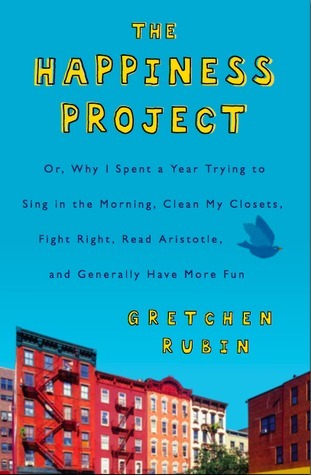
"The Happiness Project" chronicles Gretchen Rubin's year-long endeavor to boost her own happiness by deliberately testing various strategies and resolutions. She systematically explores areas like energy, work, parenthood, and mindfulness, documenting her experiences, successes, and setbacks in a highly personal and relatable narrative. It’s a practical, experiential guide to self-improvement through focused, intentional change.
Both books delve into the pursuit of a more fulfilling life. While Haidt's "The Happiness Hypothesis" provides a scholarly exploration of ancient wisdom and modern psychology to understand happiness, Rubin's work offers a contemporary, lived experiment applying similar principles. Both authors dissect the components of well-being, though through different lenses: one academic and the other anecdotal.
This book will appeal to those seeking actionable guidance for personal growth and a more positive outlook. It provides a blueprint for self-experimentation, offering inspiration and practical ideas for integrating happiness-boosting habits into daily life. Its candid and accessible approach makes the often abstract concept of happiness feel attainable and manageable, empowering individuals to embark on their own journeys of self-improvement.
The Happiness Project
"The Happiness Project" chronicles Gretchen Rubin's year-long endeavor to boost her own happiness by deliberately testing various strategies and resolutions. She systematically explores areas like energy, work, parenthood, and mindfulness, documenting her experiences, successes, and setbacks in a highly personal and relatable narrative. It’s a practical, experiential guide to self-improvement through focused, intentional change.
Both books delve into the pursuit of a more fulfilling life. While Haidt's "The Happiness Hypothesis" provides a scholarly exploration of ancient wisdom and modern psychology to understand happiness, Rubin's work offers a contemporary, lived experiment applying similar principles. Both authors dissect the components of well-being, though through different lenses: one academic and the other anecdotal.
This book will appeal to those seeking actionable guidance for personal growth and a more positive outlook. It provides a blueprint for self-experimentation, offering inspiration and practical ideas for integrating happiness-boosting habits into daily life. Its candid and accessible approach makes the often abstract concept of happiness feel attainable and manageable, empowering individuals to embark on their own journeys of self-improvement.
The Social Animal: The Hidden Sources of Love, Character, and Achievement

"The Social Animal" delves into the unconscious mind's profound influence on human behavior, exploring how our decisions, emotions, and relationships are shaped by deep-seated psychological processes often hidden from our conscious awareness. Through the narrative of two fictional characters, Harold and Erica, Brooks illustrates how experiences from childhood through adulthood mold our character, our capacity for love, and our pursuit of achievement. It’s a compelling exploration of the non-rational drivers behind what makes us uniquely human.
This book resonates with "The Happiness Hypothesis" by examining the interplay between ancient wisdom and modern psychological insights to understand human flourishing. Both authors explore the dual nature of the human mind—Haidt's elephant and rider, Brooks' conscious and unconscious processes—to explain why we act as we do and what truly contributes to a meaningful life. They share an empirical yet humanistic approach to understanding the complex mechanisms of well-being and social connection.
The appeal of "The Social Animal" lies in its ability to illuminate the often-invisible forces that guide our lives, offering a richer understanding of ourselves and others. Its insights can help individuals navigate relationships, career choices, and personal growth with greater awareness. The engaging narrative makes complex psychological and sociological concepts accessible, providing a valuable lens for interpreting everyday experiences and fostering a deeper appreciation for the nuanced tapestry of human existence.
The Social Animal: The Hidden Sources of Love, Character, and Achievement
"The Social Animal" delves into the unconscious mind's profound influence on human behavior, exploring how our decisions, emotions, and relationships are shaped by deep-seated psychological processes often hidden from our conscious awareness. Through the narrative of two fictional characters, Harold and Erica, Brooks illustrates how experiences from childhood through adulthood mold our character, our capacity for love, and our pursuit of achievement. It’s a compelling exploration of the non-rational drivers behind what makes us uniquely human.
This book resonates with "The Happiness Hypothesis" by examining the interplay between ancient wisdom and modern psychological insights to understand human flourishing. Both authors explore the dual nature of the human mind—Haidt's elephant and rider, Brooks' conscious and unconscious processes—to explain why we act as we do and what truly contributes to a meaningful life. They share an empirical yet humanistic approach to understanding the complex mechanisms of well-being and social connection.
The appeal of "The Social Animal" lies in its ability to illuminate the often-invisible forces that guide our lives, offering a richer understanding of ourselves and others. Its insights can help individuals navigate relationships, career choices, and personal growth with greater awareness. The engaging narrative makes complex psychological and sociological concepts accessible, providing a valuable lens for interpreting everyday experiences and fostering a deeper appreciation for the nuanced tapestry of human existence.
More Books to Explore
Discover more titles that expand on these ideas and themes.
Stumbling on Happiness
Authentic Happiness: Using the New Positive Psychology to Realize Your Potential for Lasting Fulfillment
The Pursuit of Happiness: Discovering the Pathway to Fulfillment, Well-Being, and Enduring Personal Joy
The How of Happiness: A Scientific Approach to Getting the Life You Want
The Happiness Advantage: The Seven Principles of Positive Psychology That Fuel Success and Performance at Work
The Coddling of the American Mind: How Good Intentions and Bad Ideas Are Setting up a Generation for Failure