10 Books Similar to "The Expression of the Emotions in Man and Animals"
by Charles Darwin

The Descent of Man

"The Descent of Man" comprehensively explores human evolution, detailing our lineage from earlier forms through natural and sexual selection. Darwin meticulously examines the physical and mental faculties of humankind, including our moral sense, intellectual powers, and social instincts, tracing their development and highlighting our kinship with other species.
This work resonates with "The Expression of the Emotions in Man and Animals" by consistently emphasizing the continuity between humans and other animals. Both books underscore the shared biological roots of various traits, with "Descent" extending the argument to cognitive and behavioral aspects, much like "Expression" focuses on the universality of emotional displays across species.
Its enduring relevance stems from its foundational exploration of human origins and nature. It offers profound insights into what defines humanity, our place in the natural world, and the evolutionary forces that shaped us, providing a crucial historical perspective on our modern understanding of biology, behavior, and ethics.
The Descent of Man
"The Descent of Man" comprehensively explores human evolution, detailing our lineage from earlier forms through natural and sexual selection. Darwin meticulously examines the physical and mental faculties of humankind, including our moral sense, intellectual powers, and social instincts, tracing their development and highlighting our kinship with other species.
This work resonates with "The Expression of the Emotions in Man and Animals" by consistently emphasizing the continuity between humans and other animals. Both books underscore the shared biological roots of various traits, with "Descent" extending the argument to cognitive and behavioral aspects, much like "Expression" focuses on the universality of emotional displays across species.
Its enduring relevance stems from its foundational exploration of human origins and nature. It offers profound insights into what defines humanity, our place in the natural world, and the evolutionary forces that shaped us, providing a crucial historical perspective on our modern understanding of biology, behavior, and ethics.
The Origin of Species / The Voyage of the Beagle

"The Origin of Species / The Voyage of the Beagle" presents Darwin’s groundbreaking theory of evolution by natural selection, meticulously developed through his observations during the five-year voyage aboard HMS Beagle. It details how species adapt and change over generations, leading to the diversity of life on Earth. The accompanying "Voyage of the Beagle" offers a vivid account of his travels, chronicling the scientific discoveries and geographical wonders that shaped his revolutionary ideas.
Both books showcase Darwin's profound observational skills and his dedication to understanding biological phenomena. They share a common analytical rigor applied to the natural world, moving from specific observations to broader, unifying theories. Just as "Expression of the Emotions" dissects the universality and evolutionary roots of emotional displays, "The Origin of Species" dissects the intricate mechanisms driving biological change.
This collection provides a foundational understanding of modern biology and the scientific method. It offers a window into the intellectual journey of one of history's most influential scientists, demonstrating how careful observation and logical deduction can reshape our understanding of life itself. The insights into natural selection remain incredibly relevant for understanding biological systems, making it a valuable read for anyone interested in science, history, or the natural world.
The Origin of Species / The Voyage of the Beagle
"The Origin of Species / The Voyage of the Beagle" presents Darwin’s groundbreaking theory of evolution by natural selection, meticulously developed through his observations during the five-year voyage aboard HMS Beagle. It details how species adapt and change over generations, leading to the diversity of life on Earth. The accompanying "Voyage of the Beagle" offers a vivid account of his travels, chronicling the scientific discoveries and geographical wonders that shaped his revolutionary ideas.
Both books showcase Darwin's profound observational skills and his dedication to understanding biological phenomena. They share a common analytical rigor applied to the natural world, moving from specific observations to broader, unifying theories. Just as "Expression of the Emotions" dissects the universality and evolutionary roots of emotional displays, "The Origin of Species" dissects the intricate mechanisms driving biological change.
This collection provides a foundational understanding of modern biology and the scientific method. It offers a window into the intellectual journey of one of history's most influential scientists, demonstrating how careful observation and logical deduction can reshape our understanding of life itself. The insights into natural selection remain incredibly relevant for understanding biological systems, making it a valuable read for anyone interested in science, history, or the natural world.
Voyage of the Beagle

"Voyage of the Beagle" chronicles Charles Darwin's transformative five-year journey aboard HMS Beagle, serving as a naturalist. It details his extensive observations of geology, flora, and fauna across South America, the Galápagos Islands, and beyond, providing a rich, firsthand account of diverse ecosystems and indigenous cultures. More than a travelogue, it's a foundational text for understanding Darwin's developing theories on evolution and natural selection, presenting the raw data and intellectual ferment that would later define his groundbreaking work.
The similarity to "The Expression of the Emotions in Man and Animals" lies in both books' deep observational approach to understanding life. While "Emotions" focuses on comparative behavior and physiology, "Beagle" showcases Darwin's meticulous recording of animal adaptations, ecological relationships, and human diversity. Both works exemplify his systematic empirical methodology and his profound curiosity about the mechanisms shaping biological forms and behaviors, revealing the interconnectedness of all living things.
This book will appeal to those interested in natural history, scientific exploration, and the genesis of evolutionary thought. It offers a captivating window into the world as observed by one of history's most influential scientists, demonstrating the power of direct observation and critical thinking. The vivid descriptions of remote landscapes and exotic species, coupled with Darwin's developing insights, make it a valuable resource for understanding both scientific discovery and the natural world itself.
Voyage of the Beagle
"Voyage of the Beagle" chronicles Charles Darwin's transformative five-year journey aboard HMS Beagle, serving as a naturalist. It details his extensive observations of geology, flora, and fauna across South America, the Galápagos Islands, and beyond, providing a rich, firsthand account of diverse ecosystems and indigenous cultures. More than a travelogue, it's a foundational text for understanding Darwin's developing theories on evolution and natural selection, presenting the raw data and intellectual ferment that would later define his groundbreaking work.
The similarity to "The Expression of the Emotions in Man and Animals" lies in both books' deep observational approach to understanding life. While "Emotions" focuses on comparative behavior and physiology, "Beagle" showcases Darwin's meticulous recording of animal adaptations, ecological relationships, and human diversity. Both works exemplify his systematic empirical methodology and his profound curiosity about the mechanisms shaping biological forms and behaviors, revealing the interconnectedness of all living things.
This book will appeal to those interested in natural history, scientific exploration, and the genesis of evolutionary thought. It offers a captivating window into the world as observed by one of history's most influential scientists, demonstrating the power of direct observation and critical thinking. The vivid descriptions of remote landscapes and exotic species, coupled with Darwin's developing insights, make it a valuable resource for understanding both scientific discovery and the natural world itself.
Ever Since Darwin: Reflections in Natural History

Stephen Jay Gould’s "Ever Since Darwin" is a collection of essays exploring various facets of evolutionary theory, natural history, and scientific thought. Gould, a brilliant paleontologist and essayist, delved into subjects ranging from the biases inherent in scientific discovery to the intricacies of adaptation and the contingency of life's history, all presented with engaging prose and intellectual rigor.
The similarity to Darwin's "The Expression of the Emotions" lies in their shared exploration of fundamental aspects of life, observed through a scientific lens. While Darwin focused on outward emotional displays as products of evolution, Gould broadens this inquiry to encompass the very processes and patterns of evolution itself, often referencing and engaging directly with Darwin's original ideas and their enduring impact. Both authors ground their profound insights in meticulous natural observation and a deep appreciation for the complexities of the living world, fostering a contemplative approach to scientific understanding.
This book offers a compelling narrative for anyone interested in science, evolution, and the history of ideas. It provides accessible yet profound insights into how we understand the natural world, prompting critical reflection on scientific methodology and the broader implications of evolutionary theory. Its value lies in illuminating the ongoing dialogue surrounding Darwin's legacy and in encouraging a more nuanced appreciation for the scientific endeavor.
Ever Since Darwin: Reflections in Natural History
Stephen Jay Gould’s "Ever Since Darwin" is a collection of essays exploring various facets of evolutionary theory, natural history, and scientific thought. Gould, a brilliant paleontologist and essayist, delved into subjects ranging from the biases inherent in scientific discovery to the intricacies of adaptation and the contingency of life's history, all presented with engaging prose and intellectual rigor.
The similarity to Darwin's "The Expression of the Emotions" lies in their shared exploration of fundamental aspects of life, observed through a scientific lens. While Darwin focused on outward emotional displays as products of evolution, Gould broadens this inquiry to encompass the very processes and patterns of evolution itself, often referencing and engaging directly with Darwin's original ideas and their enduring impact. Both authors ground their profound insights in meticulous natural observation and a deep appreciation for the complexities of the living world, fostering a contemplative approach to scientific understanding.
This book offers a compelling narrative for anyone interested in science, evolution, and the history of ideas. It provides accessible yet profound insights into how we understand the natural world, prompting critical reflection on scientific methodology and the broader implications of evolutionary theory. Its value lies in illuminating the ongoing dialogue surrounding Darwin's legacy and in encouraging a more nuanced appreciation for the scientific endeavor.
Darwin's Dangerous Idea: Evolution and the Meanings of Life
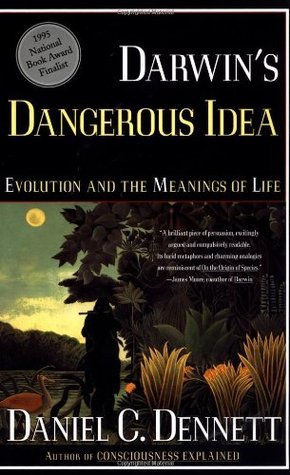
"Darwin's Dangerous Idea" explores the profound and often challenging implications of natural selection. Daniel Dennett argues that evolution isn't merely a biological theory but a fundamental explanatory framework, a "universal acid" that dissolves traditional notions of meaning, purpose, and even consciousness, revealing a purely mechanistic universe. He meticulously dismantles common misunderstandings and philosophical resistances to Darwin's central insight, presenting it as a powerful, albeit unsettling, truth about life.
This work resonates with "The Expression of the Emotions in Man and Animals" by extending Darwin's own intellectual courage. While Darwin meticulously documented the biological basis of emotions, hinting at a mechanistic origin for subjective experiences, Dennett explicitly tackles the philosophical ramifications, demonstrating how even complex human phenomena can be understood through an evolutionary lens, without recourse to supernatural or vitalistic explanations. Both books share a commitment to understanding life through empirical observation and logical deduction.
This book offers a rigorous and intellectually stimulating journey into the core tenets of modern evolutionary thought. It provides a deeper understanding of how the intricate complexity of life, including our own minds, could arise from simple, recursive processes. It challenges deeply held assumptions, inviting a more scientifically grounded perspective on existence and our place within it.
Darwin's Dangerous Idea: Evolution and the Meanings of Life
"Darwin's Dangerous Idea" explores the profound and often challenging implications of natural selection. Daniel Dennett argues that evolution isn't merely a biological theory but a fundamental explanatory framework, a "universal acid" that dissolves traditional notions of meaning, purpose, and even consciousness, revealing a purely mechanistic universe. He meticulously dismantles common misunderstandings and philosophical resistances to Darwin's central insight, presenting it as a powerful, albeit unsettling, truth about life.
This work resonates with "The Expression of the Emotions in Man and Animals" by extending Darwin's own intellectual courage. While Darwin meticulously documented the biological basis of emotions, hinting at a mechanistic origin for subjective experiences, Dennett explicitly tackles the philosophical ramifications, demonstrating how even complex human phenomena can be understood through an evolutionary lens, without recourse to supernatural or vitalistic explanations. Both books share a commitment to understanding life through empirical observation and logical deduction.
This book offers a rigorous and intellectually stimulating journey into the core tenets of modern evolutionary thought. It provides a deeper understanding of how the intricate complexity of life, including our own minds, could arise from simple, recursive processes. It challenges deeply held assumptions, inviting a more scientifically grounded perspective on existence and our place within it.
On Human Nature

Edward O. Wilson's *On Human Nature* explores the biological roots of human behavior and culture, arguing that our deepest impulses, from altruism to aggression, are profoundly shaped by evolutionary forces. It delves into the interplay between genetics and environment, proposing that understanding our biological heritage is crucial for comprehending human societies and individual choices.
This groundbreaking work draws parallels with Darwin's *The Expression of the Emotions in Man and Animals* by fundamentally examining the biological underpinnings of behavior. Both books venture beyond anecdotal observation, seeking universal patterns and evolutionary explanations for phenomena once thought purely cultural or psychological. Darwin meticulously cataloged the physical manifestations of emotion; Wilson extends this evolutionary lens to the complex tapestry of human societal structures and ethical dilemmas.
The book offers a compelling framework for understanding ourselves and our societies, providing fresh perspectives on age-old questions about morality, culture, and individual identity. Its insights illuminate the biological threads woven into the fabric of human experience, offering a deeper appreciation for the forces that shape our species and the potential paths for our future.
On Human Nature
Edward O. Wilson's *On Human Nature* explores the biological roots of human behavior and culture, arguing that our deepest impulses, from altruism to aggression, are profoundly shaped by evolutionary forces. It delves into the interplay between genetics and environment, proposing that understanding our biological heritage is crucial for comprehending human societies and individual choices.
This groundbreaking work draws parallels with Darwin's *The Expression of the Emotions in Man and Animals* by fundamentally examining the biological underpinnings of behavior. Both books venture beyond anecdotal observation, seeking universal patterns and evolutionary explanations for phenomena once thought purely cultural or psychological. Darwin meticulously cataloged the physical manifestations of emotion; Wilson extends this evolutionary lens to the complex tapestry of human societal structures and ethical dilemmas.
The book offers a compelling framework for understanding ourselves and our societies, providing fresh perspectives on age-old questions about morality, culture, and individual identity. Its insights illuminate the biological threads woven into the fabric of human experience, offering a deeper appreciation for the forces that shape our species and the potential paths for our future.
Evolution for Everyone: How Darwin's Theory Can Change the Way We Think About Our Lives
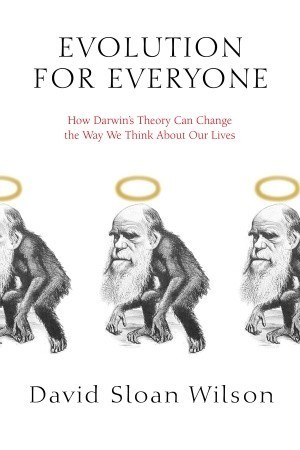
"Evolution for Everyone" by David Sloan Wilson explores how evolutionary theory, beyond biology, offers profound insights into human behavior, culture, and society. Wilson demonstrates how principles like natural selection and adaptation can illuminate aspects of our daily lives, from altruism to economic decisions, providing a cohesive framework for understanding the complexities of human existence.
This book shares a thematic continuity with Darwin's "The Expression of the Emotions in Man and Animals" by extending evolutionary principles beyond purely physical traits. Both books delve into the adaptive significance of human characteristics – Darwin focusing on the evolutionary roots of emotional displays, and Wilson broadening that perspective to encompass the adaptive nature of human social structures and psychological tendencies. They both champion the idea that seemingly disparate aspects of humanity are ultimately products of evolutionary processes.
The book will appeal to those curious about the underlying mechanisms driving human action and societal dynamics. It offers a powerful lens through which to re-examine long-held beliefs about ourselves and our world, providing a scientifically grounded yet accessible toolkit for understanding and navigating the challenges and opportunities of modern life.
Evolution for Everyone: How Darwin's Theory Can Change the Way We Think About Our Lives
"Evolution for Everyone" by David Sloan Wilson explores how evolutionary theory, beyond biology, offers profound insights into human behavior, culture, and society. Wilson demonstrates how principles like natural selection and adaptation can illuminate aspects of our daily lives, from altruism to economic decisions, providing a cohesive framework for understanding the complexities of human existence.
This book shares a thematic continuity with Darwin's "The Expression of the Emotions in Man and Animals" by extending evolutionary principles beyond purely physical traits. Both books delve into the adaptive significance of human characteristics – Darwin focusing on the evolutionary roots of emotional displays, and Wilson broadening that perspective to encompass the adaptive nature of human social structures and psychological tendencies. They both champion the idea that seemingly disparate aspects of humanity are ultimately products of evolutionary processes.
The book will appeal to those curious about the underlying mechanisms driving human action and societal dynamics. It offers a powerful lens through which to re-examine long-held beliefs about ourselves and our world, providing a scientifically grounded yet accessible toolkit for understanding and navigating the challenges and opportunities of modern life.
River Out of Eden: A Darwinian View of Life

"River Out of Eden" by Richard Dawkins offers a concise and compelling overview of Darwinian evolution, presenting life as a continuous river of genes flowing through time. Dawkins explains fundamental concepts like natural selection, adaptation, and the selfish gene, illustrating how these principles drive the extraordinary diversity and complexity of the natural world, all without needing recourse to supernatural explanations.
This book shares a core intellectual lineage with Darwin's "The Expression of the Emotions in Man and Animals." Both works delve into the biological underpinnings of complex phenomena—emotions in Darwin's case, and life itself in Dawkins'—seeking to explain them through natural processes rather than divine intervention. They both aim to demystify seemingly intricate aspects of life by tracing their evolutionary origins and adaptive value.
Anyone interested in a clear, articulate, and scientifically grounded understanding of life's fundamental mechanisms will find this book highly illuminating. It provides a powerful synthesis of evolutionary biology, offering a profound perspective on our place in the grand scheme of life and enhancing one's appreciation of the natural world.
River Out of Eden: A Darwinian View of Life
"River Out of Eden" by Richard Dawkins offers a concise and compelling overview of Darwinian evolution, presenting life as a continuous river of genes flowing through time. Dawkins explains fundamental concepts like natural selection, adaptation, and the selfish gene, illustrating how these principles drive the extraordinary diversity and complexity of the natural world, all without needing recourse to supernatural explanations.
This book shares a core intellectual lineage with Darwin's "The Expression of the Emotions in Man and Animals." Both works delve into the biological underpinnings of complex phenomena—emotions in Darwin's case, and life itself in Dawkins'—seeking to explain them through natural processes rather than divine intervention. They both aim to demystify seemingly intricate aspects of life by tracing their evolutionary origins and adaptive value.
Anyone interested in a clear, articulate, and scientifically grounded understanding of life's fundamental mechanisms will find this book highly illuminating. It provides a powerful synthesis of evolutionary biology, offering a profound perspective on our place in the grand scheme of life and enhancing one's appreciation of the natural world.
The Naked Ape

Desmond Morris's "The Naked Ape" provocatively examines human behavior through an ethological lens, treating *Homo sapiens* as a species uniquely evolved from other primates. Morris explores fundamental human traits—sex, aggression, child-rearing, and social structures—interpreting them as direct consequences of our biological heritage and evolutionary journey as a "naked ape." The book contends that many of our complex societal rituals and personal behaviors are rooted in primal instincts, often shared with our animal relatives.
This echoes Darwin's "The Expression of the Emotions in Man and Animals" by focusing on the continuity between human and animal behavior. Just as Darwin meticulously documented shared expressive gestures across species to underscore evolutionary links, Morris systematically dissects human actions to reveal their underlying animalistic origins. Both authors challenge anthropocentric views, offering a more integrated understanding of humanity within the broader biological world, demonstrating how our emotional and behavioral repertoires are deeply entwined with our evolutionary past.
The book invites a deeper understanding of human nature, prompting reflection on the biological underpinnings of everyday actions and societal norms. It offers a unique perspective that demystifies complex human interactions by connecting them to observable animal behaviors, enriching one's comprehension of universal human experiences and their evolutionary significance. Its compelling arguments and accessible style make it a valuable resource for anyone seeking profound insights into what it means to be human.
The Naked Ape
Desmond Morris's "The Naked Ape" provocatively examines human behavior through an ethological lens, treating *Homo sapiens* as a species uniquely evolved from other primates. Morris explores fundamental human traits—sex, aggression, child-rearing, and social structures—interpreting them as direct consequences of our biological heritage and evolutionary journey as a "naked ape." The book contends that many of our complex societal rituals and personal behaviors are rooted in primal instincts, often shared with our animal relatives.
This echoes Darwin's "The Expression of the Emotions in Man and Animals" by focusing on the continuity between human and animal behavior. Just as Darwin meticulously documented shared expressive gestures across species to underscore evolutionary links, Morris systematically dissects human actions to reveal their underlying animalistic origins. Both authors challenge anthropocentric views, offering a more integrated understanding of humanity within the broader biological world, demonstrating how our emotional and behavioral repertoires are deeply entwined with our evolutionary past.
The book invites a deeper understanding of human nature, prompting reflection on the biological underpinnings of everyday actions and societal norms. It offers a unique perspective that demystifies complex human interactions by connecting them to observable animal behaviors, enriching one's comprehension of universal human experiences and their evolutionary significance. Its compelling arguments and accessible style make it a valuable resource for anyone seeking profound insights into what it means to be human.
The Extended Phenotype: The Long Reach of the Gene

"The Extended Phenotype" posits that a gene's influence isn't limited to an organism's body, but extends outward to affect its environment, behavior, and even the structures it builds. Think of a caddisfly larva's stone casing or a beaver's dam – these are, in Dawkins' view, phenotypic expressions of genes, much like an eye color or a bone structure. This concept fundamentally reshapes how we understand evolution and the reach of genetic programming.
This book shares a powerful conceptual thread with Darwin's "Expression of the Emotions." Both works challenge the intuitive boundaries of what constitutes "life" and "organism." Darwin explored how internal emotional states are manifested externally through physical expressions. Dawkins similarly investigates how internal genetic instructions manifest externally, often far beyond the organism's skin, influencing the world around it through a sort of "long-distance" genetic effect. They both push us to consider the hidden mechanisms dictating observable phenomena.
Intellectually curious individuals will find profound insights here. It offers a fresh, compelling lens through which to view the natural world, from animal architecture to parasitic manipulation, and even human culture. Its exploration of genes as orchestrators extending their influence across various scales provides a sophisticated framework for understanding biological complexity and the intricate connections between an organism and its surroundings.
The Extended Phenotype: The Long Reach of the Gene
"The Extended Phenotype" posits that a gene's influence isn't limited to an organism's body, but extends outward to affect its environment, behavior, and even the structures it builds. Think of a caddisfly larva's stone casing or a beaver's dam – these are, in Dawkins' view, phenotypic expressions of genes, much like an eye color or a bone structure. This concept fundamentally reshapes how we understand evolution and the reach of genetic programming.
This book shares a powerful conceptual thread with Darwin's "Expression of the Emotions." Both works challenge the intuitive boundaries of what constitutes "life" and "organism." Darwin explored how internal emotional states are manifested externally through physical expressions. Dawkins similarly investigates how internal genetic instructions manifest externally, often far beyond the organism's skin, influencing the world around it through a sort of "long-distance" genetic effect. They both push us to consider the hidden mechanisms dictating observable phenomena.
Intellectually curious individuals will find profound insights here. It offers a fresh, compelling lens through which to view the natural world, from animal architecture to parasitic manipulation, and even human culture. Its exploration of genes as orchestrators extending their influence across various scales provides a sophisticated framework for understanding biological complexity and the intricate connections between an organism and its surroundings.
More Books to Explore
Discover more titles that expand on these ideas and themes.
The Descent of Man
The Origin of Species / The Voyage of the Beagle
Voyage of the Beagle
Ever Since Darwin: Reflections in Natural History
Darwin's Dangerous Idea: Evolution and the Meanings of Life
On Human Nature