10 Books Similar to "The Descent of Man"
by Charles Darwin

The Origin of Species / The Voyage of the Beagle

"The Origin of Species / The Voyage of the Beagle" presents two foundational works by Charles Darwin. *The Origin of Species* meticulously lays out his theory of evolution through natural selection, arguing that all life shares common ancestry and has diversified over vast stretches of time. *The Voyage of the Beagle* is Darwin's personal account of his five-year scientific expedition around the world, detailing his observations of geology, flora, and fauna, particularly in South America and the Galápagos Islands, which profoundly influenced his later theories.
This combined volume shares significant common ground with "The Descent of Man" by exploring the intricate mechanisms of life's development and diversity. Both works are cornerstones of evolutionary thought, demonstrating Darwin's rigorous scientific methodology, his deep observational skills, and his groundbreaking conclusions about the origins and relationships among species, including humanity. They collectively trace the progression of his ideas from broad biological principles to the specific application of evolution to human beings.
This collection offers an unparalleled opportunity to witness the genesis of revolutionary scientific thought firsthand. It provides the core arguments for natural selection and showcases the crucial empirical evidence that underpinned Darwin's paradigm-shifting ideas. Individuals interested in the history of science, evolutionary biology, or the grand narrative of life on Earth will discover profound insights and a timeless demonstration of intellectual courage and meticulous inquiry.
The Origin of Species / The Voyage of the Beagle
"The Origin of Species / The Voyage of the Beagle" presents two foundational works by Charles Darwin. *The Origin of Species* meticulously lays out his theory of evolution through natural selection, arguing that all life shares common ancestry and has diversified over vast stretches of time. *The Voyage of the Beagle* is Darwin's personal account of his five-year scientific expedition around the world, detailing his observations of geology, flora, and fauna, particularly in South America and the Galápagos Islands, which profoundly influenced his later theories.
This combined volume shares significant common ground with "The Descent of Man" by exploring the intricate mechanisms of life's development and diversity. Both works are cornerstones of evolutionary thought, demonstrating Darwin's rigorous scientific methodology, his deep observational skills, and his groundbreaking conclusions about the origins and relationships among species, including humanity. They collectively trace the progression of his ideas from broad biological principles to the specific application of evolution to human beings.
This collection offers an unparalleled opportunity to witness the genesis of revolutionary scientific thought firsthand. It provides the core arguments for natural selection and showcases the crucial empirical evidence that underpinned Darwin's paradigm-shifting ideas. Individuals interested in the history of science, evolutionary biology, or the grand narrative of life on Earth will discover profound insights and a timeless demonstration of intellectual courage and meticulous inquiry.
The Expression of the Emotions in Man and Animals

"The Expression of the Emotions in Man and Animals" explores how humans and various animal species express emotions. Darwin meticulously observes and theorizes on the universality and evolutionary origins of emotional displays, from joy and sadness to anger and fear. He posits that many expressions, like baring teeth or widening eyes, have functional roots in our ancestral past, even if their direct utility has diminished.
This work complements "The Descent of Man" by providing concrete evidence for continuity between humans and other animals, particularly regarding psychological traits. While "Descent" focuses on physical and intellectual evolution, "Expression" delves into the shared biological basis of our inner lives, reinforcing the notion of a common ancestor and the gradual development of complex behaviors. It bolsters Darwin's overarching evolutionary argument.
Its appeal lies in offering profound insights into human behavior and our connection to the animal kingdom. Understanding the deep-seated origins of our expressions can illuminate empathy, communication, and even mental health. It provides a unique lens through which to view ourselves and the creatures around us, fostering a richer appreciation for the intricate tapestry of life.
The Expression of the Emotions in Man and Animals
"The Expression of the Emotions in Man and Animals" explores how humans and various animal species express emotions. Darwin meticulously observes and theorizes on the universality and evolutionary origins of emotional displays, from joy and sadness to anger and fear. He posits that many expressions, like baring teeth or widening eyes, have functional roots in our ancestral past, even if their direct utility has diminished.
This work complements "The Descent of Man" by providing concrete evidence for continuity between humans and other animals, particularly regarding psychological traits. While "Descent" focuses on physical and intellectual evolution, "Expression" delves into the shared biological basis of our inner lives, reinforcing the notion of a common ancestor and the gradual development of complex behaviors. It bolsters Darwin's overarching evolutionary argument.
Its appeal lies in offering profound insights into human behavior and our connection to the animal kingdom. Understanding the deep-seated origins of our expressions can illuminate empathy, communication, and even mental health. It provides a unique lens through which to view ourselves and the creatures around us, fostering a richer appreciation for the intricate tapestry of life.
Voyage of the Beagle

"Voyage of the Beagle" chronicles Charles Darwin's transformative five-year expedition around the world aboard HMS Beagle. It’s a vivid, firsthand account of his observations on geology, botany, zoology, and anthropology across South America, the Galápagos, Australia, and other locales. More than a travelogue, it meticulously documents the vast biological and geological diversity that laid the foundational groundwork for his later scientific theories.
This work parallels "The Descent of Man" by showcasing the empirical observation and meticulous record-keeping that were hallmarks of Darwin’s scientific method. Both books are deeply rooted in direct evidence and comparative anatomy, examining variations and adaptations within species. "Voyage" provides the raw data and developing insights that ultimately coalesced into the evolutionary arguments presented in "Descent," illustrating the intellectual journey leading to those profound conclusions.
The book offers an unparalleled glimpse into the mind of a scientific pioneer during his formative years. Its detailed descriptions of natural phenomena and diverse cultures provide both compelling narrative and intellectual stimulation, showcasing the power of observation in shaping revolutionary ideas. It proves valuable as a foundational text for understanding Darwin's path to evolutionary theory, offering a rich historical and scientific exploration.
Voyage of the Beagle
"Voyage of the Beagle" chronicles Charles Darwin's transformative five-year expedition around the world aboard HMS Beagle. It’s a vivid, firsthand account of his observations on geology, botany, zoology, and anthropology across South America, the Galápagos, Australia, and other locales. More than a travelogue, it meticulously documents the vast biological and geological diversity that laid the foundational groundwork for his later scientific theories.
This work parallels "The Descent of Man" by showcasing the empirical observation and meticulous record-keeping that were hallmarks of Darwin’s scientific method. Both books are deeply rooted in direct evidence and comparative anatomy, examining variations and adaptations within species. "Voyage" provides the raw data and developing insights that ultimately coalesced into the evolutionary arguments presented in "Descent," illustrating the intellectual journey leading to those profound conclusions.
The book offers an unparalleled glimpse into the mind of a scientific pioneer during his formative years. Its detailed descriptions of natural phenomena and diverse cultures provide both compelling narrative and intellectual stimulation, showcasing the power of observation in shaping revolutionary ideas. It proves valuable as a foundational text for understanding Darwin's path to evolutionary theory, offering a rich historical and scientific exploration.
The Naked Ape

"The Naked Ape" offers a zoological perspective on human behavior, viewing humanity primarily as an advanced primate species. Morris meticulously dissects our actions, rituals, and societal structures through the lens of evolutionary biology, interpreting cultural phenomena as extensions of our innate animalistic drives: feeding, fighting, fleeing, and mating. It’s a compelling, often provocative, analysis of human nature stripped bare.
This resemblance to "The Descent of Man" is striking. Just as Darwin explored human evolution, intelligence, and sexual selection through a naturalistic framework, Morris applies a similar scientific rigor to contemporary human behavior. Both authors seek to understand humanity's place within the animal kingdom, emphasizing biological imperatives and evolutionary trajectories as fundamental shapers of our existence, dismantling anthropocentric exceptionalism.
Its enduring appeal lies in its insightful, if sometimes reductionist, explanations for complex human behaviors. This book provides a fresh, demystifying lens on our everyday lives, compelling one to reconsider the biological roots of our social norms and personal motivations. Its analytical approach offers valuable insights for anyone interested in human nature, anthropology, and the intricate connections between our primitive past and modern existence.
The Naked Ape
"The Naked Ape" offers a zoological perspective on human behavior, viewing humanity primarily as an advanced primate species. Morris meticulously dissects our actions, rituals, and societal structures through the lens of evolutionary biology, interpreting cultural phenomena as extensions of our innate animalistic drives: feeding, fighting, fleeing, and mating. It’s a compelling, often provocative, analysis of human nature stripped bare.
This resemblance to "The Descent of Man" is striking. Just as Darwin explored human evolution, intelligence, and sexual selection through a naturalistic framework, Morris applies a similar scientific rigor to contemporary human behavior. Both authors seek to understand humanity's place within the animal kingdom, emphasizing biological imperatives and evolutionary trajectories as fundamental shapers of our existence, dismantling anthropocentric exceptionalism.
Its enduring appeal lies in its insightful, if sometimes reductionist, explanations for complex human behaviors. This book provides a fresh, demystifying lens on our everyday lives, compelling one to reconsider the biological roots of our social norms and personal motivations. Its analytical approach offers valuable insights for anyone interested in human nature, anthropology, and the intricate connections between our primitive past and modern existence.
Darwin's Dangerous Idea: Evolution and the Meanings of Life
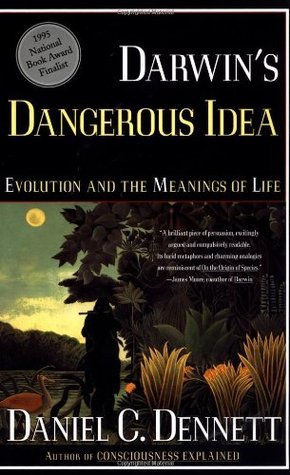
Daniel Dennett's "Darwin's Dangerous Idea" explores the profound implications of Darwinian evolution, not just in biology, but across philosophy, psychology, and even artificial intelligence. It argues that evolution by natural selection is a "universal acid" capable of dissolving traditional, often comforting, explanations for complex phenomena, offering instead a mechanistic yet awe-inspiring account of how design and purpose can emerge without a designer.
This book resonates with "The Descent of Man" by extending Darwin’s own radical project. Just as Darwin applied evolutionary principles to human origins, morality, and intelligence, Dennett meticulously unpacks how the same blind, algorithmic process can explain the very foundations of meaning and consciousness, topics Darwin only began to broach. Both works challenge anthropocentric views and emphasize our continuity with the natural world.
The book will captivate those interested in the grand questions of existence, consciousness, and the nature of knowledge. It offers a sophisticated yet accessible defense and exploration of evolutionary theory's explanatory power, providing a robust framework for understanding the human condition through a scientific lens. Its value lies in its rigorous intellectual journey, compelling readers to re-evaluate deeply held beliefs.
Darwin's Dangerous Idea: Evolution and the Meanings of Life
Daniel Dennett's "Darwin's Dangerous Idea" explores the profound implications of Darwinian evolution, not just in biology, but across philosophy, psychology, and even artificial intelligence. It argues that evolution by natural selection is a "universal acid" capable of dissolving traditional, often comforting, explanations for complex phenomena, offering instead a mechanistic yet awe-inspiring account of how design and purpose can emerge without a designer.
This book resonates with "The Descent of Man" by extending Darwin’s own radical project. Just as Darwin applied evolutionary principles to human origins, morality, and intelligence, Dennett meticulously unpacks how the same blind, algorithmic process can explain the very foundations of meaning and consciousness, topics Darwin only began to broach. Both works challenge anthropocentric views and emphasize our continuity with the natural world.
The book will captivate those interested in the grand questions of existence, consciousness, and the nature of knowledge. It offers a sophisticated yet accessible defense and exploration of evolutionary theory's explanatory power, providing a robust framework for understanding the human condition through a scientific lens. Its value lies in its rigorous intellectual journey, compelling readers to re-evaluate deeply held beliefs.
The Descent of Woman: The Classic Study of Evolution

Elaine Morgan's *The Descent of Woman* critically re-examines human evolution, particularly focusing on the role of women, challenging male-centric narratives prevalent in anthropological theory. It proposes the "aquatic ape hypothesis," suggesting that human ancestors spent a period near water, which significantly influenced traits like bipedalism, hairlessness, and fat layers.
This book mirrors Darwin’s *The Descent of Man* by offering a comprehensive, albeit reinterpreted, account of human origins and development. Both works are foundational texts seeking to explain human evolution, with Morgan's serving as a direct counter-narrative and re-evaluation of established scientific perspectives.
It will appeal to those interested in evolutionary biology, feminist anthropology, and the history of science. It offers a thought-provoking alternative perspective on human development, sparking fresh discussion and challenging long-held assumptions about the evolutionary journey of our species.
The Descent of Woman: The Classic Study of Evolution
Elaine Morgan's *The Descent of Woman* critically re-examines human evolution, particularly focusing on the role of women, challenging male-centric narratives prevalent in anthropological theory. It proposes the "aquatic ape hypothesis," suggesting that human ancestors spent a period near water, which significantly influenced traits like bipedalism, hairlessness, and fat layers.
This book mirrors Darwin’s *The Descent of Man* by offering a comprehensive, albeit reinterpreted, account of human origins and development. Both works are foundational texts seeking to explain human evolution, with Morgan's serving as a direct counter-narrative and re-evaluation of established scientific perspectives.
It will appeal to those interested in evolutionary biology, feminist anthropology, and the history of science. It offers a thought-provoking alternative perspective on human development, sparking fresh discussion and challenging long-held assumptions about the evolutionary journey of our species.
On Human Nature

Edward O. Wilson's "On Human Nature" explores the biological basis of human behavior, examining how evolutionary forces have shaped our intelligence, altruism, aggression, and other fundamental traits. He posits that even seemingly complex social behaviors have roots in our genetic predispositions, arguing for a more integrated understanding of biology and culture.
This book shares a profound lineage with Darwin's "The Descent of Man" by similarly venturing into the scientific explanation of human origins and characteristics. Both authors courageously applied evolutionary principles to unlock the mysteries of humanity, moving beyond purely philosophical or theological frameworks to offer biological insights into our very nature and societal structures.
The book offers a compelling intellectual journey, providing a grounding in evolutionary biology that illuminates perennial questions about human identity and purpose. Its accessible exploration of complex scientific ideas fosters a deeper understanding of ourselves and our place in the natural world.
On Human Nature
Edward O. Wilson's "On Human Nature" explores the biological basis of human behavior, examining how evolutionary forces have shaped our intelligence, altruism, aggression, and other fundamental traits. He posits that even seemingly complex social behaviors have roots in our genetic predispositions, arguing for a more integrated understanding of biology and culture.
This book shares a profound lineage with Darwin's "The Descent of Man" by similarly venturing into the scientific explanation of human origins and characteristics. Both authors courageously applied evolutionary principles to unlock the mysteries of humanity, moving beyond purely philosophical or theological frameworks to offer biological insights into our very nature and societal structures.
The book offers a compelling intellectual journey, providing a grounding in evolutionary biology that illuminates perennial questions about human identity and purpose. Its accessible exploration of complex scientific ideas fosters a deeper understanding of ourselves and our place in the natural world.
River Out of Eden: A Darwinian View of Life

"River Out of Eden" by Richard Dawkins succinctly explains life as a continuous, unbroken chain of DNA, replicating and diversifying through natural selection. It presents evolution not as a ladder of progress, but as a branching river of genetic information flowing through time, with individual organisms serving as temporary vessels for these enduring genes.
This book echoes "The Descent of Man" in its unwavering commitment to explaining biological complexity through naturalistic, evolutionary principles. Both works dismantle anthropocentric views, placing humans firmly within the broader tapestry of life, shaped by the same fundamental forces of selection and inheritance that govern all species.
The book offers a profound and accessible understanding of evolution's core mechanics, stripping away misconceptions and presenting a unified, coherent narrative of life's origins and diversification. It illuminates the elegance and power of natural selection, providing a fundamental framework for comprehending biological reality that is both intellectually stimulating and deeply insightful.
River Out of Eden: A Darwinian View of Life
"River Out of Eden" by Richard Dawkins succinctly explains life as a continuous, unbroken chain of DNA, replicating and diversifying through natural selection. It presents evolution not as a ladder of progress, but as a branching river of genetic information flowing through time, with individual organisms serving as temporary vessels for these enduring genes.
This book echoes "The Descent of Man" in its unwavering commitment to explaining biological complexity through naturalistic, evolutionary principles. Both works dismantle anthropocentric views, placing humans firmly within the broader tapestry of life, shaped by the same fundamental forces of selection and inheritance that govern all species.
The book offers a profound and accessible understanding of evolution's core mechanics, stripping away misconceptions and presenting a unified, coherent narrative of life's origins and diversification. It illuminates the elegance and power of natural selection, providing a fundamental framework for comprehending biological reality that is both intellectually stimulating and deeply insightful.
Ever Since Darwin: Reflections in Natural History

"Ever Since Darwin: Reflections in Natural History" is a collection of essays by Stephen Jay Gould that explores various facets of evolutionary biology, science history, and humanity's place in the natural world. Gould, a renowned paleontologist and science popularizer, delves into topics ranging from misinterpretations of evolution to the quirky details of biological forms, all while championing critical thinking and a nuanced understanding of scientific processes.
This book shares a fundamental kinship with Darwin's "The Descent of Man" by continuing the intellectual lineage of examining human evolution and its broader implications. Both works grapple with how scientific discoveries shape our understanding of ourselves, our origins, and our relationship with the animal kingdom, albeit from different historical vantage points. Gould’s essays often revisit and reinterpret Darwinian concepts, offering modern perspectives on enduring questions.
The book holds significant appeal for those interested in science, philosophy, and the ongoing dialogue surrounding evolutionary theory. It offers profound insights into how science functions, challenges common misconceptions, and encourages a deeper appreciation for the intricacies of life on Earth. Its engaging prose and intellectual rigor make it a valuable resource for anyone seeking to broaden their understanding of natural history and the human condition.
Ever Since Darwin: Reflections in Natural History
"Ever Since Darwin: Reflections in Natural History" is a collection of essays by Stephen Jay Gould that explores various facets of evolutionary biology, science history, and humanity's place in the natural world. Gould, a renowned paleontologist and science popularizer, delves into topics ranging from misinterpretations of evolution to the quirky details of biological forms, all while championing critical thinking and a nuanced understanding of scientific processes.
This book shares a fundamental kinship with Darwin's "The Descent of Man" by continuing the intellectual lineage of examining human evolution and its broader implications. Both works grapple with how scientific discoveries shape our understanding of ourselves, our origins, and our relationship with the animal kingdom, albeit from different historical vantage points. Gould’s essays often revisit and reinterpret Darwinian concepts, offering modern perspectives on enduring questions.
The book holds significant appeal for those interested in science, philosophy, and the ongoing dialogue surrounding evolutionary theory. It offers profound insights into how science functions, challenges common misconceptions, and encourages a deeper appreciation for the intricacies of life on Earth. Its engaging prose and intellectual rigor make it a valuable resource for anyone seeking to broaden their understanding of natural history and the human condition.
The Selfish Gene
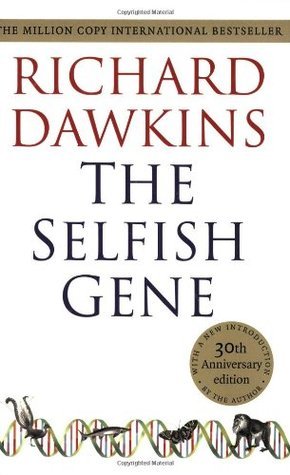
"The Selfish Gene" presents a revolutionary perspective on evolution, arguing that genes, not individuals or species, are the fundamental unit of natural selection. Dawkins explains how seemingly altruistic behaviors in animals, including humans, can be understood as strategies employed by genes to ensure their own propagation. It reframes our understanding of life through the lens of genetic survival, where organisms are essentially "survival machines" built by genes.
This book shares a profound intellectual lineage with "The Descent of Man" by extending Darwin's core insights into evolution. Both works grapple with the mechanisms driving biological change and the origins of complex traits, including social behaviors. While Darwin laid the foundation for natural selection acting on individuals, Dawkins refined this by shifting the emphasis to the gene, providing a deeper, more mechanistic explanation for many phenomena Darwin observed but couldn't fully explain, such as the evolution of cooperation or seemingly selfless acts.
The book offers a compelling narrative that demystifies complex biological concepts. Its clear and engaging prose makes a sophisticated scientific theory accessible to a broad audience, providing a powerful framework for understanding life's fundamental processes and our place within them. It provokes critical thinking about human behavior and provides a fresh perspective on the interplay between biology and culture.
The Selfish Gene
"The Selfish Gene" presents a revolutionary perspective on evolution, arguing that genes, not individuals or species, are the fundamental unit of natural selection. Dawkins explains how seemingly altruistic behaviors in animals, including humans, can be understood as strategies employed by genes to ensure their own propagation. It reframes our understanding of life through the lens of genetic survival, where organisms are essentially "survival machines" built by genes.
This book shares a profound intellectual lineage with "The Descent of Man" by extending Darwin's core insights into evolution. Both works grapple with the mechanisms driving biological change and the origins of complex traits, including social behaviors. While Darwin laid the foundation for natural selection acting on individuals, Dawkins refined this by shifting the emphasis to the gene, providing a deeper, more mechanistic explanation for many phenomena Darwin observed but couldn't fully explain, such as the evolution of cooperation or seemingly selfless acts.
The book offers a compelling narrative that demystifies complex biological concepts. Its clear and engaging prose makes a sophisticated scientific theory accessible to a broad audience, providing a powerful framework for understanding life's fundamental processes and our place within them. It provokes critical thinking about human behavior and provides a fresh perspective on the interplay between biology and culture.
More Books to Explore
Discover more titles that expand on these ideas and themes.
The Origin of Species / The Voyage of the Beagle
The Expression of the Emotions in Man and Animals
Voyage of the Beagle
The Naked Ape
Darwin's Dangerous Idea: Evolution and the Meanings of Life
The Descent of Woman: The Classic Study of Evolution