10 Books Similar to "The Art of Dreaming"
by Carlos Castaneda

The Active Side of Infinity
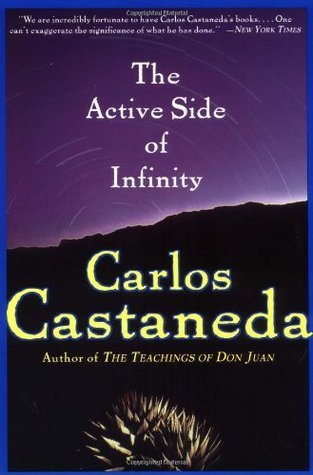
"The Active Side of Infinity" delves into the concept of predatory, non-human entities that influence human consciousness and perception. Castaneda, via his mentor Don Juan, proposes that humanity's internal dialogue and self-importance are manipulated by these "flyers" to maintain a subdued, controllable state, harvesting their awareness. The book explores methods of disengaging from this influence to reclaim personal power and perceive reality beyond imposed limitations.
This book resonates strongly with "The Art of Dreaming" due to their shared exploration of altered states of consciousness and the hidden dimensions of reality. Both narratives hinge on Castaneda's apprenticeship with Don Juan, employing Toltec wisdom to unpack the mechanisms of perception and the extraordinary capabilities latent within human awareness. They collectively build a framework for understanding and interacting with what Castaneda terms "non-ordinary reality."
The book will appeal to those intrigued by esoteric philosophy, consciousness studies, and radical perspectives on human potential. It offers a challenging and empowering narrative, encouraging introspection about the nature of personal agency and the forces that shape our understanding of the world. Its value lies in its stimulus for self-examination and its provocative proposal that freedom begins with recognizing and dismantling unseen confines.
The Active Side of Infinity
"The Active Side of Infinity" delves into the concept of predatory, non-human entities that influence human consciousness and perception. Castaneda, via his mentor Don Juan, proposes that humanity's internal dialogue and self-importance are manipulated by these "flyers" to maintain a subdued, controllable state, harvesting their awareness. The book explores methods of disengaging from this influence to reclaim personal power and perceive reality beyond imposed limitations.
This book resonates strongly with "The Art of Dreaming" due to their shared exploration of altered states of consciousness and the hidden dimensions of reality. Both narratives hinge on Castaneda's apprenticeship with Don Juan, employing Toltec wisdom to unpack the mechanisms of perception and the extraordinary capabilities latent within human awareness. They collectively build a framework for understanding and interacting with what Castaneda terms "non-ordinary reality."
The book will appeal to those intrigued by esoteric philosophy, consciousness studies, and radical perspectives on human potential. It offers a challenging and empowering narrative, encouraging introspection about the nature of personal agency and the forces that shape our understanding of the world. Its value lies in its stimulus for self-examination and its provocative proposal that freedom begins with recognizing and dismantling unseen confines.
The Power of Silence: Further Lessons of don Juan

"The Power of Silence" delves into the intricate spiritual and philosophical teachings of don Juan Matus, emphasizing a practice known as "controlled folly" and the development of inner silence. This book explores how to dismantle the internal dialogue that limits perception, allowing access to a deeper, more direct understanding of reality. It presents a path to mastering one's energetic being and navigating the human experience with heightened awareness and detachment.
The similarity to "The Art of Dreaming" lies in their shared exploration of altered states of consciousness and the practical application of don Juan's sorceric knowledge. Both books guide the reader through exercises and concepts designed to expand awareness beyond conventional limits, albeit focusing on different methods – dreaming in one and silence in the other. They both assert that our perceived reality is but one layer of a much vaster, more malleable existence.
This book will appeal to those interested in spiritual awakening, personal transformation, and unconventional approaches to understanding the self and the universe. Its value lies in offering practical methods for cultivating inner peace, expanding perception, and challenging preconceived notions of reality, ultimately empowering individuals to reclaim their personal power and navigate life with greater intentionality and insight.
The Power of Silence: Further Lessons of don Juan
"The Power of Silence" delves into the intricate spiritual and philosophical teachings of don Juan Matus, emphasizing a practice known as "controlled folly" and the development of inner silence. This book explores how to dismantle the internal dialogue that limits perception, allowing access to a deeper, more direct understanding of reality. It presents a path to mastering one's energetic being and navigating the human experience with heightened awareness and detachment.
The similarity to "The Art of Dreaming" lies in their shared exploration of altered states of consciousness and the practical application of don Juan's sorceric knowledge. Both books guide the reader through exercises and concepts designed to expand awareness beyond conventional limits, albeit focusing on different methods – dreaming in one and silence in the other. They both assert that our perceived reality is but one layer of a much vaster, more malleable existence.
This book will appeal to those interested in spiritual awakening, personal transformation, and unconventional approaches to understanding the self and the universe. Its value lies in offering practical methods for cultivating inner peace, expanding perception, and challenging preconceived notions of reality, ultimately empowering individuals to reclaim their personal power and navigate life with greater intentionality and insight.
The Teachings of Don Juan: A Yaqui Way of Knowledge

"The Teachings of Don Juan: A Yaqui Way of Knowledge" chronicles Castaneda's apprenticeship with Don Juan Matus, a Yaqui shaman, detailing his introduction to a non-ordinary reality. It explores concepts such as "seeing" and "not-doing," challenging conventional perceptions of reality, knowledge, and self through a blend of anthropological observation and psychedelic experiences. The narrative unfolds as a journey into an esoteric system of thought and practice, focusing on altered states of consciousness as a means to perceive the world beyond sensory input.
This book shares foundational similarities with "The Art of Dreaming" by presenting a direct engagement with Don Juan's esoteric teachings. Both works delve into the nature of perception, the malleability of reality, and the pursuit of expanded awareness through unconventional means. They represent different phases of Castaneda’s learning, with "The Teachings" laying the groundwork for many of the advanced concepts explored in "The Art of Dreaming," particularly the idea of manipulating one’s consciousness to access other realms.
This work appeals through its unique blend of memoir, ethnography, and philosophical inquiry, drawing in those interested in mysticism, consciousness studies, and cross-cultural spiritual traditions. It offers a provocative alternative to Western epistemologies, encouraging a radical re-evaluation of what constitutes reality and knowledge. The book's value lies in its profound exploration of human potential and the limits of ordinary perception, inspiring a deeper contemplation of existence and the unseen forces at play within it.
The Teachings of Don Juan: A Yaqui Way of Knowledge
"The Teachings of Don Juan: A Yaqui Way of Knowledge" chronicles Castaneda's apprenticeship with Don Juan Matus, a Yaqui shaman, detailing his introduction to a non-ordinary reality. It explores concepts such as "seeing" and "not-doing," challenging conventional perceptions of reality, knowledge, and self through a blend of anthropological observation and psychedelic experiences. The narrative unfolds as a journey into an esoteric system of thought and practice, focusing on altered states of consciousness as a means to perceive the world beyond sensory input.
This book shares foundational similarities with "The Art of Dreaming" by presenting a direct engagement with Don Juan's esoteric teachings. Both works delve into the nature of perception, the malleability of reality, and the pursuit of expanded awareness through unconventional means. They represent different phases of Castaneda’s learning, with "The Teachings" laying the groundwork for many of the advanced concepts explored in "The Art of Dreaming," particularly the idea of manipulating one’s consciousness to access other realms.
This work appeals through its unique blend of memoir, ethnography, and philosophical inquiry, drawing in those interested in mysticism, consciousness studies, and cross-cultural spiritual traditions. It offers a provocative alternative to Western epistemologies, encouraging a radical re-evaluation of what constitutes reality and knowledge. The book's value lies in its profound exploration of human potential and the limits of ordinary perception, inspiring a deeper contemplation of existence and the unseen forces at play within it.
The Second Ring of Power

"The Second Ring of Power" delves into Carlos Castaneda’s continued apprenticeship with the Yaqui sorcerer Don Juan Matus, focusing on the increasingly surreal and challenging experiences of his female peers, particularly La Gorda. It explores the practical and philosophical implications of “stopping the world,” the rigorous training involved in separating one’s “consensus reality” from a deeper, more fluid truth, and the energetic maneuvers required to achieve this. The book chronicles intense physical and psychological trials, revealing the intricate social dynamics within Don Juan's circle and their profound spiritual transformations.
Thematically, it resonates strongly with "The Art of Dreaming" by extending the exploration of altered states of consciousness. Both books emphasize the disciplined manipulation of perception and energy to transcend ordinary reality, whether through lucid dreaming or the more immediate, waking world confrontations described in "The Second Ring of Power." They share a common emphasis on the non-linear acquisition of knowledge, the elusive nature of self, and the pivotal role of intent in navigating extraordinary realities.
This book offers a compelling narrative for those fascinated by expanded human potential and the esoteric. It provides a deeper understanding of the practical applications of Don Juan's teachings, showcasing the visceral and often terrifying journey towards self-mastery beyond conventional thought. The detailed accounts of energetic shifts and the exploration of identity prove invaluable for individuals seeking to challenge their perceptions of reality and explore profound spiritual and psychological growth.
The Second Ring of Power
"The Second Ring of Power" delves into Carlos Castaneda’s continued apprenticeship with the Yaqui sorcerer Don Juan Matus, focusing on the increasingly surreal and challenging experiences of his female peers, particularly La Gorda. It explores the practical and philosophical implications of “stopping the world,” the rigorous training involved in separating one’s “consensus reality” from a deeper, more fluid truth, and the energetic maneuvers required to achieve this. The book chronicles intense physical and psychological trials, revealing the intricate social dynamics within Don Juan's circle and their profound spiritual transformations.
Thematically, it resonates strongly with "The Art of Dreaming" by extending the exploration of altered states of consciousness. Both books emphasize the disciplined manipulation of perception and energy to transcend ordinary reality, whether through lucid dreaming or the more immediate, waking world confrontations described in "The Second Ring of Power." They share a common emphasis on the non-linear acquisition of knowledge, the elusive nature of self, and the pivotal role of intent in navigating extraordinary realities.
This book offers a compelling narrative for those fascinated by expanded human potential and the esoteric. It provides a deeper understanding of the practical applications of Don Juan's teachings, showcasing the visceral and often terrifying journey towards self-mastery beyond conventional thought. The detailed accounts of energetic shifts and the exploration of identity prove invaluable for individuals seeking to challenge their perceptions of reality and explore profound spiritual and psychological growth.
Being-in-Dreaming: An Initiation into the Sorcerers' World
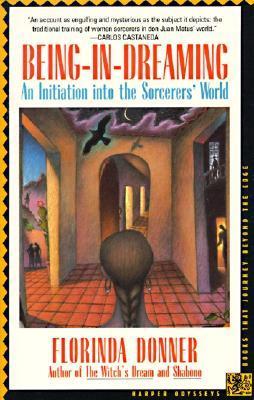
"Being-in-Dreaming: An Initiation into the Sorcerers' World" delves into the author's personal journey within the esoteric practices of Castaneda's sorcerers. It recounts Florinda Donner's experiences learning to manipulate conscious awareness within the dream state, navigating different layers of reality, and encountering otherworldly entities under the tutelage of Don Juan Matus's lineage. The narrative explores techniques for maintaining lucidity, shifting perception, and the profound implications of these practices for understanding the nature of existence.
This book strongly resembles "The Art of Dreaming" because both works explore the disciplined manipulation of dreams and conscious awareness as a path to altered states of perception and understanding. They share a philosophical foundation centered on the sorcerers' concept of "dreaming" as a practical, actionable skill, not merely a subconscious phenomenon. Both authors present their personal apprenticeships, detailing the often challenging and counter-intuitive exercises designed to expand human consciousness beyond conventional limits.
The book appeals to those fascinated by altered states of consciousness, esoteric spirituality, and the potential for human perception to extend beyond scientifically accepted boundaries. Its value lies in offering an intimate, first-hand account of practices often described from an external or theoretical perspective, providing a complementary and enriching perspective to Castaneda's works. It deepens understanding of the sorcerers’ world, offering insights into its practical applications and spiritual implications.
Being-in-Dreaming: An Initiation into the Sorcerers' World
"Being-in-Dreaming: An Initiation into the Sorcerers' World" delves into the author's personal journey within the esoteric practices of Castaneda's sorcerers. It recounts Florinda Donner's experiences learning to manipulate conscious awareness within the dream state, navigating different layers of reality, and encountering otherworldly entities under the tutelage of Don Juan Matus's lineage. The narrative explores techniques for maintaining lucidity, shifting perception, and the profound implications of these practices for understanding the nature of existence.
This book strongly resembles "The Art of Dreaming" because both works explore the disciplined manipulation of dreams and conscious awareness as a path to altered states of perception and understanding. They share a philosophical foundation centered on the sorcerers' concept of "dreaming" as a practical, actionable skill, not merely a subconscious phenomenon. Both authors present their personal apprenticeships, detailing the often challenging and counter-intuitive exercises designed to expand human consciousness beyond conventional limits.
The book appeals to those fascinated by altered states of consciousness, esoteric spirituality, and the potential for human perception to extend beyond scientifically accepted boundaries. Its value lies in offering an intimate, first-hand account of practices often described from an external or theoretical perspective, providing a complementary and enriching perspective to Castaneda's works. It deepens understanding of the sorcerers’ world, offering insights into its practical applications and spiritual implications.
The Sorcerer's Crossing: A Woman's Journey

"The Sorcerer's Crossing: A Woman's Journey" recounts Taisha Abelar's apprenticeship under a lineage of female sorcerers, focusing on the practical application of their teachings. It details her experiences cultivating a "second attention," navigating altered states of consciousness, and mastering various energetic and perceptual disciplines aimed at achieving spiritual and physical liberation. The narrative emphasizes the arduous training, personal sacrifices, and profound transformation inherent in this journey.
This book shares foundational similarities with "The Art of Dreaming" by Carlos Castaneda.
The Sorcerer's Crossing: A Woman's Journey
"The Sorcerer's Crossing: A Woman's Journey" recounts Taisha Abelar's apprenticeship under a lineage of female sorcerers, focusing on the practical application of their teachings. It details her experiences cultivating a "second attention," navigating altered states of consciousness, and mastering various energetic and perceptual disciplines aimed at achieving spiritual and physical liberation. The narrative emphasizes the arduous training, personal sacrifices, and profound transformation inherent in this journey.
This book shares foundational similarities with "The Art of Dreaming" by Carlos Castaneda.
The Art of Spiritual Dreaming: How Dreams Can Make You Find More Love and Happiness
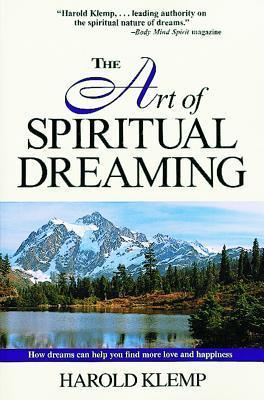
"The Art of Spiritual Dreaming" delves into the practical application of dream interpretation as a tool for personal growth and emotional well-being. It posits that dreams are not random occurrences but rather insightful messages from a higher self or spiritual consciousness, offering guidance to navigate life's challenges, deepen relationships, and cultivate inner joy. The book provides techniques for recalling and understanding these nocturnal narratives, ultimately empowering individuals to harness dream wisdom for a more fulfilling waking life.
This book shares foundational thematic similarities with Castaneda's "The Art of Dreaming" in its exploration of dreams as a conscious, actionable realm beyond mere fantasy. Both works encourage readers to engage with their dream states intentionally, viewing them as valuable sources of esoteric knowledge and practical insight for shaping one's reality, albeit from different philosophical standpoints.
The appeal lies in its promise of an accessible pathway to self-discovery and enhanced emotional intelligence. Individuals seeking practical methods to decode their inner world and apply those insights to improve their relationships and overall happiness will find immense value. It offers a structured approach to a traditionally elusive subject, providing actionable steps for leveraging personal dream experiences for tangible life improvements.
The Art of Spiritual Dreaming: How Dreams Can Make You Find More Love and Happiness
"The Art of Spiritual Dreaming" delves into the practical application of dream interpretation as a tool for personal growth and emotional well-being. It posits that dreams are not random occurrences but rather insightful messages from a higher self or spiritual consciousness, offering guidance to navigate life's challenges, deepen relationships, and cultivate inner joy. The book provides techniques for recalling and understanding these nocturnal narratives, ultimately empowering individuals to harness dream wisdom for a more fulfilling waking life.
This book shares foundational thematic similarities with Castaneda's "The Art of Dreaming" in its exploration of dreams as a conscious, actionable realm beyond mere fantasy. Both works encourage readers to engage with their dream states intentionally, viewing them as valuable sources of esoteric knowledge and practical insight for shaping one's reality, albeit from different philosophical standpoints.
The appeal lies in its promise of an accessible pathway to self-discovery and enhanced emotional intelligence. Individuals seeking practical methods to decode their inner world and apply those insights to improve their relationships and overall happiness will find immense value. It offers a structured approach to a traditionally elusive subject, providing actionable steps for leveraging personal dream experiences for tangible life improvements.
A Course in Astral Travel and Dreams
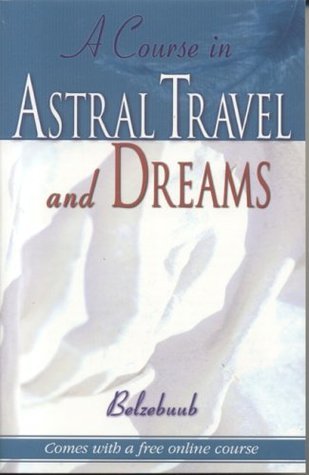
"A Course in Astral Travel and Dreams" by Belzebuub offers a practical guide to out-of-body experiences and lucid dreaming. It meticulously details techniques for inducing these states, along with insights into their significance and potential for conscious exploration beyond the physical realm. The book emphasizes disciplined practice and self-awareness as foundational to navigating these altered states.
This work echoes "The Art of Dreaming" by Carlos Castaneda in its core premise: that dreaming is a potent pathway to expanded consciousness and alternate realities. Both books challenge conventional perceptions of reality and offer structured approaches to developing latent human capacities for perception and exploration through dreams. They share a focus on disciplined internal work to achieve extraordinary states of awareness.
This book will appeal to individuals seeking concrete methods for exploring non-ordinary states of consciousness and expanding their understanding of reality. It provides actionable techniques for cultivating astral projection and lucid dreaming, offering a direct path to personal discovery and a richer, more expansive experience of life beyond typical waking awareness. Its practical focus makes it a valuable resource for those ready to embark on such inner journeys.
A Course in Astral Travel and Dreams
"A Course in Astral Travel and Dreams" by Belzebuub offers a practical guide to out-of-body experiences and lucid dreaming. It meticulously details techniques for inducing these states, along with insights into their significance and potential for conscious exploration beyond the physical realm. The book emphasizes disciplined practice and self-awareness as foundational to navigating these altered states.
This work echoes "The Art of Dreaming" by Carlos Castaneda in its core premise: that dreaming is a potent pathway to expanded consciousness and alternate realities. Both books challenge conventional perceptions of reality and offer structured approaches to developing latent human capacities for perception and exploration through dreams. They share a focus on disciplined internal work to achieve extraordinary states of awareness.
This book will appeal to individuals seeking concrete methods for exploring non-ordinary states of consciousness and expanding their understanding of reality. It provides actionable techniques for cultivating astral projection and lucid dreaming, offering a direct path to personal discovery and a richer, more expansive experience of life beyond typical waking awareness. Its practical focus makes it a valuable resource for those ready to embark on such inner journeys.
True Hallucinations

"True Hallucinations" chronicles Terence McKenna's psychedelic adventures in the Amazon rainforest during the 1970s. It details his and his brother's experiments with psilocybin mushrooms and other entheogens, exploring the resulting shifts in consciousness, the emergence of complex theoretical frameworks, and their pursuit of the "Stoned Ape" theory of human evolution. The book is essentially a memoir of transformative, drug-induced experiences and the philosophical interpretations that followed.
Both "True Hallucinations" and "The Art of Dreaming" delve into altered states of consciousness as pathways to profound knowledge and experience beyond conventional reality. While Castaneda focuses on Don Juan's sorcery and disciplined dreaming, McKenna employs psychedelic substances to access what he perceives as hyper-dimensional realities and historical insights. Both authors present subjective, experiential narratives that challenge epistemological norms and explore the boundaries of human perception and understanding, often blurring the lines between objective and internal landscapes.
This book offers a fascinating exploration of consciousness that resonates with those interested in the nature of reality, ethnobotany, and the potential of non-ordinary states for personal and philosophical insight. It provides a unique blend of adventure, scientific speculation, and mystical inquiry, prompting reflection on human origins, perception, and the interconnectedness of mind and matter. Its intellectual curiosity paired with vivid personal accounts makes it a compelling read for those drawn to unconventional perspectives.
True Hallucinations
"True Hallucinations" chronicles Terence McKenna's psychedelic adventures in the Amazon rainforest during the 1970s. It details his and his brother's experiments with psilocybin mushrooms and other entheogens, exploring the resulting shifts in consciousness, the emergence of complex theoretical frameworks, and their pursuit of the "Stoned Ape" theory of human evolution. The book is essentially a memoir of transformative, drug-induced experiences and the philosophical interpretations that followed.
Both "True Hallucinations" and "The Art of Dreaming" delve into altered states of consciousness as pathways to profound knowledge and experience beyond conventional reality. While Castaneda focuses on Don Juan's sorcery and disciplined dreaming, McKenna employs psychedelic substances to access what he perceives as hyper-dimensional realities and historical insights. Both authors present subjective, experiential narratives that challenge epistemological norms and explore the boundaries of human perception and understanding, often blurring the lines between objective and internal landscapes.
This book offers a fascinating exploration of consciousness that resonates with those interested in the nature of reality, ethnobotany, and the potential of non-ordinary states for personal and philosophical insight. It provides a unique blend of adventure, scientific speculation, and mystical inquiry, prompting reflection on human origins, perception, and the interconnectedness of mind and matter. Its intellectual curiosity paired with vivid personal accounts makes it a compelling read for those drawn to unconventional perspectives.
Breaking Open the Head: A Psychedelic Journey into the Heart of Contemporary Shamanism
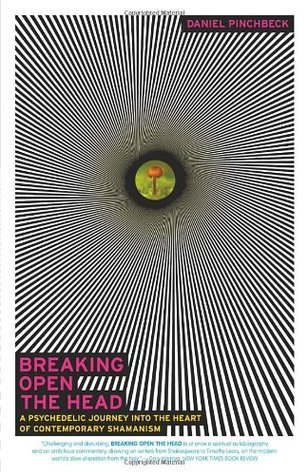
"Breaking Open the Head" meticulously chronicles Daniel Pinchbeck's immersive explorations into psychedelic experiences and their intersection with contemporary shamanism across various cultures. It delves into the historical and cultural significance of entheogens, examining their potential to induce altered states of consciousness and the implications for understanding reality, identity, and spirituality. Pinchbeck blends personal narrative with anthropological research, philosophical inquiry, and scientific perspectives to present a comprehensive, yet often challenging, overview of these profound practices.
The book echoes "The Art of Dreaming" in its exploration of non-ordinary states of consciousness as pathways to knowledge and expanded perception. Both authors engage with the idea that alternative realities are accessible through disciplined practice and altered awareness, whether induced by shamanic techniques or lucid dreaming. Each narrative presents a journey into the previously unseen, challenging conventional Western thought and offering insights into the deeper structures of existence.
This book will appeal to those intrigued by the frontiers of consciousness, spirituality, and culture. It offers a sophisticated and thought-provoking analysis of practices that often remain marginalized, providing valuable context for understanding the human desire to transcend ordinary experience and the potential for ancient wisdom to inform modern life. Its critical examination of both the allure and the pitfalls of psychedelic exploration lends it significant intellectual weight.
Breaking Open the Head: A Psychedelic Journey into the Heart of Contemporary Shamanism
"Breaking Open the Head" meticulously chronicles Daniel Pinchbeck's immersive explorations into psychedelic experiences and their intersection with contemporary shamanism across various cultures. It delves into the historical and cultural significance of entheogens, examining their potential to induce altered states of consciousness and the implications for understanding reality, identity, and spirituality. Pinchbeck blends personal narrative with anthropological research, philosophical inquiry, and scientific perspectives to present a comprehensive, yet often challenging, overview of these profound practices.
The book echoes "The Art of Dreaming" in its exploration of non-ordinary states of consciousness as pathways to knowledge and expanded perception. Both authors engage with the idea that alternative realities are accessible through disciplined practice and altered awareness, whether induced by shamanic techniques or lucid dreaming. Each narrative presents a journey into the previously unseen, challenging conventional Western thought and offering insights into the deeper structures of existence.
This book will appeal to those intrigued by the frontiers of consciousness, spirituality, and culture. It offers a sophisticated and thought-provoking analysis of practices that often remain marginalized, providing valuable context for understanding the human desire to transcend ordinary experience and the potential for ancient wisdom to inform modern life. Its critical examination of both the allure and the pitfalls of psychedelic exploration lends it significant intellectual weight.
More Books to Explore
Discover more titles that expand on these ideas and themes.
The Active Side of Infinity
The Power of Silence: Further Lessons of don Juan
The Teachings of Don Juan: A Yaqui Way of Knowledge
The Second Ring of Power
Being-in-Dreaming: An Initiation into the Sorcerers' World
The Sorcerer's Crossing: A Woman's Journey