10 Books Similar to "Principles of Neural Science"
by Eric R. Kandel

The Quest for Consciousness: A Neurobiological Approach

"The Quest for Consciousness" by Christof Koch delves into the profound question of how subjective experience, or consciousness, arises from the physical brain. Koch, a leading neuroscientist, explores the neurobiological underpinnings of consciousness, examining theoretical frameworks like the Integrated Information Theory and investigating experimental evidence from neuroscience, psychology, and philosophy. It's a rigorous yet accessible journey into the fundamental nature of conscious awareness.
This book shares a core intellectual lineage with Kandel's "Principles of Neural Science" by grounding its exploration of complex brain functions in detailed neuroscientific principles. Both texts emphasize the biological basis of mental processes, though Koch focuses intensely on consciousness as a singular, multifaceted phenomenon, while Kandel provides a broader foundational overview of the entire nervous system. They both apply a rigorous scientific lens to traditionally philosophical questions.
Individuals captivated by the ultimate mysteries of the mind and brain will find immense value in Koch's quest. It offers a comprehensive and scientifically informed perspective on one of humanity's most enduring puzzles, equipping one with a nuanced understanding of current theories and experimental approaches to consciousness. The book provides a sophisticated yet understandable framework for contemplating how our inner world is physically realized.
The Quest for Consciousness: A Neurobiological Approach
"The Quest for Consciousness" by Christof Koch delves into the profound question of how subjective experience, or consciousness, arises from the physical brain. Koch, a leading neuroscientist, explores the neurobiological underpinnings of consciousness, examining theoretical frameworks like the Integrated Information Theory and investigating experimental evidence from neuroscience, psychology, and philosophy. It's a rigorous yet accessible journey into the fundamental nature of conscious awareness.
This book shares a core intellectual lineage with Kandel's "Principles of Neural Science" by grounding its exploration of complex brain functions in detailed neuroscientific principles. Both texts emphasize the biological basis of mental processes, though Koch focuses intensely on consciousness as a singular, multifaceted phenomenon, while Kandel provides a broader foundational overview of the entire nervous system. They both apply a rigorous scientific lens to traditionally philosophical questions.
Individuals captivated by the ultimate mysteries of the mind and brain will find immense value in Koch's quest. It offers a comprehensive and scientifically informed perspective on one of humanity's most enduring puzzles, equipping one with a nuanced understanding of current theories and experimental approaches to consciousness. The book provides a sophisticated yet understandable framework for contemplating how our inner world is physically realized.
The Emotional Brain: The Mysterious Underpinnings of Emotional Life

Joseph LeDoux's *The Emotional Brain* delves into the neuroscience of fear, providing a deep dive into how our brains process and generate emotional responses, particularly those related to survival. It distinguishes between the "low road" (fast, unconscious emotional responses) and the "high road" (slower, conscious processing), revealing the intricate neural circuits that underpin our emotional lives. The book challenges traditional psychological views by emphasizing the brain's role in creating emotion, rather than emotion being purely a product of conscious thought.
This book shares common ground with Kandel’s *Principles of Neural Science* by offering a rigorous, brain-centric exploration of fundamental mental processes. Both texts are authoritative in their fields, employing a scientific approach to dissect complex neurological phenomena. While Kandel provides a comprehensive overview of neural science, LeDoux focuses intensely on the neural architecture of emotion, making a highly specialized contribution to our understanding of the brain's functions. Both emphasize empirical evidence and detailed biological mechanisms.
*The Emotional Brain* will resonate with those seeking a scientifically grounded understanding of emotions, particularly why we react the way we do in threatening situations. It offers profound insights into anxiety, fear, and even clinical disorders, providing a new lens through which to view these experiences. The book empowers its audience with knowledge about their own internal workings, fostering a more informed perspective on mental health and the powerful influence of the brain on our subjective reality.
The Emotional Brain: The Mysterious Underpinnings of Emotional Life
Joseph LeDoux's *The Emotional Brain* delves into the neuroscience of fear, providing a deep dive into how our brains process and generate emotional responses, particularly those related to survival. It distinguishes between the "low road" (fast, unconscious emotional responses) and the "high road" (slower, conscious processing), revealing the intricate neural circuits that underpin our emotional lives. The book challenges traditional psychological views by emphasizing the brain's role in creating emotion, rather than emotion being purely a product of conscious thought.
This book shares common ground with Kandel’s *Principles of Neural Science* by offering a rigorous, brain-centric exploration of fundamental mental processes. Both texts are authoritative in their fields, employing a scientific approach to dissect complex neurological phenomena. While Kandel provides a comprehensive overview of neural science, LeDoux focuses intensely on the neural architecture of emotion, making a highly specialized contribution to our understanding of the brain's functions. Both emphasize empirical evidence and detailed biological mechanisms.
*The Emotional Brain* will resonate with those seeking a scientifically grounded understanding of emotions, particularly why we react the way we do in threatening situations. It offers profound insights into anxiety, fear, and even clinical disorders, providing a new lens through which to view these experiences. The book empowers its audience with knowledge about their own internal workings, fostering a more informed perspective on mental health and the powerful influence of the brain on our subjective reality.
The Mind & the Brain: Neuroplasticity and the Power of Mental Force

"The Mind & the Brain" explores the remarkable capacity of the brain to reorganize itself in response to experience and conscious effort, a phenomenon known as neuroplasticity. Dr. Schwartz, through his work with OCD patients, argues for the power of "mental force" – the deliberate application of mental energy and attention – to reshape neural pathways and overcome debilitating conditions. It's an accessible dive into how our thoughts and intentions can actively change our physical brains.
Both books delve deep into the intricate workings of the nervous system. While Kandel's "Principles of Neural Science" provides a foundational, encyclopedic overview of neuroscience from cellular to cognitive levels, Schwartz's work zooms in on a specific, yet crucial, aspect: the brain's adaptability. Both underscore the material basis of mental processes and behavior, albeit from different perspectives – one broad, the other highly focused on therapeutic application.
This book offers a compelling narrative for anyone fascinated by the brain's capacity for change and recovery. It provides a hopeful and empowering perspective on mental health, suggesting that conscious mental effort can be a powerful tool in overcoming neurological and psychological challenges. Its real-world examples and clear explanations of complex neuroscience concepts make it an engaging read for those seeking to understand the practical implications of brain science.
The Mind & the Brain: Neuroplasticity and the Power of Mental Force
"The Mind & the Brain" explores the remarkable capacity of the brain to reorganize itself in response to experience and conscious effort, a phenomenon known as neuroplasticity. Dr. Schwartz, through his work with OCD patients, argues for the power of "mental force" – the deliberate application of mental energy and attention – to reshape neural pathways and overcome debilitating conditions. It's an accessible dive into how our thoughts and intentions can actively change our physical brains.
Both books delve deep into the intricate workings of the nervous system. While Kandel's "Principles of Neural Science" provides a foundational, encyclopedic overview of neuroscience from cellular to cognitive levels, Schwartz's work zooms in on a specific, yet crucial, aspect: the brain's adaptability. Both underscore the material basis of mental processes and behavior, albeit from different perspectives – one broad, the other highly focused on therapeutic application.
This book offers a compelling narrative for anyone fascinated by the brain's capacity for change and recovery. It provides a hopeful and empowering perspective on mental health, suggesting that conscious mental effort can be a powerful tool in overcoming neurological and psychological challenges. Its real-world examples and clear explanations of complex neuroscience concepts make it an engaging read for those seeking to understand the practical implications of brain science.
Descartes' Error: Emotion, Reason and the Human Brain
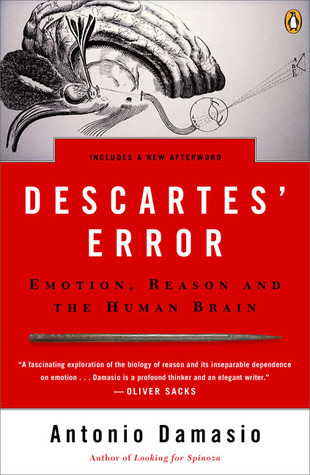
"Descartes' Error" fundamentally challenges the notion, often attributed to Descartes, that mind and body are separate, and that reason operates independently of emotion. Damásio meticulously builds a case, drawing on neurological case studies, to demonstrate how emotions are not a hindrance to rationality but are, in fact, essential for effective decision-making, social behavior, and even our sense of self. He argues that our capacity for reason relies heavily on somatic markers – bodily states that provide an intuitive, emotional framework for evaluating choices, even unconsciously.
This book shares a foundational commonality with Kandel's "Principles of Neural Science" by delving into the biological underpinnings of complex human faculties. While Kandel provides a comprehensive textbook-level exploration of neurobiology, Damásio offers a more philosophical yet empirically grounded examination of how the brain's emotional circuitry directly shapes our cognitive processes and ultimately defines human consciousness. Both works emphasize the intricate, indivisible relationship between the brain's physical structure and our mental experiences.
This work appeals to anyone fascinated by the brain's intricate workings and the nature of human experience. It provides a profound rethinking of reason and emotion, offering a more integrated and biologically accurate understanding of ourselves. The insights presented in "Descartes' Error" offer a valuable perspective for fields ranging from neuroscience and psychology to ethics and artificial intelligence, compelling readers to reconsider deeply ingrained assumptions about the mind.
Descartes' Error: Emotion, Reason and the Human Brain
"Descartes' Error" fundamentally challenges the notion, often attributed to Descartes, that mind and body are separate, and that reason operates independently of emotion. Damásio meticulously builds a case, drawing on neurological case studies, to demonstrate how emotions are not a hindrance to rationality but are, in fact, essential for effective decision-making, social behavior, and even our sense of self. He argues that our capacity for reason relies heavily on somatic markers – bodily states that provide an intuitive, emotional framework for evaluating choices, even unconsciously.
This book shares a foundational commonality with Kandel's "Principles of Neural Science" by delving into the biological underpinnings of complex human faculties. While Kandel provides a comprehensive textbook-level exploration of neurobiology, Damásio offers a more philosophical yet empirically grounded examination of how the brain's emotional circuitry directly shapes our cognitive processes and ultimately defines human consciousness. Both works emphasize the intricate, indivisible relationship between the brain's physical structure and our mental experiences.
This work appeals to anyone fascinated by the brain's intricate workings and the nature of human experience. It provides a profound rethinking of reason and emotion, offering a more integrated and biologically accurate understanding of ourselves. The insights presented in "Descartes' Error" offer a valuable perspective for fields ranging from neuroscience and psychology to ethics and artificial intelligence, compelling readers to reconsider deeply ingrained assumptions about the mind.
The Root of Thought: Unlocking Glia--the Brain Cell That Will Help Us Sharpen Our Wits, Heal Injury, and Treat Brain Disease

*The Root of Thought* by Andrew Koob delves into the often-overlooked world of glial cells, challenging the long-held notion that neurons alone are the brain's primary actors. Koob explains how glia, once considered mere support cells, are critical for everything from learning and memory to healing brain injuries and combating diseases like Alzheimer's. The book makes complex neuroscience accessible, demonstrating glia's profound impact on our cognitive abilities and overall brain health.
This book shares foundational similarities with Kandel's *Principles of Neural Science* by exploring the fundamental building blocks and operational mechanisms of the brain. Both texts provide a deep dive into cellular neuroscience, though Koob focuses on a historically marginalized cell type, expanding our understanding of the brain's complete cellular symphony, much like Kandel provides a comprehensive overview of neuronal function.
Its appeal lies in offering a fresh perspective on brain science. This book will inform those interested in cutting-edge research, revealing how a deeper understanding of glia could revolutionize treatments for various neurological conditions and unlock new avenues for enhancing human cognition. It offers not just knowledge but genuine hope for future medical advancements and self-improvement.
The Root of Thought: Unlocking Glia--the Brain Cell That Will Help Us Sharpen Our Wits, Heal Injury, and Treat Brain Disease
*The Root of Thought* by Andrew Koob delves into the often-overlooked world of glial cells, challenging the long-held notion that neurons alone are the brain's primary actors. Koob explains how glia, once considered mere support cells, are critical for everything from learning and memory to healing brain injuries and combating diseases like Alzheimer's. The book makes complex neuroscience accessible, demonstrating glia's profound impact on our cognitive abilities and overall brain health.
This book shares foundational similarities with Kandel's *Principles of Neural Science* by exploring the fundamental building blocks and operational mechanisms of the brain. Both texts provide a deep dive into cellular neuroscience, though Koob focuses on a historically marginalized cell type, expanding our understanding of the brain's complete cellular symphony, much like Kandel provides a comprehensive overview of neuronal function.
Its appeal lies in offering a fresh perspective on brain science. This book will inform those interested in cutting-edge research, revealing how a deeper understanding of glia could revolutionize treatments for various neurological conditions and unlock new avenues for enhancing human cognition. It offers not just knowledge but genuine hope for future medical advancements and self-improvement.
Matter and Consciousness: A Contemporary Introduction to the Philosophy of Mind

Paul Churchland's "Matter and Consciousness" provides an engaging introduction to the philosophy of mind, exploring fundamental questions about the nature of consciousness, identity, and the relationship between the mind and the physical brain. It delves into various philosophical theories, such as dualism, behaviorism, and functionalism, ultimately advocating for a materialist perspective where mental states are reduced to brain states.
This book shares a core thematic similarity with Kandel's "Principles of Neural Science" in its deep engagement with the brain as the substrate of thought and experience. While Kandel meticulously details the neurobiological mechanisms, Churchland critically examines the philosophical implications of such scientific understanding, probing how our knowledge of the brain informs our understanding of the mind itself. Both works emphasize a scientific, rather than mystical, approach to understanding consciousness.
This work offers significant value for anyone interested in the profound connection between the brain and our subjective experience. It provides a robust framework for considering classic philosophical dilemmas through a modern, scientifically informed lens, encouraging critical thought about what it means to be conscious and how our internal world is rooted in physical reality.
Matter and Consciousness: A Contemporary Introduction to the Philosophy of Mind
Paul Churchland's "Matter and Consciousness" provides an engaging introduction to the philosophy of mind, exploring fundamental questions about the nature of consciousness, identity, and the relationship between the mind and the physical brain. It delves into various philosophical theories, such as dualism, behaviorism, and functionalism, ultimately advocating for a materialist perspective where mental states are reduced to brain states.
This book shares a core thematic similarity with Kandel's "Principles of Neural Science" in its deep engagement with the brain as the substrate of thought and experience. While Kandel meticulously details the neurobiological mechanisms, Churchland critically examines the philosophical implications of such scientific understanding, probing how our knowledge of the brain informs our understanding of the mind itself. Both works emphasize a scientific, rather than mystical, approach to understanding consciousness.
This work offers significant value for anyone interested in the profound connection between the brain and our subjective experience. It provides a robust framework for considering classic philosophical dilemmas through a modern, scientifically informed lens, encouraging critical thought about what it means to be conscious and how our internal world is rooted in physical reality.
I of the Vortex: From Neurons to Self

"I of the Vortex: From Neurons to Self" explores the biological foundations of self-awareness and consciousness. Llinás, a renowned neuroscientist, posits that the "self" isn't a mystical entity but an emergent property of the brain's intrinsic oscillatory activity, particularly within the thalamocortical system. He argues that our subjective experience arises from the dynamic interplay of these electrical rhythms, creating a unified perception of reality and agency.
This book shares foundational similarities with "Principles of Neural Science" by delving deep into the neurobiological underpinnings of complex brain functions. Both texts emphasize the cellular and systems-level mechanisms that govern neural activity, applying a rigorous scientific lens to phenomena traditionally considered philosophical. While Kandel offers a comprehensive textbook overview, Llinás presents a more focused, yet equally profound, theoretical framework for understanding the integration of neural processes into a cohesive self.
This exploration will captivate individuals interested in the ultimate questions of mind and brain. It offers a compelling, scientifically grounded perspective on consciousness, providing a refreshing alternative to purely philosophical or psychological interpretations. Its value lies in offering a sophisticated yet accessible framework for understanding how the physical brain gives rise to the elusive experience of being "I."
I of the Vortex: From Neurons to Self
"I of the Vortex: From Neurons to Self" explores the biological foundations of self-awareness and consciousness. Llinás, a renowned neuroscientist, posits that the "self" isn't a mystical entity but an emergent property of the brain's intrinsic oscillatory activity, particularly within the thalamocortical system. He argues that our subjective experience arises from the dynamic interplay of these electrical rhythms, creating a unified perception of reality and agency.
This book shares foundational similarities with "Principles of Neural Science" by delving deep into the neurobiological underpinnings of complex brain functions. Both texts emphasize the cellular and systems-level mechanisms that govern neural activity, applying a rigorous scientific lens to phenomena traditionally considered philosophical. While Kandel offers a comprehensive textbook overview, Llinás presents a more focused, yet equally profound, theoretical framework for understanding the integration of neural processes into a cohesive self.
This exploration will captivate individuals interested in the ultimate questions of mind and brain. It offers a compelling, scientifically grounded perspective on consciousness, providing a refreshing alternative to purely philosophical or psychological interpretations. Its value lies in offering a sophisticated yet accessible framework for understanding how the physical brain gives rise to the elusive experience of being "I."
Phantoms in the Brain: Probing the Mysteries of the Human Mind

"Phantoms in the Brain" delves into the perplexing world of neurological disorders and how they illuminate the intricate workings of the human mind. Through a series of compelling case studies, V.S. Ramachandran explores phenomena like phantom limbs, synesthesia, and Capgras syndrome, using these unusual conditions to shed light on consciousness, self-awareness, and perception. It's an accessible journey into the brain's remarkable plasticity and its sometimes-bizarre manifestations.
This book shares a fundamental similarity with "Principles of Neural Science" in its core objective: to understand the brain's functions. While Kandel's work offers a comprehensive, foundational textbook perspective, Ramachandran approaches the same subject by dissecting extraordinary neurological cases, revealing fundamental principles of brain organization and mental processes through anomaly rather than typical function. Both works aim to demystify neural mechanisms and their impact on our experience.
This exploration of neurological curiosities holds broad appeal. It offers a unique window into the brain's architecture and how deviations from the norm can reveal underlying truths about ordinary perception and identity. The insightful and often astounding discoveries presented encourage contemplation of what it means to be human, making it a valuable read for anyone fascinated by the brain's profound influence on our reality and self.
Phantoms in the Brain: Probing the Mysteries of the Human Mind
"Phantoms in the Brain" delves into the perplexing world of neurological disorders and how they illuminate the intricate workings of the human mind. Through a series of compelling case studies, V.S. Ramachandran explores phenomena like phantom limbs, synesthesia, and Capgras syndrome, using these unusual conditions to shed light on consciousness, self-awareness, and perception. It's an accessible journey into the brain's remarkable plasticity and its sometimes-bizarre manifestations.
This book shares a fundamental similarity with "Principles of Neural Science" in its core objective: to understand the brain's functions. While Kandel's work offers a comprehensive, foundational textbook perspective, Ramachandran approaches the same subject by dissecting extraordinary neurological cases, revealing fundamental principles of brain organization and mental processes through anomaly rather than typical function. Both works aim to demystify neural mechanisms and their impact on our experience.
This exploration of neurological curiosities holds broad appeal. It offers a unique window into the brain's architecture and how deviations from the norm can reveal underlying truths about ordinary perception and identity. The insightful and often astounding discoveries presented encourage contemplation of what it means to be human, making it a valuable read for anyone fascinated by the brain's profound influence on our reality and self.
Molecular Biology of the Cell

"Molecular Biology of the Cell" is a foundational text exploring the intricate machinery within living cells. It delves into the precise structures, functions, and interactions of molecules like DNA, RNA, and proteins, explaining how these components govern everything from cellular growth and division to communication and disease. It meticulously unpacks the fundamental processes that define life at its most basic level.
This book shares a significant kinship with "Principles of Neural Science" because both are monumental, authoritative works that strive to understand complex biological systems from their fundamental building blocks. While Kandel focuses on the brain's cellular and molecular underpinnings, Alberts' work provides the essential, broader context of cell biology that underpins all specialized biological functions, including those of neurons. Both employ rigorous scientific explanation to demystify complex biological phenomena.
This comprehensive volume will deeply engage individuals seeking a thorough and accurate understanding of life's most basic unit. Its clarity, depth, and stunning illustrations make it an indispensable resource for students, researchers, and anyone with a serious interest in biology, offering a deep foundational knowledge crucial for understanding any biological discipline, from neuroscience to genetics.
Molecular Biology of the Cell
"Molecular Biology of the Cell" is a foundational text exploring the intricate machinery within living cells. It delves into the precise structures, functions, and interactions of molecules like DNA, RNA, and proteins, explaining how these components govern everything from cellular growth and division to communication and disease. It meticulously unpacks the fundamental processes that define life at its most basic level.
This book shares a significant kinship with "Principles of Neural Science" because both are monumental, authoritative works that strive to understand complex biological systems from their fundamental building blocks. While Kandel focuses on the brain's cellular and molecular underpinnings, Alberts' work provides the essential, broader context of cell biology that underpins all specialized biological functions, including those of neurons. Both employ rigorous scientific explanation to demystify complex biological phenomena.
This comprehensive volume will deeply engage individuals seeking a thorough and accurate understanding of life's most basic unit. Its clarity, depth, and stunning illustrations make it an indispensable resource for students, researchers, and anyone with a serious interest in biology, offering a deep foundational knowledge crucial for understanding any biological discipline, from neuroscience to genetics.
The Tree of Knowledge: The Biological Roots of Human Understanding
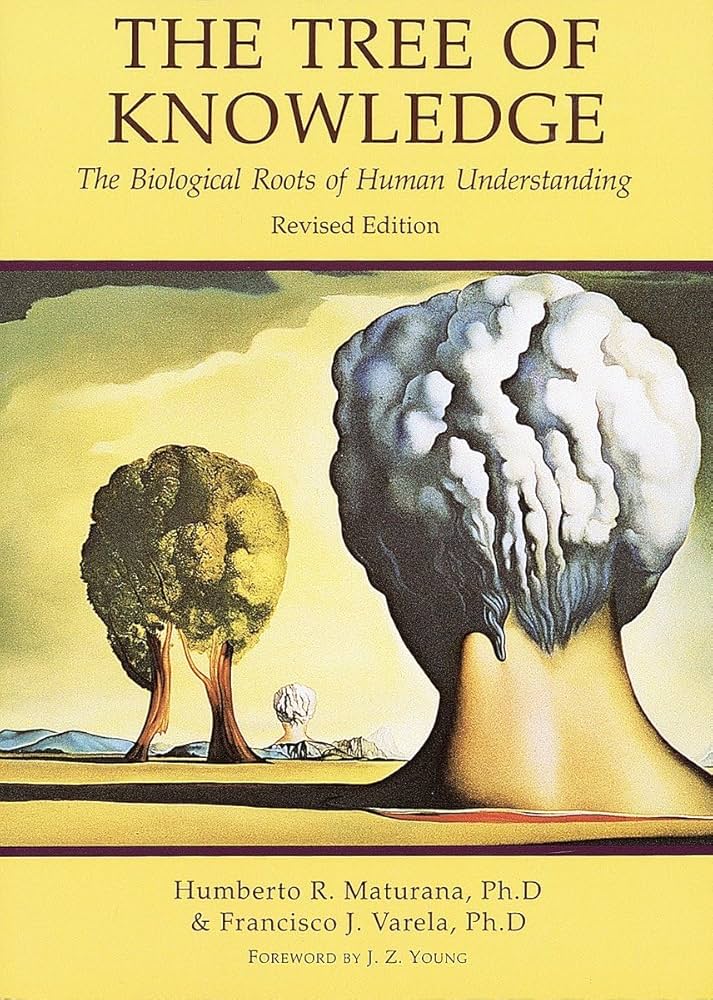
"The Tree of Knowledge" by Maturana explores humanity's unique relationship with language and self-awareness, positing that our understanding of the world is inherently shaped by our biological structure and our historical interactions. It delves into how cognition isn't a passive reception of objective reality, but an active, circular process of creating our experience through social interaction and language, ultimately defining what it means to be alive and human.
This work resonates with "Principles of Neural Science" by examining the biological underpinnings of consciousness and perception. While Kandel meticulously details the cellular and molecular mechanisms of the brain, Maturana offers a complementary, higher-level philosophical framework explaining *how* these biological processes lead to our subjective experience and shared understanding, bridging the gap between raw neural activity and the emergence of meaning.
The book will appeal to those seeking a profound understanding of the biological roots of human cognition and communication. It offers a paradigm-shifting perspective on knowledge, consciousness, and the very nature of reality, providing a rich, intellectual journey into the intertwined realms of biology, philosophy, and linguistics. Its insights are invaluable for anyone pondering the limits and possibilities of human understanding.
The Tree of Knowledge: The Biological Roots of Human Understanding
"The Tree of Knowledge" by Maturana explores humanity's unique relationship with language and self-awareness, positing that our understanding of the world is inherently shaped by our biological structure and our historical interactions. It delves into how cognition isn't a passive reception of objective reality, but an active, circular process of creating our experience through social interaction and language, ultimately defining what it means to be alive and human.
This work resonates with "Principles of Neural Science" by examining the biological underpinnings of consciousness and perception. While Kandel meticulously details the cellular and molecular mechanisms of the brain, Maturana offers a complementary, higher-level philosophical framework explaining *how* these biological processes lead to our subjective experience and shared understanding, bridging the gap between raw neural activity and the emergence of meaning.
The book will appeal to those seeking a profound understanding of the biological roots of human cognition and communication. It offers a paradigm-shifting perspective on knowledge, consciousness, and the very nature of reality, providing a rich, intellectual journey into the intertwined realms of biology, philosophy, and linguistics. Its insights are invaluable for anyone pondering the limits and possibilities of human understanding.
More Books to Explore
Discover more titles that expand on these ideas and themes.
The Quest for Consciousness: A Neurobiological Approach
The Emotional Brain: The Mysterious Underpinnings of Emotional Life
The Mind & the Brain: Neuroplasticity and the Power of Mental Force
Descartes' Error: Emotion, Reason and the Human Brain
The Root of Thought: Unlocking Glia--the Brain Cell That Will Help Us Sharpen Our Wits, Heal Injury, and Treat Brain Disease
Matter and Consciousness: A Contemporary Introduction to the Philosophy of Mind