10 Books Similar to "Erewhon"
by Samuel Butler
The Way of All Flesh

"The Way of All Flesh" is a scathing, semi-autobiographical novel chronicling the life of Ernest Pontifex, born into a repressive Victorian clerical family. It meticulously dissects the suffocating impact of conventional education, religious hypocrisy, and familial expectation on individual development, tracing Ernest’s struggle for independence and authentic selfhood against a backdrop of societal constraints.
The similarity to "Erewhon" lies in Butler’s shared thematic preoccupation with societal critique and the questioning of established norms. Both novels employ satire to expose the absurdities and damaging consequences of deeply ingrained institutions – "Erewhon" targeting aspects like justice and technology, while "The Way of All Flesh" zeroes in on the oppressive forces of family, religion, and education prevalent in Victorian England. Both feature protagonists who navigate bewildering social structures and challenge prevailing wisdom.
This novel will appeal to those who appreciate incisive social commentary and psychological depth. Its enduring value lies in its portrayal of generational conflict and the universal quest for individual liberation. It offers profound insights into the formation of identity and the courage required to break free from inherited dogmas, making it remarkably relevant even today.
The Way of All Flesh
"The Way of All Flesh" is a scathing, semi-autobiographical novel chronicling the life of Ernest Pontifex, born into a repressive Victorian clerical family. It meticulously dissects the suffocating impact of conventional education, religious hypocrisy, and familial expectation on individual development, tracing Ernest’s struggle for independence and authentic selfhood against a backdrop of societal constraints.
The similarity to "Erewhon" lies in Butler’s shared thematic preoccupation with societal critique and the questioning of established norms. Both novels employ satire to expose the absurdities and damaging consequences of deeply ingrained institutions – "Erewhon" targeting aspects like justice and technology, while "The Way of All Flesh" zeroes in on the oppressive forces of family, religion, and education prevalent in Victorian England. Both feature protagonists who navigate bewildering social structures and challenge prevailing wisdom.
This novel will appeal to those who appreciate incisive social commentary and psychological depth. Its enduring value lies in its portrayal of generational conflict and the universal quest for individual liberation. It offers profound insights into the formation of identity and the courage required to break free from inherited dogmas, making it remarkably relevant even today.
The Food of the Gods and How It Came to Earth
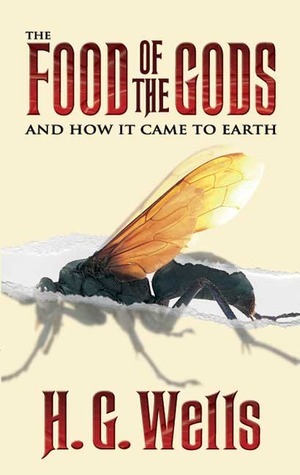
H.G. Wells's "The Food of the Gods" chronicles an accidental scientific discovery—a growth-accelerating substance—that transforms the natural world. Chickens become massive, insects monstrous, and eventually, humans exposed to the "Food" grow into giants, challenging societal norms and inciting fear and conflict. The narrative explores the unintended consequences of scientific advancement and humanity's struggle to adapt to radical change, culminating in a clash between the "little people" and the "giants."
The similarity to "Erewhon" lies in their shared exploration of societal responses to radical otherness and perceived threats to established order. Both novels present an isolated or transformed society that grapples with innovation and difference, forcing characters and by extension, the reader, to question prevailing ethical and social structures. Both employ speculative scenarios to critique contemporary anxieties about progress and conformity.
This book will appeal for its insightful commentary on scientific ethics and societal evolution. It provokes thought on humanity's capacity for adaptation versus its tendency towards fear and resistance when confronted with the unknown. Its enduring relevance, particularly in an age of rapid technological change, offers valuable perspectives on how we might navigate future disruptions, making it a compelling and intellectually stimulating read.
The Food of the Gods and How It Came to Earth
H.G. Wells's "The Food of the Gods" chronicles an accidental scientific discovery—a growth-accelerating substance—that transforms the natural world. Chickens become massive, insects monstrous, and eventually, humans exposed to the "Food" grow into giants, challenging societal norms and inciting fear and conflict. The narrative explores the unintended consequences of scientific advancement and humanity's struggle to adapt to radical change, culminating in a clash between the "little people" and the "giants."
The similarity to "Erewhon" lies in their shared exploration of societal responses to radical otherness and perceived threats to established order. Both novels present an isolated or transformed society that grapples with innovation and difference, forcing characters and by extension, the reader, to question prevailing ethical and social structures. Both employ speculative scenarios to critique contemporary anxieties about progress and conformity.
This book will appeal for its insightful commentary on scientific ethics and societal evolution. It provokes thought on humanity's capacity for adaptation versus its tendency towards fear and resistance when confronted with the unknown. Its enduring relevance, particularly in an age of rapid technological change, offers valuable perspectives on how we might navigate future disruptions, making it a compelling and intellectually stimulating read.
The Other Side of the Hedge; The Celestial Omnibus
E.M. Forster's *The Other Side of the Hedge; The Celestial Omnibus* presents two distinct but thematically linked novellas. "The Other Side of the Hedge" chronicles a weary traveler's accidental crossing into a timeless, idyllic afterlife realm, while "The Celestial Omnibus" follows a precocious boy who discovers a magical omnibus route to mythical lands. Both explore liminal spaces and alternative realities, challenging conventional perceptions of existence and societal norms.
These works resonate with *Erewhon* through their shared exploration of utopian or fantastical societies that critique the mundane and often rigid structures of the real world. Just as Erewhon's inversions of logic and technology expose Victorian hypocrisy, Forster's imagined realms offer escape and enlightenment, often satirizing the restrictive nature of polite society and the limitations of empirical understanding. Both authors employ speculative fiction to dissect human nature and societal constructs.
This dual collection offers a delightful intellectual escape, inviting contemplation on the nature of reality, perception, and the desire for transcendence. Its imaginative premises and subtle social commentary will stimulate thought and provide a satisfying experience for those who appreciate nuanced storytelling and allegorical depth. It’s a rewarding read for anyone seeking narratives that blend fantasy with profound philosophical questions.
The Other Side of the Hedge; The Celestial Omnibus
E.M. Forster's *The Other Side of the Hedge; The Celestial Omnibus* presents two distinct but thematically linked novellas. "The Other Side of the Hedge" chronicles a weary traveler's accidental crossing into a timeless, idyllic afterlife realm, while "The Celestial Omnibus" follows a precocious boy who discovers a magical omnibus route to mythical lands. Both explore liminal spaces and alternative realities, challenging conventional perceptions of existence and societal norms.
These works resonate with *Erewhon* through their shared exploration of utopian or fantastical societies that critique the mundane and often rigid structures of the real world. Just as Erewhon's inversions of logic and technology expose Victorian hypocrisy, Forster's imagined realms offer escape and enlightenment, often satirizing the restrictive nature of polite society and the limitations of empirical understanding. Both authors employ speculative fiction to dissect human nature and societal constructs.
This dual collection offers a delightful intellectual escape, inviting contemplation on the nature of reality, perception, and the desire for transcendence. Its imaginative premises and subtle social commentary will stimulate thought and provide a satisfying experience for those who appreciate nuanced storytelling and allegorical depth. It’s a rewarding read for anyone seeking narratives that blend fantasy with profound philosophical questions.
Herland
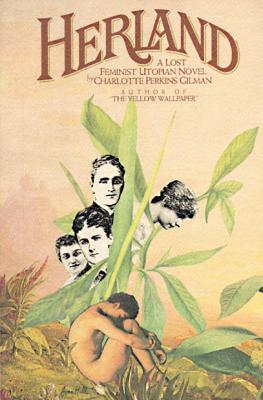
"Herland" explores a secluded, all-female society that has existed for two millennia, untouched by men. Three male adventurers stumble upon this utopian land, challenging its inhabitants' established norms and their own preconceptions about gender roles, societal structure, and human potential. The narrative unfolds as a social experiment, examining the strengths and weaknesses of a world shaped entirely by women.
This novel shares a striking kinship with "Erewhon" through their shared use of the "discovery narrative" to conduct biting social critiques. Both novels present an outsider's perspective on an isolated, seemingly ideal society, allowing for an incisive examination of conventional Western values and institutions—be it religion, justice, or gender dynamics—by presenting their radical inversions or alternatives. They are intellectual thought experiments disguised as adventures.
The enduring appeal of "Herland" lies in its prescient exploration of feminist ideals and societal constructs. It offers a thought-provoking challenge to patriarchal norms and provides a compelling vision of female agency and community, prompting reflection on what a truly equitable society might entail. Its insights into human nature and social engineering remain remarkably relevant.
Herland
"Herland" explores a secluded, all-female society that has existed for two millennia, untouched by men. Three male adventurers stumble upon this utopian land, challenging its inhabitants' established norms and their own preconceptions about gender roles, societal structure, and human potential. The narrative unfolds as a social experiment, examining the strengths and weaknesses of a world shaped entirely by women.
This novel shares a striking kinship with "Erewhon" through their shared use of the "discovery narrative" to conduct biting social critiques. Both novels present an outsider's perspective on an isolated, seemingly ideal society, allowing for an incisive examination of conventional Western values and institutions—be it religion, justice, or gender dynamics—by presenting their radical inversions or alternatives. They are intellectual thought experiments disguised as adventures.
The enduring appeal of "Herland" lies in its prescient exploration of feminist ideals and societal constructs. It offers a thought-provoking challenge to patriarchal norms and provides a compelling vision of female agency and community, prompting reflection on what a truly equitable society might entail. Its insights into human nature and social engineering remain remarkably relevant.
The Napoleon of Notting Hill

"The Napoleon of Notting Hill" posits a future London where local boroughs have reasserted their historic identities, reverting to medieval pageantry and civic rivalries. The plot centers on Auberon Quin, an eccentric king who instigates this revival, and Adam Wayne, a fiercely patriotic Notting Hill resident who takes these mock rivalries seriously, leading to escalating, theatrical "wars" over trivial matters that eventually turn genuinely destructive. It's a satire on local pride and the arbitrary nature of conflict.
This novel resonates with "Erewhon" through its use of a speculative, almost dreamlike society to critique contemporary values. Both books construct fantastical worlds governed by peculiar, seemingly illogical rules – Erewhon's illness as a crime, Notting Hill's territorial wars – that serve as thinly veiled allegories for societal absurdities. They both playfully yet incisively expose the arbitrary foundations of human laws and conventions.
The book will appeal to those who enjoy social satire disguised as whimsical adventure. It offers a thought-provoking exploration of patriotism, the dangers of performative politics, and how easily abstract ideals can lead to real-world consequences. Its blend of humor, philosophical musings, and a unique premise makes it a valuable commentary on human nature and the inherent silliness of our self-created divisions.
The Napoleon of Notting Hill
"The Napoleon of Notting Hill" posits a future London where local boroughs have reasserted their historic identities, reverting to medieval pageantry and civic rivalries. The plot centers on Auberon Quin, an eccentric king who instigates this revival, and Adam Wayne, a fiercely patriotic Notting Hill resident who takes these mock rivalries seriously, leading to escalating, theatrical "wars" over trivial matters that eventually turn genuinely destructive. It's a satire on local pride and the arbitrary nature of conflict.
This novel resonates with "Erewhon" through its use of a speculative, almost dreamlike society to critique contemporary values. Both books construct fantastical worlds governed by peculiar, seemingly illogical rules – Erewhon's illness as a crime, Notting Hill's territorial wars – that serve as thinly veiled allegories for societal absurdities. They both playfully yet incisively expose the arbitrary foundations of human laws and conventions.
The book will appeal to those who enjoy social satire disguised as whimsical adventure. It offers a thought-provoking exploration of patriotism, the dangers of performative politics, and how easily abstract ideals can lead to real-world consequences. Its blend of humor, philosophical musings, and a unique premise makes it a valuable commentary on human nature and the inherent silliness of our self-created divisions.
Odd John
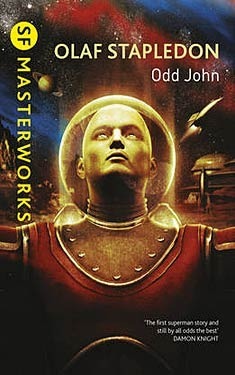
Olaf Stapledon's "Odd John" chronicles the life of John Wainwright, a super-intelligent mutant born into 20th-century England. Throughout the novel, John struggles with his profound intellectual superiority, his inability to connect with "normal" humanity, and his eventual quest to gather other such advanced individuals to form a utopian, isolated community where they can develop their extraordinary potential unchecked. The narrative explores themes of transhumanism, alienation, and the limitations of conventional societal structures.
"Odd John" resonates with "Erewhon" through its incisive critique of established social norms and institutions, particularly the justice system and education. Both novels present an outsider's perspective – be it John's superior intellect or Higgs's cultural shock – to highlight the arbitrary and often illogical nature of human conventions. A shared thread is the exploration of what constitutes an ideal society and the inherent challenges in achieving it when confronted with ingrained human behaviors and prejudices.
This novel offers a compelling intellectual journey into the possibilities and perils of radical societal evolution. Its exploration of advanced human potential against a backdrop of societal misunderstanding provides rich ground for contemplation on identity, progress, and the very definition of humanity. It offers a valuable lens through which to examine our own societal structures and biases, prompting reflection on our capacity for both innovation and resistance to change.
Odd John
Olaf Stapledon's "Odd John" chronicles the life of John Wainwright, a super-intelligent mutant born into 20th-century England. Throughout the novel, John struggles with his profound intellectual superiority, his inability to connect with "normal" humanity, and his eventual quest to gather other such advanced individuals to form a utopian, isolated community where they can develop their extraordinary potential unchecked. The narrative explores themes of transhumanism, alienation, and the limitations of conventional societal structures.
"Odd John" resonates with "Erewhon" through its incisive critique of established social norms and institutions, particularly the justice system and education. Both novels present an outsider's perspective – be it John's superior intellect or Higgs's cultural shock – to highlight the arbitrary and often illogical nature of human conventions. A shared thread is the exploration of what constitutes an ideal society and the inherent challenges in achieving it when confronted with ingrained human behaviors and prejudices.
This novel offers a compelling intellectual journey into the possibilities and perils of radical societal evolution. Its exploration of advanced human potential against a backdrop of societal misunderstanding provides rich ground for contemplation on identity, progress, and the very definition of humanity. It offers a valuable lens through which to examine our own societal structures and biases, prompting reflection on our capacity for both innovation and resistance to change.
The Last Chronicle of Barset

Anthony Trollope's "The Last Chronicle of Barset" meticulously details the professional and personal struggles of Josiah Crawley, a perpetual curate unjustly accused of theft. The novel provides a sweeping panorama of Victorian society, examining themes of reputation, class distinction, and the often-fraught interplay between individual morality and public perception, all set within the familiar, gently evolving social fabric of Barsetshire.
Both "The Last Chronicle of Barset" and "Erewhon" share a profound interest in societal critique, albeit through different lenses. While "Erewhon" employs satirical allegory to challenge fundamental beliefs about justice, progress, and punishment, Trollope’s work uses realistic character studies and intricate social dynamics to expose the hypocrisies and rigidities within established institutions, particularly the Church and the legal system. Both authors scrutinize the mechanisms by which society judges and processes deviation.
This novel will appeal to those who value incisive social commentary and rich character development. Its exploration of moral integrity under duress, the corrosive power of gossip, and the slow grind of institutional injustice resonates deeply, offering a nuanced reflection on human nature and the complexities of upholding one’s principles in a flawed world. It provides lasting insight into the enduring challenges of reputation and fairness.
The Last Chronicle of Barset
Anthony Trollope's "The Last Chronicle of Barset" meticulously details the professional and personal struggles of Josiah Crawley, a perpetual curate unjustly accused of theft. The novel provides a sweeping panorama of Victorian society, examining themes of reputation, class distinction, and the often-fraught interplay between individual morality and public perception, all set within the familiar, gently evolving social fabric of Barsetshire.
Both "The Last Chronicle of Barset" and "Erewhon" share a profound interest in societal critique, albeit through different lenses. While "Erewhon" employs satirical allegory to challenge fundamental beliefs about justice, progress, and punishment, Trollope’s work uses realistic character studies and intricate social dynamics to expose the hypocrisies and rigidities within established institutions, particularly the Church and the legal system. Both authors scrutinize the mechanisms by which society judges and processes deviation.
This novel will appeal to those who value incisive social commentary and rich character development. Its exploration of moral integrity under duress, the corrosive power of gossip, and the slow grind of institutional injustice resonates deeply, offering a nuanced reflection on human nature and the complexities of upholding one’s principles in a flawed world. It provides lasting insight into the enduring challenges of reputation and fairness.
When the Sleeper Wakes

"When the Sleeper Wakes" plunges protagonist Graham into a hyper-capitalist, technologically advanced London of 2100, where he awakens from a 203-year coma to discover his investments have made him the world's wealthiest man and titular owner of a global corporate trust. He attempts to use his immense power to reform society, only to find himself a pawn in a larger, oppressive system. The novel explores themes of social control, economic disparity, and the unforeseen consequences of technological progress.
Both novels critically examine societal structures and their inherent flaws through the lens of a protagonist encountering an unfamiliar, engineered world. "Erewhon" satirizes Victorian England's institutions through a utopian inversion, while Wells uses Graham's awakening to dissect a future shaped by unchecked industrialism and class stratification. Both authors employ speculative fiction to expose contemporary anxieties about progress and morality.
This book offers a compelling exploration of future societal evolution and the enduring struggle against systemic exploitation. It prompts reflection on the trajectory of technological advancement and the potential for vast wealth to corrupt both individuals and the systems they inhabit. The narrative's prescience regarding corporate power and social engineering makes it a fascinating read for those interested in dystopian literature and social commentary.
When the Sleeper Wakes
"When the Sleeper Wakes" plunges protagonist Graham into a hyper-capitalist, technologically advanced London of 2100, where he awakens from a 203-year coma to discover his investments have made him the world's wealthiest man and titular owner of a global corporate trust. He attempts to use his immense power to reform society, only to find himself a pawn in a larger, oppressive system. The novel explores themes of social control, economic disparity, and the unforeseen consequences of technological progress.
Both novels critically examine societal structures and their inherent flaws through the lens of a protagonist encountering an unfamiliar, engineered world. "Erewhon" satirizes Victorian England's institutions through a utopian inversion, while Wells uses Graham's awakening to dissect a future shaped by unchecked industrialism and class stratification. Both authors employ speculative fiction to expose contemporary anxieties about progress and morality.
This book offers a compelling exploration of future societal evolution and the enduring struggle against systemic exploitation. It prompts reflection on the trajectory of technological advancement and the potential for vast wealth to corrupt both individuals and the systems they inhabit. The narrative's prescience regarding corporate power and social engineering makes it a fascinating read for those interested in dystopian literature and social commentary.
The Pilgrim's Regress

C.S. Lewis's "The Pilgrim's Regress" is an allegorical novel tracing the intellectual and spiritual journey of John, a young man who leaves his idyllic homeland in search of a rumored "Island" of deeper truth. He encounters various philosophical systems, academic trends, and intellectual figures, each representing different ideologies and false paths to enlightenment, before ultimately finding his way to a more profound understanding of reality and faith. It’s a witty and incisive examination of the human quest for meaning.
Both "The Pilgrim's Regress" and "Erewhon" employ allegorical travelogues to satirize contemporary society and thought. Just as Butler uses Erewhon to critique Victorian customs, education, and religion through a fictional lens, Lewis uses John's journey through fantastic landscapes to dissect Western philosophical and religious movements of his time. Both novels are intellectual adventures, challenging readers to re-evaluate their own beliefs and societal norms through the eyes of an outsider.
This book offers a compelling exploration of intellectual exploration and spiritual longing. Its satirical elements and depth of thought make it a rewarding experience for those who appreciate philosophical fiction and allegories that prompt critical self-reflection. The journey resonates with anyone who has grappled with existential questions or felt disillusionment with conventional wisdom, providing both entertainment and profound insights.
The Pilgrim's Regress
C.S. Lewis's "The Pilgrim's Regress" is an allegorical novel tracing the intellectual and spiritual journey of John, a young man who leaves his idyllic homeland in search of a rumored "Island" of deeper truth. He encounters various philosophical systems, academic trends, and intellectual figures, each representing different ideologies and false paths to enlightenment, before ultimately finding his way to a more profound understanding of reality and faith. It’s a witty and incisive examination of the human quest for meaning.
Both "The Pilgrim's Regress" and "Erewhon" employ allegorical travelogues to satirize contemporary society and thought. Just as Butler uses Erewhon to critique Victorian customs, education, and religion through a fictional lens, Lewis uses John's journey through fantastic landscapes to dissect Western philosophical and religious movements of his time. Both novels are intellectual adventures, challenging readers to re-evaluate their own beliefs and societal norms through the eyes of an outsider.
This book offers a compelling exploration of intellectual exploration and spiritual longing. Its satirical elements and depth of thought make it a rewarding experience for those who appreciate philosophical fiction and allegories that prompt critical self-reflection. The journey resonates with anyone who has grappled with existential questions or felt disillusionment with conventional wisdom, providing both entertainment and profound insights.
A Fantasy of Dr. Ox
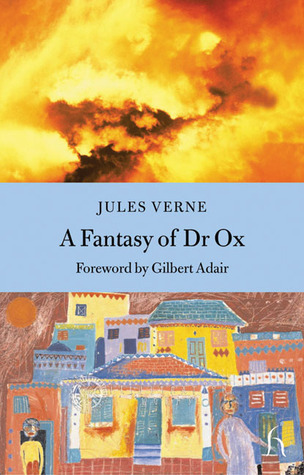
Jules Verne’s *A Fantasy of Dr. Ox* tells the tale of Quiquendone, a meticulously placid Belgian town where life unfolds at an impossibly slow pace. The introduction of Dr. Ox, a mysterious scientist, and his scheme to introduce oxygen into the town's atmosphere dramatically accelerates everything – from plants growing wildly to the inhabitants’ passions and conflicts erupting into chaos, ultimately revealing the profound impact of unseen forces on societal behavior.
This novella shares *Erewhon’s* incisive social commentary. Both works use fantastical, isolated settings to dissect human nature and societal constructs. Just as Butler satirizes Victorian society through Erewhonian institutions, Verne highlights the profound, and often humorous, effects of external catalysts on an otherwise stagnant community, questioning the very foundations of tranquility and progress.
It will appeal to those who appreciate works exploring hypothetical social experiments and the inherent flaws or eccentricities of human society. The work offers a concise yet potent examination of how easily external factors can disrupt established norms, prompting reflection on the balance between order and passion, and the often-unseen mechanisms that govern our collective lives.
A Fantasy of Dr. Ox
Jules Verne’s *A Fantasy of Dr. Ox* tells the tale of Quiquendone, a meticulously placid Belgian town where life unfolds at an impossibly slow pace. The introduction of Dr. Ox, a mysterious scientist, and his scheme to introduce oxygen into the town's atmosphere dramatically accelerates everything – from plants growing wildly to the inhabitants’ passions and conflicts erupting into chaos, ultimately revealing the profound impact of unseen forces on societal behavior.
This novella shares *Erewhon’s* incisive social commentary. Both works use fantastical, isolated settings to dissect human nature and societal constructs. Just as Butler satirizes Victorian society through Erewhonian institutions, Verne highlights the profound, and often humorous, effects of external catalysts on an otherwise stagnant community, questioning the very foundations of tranquility and progress.
It will appeal to those who appreciate works exploring hypothetical social experiments and the inherent flaws or eccentricities of human society. The work offers a concise yet potent examination of how easily external factors can disrupt established norms, prompting reflection on the balance between order and passion, and the often-unseen mechanisms that govern our collective lives.
More Books to Explore
Discover more titles that expand on these ideas and themes.
The Way of All Flesh
The Food of the Gods and How It Came to Earth
The Other Side of the Hedge; The Celestial Omnibus
Herland
The Napoleon of Notting Hill
Odd John