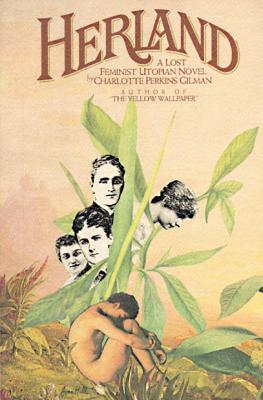
Herland
Book Description
Imagine a world where women thrive in harmony, untouched by patriarchal chaos. In 'Herland', three adventurous men stumble upon an isolated society of women who have created a utopia without men. As they navigate this mysterious land, their ingrained beliefs are challenged, and long-buried tensions bubble to the surface. Can human nature evolve when stripped of traditional roles? The women’s strength and the men's bewilderment collide, igniting a fiery exploration of gender, power, and identity. Will they embrace this radical new reality, or will it shatter their understanding of humanity? What awaits when the tables are turned?
Quick Book Summary
"Herland" by Charlotte Perkins Gilman imagines a utopian society inhabited solely by women, discovered by three male explorers: Vandyck, Terry, and Jeff. In this secluded world, women have built a peaceful, cooperative civilization without war, violence, or poverty. The men arrive expecting inferiority and chaos, but are confronted by a highly advanced society that subverts their expectations of femininity and power. Through their encounters, the men are forced to confront their own biases and assumptions about gender roles, motherhood, and coexistence. Gilman uses Herland as a vehicle to explore feminist themes, contrasting patriarchal norms with the successes of a woman-centered world, and invites readers to imagine new possibilities for social structure and gender relations.





Summary of Key Ideas
Table of Contents
Gender Roles and Stereotypes Questioned
Three male explorers—Vandyck Jennings (the narrator), Terry O. Nicholson, and Jeff Margrave—set out to find a rumored lost land inhabited only by women. After a challenging trek, they discover Herland, an isolated nation where women have survived without men for over two millennia. The society is highly organized, cooperative, and harmonious, with no sign of violence, poverty, or crime. The men are captured and treated humanely, but with intense curiosity by the Herland women, who seek to understand their visitors without fear or hostility.
Utopian Society and Social Organization
As guests (and subjects of study) in Herland, the men gradually learn the language and customs of the society. They struggle to comprehend the absence of individual ownership, the communal upbringing of children, and the total lack of traditional family structures. Herland’s women reproduce by parthenogenesis, rendering men biologically unnecessary. Education, mutual respect, and the welfare of all drive every aspect of life. The explorers’ ingrained beliefs about women and civilization are repeatedly challenged, leading to moments of self-doubt and cultural shock.
Motherhood and Community
The society’s organization is presented as a corrective to the patriarchal systems the men left behind. Herland's lack of competitive, possessive, or destructive tendencies is contrasted sharply with the flaws of male-dominated societies. The women have developed advanced agricultural techniques, sustainable cities, and a system of justice focused on restoration rather than punishment. Motherhood, here, is sacred but communal; each woman feels responsible for all the children and, by extension, the entire society. This orientation transforms notions of family, love, and duty.
Male Outsiders and Cultural Conflict
Interpersonal and philosophical tensions rise as the men develop different responses to Herland. Jeff, gentle and idealistic, is enchanted by the society and adapts readily, while Van maintains a scientific curiosity. Terry, more chauvinistic, resists, viewing the women's lack of submission as a threat. Romantic tensions arise when the explorers court three Herland women, culminating in revelations about autonomy, consent, and partnership. The trio’s interactions with their hosts expose the limitations of their own cultural indoctrination and illuminate the possibilities of an egalitarian order.
The Nature of Power and Equality
Ultimately, "Herland" is an incisive meditation on the constructedness of gender roles and societal norms. Gilman invites readers to interrogate the foundations of their own society and consider how alternative structures might foster well-being and equality. The men’s journey—one of confrontation, adaptation, and, for some, rebellion—spotlights the tension between the desire for domination and the potential for cooperative existence. In crafting a society devoid of patriarchal hierarchy but rich in shared purpose, Gilman offers a radical and hopeful vision for the possibilities of human organization and gender relations.
Download This Summary
Get a free PDF of this summary instantly — no email required.