10 Books Similar to "Austerlitz"
by W.G. Sebald

The Emigrants
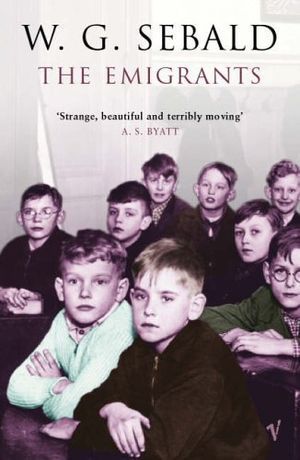
"The Emigrants" is a collection of four interconnected narratives, each exploring the lives of individuals displaced by historical circumstances, predominantly the Holocaust. The unnamed narrator, Sebald's alter ego, encounters these figures—a former teacher, a Jewish refugee, a German-Jewish émigré, and a painter—and meticulously reconstructs their fragmented pasts, often through decaying photographs, personal anecdotes, and historical documents. The book delves into themes of memory, loss, and the enduring psychological impact of trauma and exile.
Its kinship with "Austerlitz" lies in its shared thematic concerns and a distinctive narrative methodology. Both novels employ Sebald’s hallmark blend of fact and fiction, weaving together meticulously researched historical details with deeply personal, often melancholic, reflections. The meandering, digressive prose, the uncaptioned photographs, and the pervasive sense of elegy for lost lives and vanishing histories are consistent across both works. Both protagonists are driven by an obsessive quest to understand and articulate the past, echoing Sebald’s recurring exploration of inherited trauma and the burden of remembrance.
This book will resonate with those who appreciate profound meditations on history's indelible mark on individual lives. It offers a unique literary experience, blurring the lines between art and documentary, and prompting a deeper contemplation of memory's inherent unreliability and its power to shape identity. The meticulous detail and evocative prose provide a rich, immersive understanding of the human cost of historical upheaval, making it a significant work in contemporary literature.
The Emigrants
"The Emigrants" is a collection of four interconnected narratives, each exploring the lives of individuals displaced by historical circumstances, predominantly the Holocaust. The unnamed narrator, Sebald's alter ego, encounters these figures—a former teacher, a Jewish refugee, a German-Jewish émigré, and a painter—and meticulously reconstructs their fragmented pasts, often through decaying photographs, personal anecdotes, and historical documents. The book delves into themes of memory, loss, and the enduring psychological impact of trauma and exile.
Its kinship with "Austerlitz" lies in its shared thematic concerns and a distinctive narrative methodology. Both novels employ Sebald’s hallmark blend of fact and fiction, weaving together meticulously researched historical details with deeply personal, often melancholic, reflections. The meandering, digressive prose, the uncaptioned photographs, and the pervasive sense of elegy for lost lives and vanishing histories are consistent across both works. Both protagonists are driven by an obsessive quest to understand and articulate the past, echoing Sebald’s recurring exploration of inherited trauma and the burden of remembrance.
This book will resonate with those who appreciate profound meditations on history's indelible mark on individual lives. It offers a unique literary experience, blurring the lines between art and documentary, and prompting a deeper contemplation of memory's inherent unreliability and its power to shape identity. The meticulous detail and evocative prose provide a rich, immersive understanding of the human cost of historical upheaval, making it a significant work in contemporary literature.
Vertigo

"Vertigo" navigates the elusive nature of memory, identity, and the unsettling repetition found in history and personal experience, often blurring the lines between autobiography, fiction, and travelogue. Sebald, as the narrator, journeys through various European landscapes, encountering figures and moments that resonate with his own internal disquiet, exploring the profound influence of place and the past on the present self.
Its similarity to "Austerlitz" lies in their shared thematic core: the pervasive weight of historical trauma and the arduous, often incomplete, process of recall. Both novels employ Sebald's distinctive narrative style, characterized by a melancholic, wandering voice, black-and-white photographs interspersed with text, and an interrogation of what remains after profound loss. Both protagonists are adrift, seeking meaning in the shards of fragmented memory.
This book rewards those who appreciate deeply introspective and philosophical narratives that defy traditional genre boundaries. It offers a powerful meditation on the human condition, the lasting echoes of the past, and the subjective reconstruction of reality. Its evocative prose and unique structure provide a rich, immersive experience, prompting reflection on one's own relationship with memory and history.
Vertigo
"Vertigo" navigates the elusive nature of memory, identity, and the unsettling repetition found in history and personal experience, often blurring the lines between autobiography, fiction, and travelogue. Sebald, as the narrator, journeys through various European landscapes, encountering figures and moments that resonate with his own internal disquiet, exploring the profound influence of place and the past on the present self.
Its similarity to "Austerlitz" lies in their shared thematic core: the pervasive weight of historical trauma and the arduous, often incomplete, process of recall. Both novels employ Sebald's distinctive narrative style, characterized by a melancholic, wandering voice, black-and-white photographs interspersed with text, and an interrogation of what remains after profound loss. Both protagonists are adrift, seeking meaning in the shards of fragmented memory.
This book rewards those who appreciate deeply introspective and philosophical narratives that defy traditional genre boundaries. It offers a powerful meditation on the human condition, the lasting echoes of the past, and the subjective reconstruction of reality. Its evocative prose and unique structure provide a rich, immersive experience, prompting reflection on one's own relationship with memory and history.
The Rings of Saturn
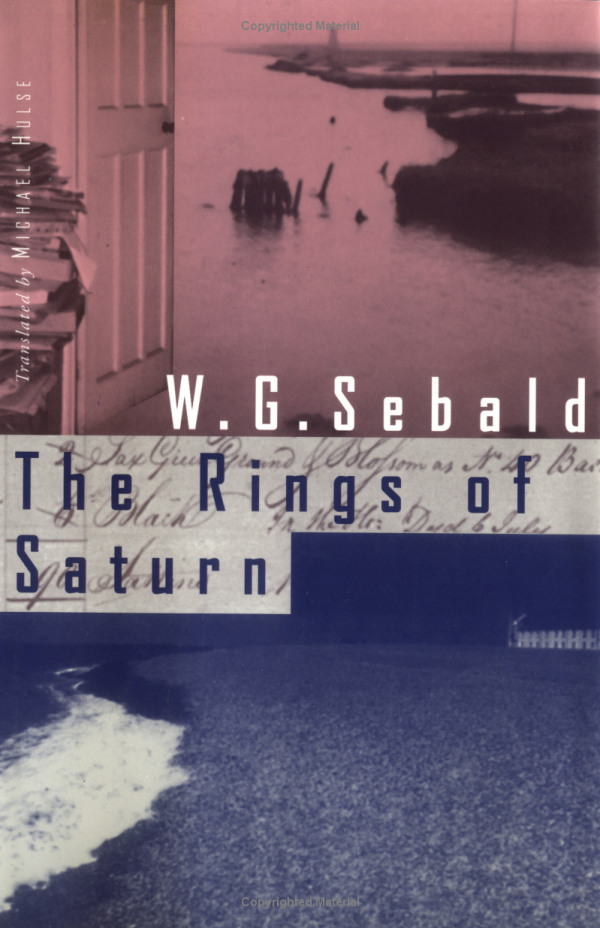
"The Rings of Saturn" chronicles Sebald's walking tour through rural Suffolk, England. However, this seemingly simple travelogue expands into a profound meditation on history, memory, decay, and environmental devastation. Through observations of landscapes, architecture, and personal encounters, the narrator weaves together narratives of silk production, colonialism, forgotten battles, and the slow erasure of human endeavor. It’s a work of non-fiction, blending historical research, memoir, and philosophical inquiry.
Both "The Rings of Saturn" and "Austerlitz" share Sebald's distinctive narrative style: a melancholic, digressive, and associative prose often accompanied by uncaptioned photographs. Both books explore the lingering presence of the past, the burden of history, and the fragility of human existence. They are journeys into personal and collective memory, characterized by a deep sense of loss and a meticulous, almost forensic, examination of forgotten lives and events.
This book offers a unique literary experience for those who appreciate intellectual profundidad and evocative prose. It provides a rich tapestry of historical insights and philosophical reflections, encouraging a deeper engagement with the world's hidden narratives and the poignant beauty of its impermanence. Its contemplative nature and masterful blend of fact and introspection makes it a valuable journey into the human condition.
The Rings of Saturn
"The Rings of Saturn" chronicles Sebald's walking tour through rural Suffolk, England. However, this seemingly simple travelogue expands into a profound meditation on history, memory, decay, and environmental devastation. Through observations of landscapes, architecture, and personal encounters, the narrator weaves together narratives of silk production, colonialism, forgotten battles, and the slow erasure of human endeavor. It’s a work of non-fiction, blending historical research, memoir, and philosophical inquiry.
Both "The Rings of Saturn" and "Austerlitz" share Sebald's distinctive narrative style: a melancholic, digressive, and associative prose often accompanied by uncaptioned photographs. Both books explore the lingering presence of the past, the burden of history, and the fragility of human existence. They are journeys into personal and collective memory, characterized by a deep sense of loss and a meticulous, almost forensic, examination of forgotten lives and events.
This book offers a unique literary experience for those who appreciate intellectual profundidad and evocative prose. It provides a rich tapestry of historical insights and philosophical reflections, encouraging a deeper engagement with the world's hidden narratives and the poignant beauty of its impermanence. Its contemplative nature and masterful blend of fact and introspection makes it a valuable journey into the human condition.
Liquidation

*Liquidation* by Imre Kertész explores the aftermath of the Holocaust through the eyes of a writer tasked with liquidating the estate of a deceased, enigmatic author named B. The novel delves into B.'s unfinished manuscript, a fragmented biography that reveals his profound struggle with memory, identity, and the inability to fully articulate the unspeakable horrors he witnessed. It’s a haunting meditation on the elusive nature of truth and the enduring burden of trauma.
The similarity to Sebald's *Austerlitz* lies in their shared exploration of historical trauma and the fragmented nature of memory, often viewed through an intensely intellectual and melancholic lens. Both novels feature protagonists grappling with a past they cannot fully comprehend or escape, employing a reflective, almost investigative prose style to piece together lives irrevocably shaped by historical catastrophe. The elusive nature of the central figures' identities and the impact of catastrophic events on their psychological landscapes form a strong thematic bridge.
This book will appeal to those who value literature that engages deeply with history, memory, and the human condition's profound complexities. Its intellectual rigor and philosophical depth offer a challenging yet rewarding experience, prompting introspection on how individuals and societies grapple with unthinkable pasts. The novel's stark honesty and poetic melancholy provide a powerful and enduring reflection on the enduring impact of collective suffering.
Liquidation
*Liquidation* by Imre Kertész explores the aftermath of the Holocaust through the eyes of a writer tasked with liquidating the estate of a deceased, enigmatic author named B. The novel delves into B.'s unfinished manuscript, a fragmented biography that reveals his profound struggle with memory, identity, and the inability to fully articulate the unspeakable horrors he witnessed. It’s a haunting meditation on the elusive nature of truth and the enduring burden of trauma.
The similarity to Sebald's *Austerlitz* lies in their shared exploration of historical trauma and the fragmented nature of memory, often viewed through an intensely intellectual and melancholic lens. Both novels feature protagonists grappling with a past they cannot fully comprehend or escape, employing a reflective, almost investigative prose style to piece together lives irrevocably shaped by historical catastrophe. The elusive nature of the central figures' identities and the impact of catastrophic events on their psychological landscapes form a strong thematic bridge.
This book will appeal to those who value literature that engages deeply with history, memory, and the human condition's profound complexities. Its intellectual rigor and philosophical depth offer a challenging yet rewarding experience, prompting introspection on how individuals and societies grapple with unthinkable pasts. The novel's stark honesty and poetic melancholy provide a powerful and enduring reflection on the enduring impact of collective suffering.
Journey into the Past

Stefan Zweig's novella "Journey into the Past" tells the story of a young man, a private secretary, who falls deeply in love with his employer's wife just before the outbreak of World War I. Their intense, short-lived affair is abruptly severed by the war, which separates them for decades. He returns many years later, hoping to rekindle their connection, only to find a world, and a woman, irrevocably changed by the passage of time and historical trauma.
The profound similarity to Sebald's "Austerlitz" lies in its poignant exploration of memory's frailty, the haunting impact of history on individual lives, and the melancholic search for lost connections. Both narratives employ a reflective, almost elegiac tone, as their protagonists grapple with personal pasts intertwined with larger societal upheavals, presenting a fragmented reality colored by nostalgia and the weight of what has been lost.
This novella will resonate with those who appreciate literature that delves into the subjective experience of time and loss, offering a profound meditation on how global events shape personal destinies. It provides an intimate, evocative portrayal of human resilience and vulnerability in the face of overwhelming historical forces, encouraging contemplation on the nature of remembrance and the enduring power of love and regret.
Journey into the Past
Stefan Zweig's novella "Journey into the Past" tells the story of a young man, a private secretary, who falls deeply in love with his employer's wife just before the outbreak of World War I. Their intense, short-lived affair is abruptly severed by the war, which separates them for decades. He returns many years later, hoping to rekindle their connection, only to find a world, and a woman, irrevocably changed by the passage of time and historical trauma.
The profound similarity to Sebald's "Austerlitz" lies in its poignant exploration of memory's frailty, the haunting impact of history on individual lives, and the melancholic search for lost connections. Both narratives employ a reflective, almost elegiac tone, as their protagonists grapple with personal pasts intertwined with larger societal upheavals, presenting a fragmented reality colored by nostalgia and the weight of what has been lost.
This novella will resonate with those who appreciate literature that delves into the subjective experience of time and loss, offering a profound meditation on how global events shape personal destinies. It provides an intimate, evocative portrayal of human resilience and vulnerability in the face of overwhelming historical forces, encouraging contemplation on the nature of remembrance and the enduring power of love and regret.
Siegfried: A Black Idyll

Harry Mulisch's *Siegfried: A Black Idyll* delves into the chilling premise that Adolf Hitler had a secret child, a son named Siegfried, and explores the profound implications for humanity if this child were to exist. Through a fictional novelist's investigation, the narrative unearths a disturbing theory about the origins of evil and the inherent darkness within human nature, connecting it to Hitler's personal history and philosophical beliefs. It’s a compelling exploration of heredity, destiny, and the shadow cast by historical atrocities.
Both *Siegfried* and Sebald's *Austerlitz* share a profound engagement with the enduring legacy of the Holocaust and its psychological scars. While *Austerlitz* traces the personal journey of an individual grappling with recovered memories of persecution, *Siegfried* interrogates the very genesis of the perpetrator's ideology and potential genetic transmission of evil. Both novels employ meticulous research and a probing, contemplative tone to excavate uncomfortable truths about history and identity, often blurring the lines between fiction and historical inquiry.
This book offers a deeply resonant experience for those who appreciate complex philosophical fiction that confronts the darkest chapters of human history. Its exploration of moral responsibility, the nature of evil, and the haunting echo of the past provides fertile ground for reflection and intellectual engagement. It is a work that challenges preconceptions and invites a profound contemplation of what it means to be human in the face of unspeakable acts.
Siegfried: A Black Idyll
Harry Mulisch's *Siegfried: A Black Idyll* delves into the chilling premise that Adolf Hitler had a secret child, a son named Siegfried, and explores the profound implications for humanity if this child were to exist. Through a fictional novelist's investigation, the narrative unearths a disturbing theory about the origins of evil and the inherent darkness within human nature, connecting it to Hitler's personal history and philosophical beliefs. It’s a compelling exploration of heredity, destiny, and the shadow cast by historical atrocities.
Both *Siegfried* and Sebald's *Austerlitz* share a profound engagement with the enduring legacy of the Holocaust and its psychological scars. While *Austerlitz* traces the personal journey of an individual grappling with recovered memories of persecution, *Siegfried* interrogates the very genesis of the perpetrator's ideology and potential genetic transmission of evil. Both novels employ meticulous research and a probing, contemplative tone to excavate uncomfortable truths about history and identity, often blurring the lines between fiction and historical inquiry.
This book offers a deeply resonant experience for those who appreciate complex philosophical fiction that confronts the darkest chapters of human history. Its exploration of moral responsibility, the nature of evil, and the haunting echo of the past provides fertile ground for reflection and intellectual engagement. It is a work that challenges preconceptions and invites a profound contemplation of what it means to be human in the face of unspeakable acts.
The Dark Room

"The Dark Room" by Rachel Seiffert explores the intergenerational impact of Germany's Nazi past through three distinct narratives. It delves into how individuals grapple with inherited guilt, complicity, and the fragmented memories of a history they did not directly experience but which profoundly shapes their lives and identities.
Both novels share a profound preoccupation with the weight of the past and its lingering presence in the contemporary world. Like "Austerlitz," "The Dark Room" employs a contemplative, often melancholic tone to explore themes of displacement, the search for identity, and memory's elusive nature. They both engage with history not as a set of facts, but as a living, breathing force that continues to resonate and define.
This work offers a compelling intellectual and emotional journey, prompting reflection on historical accountability and the complex ways in which national narratives intersect with personal lives. It provides a nuanced understanding of trauma's legacy and the enduring human struggle to reconcile with uncomfortable truths, thus enriching one's perspective on enduring historical questions.
The Dark Room
"The Dark Room" by Rachel Seiffert explores the intergenerational impact of Germany's Nazi past through three distinct narratives. It delves into how individuals grapple with inherited guilt, complicity, and the fragmented memories of a history they did not directly experience but which profoundly shapes their lives and identities.
Both novels share a profound preoccupation with the weight of the past and its lingering presence in the contemporary world. Like "Austerlitz," "The Dark Room" employs a contemplative, often melancholic tone to explore themes of displacement, the search for identity, and memory's elusive nature. They both engage with history not as a set of facts, but as a living, breathing force that continues to resonate and define.
This work offers a compelling intellectual and emotional journey, prompting reflection on historical accountability and the complex ways in which national narratives intersect with personal lives. It provides a nuanced understanding of trauma's legacy and the enduring human struggle to reconcile with uncomfortable truths, thus enriching one's perspective on enduring historical questions.
The Book of Words

Jenny Erpenbeck's "The Book of Words" explores the profound impact of language and its absence on a young girl navigating a totalitarian regime. As she witnesses the slow erosion of meaning and truth through euphemisms and forced narratives, her internal world becomes a battleground where words hold immense, often terrifying, power. The novel subtly illuminates the individual's struggle against ideological manipulation and the devastating consequences of systemic untruth.
This resonates strongly with Sebald's "Austerlitz" through its shared thematic interest in memory, trauma, and the fragmented nature of identity. Both novels employ a meticulous, reflective prose style, blurring the lines between fiction and historical inquiry. They delve into the existential weight of historical injustice and the individual's often futile attempt to reconstruct a coherent past amidst societal upheaval. Both protagonists are outsiders, haunted by legacies they struggle to comprehend, piecing together narratives from disparate clues.
This book offers a compelling intellectual journey, inviting reflection on the power of language as both a tool of oppression and a means of resistance. It provides a nuanced exploration of historical memory and the individual's place within grand, often disturbing, narratives. Its artistic merit lies in its subtle yet powerful portrayal of human resilience and the enduring quest for truth, making it a significant contribution to contemporary literature examining the intersection of history, language, and personal experience.
The Book of Words
Jenny Erpenbeck's "The Book of Words" explores the profound impact of language and its absence on a young girl navigating a totalitarian regime. As she witnesses the slow erosion of meaning and truth through euphemisms and forced narratives, her internal world becomes a battleground where words hold immense, often terrifying, power. The novel subtly illuminates the individual's struggle against ideological manipulation and the devastating consequences of systemic untruth.
This resonates strongly with Sebald's "Austerlitz" through its shared thematic interest in memory, trauma, and the fragmented nature of identity. Both novels employ a meticulous, reflective prose style, blurring the lines between fiction and historical inquiry. They delve into the existential weight of historical injustice and the individual's often futile attempt to reconstruct a coherent past amidst societal upheaval. Both protagonists are outsiders, haunted by legacies they struggle to comprehend, piecing together narratives from disparate clues.
This book offers a compelling intellectual journey, inviting reflection on the power of language as both a tool of oppression and a means of resistance. It provides a nuanced exploration of historical memory and the individual's place within grand, often disturbing, narratives. Its artistic merit lies in its subtle yet powerful portrayal of human resilience and the enduring quest for truth, making it a significant contribution to contemporary literature examining the intersection of history, language, and personal experience.
The Book of Illusions
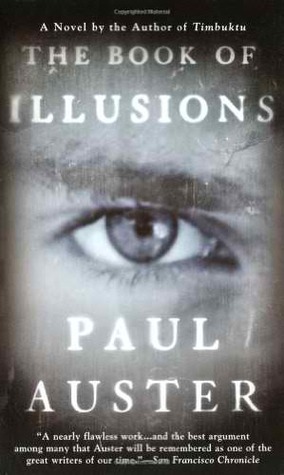
Paul Auster's "The Book of Illusions" centers on David Zimmer, a literature professor reeling from the loss of his family in a plane crash. He finds solace, and a new obsession, in the silent films of a forgotten comedian named Hector Mann. Zimmer embarks on a quest to locate Mann, encountering a cast of enigmatic characters and unraveling a complex narrative that blurs the lines between art, life, and illusion.
The two novels share a profound interest in memory, loss, and the search for identity through historical traces. Both protagonists, Zimmer and Austerlitz, are solitary figures burdened by trauma, who find themselves compelled to excavate forgotten histories – be it of a silent film star or a Holocaust survivor. The melancholic tone, fragmented narratives, and deep engagement with the past create a palpable resonance between the works.
This book offers a compelling exploration of grief, the subjective nature of truth, and the enduring power of visual storytelling. Its intricate plotting and philosophical undertones provide a rich intellectual experience, while the emotionally charged journey of its protagonist offers a deeply empathetic connection. It stands as a testament to the ways we reconstruct meaning from fragments of the past.
The Book of Illusions
Paul Auster's "The Book of Illusions" centers on David Zimmer, a literature professor reeling from the loss of his family in a plane crash. He finds solace, and a new obsession, in the silent films of a forgotten comedian named Hector Mann. Zimmer embarks on a quest to locate Mann, encountering a cast of enigmatic characters and unraveling a complex narrative that blurs the lines between art, life, and illusion.
The two novels share a profound interest in memory, loss, and the search for identity through historical traces. Both protagonists, Zimmer and Austerlitz, are solitary figures burdened by trauma, who find themselves compelled to excavate forgotten histories – be it of a silent film star or a Holocaust survivor. The melancholic tone, fragmented narratives, and deep engagement with the past create a palpable resonance between the works.
This book offers a compelling exploration of grief, the subjective nature of truth, and the enduring power of visual storytelling. Its intricate plotting and philosophical undertones provide a rich intellectual experience, while the emotionally charged journey of its protagonist offers a deeply empathetic connection. It stands as a testament to the ways we reconstruct meaning from fragments of the past.
Kaddish for an Unborn Child

"Kaddish for an Unborn Child" navigates the profound despair of a survivor who, having endured the Holocaust, chooses not to have children. The narrative unfolds as an internal monologue, a bitter "kaddish" (a Jewish prayer for the dead) for the child he never conceived, arguing that to bring life into a world forever scarred by such atrocities would be an act of unjustifiable cruelty. It's a raw, unflinching exploration of inherited trauma and the ethical dilemmas of procreation in its shadow.
The kinship with "Austerlitz" lies in their shared exploration of generational trauma and the haunting legacy of the Holocaust. Both novels delve into the psychological weight carried by individuals grappling with a catastrophic past they did not directly experience but are nonetheless profoundly shaped by. They eschew conventional plot for a meandering, introspective style that prioritizes memory, reflection, and the fragmented nature of historical understanding. Sebald's enigmatic narrator and Kertész's internal dialogues create a similar experiential immersion for the reader.
This work offers a deeply resonant inquiry into the consequences of historical violence on individual choice and identity. It appeals to those seeking literature that grapples with profound existential questions, particularly regarding memory, suffering, and the ethical responsibilities of human existence in the aftermath of atrocity. The novel’s unsparing honesty and intellectual rigor provide a powerful contemplation of life’s meaning when confronted with its darkest chapters.
Kaddish for an Unborn Child
"Kaddish for an Unborn Child" navigates the profound despair of a survivor who, having endured the Holocaust, chooses not to have children. The narrative unfolds as an internal monologue, a bitter "kaddish" (a Jewish prayer for the dead) for the child he never conceived, arguing that to bring life into a world forever scarred by such atrocities would be an act of unjustifiable cruelty. It's a raw, unflinching exploration of inherited trauma and the ethical dilemmas of procreation in its shadow.
The kinship with "Austerlitz" lies in their shared exploration of generational trauma and the haunting legacy of the Holocaust. Both novels delve into the psychological weight carried by individuals grappling with a catastrophic past they did not directly experience but are nonetheless profoundly shaped by. They eschew conventional plot for a meandering, introspective style that prioritizes memory, reflection, and the fragmented nature of historical understanding. Sebald's enigmatic narrator and Kertész's internal dialogues create a similar experiential immersion for the reader.
This work offers a deeply resonant inquiry into the consequences of historical violence on individual choice and identity. It appeals to those seeking literature that grapples with profound existential questions, particularly regarding memory, suffering, and the ethical responsibilities of human existence in the aftermath of atrocity. The novel’s unsparing honesty and intellectual rigor provide a powerful contemplation of life’s meaning when confronted with its darkest chapters.
More Books to Explore
Discover more titles that expand on these ideas and themes.
The Emigrants
Vertigo
The Rings of Saturn
Liquidation
Journey into the Past
Siegfried: A Black Idyll