10 Books Similar to "A Social Ontology"
by David Weissman
The Social Construction of Reality: A Treatise in the Sociology of Knowledge

"The Social Construction of Reality" explores how our understanding of the world isn't a fixed, objective truth, but rather something created and maintained through human interaction and shared meanings. Berger and Luckmann argue that what we consider "reality" – from institutions like marriage to abstract concepts like justice – is learned and reinforced within society, becoming solidified as objective truth over time. It delves into the processes by which individuals internalize these social frameworks, shaping their perceptions and actions.
The two books share a fundamental interest in the nature of social existence. Both endeavor to uncover the underlying structures and processes that give rise to social phenomena. While Weissman's "A Social Ontology" investigates the very being of social entities, Berger's "Social Construction of Reality" focuses on the epistemological aspect, detailing how these entities become known and accepted as real within a social context. They both offer frameworks for understanding the origins and persistence of social structures.
This book offers a profound lens for understanding why societies function as they do and how our perceptions are shaped. It encourages a critical examination of seemingly self-evident truths, revealing their often arbitrary, socially constituted origins. Anyone interested in sociology, philosophy, or simply a deeper understanding of human society and its influence on individual experience will find its insights invaluable.
The Social Construction of Reality: A Treatise in the Sociology of Knowledge
"The Social Construction of Reality" explores how our understanding of the world isn't a fixed, objective truth, but rather something created and maintained through human interaction and shared meanings. Berger and Luckmann argue that what we consider "reality" – from institutions like marriage to abstract concepts like justice – is learned and reinforced within society, becoming solidified as objective truth over time. It delves into the processes by which individuals internalize these social frameworks, shaping their perceptions and actions.
The two books share a fundamental interest in the nature of social existence. Both endeavor to uncover the underlying structures and processes that give rise to social phenomena. While Weissman's "A Social Ontology" investigates the very being of social entities, Berger's "Social Construction of Reality" focuses on the epistemological aspect, detailing how these entities become known and accepted as real within a social context. They both offer frameworks for understanding the origins and persistence of social structures.
This book offers a profound lens for understanding why societies function as they do and how our perceptions are shaped. It encourages a critical examination of seemingly self-evident truths, revealing their often arbitrary, socially constituted origins. Anyone interested in sociology, philosophy, or simply a deeper understanding of human society and its influence on individual experience will find its insights invaluable.
The Social Animal: The Hidden Sources of Love, Character, and Achievement

"The Social Animal" by David Brooks delves into the unconscious minds of two fictional characters, Harold and Erica, tracing the psychological and social forces that shape their lives from childhood through old age. It explores how our deepest emotions, attachments, and non-rational biases profoundly influence our decisions, relationships, and ultimate success or failure, often in ways we ourselves don't fully comprehend.
This work echoes "A Social Ontology" in its foundational premise: that human existence is deeply, perhaps primarily, social. While Weissman constructs a philosophical framework for understanding social entities and their properties, Brooks offers a narrative exploration of how these social realities concretely manifest in individual lives, demonstrating the "hidden sources" of character and achievement within a social fabric. Both books illuminate the pervasive influence of our collective environment on the individual.
This book offers a compelling narrative that illuminates the intricate, often unseen, mechanisms driving human behavior and societal interaction. It provides a nuanced understanding of character development, the formation of relationships, and the sociological underpinnings of individual achievement. The insights gained can foster a deeper self-awareness and a more empathetic perspective on others, proving invaluable for anyone seeking to navigate the complexities of human experience and social dynamics.
The Social Animal: The Hidden Sources of Love, Character, and Achievement
"The Social Animal" by David Brooks delves into the unconscious minds of two fictional characters, Harold and Erica, tracing the psychological and social forces that shape their lives from childhood through old age. It explores how our deepest emotions, attachments, and non-rational biases profoundly influence our decisions, relationships, and ultimate success or failure, often in ways we ourselves don't fully comprehend.
This work echoes "A Social Ontology" in its foundational premise: that human existence is deeply, perhaps primarily, social. While Weissman constructs a philosophical framework for understanding social entities and their properties, Brooks offers a narrative exploration of how these social realities concretely manifest in individual lives, demonstrating the "hidden sources" of character and achievement within a social fabric. Both books illuminate the pervasive influence of our collective environment on the individual.
This book offers a compelling narrative that illuminates the intricate, often unseen, mechanisms driving human behavior and societal interaction. It provides a nuanced understanding of character development, the formation of relationships, and the sociological underpinnings of individual achievement. The insights gained can foster a deeper self-awareness and a more empathetic perspective on others, proving invaluable for anyone seeking to navigate the complexities of human experience and social dynamics.
The Social Animal
"The Social Animal" delves into the fascinating world of human social psychology, explaining how and why we think, feel, and behave in groups and relationships. It explores phenomena like conformity, prejudice, aggression, and attraction, grounding these complex behaviors in accessible psychological principles and real-world examples. This book offers a comprehensive yet engaging survey of the forces that shape our social existence.
Its similarity to "A Social Ontology" lies in its foundational exploration of how our social world is constructed and experienced. While Weissman's work provides a more philosophical and abstract framework for understanding social entities and their properties, Aronson’s book offers the empirical and psychological counterpoint, showing *how* these social structures and interactions manifest in individual and group behavior. Both works seek to demystify the nature of our shared reality, one through conceptual analysis, the other through scientific observation.
This book appeals to anyone curious about human nature and the societal forces that influence us daily. It provides valuable insights for understanding personal interactions, workplace dynamics, and broader social issues, offering tools for critical thinking about our own biases and the motivations of others. It’s an enlightening read for those seeking a deeper appreciation of the intricate tapestry of human social life.
The Social Animal
"The Social Animal" delves into the fascinating world of human social psychology, explaining how and why we think, feel, and behave in groups and relationships. It explores phenomena like conformity, prejudice, aggression, and attraction, grounding these complex behaviors in accessible psychological principles and real-world examples. This book offers a comprehensive yet engaging survey of the forces that shape our social existence.
Its similarity to "A Social Ontology" lies in its foundational exploration of how our social world is constructed and experienced. While Weissman's work provides a more philosophical and abstract framework for understanding social entities and their properties, Aronson’s book offers the empirical and psychological counterpoint, showing *how* these social structures and interactions manifest in individual and group behavior. Both works seek to demystify the nature of our shared reality, one through conceptual analysis, the other through scientific observation.
This book appeals to anyone curious about human nature and the societal forces that influence us daily. It provides valuable insights for understanding personal interactions, workplace dynamics, and broader social issues, offering tools for critical thinking about our own biases and the motivations of others. It’s an enlightening read for those seeking a deeper appreciation of the intricate tapestry of human social life.
The Sane Society
Erich Fromm's "The Sane Society" critically examines modern industrial society, arguing that its structures promote mental illness rather than well-being. Fromm posits that genuine human needs for belonging, creativity, and self-realization are thwarted by alienation, consumerism, and oppressive social systems. He advocates for a humanistic communitarianism, where society is organized to foster individual growth and mental health, fundamentally redefining sanity not as conformity, but as flourishing.
This work resonates strongly with "A Social Ontology" through its profound exploration of how societal structures inherently shape human experience and consciousness. Both books delve into the foundational nature of social reality, questioning whether prevailing social organizations genuinely serve individuals or create pathologies. They share a critical perspective on existing frameworks and propose alternative ways of understanding and structuring collective life for human betterment.
This book offers a compelling critique of contemporary society and provides a framework for understanding the psychological toll of modern living. It prompts reflection on personal and collective well-being, encouraging a re-evaluation of societal priorities. Its insights remain remarkably pertinent, inspiring thought on how to build a more humane and psychologically healthy world.
The Sane Society
Erich Fromm's "The Sane Society" critically examines modern industrial society, arguing that its structures promote mental illness rather than well-being. Fromm posits that genuine human needs for belonging, creativity, and self-realization are thwarted by alienation, consumerism, and oppressive social systems. He advocates for a humanistic communitarianism, where society is organized to foster individual growth and mental health, fundamentally redefining sanity not as conformity, but as flourishing.
This work resonates strongly with "A Social Ontology" through its profound exploration of how societal structures inherently shape human experience and consciousness. Both books delve into the foundational nature of social reality, questioning whether prevailing social organizations genuinely serve individuals or create pathologies. They share a critical perspective on existing frameworks and propose alternative ways of understanding and structuring collective life for human betterment.
This book offers a compelling critique of contemporary society and provides a framework for understanding the psychological toll of modern living. It prompts reflection on personal and collective well-being, encouraging a re-evaluation of societal priorities. Its insights remain remarkably pertinent, inspiring thought on how to build a more humane and psychologically healthy world.
The Theory of Social and Economic Organization
Max Weber's "The Theory of Social and Economic Organization" systematically analyzes the foundations of social action and institutional structures. It explores concepts like authority, legitimation, bureaucracy, and different types of social action (affectual, traditional, rational). Weber dissects how societal order emerges from these individual and collective orientations, laying groundwork for understanding power dynamics, economic systems, and the rationalization of modern life. It's a foundational text for comprehending the building blocks of group behavior and governance.
Both Weber's work and Weissman's "A Social Ontology" delve into the fundamental nature of social reality. While Weber focuses on the *mechanisms* and *forms* of social organization — how societies are structured and function — Weissman interrogates the very *existence* and *constitution* of social entities themselves. They both seek to provide a robust conceptual framework for understanding the social world, moving beyond surface-level descriptions to uncover underlying principles and categories.
This book offers profound insights into the inescapable social structures that shape our lives. It illuminates why certain institutions persist, how authority is established (and challenged), and the enduring influence of rationality in modern society. Its analytical depth and enduring relevance allow for a more critical and informed understanding of our social and economic environments, providing essential tools for anyone seeking to decipher the complexities of human interaction and collective organization.
The Theory of Social and Economic Organization
Max Weber's "The Theory of Social and Economic Organization" systematically analyzes the foundations of social action and institutional structures. It explores concepts like authority, legitimation, bureaucracy, and different types of social action (affectual, traditional, rational). Weber dissects how societal order emerges from these individual and collective orientations, laying groundwork for understanding power dynamics, economic systems, and the rationalization of modern life. It's a foundational text for comprehending the building blocks of group behavior and governance.
Both Weber's work and Weissman's "A Social Ontology" delve into the fundamental nature of social reality. While Weber focuses on the *mechanisms* and *forms* of social organization — how societies are structured and function — Weissman interrogates the very *existence* and *constitution* of social entities themselves. They both seek to provide a robust conceptual framework for understanding the social world, moving beyond surface-level descriptions to uncover underlying principles and categories.
This book offers profound insights into the inescapable social structures that shape our lives. It illuminates why certain institutions persist, how authority is established (and challenged), and the enduring influence of rationality in modern society. Its analytical depth and enduring relevance allow for a more critical and informed understanding of our social and economic environments, providing essential tools for anyone seeking to decipher the complexities of human interaction and collective organization.
Cosmopolitanism and the Geographies of Freedom

David Harvey's "Cosmopolitanism and the Geographies of Freedom" explores how notions of freedom and universal rights are shaped by urban development, global capitalism, and geographical spaces. It delves into the inherent contradictions of cosmopolitan ideals when faced with real-world inequalities and power dynamics, examining historical and contemporary examples to illustrate how freedom is conceived, constrained, and contested across different scales. Harvey critically analyzes the tension between abstract ideals of human emancipation and the concrete realities of social and spatial organization.
This book resonates with Weissman's "A Social Ontology" because both works fundamentally interrogate the structural underpinnings of social existence. While Weissman constructs a comprehensive framework for understanding social entities and their processes, Harvey applies a similar lens to the specific concepts of freedom and cosmopolitanism. Both authors seek to uncover the *what* and *how* of social phenomena, revealing the intricate relationships between individual actions, collective structures, and the physical environment that shape human experience. They share a commitment to analyzing the complex, often hidden, mechanisms that define our social world.
This exploration will appeal to those interested in the philosophical and practical implications of social structures, particularly how economic and geographical forces influence ethical and political aspirations. It offers a sophisticated yet accessible framework for understanding critical contemporary issues, inviting intellectual engagement with pressing questions about justice, liberty, and global interconnectedness. The book provides a powerful tool for analyzing the challenges of achieving genuinely inclusive forms of freedom in an increasingly interconnected world.
Cosmopolitanism and the Geographies of Freedom
David Harvey's "Cosmopolitanism and the Geographies of Freedom" explores how notions of freedom and universal rights are shaped by urban development, global capitalism, and geographical spaces. It delves into the inherent contradictions of cosmopolitan ideals when faced with real-world inequalities and power dynamics, examining historical and contemporary examples to illustrate how freedom is conceived, constrained, and contested across different scales. Harvey critically analyzes the tension between abstract ideals of human emancipation and the concrete realities of social and spatial organization.
This book resonates with Weissman's "A Social Ontology" because both works fundamentally interrogate the structural underpinnings of social existence. While Weissman constructs a comprehensive framework for understanding social entities and their processes, Harvey applies a similar lens to the specific concepts of freedom and cosmopolitanism. Both authors seek to uncover the *what* and *how* of social phenomena, revealing the intricate relationships between individual actions, collective structures, and the physical environment that shape human experience. They share a commitment to analyzing the complex, often hidden, mechanisms that define our social world.
This exploration will appeal to those interested in the philosophical and practical implications of social structures, particularly how economic and geographical forces influence ethical and political aspirations. It offers a sophisticated yet accessible framework for understanding critical contemporary issues, inviting intellectual engagement with pressing questions about justice, liberty, and global interconnectedness. The book provides a powerful tool for analyzing the challenges of achieving genuinely inclusive forms of freedom in an increasingly interconnected world.
HUMANITY Understanding Reality and Inquiring Good
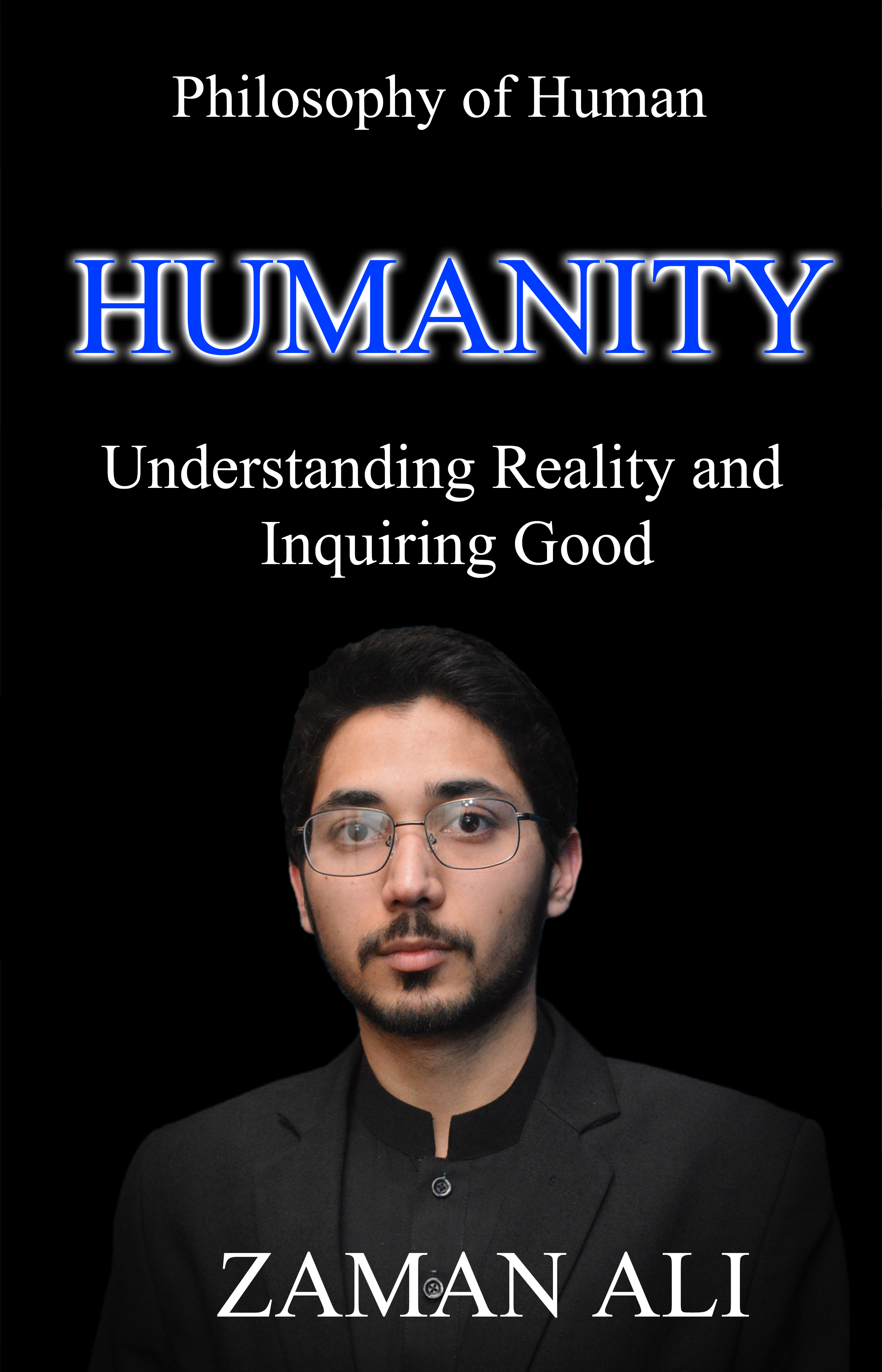
"HUMANITY Understanding Reality and Inquiring Good" delves into the intricate relationship between human understanding, the nature of reality, and the pursuit of ethical living. It encourages a deep self-reflection regarding our cognitive processes, how we construct our worldviews, and the practical implications of these understandings for fostering a more just and meaningful existence. The book posits that a fundamental re-evaluation of reality is prerequisite to genuinely inquiring about and achieving "good" in our lives and societies.
This book shares conceptual territory with "A Social Ontology" by exploring the foundational structures that shape human interaction and meaning. Both works grapple with how intersubjective agreements, collective beliefs, and shared interpretations coalesce to form the realities we inhabit. While Weissman focuses on the societal fabrication of being, Ali similarly examines how our understanding of reality, individually and collectively, underpins ethical frameworks and societal constructs, linking epistemology to social practice.
The book will resonate with individuals seeking a profound exploration of human purpose and the mechanisms of belief formation. Its inquiry into the nature of reality and the practical pursuit of good offers a framework for personal growth and a critical lens for examining societal values. It will prove valuable for anyone wishing to deepen their understanding of how philosophical insights can directly inform ethical action and contribute to a more coherent and fulfilling life.
HUMANITY Understanding Reality and Inquiring Good
"HUMANITY Understanding Reality and Inquiring Good" delves into the intricate relationship between human understanding, the nature of reality, and the pursuit of ethical living. It encourages a deep self-reflection regarding our cognitive processes, how we construct our worldviews, and the practical implications of these understandings for fostering a more just and meaningful existence. The book posits that a fundamental re-evaluation of reality is prerequisite to genuinely inquiring about and achieving "good" in our lives and societies.
This book shares conceptual territory with "A Social Ontology" by exploring the foundational structures that shape human interaction and meaning. Both works grapple with how intersubjective agreements, collective beliefs, and shared interpretations coalesce to form the realities we inhabit. While Weissman focuses on the societal fabrication of being, Ali similarly examines how our understanding of reality, individually and collectively, underpins ethical frameworks and societal constructs, linking epistemology to social practice.
The book will resonate with individuals seeking a profound exploration of human purpose and the mechanisms of belief formation. Its inquiry into the nature of reality and the practical pursuit of good offers a framework for personal growth and a critical lens for examining societal values. It will prove valuable for anyone wishing to deepen their understanding of how philosophical insights can directly inform ethical action and contribute to a more coherent and fulfilling life.
Mind, Self and Society from the Standpoint of a Social Behaviorist

George Herbert Mead's "Mind, Self and Society" explores how our individual minds and sense of self are not inherent, but rather develop through our interactions within a social context. He argues that language, gestures, and shared understandings are crucial for the formation of self-consciousness and for individuals to take on the perspectives of others, which he calls "the generalized other." This process is fundamental to how we become social beings.
This work resonates with David Weissman's "A Social Ontology" because both delve into the fundamental building blocks of social reality. While Mead focuses on the micro-level development of mind and self *within* society, Weissman broadly examines the very nature and existence of social entities, structures, and norms. Both books ultimately seek to understand how the social world comes to be and how it shapes individuals and collective experiences.
The book offers a profound understanding of human sociality and the origins of individual identity within a collective. It is an essential resource for anyone seeking to grasp the deep interconnectedness between the personal and the social, providing a foundational framework for understanding interpersonal communication, societal organization, and the evolution of social thought.
Mind, Self and Society from the Standpoint of a Social Behaviorist
George Herbert Mead's "Mind, Self and Society" explores how our individual minds and sense of self are not inherent, but rather develop through our interactions within a social context. He argues that language, gestures, and shared understandings are crucial for the formation of self-consciousness and for individuals to take on the perspectives of others, which he calls "the generalized other." This process is fundamental to how we become social beings.
This work resonates with David Weissman's "A Social Ontology" because both delve into the fundamental building blocks of social reality. While Mead focuses on the micro-level development of mind and self *within* society, Weissman broadly examines the very nature and existence of social entities, structures, and norms. Both books ultimately seek to understand how the social world comes to be and how it shapes individuals and collective experiences.
The book offers a profound understanding of human sociality and the origins of individual identity within a collective. It is an essential resource for anyone seeking to grasp the deep interconnectedness between the personal and the social, providing a foundational framework for understanding interpersonal communication, societal organization, and the evolution of social thought.
Understanding the Times: The Collision of Today's Competing Worldviews
"Understanding the Times: The Collision of Today's Competing Worldviews" meticulously dissects the core tenets and implications of various dominant contemporary worldviews – from secular humanism and Marxism to postmodernism and more traditional perspectives. It aims to equip individuals with a robust framework for critically evaluating the underlying philosophies shaping culture, politics, and personal belief systems, fostering an informed understanding of diverse societal narratives.
Both "Understanding the Times" and "A Social Ontology" delve into the foundational structures that underpin human interaction and collective reality. While Weissman's work constructs a theoretical framework for social existence, Noebel's book applies a similar analytical rigor to deconstruct existing belief systems, examining how these worldviews create and maintain different social realities and ethical standards. Both explore how shared (or competing) ideas coalesce into impactful social formations.
This book offers profound insights into the origins and consequences of public discourse and ethical dilemmas. It provides a valuable tool for discerning the "why" behind differing societal perspectives, fostering intellectual clarity and enhancing the ability to navigate a complex intellectual landscape with greater understanding and critical acumen. The practical application of worldview analysis makes it a compelling and illuminating read.
Understanding the Times: The Collision of Today's Competing Worldviews
"Understanding the Times: The Collision of Today's Competing Worldviews" meticulously dissects the core tenets and implications of various dominant contemporary worldviews – from secular humanism and Marxism to postmodernism and more traditional perspectives. It aims to equip individuals with a robust framework for critically evaluating the underlying philosophies shaping culture, politics, and personal belief systems, fostering an informed understanding of diverse societal narratives.
Both "Understanding the Times" and "A Social Ontology" delve into the foundational structures that underpin human interaction and collective reality. While Weissman's work constructs a theoretical framework for social existence, Noebel's book applies a similar analytical rigor to deconstruct existing belief systems, examining how these worldviews create and maintain different social realities and ethical standards. Both explore how shared (or competing) ideas coalesce into impactful social formations.
This book offers profound insights into the origins and consequences of public discourse and ethical dilemmas. It provides a valuable tool for discerning the "why" behind differing societal perspectives, fostering intellectual clarity and enhancing the ability to navigate a complex intellectual landscape with greater understanding and critical acumen. The practical application of worldview analysis makes it a compelling and illuminating read.
Assumptions That Affect Our Lives
"Assumptions That Affect Our Lives" delves into the pervasive, often unconscious, beliefs that shape individual and societal behavior. Overman argues that these fundamental assumptions, whether about human nature, reality, or purpose, are not neutral but actively influence our choices, interpretations, and ultimately, the structures we create and inhabit. The book encourages a critical examination of these underlying premises to foster greater self-awareness and more intentional action.
This book shares a thematic kinship with "A Social Ontology" by exploring the foundational elements that construct our shared reality. While Weissman's work meticulously dissects the nature of social entities and their existence, Overman's text examines the cognitive frameworks—the assumptions—that underpin our understanding and interaction within these social structures. Both aim to expose the building blocks, whether ontological or cognitive, that define our collective experience.
The book offers a compelling invitation to introspection and critical thought. It provides a framework for understanding not just personal biases, but also the roots of societal norms and conflicts, fostering a deeper comprehension of why we, as individuals and communities, act the way we do. Gaining insight into these powerful, often hidden, drivers of behavior offers substantial value for personal growth and navigating complex social landscapes.
Assumptions That Affect Our Lives
"Assumptions That Affect Our Lives" delves into the pervasive, often unconscious, beliefs that shape individual and societal behavior. Overman argues that these fundamental assumptions, whether about human nature, reality, or purpose, are not neutral but actively influence our choices, interpretations, and ultimately, the structures we create and inhabit. The book encourages a critical examination of these underlying premises to foster greater self-awareness and more intentional action.
This book shares a thematic kinship with "A Social Ontology" by exploring the foundational elements that construct our shared reality. While Weissman's work meticulously dissects the nature of social entities and their existence, Overman's text examines the cognitive frameworks—the assumptions—that underpin our understanding and interaction within these social structures. Both aim to expose the building blocks, whether ontological or cognitive, that define our collective experience.
The book offers a compelling invitation to introspection and critical thought. It provides a framework for understanding not just personal biases, but also the roots of societal norms and conflicts, fostering a deeper comprehension of why we, as individuals and communities, act the way we do. Gaining insight into these powerful, often hidden, drivers of behavior offers substantial value for personal growth and navigating complex social landscapes.
More Books to Explore
Discover more titles that expand on these ideas and themes.
The Social Construction of Reality: A Treatise in the Sociology of Knowledge
The Social Animal: The Hidden Sources of Love, Character, and Achievement
The Social Animal
The Sane Society
The Theory of Social and Economic Organization
Cosmopolitanism and the Geographies of Freedom