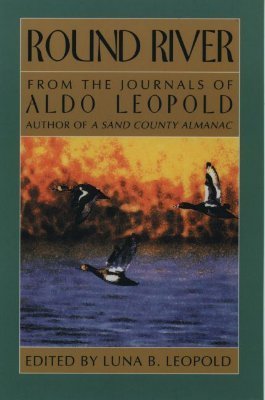
Round River: From the Journals of Aldo Leopold
Book Description
Imagine wandering through the wild landscapes of the American Southwest, where every river and ridge tells a story. In "Round River," Aldo Leopold’s vivid journals pulse with life, capturing the majesty of nature and the urgency of conservation. Experience haunting reflections on the intricate web of ecosystems, where humanity's choices echo through generations. Each entry is a call to action, urging a deeper connection to the earth that nurtures us. Can we learn to protect the fragile beauty around us before it’s too late? Dive into this powerful testament to nature’s splendor and urgency—will we heed Leopold’s wisdom?
Quick Book Summary
"Round River: From the Journals of Aldo Leopold" compiles the eloquent observations and meditative essays of Aldo Leopold, one of America’s most significant environmental thinkers. Through Leopold's meticulous field notes and philosophical reflections, readers journey through wild landscapes, witnessing the interconnectedness of nature and humanity’s profound impact on the natural world. The book blends vivid descriptions of wildlife and ecosystems with a passionate plea for conservation, emphasizing the ethical need to respect and protect the environment. Leopold’s writing invites readers to experience the rhythms of the land, recognize its fragility, and consider their responsibility in shaping the future. Deeply personal yet universally resonant, this collection remains a moving and persuasive call to steward the earth with wisdom and humility.

Summary of Key Ideas
Table of Contents
The Interconnectedness of Ecosystems
Aldo Leopold’s "Round River" draws from his field journals, blending scientific observation with poetic prose to celebrate the diversity and complexity of natural systems. With keen attention to detail, Leopold documents the rhythms of forests, wetlands, and rivers, illustrating how every element within an ecosystem is intertwined. His acute awareness highlights the symbiotic relationships between plants, animals, water, and soil, inviting readers to understand that disrupting one component inevitably influences the whole. Leopold’s holistic view forms the backbone of his environmental perspective, positioning nature as a community of which humans are merely a part.
Ethics of Conservation and Land Stewardship
A dominant theme throughout "Round River" is Leopold’s call for an ethical revolution in humanity’s relationship to the land. He champions the idea of a land ethic, where people recognize their responsibility to preserve the integrity, stability, and beauty of the biotic community. Drawing on personal anecdotes and broader ecological principles, Leopold persuades readers to move beyond viewing land as a commodity. Instead, he urges a shift toward stewardship, where preservation, restoration, and respect guide actions. His ethical framework underscores the moral dimensions of conservation and ecological decision-making.
Observations of Natural Beauty and Wildlife
Leopold’s journals capture the splendors of wildlife—a swift deer, a chorus of migrating cranes, the patient growth of trees—imbuing the text with reverence and awe for the natural world. His descriptive passages, rich with sensory detail, immerse the reader in the landscape’s sights and sounds. Through these observations, Leopold underscores the intrinsic value of nature’s beauty and the subtle yet vital cycles of birth, decay, and renewal. By fostering appreciation for these wonders, Leopold aims to cultivate a personal connection between individuals and the wider environment.
Human Impact on the Environment
Beyond appreciation, "Round River" addresses the profound ways in which human activities alter landscapes and compromise ecological health. Leopold reflects on overgrazing, deforestation, and resource extraction, tracing the consequences these actions have on soil fertility, water quality, and wildlife habitats. These essays offer a sharp critique of industrial progress when pursued without consideration for ecological costs, emphasizing that short-term gains often lead to long-term degradation. He warns of a dangerous disconnect between society and the land—a disconnect that can only be mended through concerted conservation efforts.
The Urgency of Ecological Awareness
Leopold closes with a sense of urgency, imploring readers to awaken their ecological conscience. He recognizes the fragility of natural processes and the finite window for effective intervention. His writings are not merely retrospective accounts but instructive lessons for current and future generations. Leopold insists that genuine progress hinges on fostering ecological literacy, acting responsibly, and advocating for policies that restore and sustain natural communities. "Round River" stands as both a celebration of wildness and a timeless blueprint for nurturing a sustainable and harmonious relationship with the earth.
Download This Summary
Get a free PDF of this summary instantly — no email required.