10 Books Similar to "What Do You Care What Other People Think? Further Adventures of a Curious Character"
by Richard P. Feynman

Surely You're Joking, Mr. Feynman!: Adventures of a Curious Character
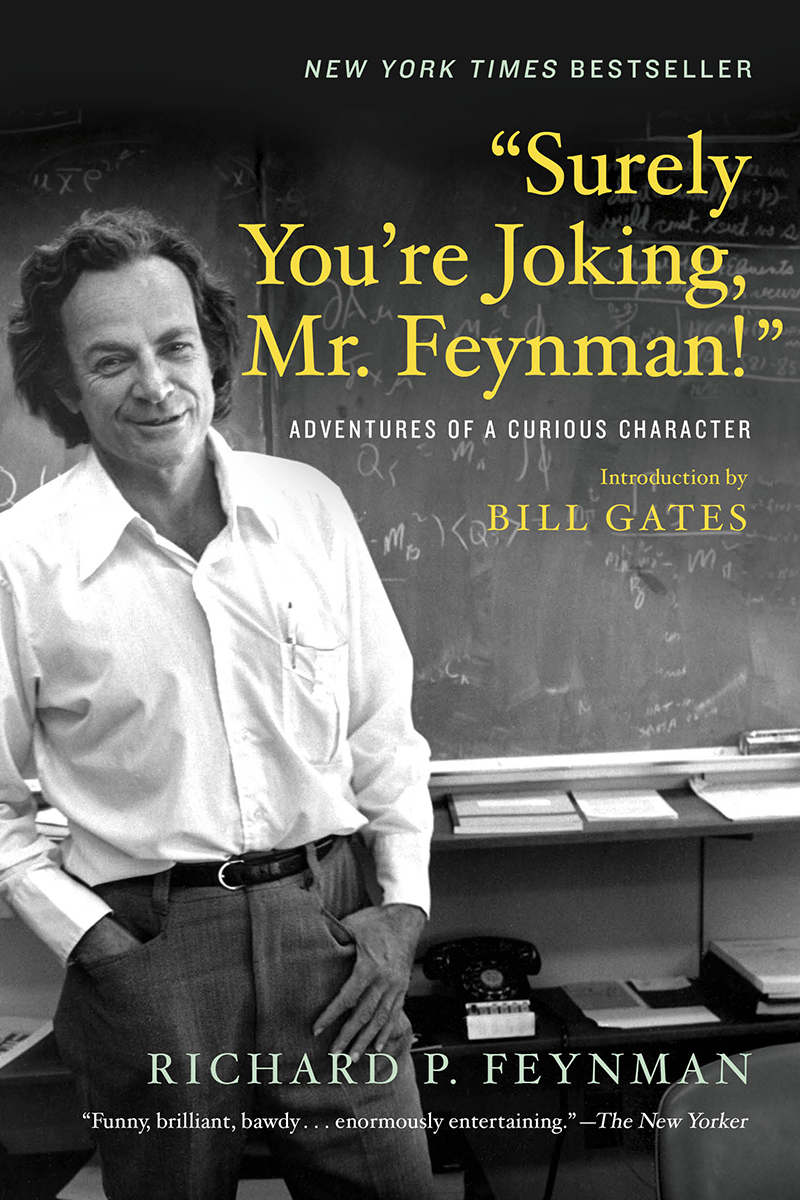
"Surely You're Joking, Mr. Feynman!" offers a delightful, often humorous, dive into the mind and life of Nobel Prize-winning physicist Richard Feynman. It's a collection of anecdotes detailing his diverse experiences, from cracking safes at Los Alamos to learning to draw, playing bongo drums, and engaging with various cultures, all while maintaining a fiercely independent and curious spirit. The book reveals his unconventional approach to science and life, prioritizing understanding and genuine inquiry over reputation.
Both books are essentially two volumes of Feynman's self-narrated adventures and observations, compiled from recorded conversations. They share the same distinctive voice, characterized by a playful intellectualism, a penchant for storytelling, and an underlying conviction in the importance of questioning and direct experience. The thematic similarity lies in their exploration of an extraordinarily multifaceted personality dedicated to unraveling the world's mysteries, whether scientific or human.
This book captivates with its blend of intellectual insight and engaging personal narrative. It offers a unique perspective on creativity, problem-solving, and the pursuit of knowledge, demonstrating that profound intelligence can co-exist with a joyful irreverence for convention. Its value lies in inspiring a similar spirit of inquiry and intellectual honesty, encouraging an appreciation for independent thought and the fascinating interconnectedness of disparate fields of knowledge.
Surely You're Joking, Mr. Feynman!: Adventures of a Curious Character
"Surely You're Joking, Mr. Feynman!" offers a delightful, often humorous, dive into the mind and life of Nobel Prize-winning physicist Richard Feynman. It's a collection of anecdotes detailing his diverse experiences, from cracking safes at Los Alamos to learning to draw, playing bongo drums, and engaging with various cultures, all while maintaining a fiercely independent and curious spirit. The book reveals his unconventional approach to science and life, prioritizing understanding and genuine inquiry over reputation.
Both books are essentially two volumes of Feynman's self-narrated adventures and observations, compiled from recorded conversations. They share the same distinctive voice, characterized by a playful intellectualism, a penchant for storytelling, and an underlying conviction in the importance of questioning and direct experience. The thematic similarity lies in their exploration of an extraordinarily multifaceted personality dedicated to unraveling the world's mysteries, whether scientific or human.
This book captivates with its blend of intellectual insight and engaging personal narrative. It offers a unique perspective on creativity, problem-solving, and the pursuit of knowledge, demonstrating that profound intelligence can co-exist with a joyful irreverence for convention. Its value lies in inspiring a similar spirit of inquiry and intellectual honesty, encouraging an appreciation for independent thought and the fascinating interconnectedness of disparate fields of knowledge.
The Meaning of It All: Thoughts of a Citizen-Scientist
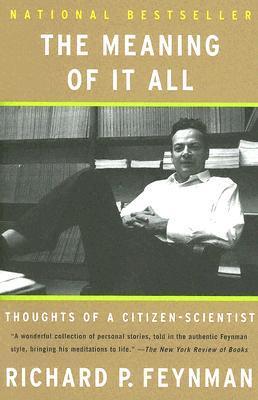
"The Meaning of It All" presents Richard Feynman’s reflections on the relationship between science, society, and existence. Drawn from a series of lectures, this book explores the fundamental questions of life, morality, and purpose through the lens of a scientific mind. Feynman challenges conventional thinking, advocating for critical inquiry and an embrace of uncertainty as pathways to understanding.
This collection shares a deep kinship with "What Do You Care What Other People Think?" in its direct, unvarnished intellectual curiosity. Both books showcase Feynman’s distinctive voice, his intellectual honesty, and his willingness to dissect complex ideas with refreshing clarity and a healthy skepticism of dogma. They both reveal the inner workings of a brilliant mind grappling with universal human experiences, albeit from different angles.
This book offers a compelling opportunity to engage with profound philosophical questions from an unexpected scientific perspective. It provides a unique blend of intellectual rigor and accessible prose, inspiring critical thought and a deeper appreciation for the scientific method’s applicability beyond the laboratory. The insights offered are enduring, prompting contemplation on our individual and collective roles in the world.
The Meaning of It All: Thoughts of a Citizen-Scientist
"The Meaning of It All" presents Richard Feynman’s reflections on the relationship between science, society, and existence. Drawn from a series of lectures, this book explores the fundamental questions of life, morality, and purpose through the lens of a scientific mind. Feynman challenges conventional thinking, advocating for critical inquiry and an embrace of uncertainty as pathways to understanding.
This collection shares a deep kinship with "What Do You Care What Other People Think?" in its direct, unvarnished intellectual curiosity. Both books showcase Feynman’s distinctive voice, his intellectual honesty, and his willingness to dissect complex ideas with refreshing clarity and a healthy skepticism of dogma. They both reveal the inner workings of a brilliant mind grappling with universal human experiences, albeit from different angles.
This book offers a compelling opportunity to engage with profound philosophical questions from an unexpected scientific perspective. It provides a unique blend of intellectual rigor and accessible prose, inspiring critical thought and a deeper appreciation for the scientific method’s applicability beyond the laboratory. The insights offered are enduring, prompting contemplation on our individual and collective roles in the world.
No Ordinary Genius: The Illustrated Richard Feynman

"No Ordinary Genius: The Illustrated Richard Feynman" offers a visually rich and narrative exploration of Feynman's life and scientific contributions. It synthesizes archival photographs, personal anecdotes, and straightforward explanations of his groundbreaking physics, presenting a comprehensive portrait of the man behind the genius in an accessible format.
Its similarity to "What Do You Care What Other People Think?" lies in its focus on rendering Feynman's multifaceted personality and unconventional approach to life and science. Both books delve beyond the scientific achievements to reveal the curious, humorous, and deeply insightful individual, allowing a deeper understanding of his thinking and motivations.
This book will appeal to those seeking a well-rounded and engaging introduction to Feynman or a visual complement to his written memoirs. Its blend of biographical detail, scientific context, and captivating imagery provides an invaluable opportunity to connect with one of the 20th century's most iconic and intriguing minds.
No Ordinary Genius: The Illustrated Richard Feynman
"No Ordinary Genius: The Illustrated Richard Feynman" offers a visually rich and narrative exploration of Feynman's life and scientific contributions. It synthesizes archival photographs, personal anecdotes, and straightforward explanations of his groundbreaking physics, presenting a comprehensive portrait of the man behind the genius in an accessible format.
Its similarity to "What Do You Care What Other People Think?" lies in its focus on rendering Feynman's multifaceted personality and unconventional approach to life and science. Both books delve beyond the scientific achievements to reveal the curious, humorous, and deeply insightful individual, allowing a deeper understanding of his thinking and motivations.
This book will appeal to those seeking a well-rounded and engaging introduction to Feynman or a visual complement to his written memoirs. Its blend of biographical detail, scientific context, and captivating imagery provides an invaluable opportunity to connect with one of the 20th century's most iconic and intriguing minds.
Feynman

Jim Ottaviani's "Feynman" is a graphic novel biography that vividly portrays the life and scientific contributions of Nobel laureate Richard Feynman. Through compelling illustrations and insightful narrative, it navigates his unconventional approaches to physics, his involvement in the Manhattan Project, his passion for art and music, and his profound intellectual curiosity that extended beyond scientific domains. The book offers an accessible yet comprehensive look at a truly singular mind.
This graphic biography shares a core essence with "What Do You Care What Other People Think?" by delving into Feynman's distinctive personality and philosophical outlook. Both works showcase his irreverent humor, his skepticism of authority, and his unwavering commitment to independent thought and inquiry. They both emphasize his multifaceted interests and his unique way of viewing the world, demonstrating how his personal adventures intertwined with his scientific breakthroughs.
Fans of Feynman's self-authored memoirs will appreciate an alternative, visually rich perspective on his life. This adaptation provides a fresh entry point for those new to Feynman or a delightful complementary experience for long-time admirers. Its engaging format makes complex scientific ideas and personal anecdotes readily digestible, offering a valuable and entertaining exploration of a pivotal figure in modern science and culture.
Feynman
Jim Ottaviani's "Feynman" is a graphic novel biography that vividly portrays the life and scientific contributions of Nobel laureate Richard Feynman. Through compelling illustrations and insightful narrative, it navigates his unconventional approaches to physics, his involvement in the Manhattan Project, his passion for art and music, and his profound intellectual curiosity that extended beyond scientific domains. The book offers an accessible yet comprehensive look at a truly singular mind.
This graphic biography shares a core essence with "What Do You Care What Other People Think?" by delving into Feynman's distinctive personality and philosophical outlook. Both works showcase his irreverent humor, his skepticism of authority, and his unwavering commitment to independent thought and inquiry. They both emphasize his multifaceted interests and his unique way of viewing the world, demonstrating how his personal adventures intertwined with his scientific breakthroughs.
Fans of Feynman's self-authored memoirs will appreciate an alternative, visually rich perspective on his life. This adaptation provides a fresh entry point for those new to Feynman or a delightful complementary experience for long-time admirers. Its engaging format makes complex scientific ideas and personal anecdotes readily digestible, offering a valuable and entertaining exploration of a pivotal figure in modern science and culture.
Six Easy Pieces: Essentials of Physics Explained by Its Most Brilliant Teacher

"Six Easy Pieces" distills core concepts of physics—atoms in motion, basic physics, the relation of physics to other sciences, energy, gravitation, and quantum behavior—from Feynman's renowned lectures. It offers an accessible, non-technical introduction to fundamental scientific principles, presented with his characteristic lucidity and insight.
The similarity to "What Do You Care What Other People Think?" lies in Feynman's distinctive voice and intellectual curiosity. While the latter showcases his philosophical musings and adventurous spirit, "Six Easy Pieces" reveals the same unconventional yet deeply effective pedagogical approach, presenting complex ideas with elegant simplicity and genuine enthusiasm for discovery. Both books reflect his profound engagement with the world, whether through scientific inquiry or personal experience.
This book offers a compelling entry point into the beauty and logic of physics, even for those without a scientific background. It provides a unique opportunity to learn from one of the 20th century's most brilliant scientific communicators, gaining a foundational understanding of how the universe works through explanations that are both rigorous and profoundly engaging. Its value lies in demystifying complex concepts, making them approachable and inspiring enduring intellectual curiosity.
Six Easy Pieces: Essentials of Physics Explained by Its Most Brilliant Teacher
"Six Easy Pieces" distills core concepts of physics—atoms in motion, basic physics, the relation of physics to other sciences, energy, gravitation, and quantum behavior—from Feynman's renowned lectures. It offers an accessible, non-technical introduction to fundamental scientific principles, presented with his characteristic lucidity and insight.
The similarity to "What Do You Care What Other People Think?" lies in Feynman's distinctive voice and intellectual curiosity. While the latter showcases his philosophical musings and adventurous spirit, "Six Easy Pieces" reveals the same unconventional yet deeply effective pedagogical approach, presenting complex ideas with elegant simplicity and genuine enthusiasm for discovery. Both books reflect his profound engagement with the world, whether through scientific inquiry or personal experience.
This book offers a compelling entry point into the beauty and logic of physics, even for those without a scientific background. It provides a unique opportunity to learn from one of the 20th century's most brilliant scientific communicators, gaining a foundational understanding of how the universe works through explanations that are both rigorous and profoundly engaging. Its value lies in demystifying complex concepts, making them approachable and inspiring enduring intellectual curiosity.
Genius: The Life and Science of Richard Feynman

"Genius: The Life and Science of Richard Feynman" meticulously chronicles the multifaceted life of Richard Feynman, from his Brooklyn upbringing to his Nobel Prize-winning work in quantum electrodynamics. It delves into his unique approach to physics, his insatiable curiosity, and his profound influence on scientific thought and education. Gleick masterfully portrays both the intellectual titan and the unconventional personality, exploring his passions, his vulnerabilities, and his relentless pursuit of understanding.
This biography resonates with "What Do You Care What Other People Think?" by offering a deeper, external perspective on the very character traits Feynman himself narrates. Both works illuminate his irreverent spirit, his intellectual honesty, and his consistent challenge to conventional wisdom. While Feynman's memoir provides firsthand anecdotes, Gleick’s work contextualizes these stories within the broader narrative of his scientific achievements and personal development.
Anyone captivated by a life lived with intellectual courage and curiosity will appreciate this book. It offers not just a detailed account of a scientific luminary but also inspiring insights into the nature of genius and the joy of discovery. Its value lies in its comprehensive portrayal of a man who redefined both physics and the public image of a scientist.
Genius: The Life and Science of Richard Feynman
"Genius: The Life and Science of Richard Feynman" meticulously chronicles the multifaceted life of Richard Feynman, from his Brooklyn upbringing to his Nobel Prize-winning work in quantum electrodynamics. It delves into his unique approach to physics, his insatiable curiosity, and his profound influence on scientific thought and education. Gleick masterfully portrays both the intellectual titan and the unconventional personality, exploring his passions, his vulnerabilities, and his relentless pursuit of understanding.
This biography resonates with "What Do You Care What Other People Think?" by offering a deeper, external perspective on the very character traits Feynman himself narrates. Both works illuminate his irreverent spirit, his intellectual honesty, and his consistent challenge to conventional wisdom. While Feynman's memoir provides firsthand anecdotes, Gleick’s work contextualizes these stories within the broader narrative of his scientific achievements and personal development.
Anyone captivated by a life lived with intellectual courage and curiosity will appreciate this book. It offers not just a detailed account of a scientific luminary but also inspiring insights into the nature of genius and the joy of discovery. Its value lies in its comprehensive portrayal of a man who redefined both physics and the public image of a scientist.
The Feynman Lectures on Physics

"The Feynman Lectures on Physics" is a monumental three-volume work, originally delivered as undergraduate lectures at Caltech. It presents a comprehensive, yet highly unconventional, introduction to fundamental physics concepts, ranging from classical mechanics and electromagnetism to quantum mechanics and thermodynamics. Rather than simply presenting facts, Feynman probes the underlying motivations and intuitions behind physical laws, inviting the reader to think like a physicist.
The similarity to "What Do You Care What Other People Think?" lies in the pervasive presence of Feynman's distinctive and deeply curious intellectual approach. Both books showcase his irreverent questioning of assumptions, his commitment to understanding things from first principles, and his engaging, anecdotal style, even when tackling complex scientific subjects. It's the same inquisitive mind, just applied to different domains – personal insights versus scientific principles.
This work appeals to those seeking a profound understanding of physics, not just a superficial grasp. Its value lies in offering an unparalleled insight into the mind of a scientific genius, inspiring critical thinking and a deeper appreciation for the beauty and logic of the natural world. It encourages an active, rather than passive, engagement with knowledge, making it a foundational text for aspiring scientists and anyone interested in how the world truly works.
The Feynman Lectures on Physics
"The Feynman Lectures on Physics" is a monumental three-volume work, originally delivered as undergraduate lectures at Caltech. It presents a comprehensive, yet highly unconventional, introduction to fundamental physics concepts, ranging from classical mechanics and electromagnetism to quantum mechanics and thermodynamics. Rather than simply presenting facts, Feynman probes the underlying motivations and intuitions behind physical laws, inviting the reader to think like a physicist.
The similarity to "What Do You Care What Other People Think?" lies in the pervasive presence of Feynman's distinctive and deeply curious intellectual approach. Both books showcase his irreverent questioning of assumptions, his commitment to understanding things from first principles, and his engaging, anecdotal style, even when tackling complex scientific subjects. It's the same inquisitive mind, just applied to different domains – personal insights versus scientific principles.
This work appeals to those seeking a profound understanding of physics, not just a superficial grasp. Its value lies in offering an unparalleled insight into the mind of a scientific genius, inspiring critical thinking and a deeper appreciation for the beauty and logic of the natural world. It encourages an active, rather than passive, engagement with knowledge, making it a foundational text for aspiring scientists and anyone interested in how the world truly works.
The Character of Physical Law

"The Character of Physical Law" offers a captivating exploration of the fundamental principles governing the universe. Based on a series of lectures, Feynman delves into concepts like the conservation of energy, the principle of least action, quantum behavior, and the relationship between physics and human understanding. He strips away complex jargon, making profound scientific ideas accessible and demonstrating the elegance and interconnectedness of physical laws.
Both books, while seemingly disparate in subject matter, are united by Feynman's inimitable voice and his deep-seated curiosity. "The Character of Physical Law" showcases his ability to explain intricate concepts with clarity and wit, reflecting the same engaging narrative style and intellectual honesty found in his personal anecdotes in "What Do You Care What Other People Think?". Each book reveals Feynman’s profound insights, whether about the cosmos or human nature, filtered through his uniquely questioning and observational lens.
This book will appeal to individuals with an interest in science, philosophy, or simply those who appreciate a brilliant mind at work. It offers a rare opportunity to understand complex scientific principles through the perspective of one of the 20th century's greatest thinkers. The enduring clarity and profound implications of Feynman’s ideas make this a truly valuable and thought-provoking read, providing a window into the beauty and order of the physical world.
The Character of Physical Law
"The Character of Physical Law" offers a captivating exploration of the fundamental principles governing the universe. Based on a series of lectures, Feynman delves into concepts like the conservation of energy, the principle of least action, quantum behavior, and the relationship between physics and human understanding. He strips away complex jargon, making profound scientific ideas accessible and demonstrating the elegance and interconnectedness of physical laws.
Both books, while seemingly disparate in subject matter, are united by Feynman's inimitable voice and his deep-seated curiosity. "The Character of Physical Law" showcases his ability to explain intricate concepts with clarity and wit, reflecting the same engaging narrative style and intellectual honesty found in his personal anecdotes in "What Do You Care What Other People Think?". Each book reveals Feynman’s profound insights, whether about the cosmos or human nature, filtered through his uniquely questioning and observational lens.
This book will appeal to individuals with an interest in science, philosophy, or simply those who appreciate a brilliant mind at work. It offers a rare opportunity to understand complex scientific principles through the perspective of one of the 20th century's greatest thinkers. The enduring clarity and profound implications of Feynman’s ideas make this a truly valuable and thought-provoking read, providing a window into the beauty and order of the physical world.
Tuva or Bust!: Richard Feynman's Last Journey

"Tuva or Bust!: Richard Feynman's Last Journey" chronicles Feynman's decades-long, whimsical obsession with traveling to the remote, little-known Soviet republic of Tuva, fueled initially by a stamp collection and a fascination with its unique culture and throat-singing. The book details the increasingly complex and often comical international efforts undertaken by Feynman and his friend Ralph Leighton to make this improbable journey a reality, ultimately becoming a race against time as Feynman's health declined. It's a testament to unwavering curiosity and the pursuit of an unconventional dream.
This book resonates with "What Do You Care What Other People Think?" because both works vividly display Feynman's extraordinary intellect, insatiable curiosity, and unconventional approach to life. Just as "What Do You Care" showcases his diverse interests and dismissal of societal norms, "Tuva or Bust!" exemplifies his playful yet persistent pursuit of a seemingly absurd goal that ultimately revealed his deep-seated desire for discovery and engagement with the world on his own terms. Both offer intimate glimpses into the mind of a genius who refused to be confined by academic or social conventions.
This account will appeal to those who appreciate tales of intellectual adventure, perseverance, and the endearing eccentricities of brilliant minds. It offers a unique window into Feynman's character beyond his scientific achievements, demonstrating his passion for art, culture, and the thrill of the unknown. The book provides a poignant and inspiring narrative about chasing a dream against all odds, offering reflections on life, learning, and the human spirit's enduring quest for connection and understanding.
Tuva or Bust!: Richard Feynman's Last Journey
"Tuva or Bust!: Richard Feynman's Last Journey" chronicles Feynman's decades-long, whimsical obsession with traveling to the remote, little-known Soviet republic of Tuva, fueled initially by a stamp collection and a fascination with its unique culture and throat-singing. The book details the increasingly complex and often comical international efforts undertaken by Feynman and his friend Ralph Leighton to make this improbable journey a reality, ultimately becoming a race against time as Feynman's health declined. It's a testament to unwavering curiosity and the pursuit of an unconventional dream.
This book resonates with "What Do You Care What Other People Think?" because both works vividly display Feynman's extraordinary intellect, insatiable curiosity, and unconventional approach to life. Just as "What Do You Care" showcases his diverse interests and dismissal of societal norms, "Tuva or Bust!" exemplifies his playful yet persistent pursuit of a seemingly absurd goal that ultimately revealed his deep-seated desire for discovery and engagement with the world on his own terms. Both offer intimate glimpses into the mind of a genius who refused to be confined by academic or social conventions.
This account will appeal to those who appreciate tales of intellectual adventure, perseverance, and the endearing eccentricities of brilliant minds. It offers a unique window into Feynman's character beyond his scientific achievements, demonstrating his passion for art, culture, and the thrill of the unknown. The book provides a poignant and inspiring narrative about chasing a dream against all odds, offering reflections on life, learning, and the human spirit's enduring quest for connection and understanding.
Six Not So Easy Pieces: Einstein's Relativity, Symmetry, and Space-Time

"Six Not So Easy Pieces" delves into fundamental concepts of modern physics, primarily Einstein's theories of relativity, the profound role of symmetry in the universe, and the intricate nature of space-time. Feynman illuminates these complex ideas with his characteristic clarity, breaking them down into accessible, thought-provoking examinations without sacrificing intellectual rigor.
The similarity to "What Do You Care What Other People Think?" lies in Feynman's unique intellectual voice and his method of inquiry. Both books showcase his unparalleled ability to make profound ideas approachable, blending scientific exposition with his quirky, engaging personality, and a relentless commitment to understanding, not just memorizing.
This book will appeal to those with a curiosity about the underlying structure of reality and the biggest questions in physics. It offers invaluable insights into how a brilliant mind grapples with and articulates complex scientific truths, fostering a deeper appreciation for the beauty and elegance of the universe as understood through scientific principles.
Six Not So Easy Pieces: Einstein's Relativity, Symmetry, and Space-Time
"Six Not So Easy Pieces" delves into fundamental concepts of modern physics, primarily Einstein's theories of relativity, the profound role of symmetry in the universe, and the intricate nature of space-time. Feynman illuminates these complex ideas with his characteristic clarity, breaking them down into accessible, thought-provoking examinations without sacrificing intellectual rigor.
The similarity to "What Do You Care What Other People Think?" lies in Feynman's unique intellectual voice and his method of inquiry. Both books showcase his unparalleled ability to make profound ideas approachable, blending scientific exposition with his quirky, engaging personality, and a relentless commitment to understanding, not just memorizing.
This book will appeal to those with a curiosity about the underlying structure of reality and the biggest questions in physics. It offers invaluable insights into how a brilliant mind grapples with and articulates complex scientific truths, fostering a deeper appreciation for the beauty and elegance of the universe as understood through scientific principles.
More Books to Explore
Discover more titles that expand on these ideas and themes.
Surely You're Joking, Mr. Feynman!: Adventures of a Curious Character
The Meaning of It All: Thoughts of a Citizen-Scientist
No Ordinary Genius: The Illustrated Richard Feynman
Feynman
Six Easy Pieces: Essentials of Physics Explained by Its Most Brilliant Teacher
Genius: The Life and Science of Richard Feynman