10 Books Similar to "Too Loud a Solitude"
by Bohumil Hrabal

In-House Weddings
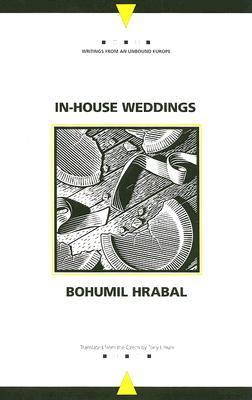
"In-House Weddings" delves into the life and observations of a Prague brewery worker, exploring his inner world alongside the vibrant, often chaotic, lives of his colleagues and the city itself. It's a rich tapestry of everyday existence, permeated by reflections on history, art, and the human condition, all filtered through the protagonist's unique, contemplative lens.
The similarities with "Too Loud a Solitude" are striking, primarily through their shared narrative DNA: the solitary, philosophically inclined working-class narrator processing vast amounts of information and cultural detritus. Both protagonists find profound meaning and beauty in the overlooked, transforming mundane tasks into deeply introspective experiences, and battling against encroaching meaninglessness through their intellectual pursuits. Hrabal's signature blend of dark humor, poetic sensibility, and profound empathy for the common person shines equally in both works.
This book offers a compelling and valuable experience for those who appreciate literary depth and a unique authorial voice. It provides a window into a specific historical and cultural moment, enriching understanding of post-war Czechoslovakia through its vivid characterizations and existential ponderings. The enduring themes of memory, the struggle for individuality, and the redemptive power of art resonate deeply, making it a powerful and thought-provoking read.
In-House Weddings
"In-House Weddings" delves into the life and observations of a Prague brewery worker, exploring his inner world alongside the vibrant, often chaotic, lives of his colleagues and the city itself. It's a rich tapestry of everyday existence, permeated by reflections on history, art, and the human condition, all filtered through the protagonist's unique, contemplative lens.
The similarities with "Too Loud a Solitude" are striking, primarily through their shared narrative DNA: the solitary, philosophically inclined working-class narrator processing vast amounts of information and cultural detritus. Both protagonists find profound meaning and beauty in the overlooked, transforming mundane tasks into deeply introspective experiences, and battling against encroaching meaninglessness through their intellectual pursuits. Hrabal's signature blend of dark humor, poetic sensibility, and profound empathy for the common person shines equally in both works.
This book offers a compelling and valuable experience for those who appreciate literary depth and a unique authorial voice. It provides a window into a specific historical and cultural moment, enriching understanding of post-war Czechoslovakia through its vivid characterizations and existential ponderings. The enduring themes of memory, the struggle for individuality, and the redemptive power of art resonate deeply, making it a powerful and thought-provoking read.
I Served the King of England

"I Served the King of England" chronicles the extraordinary life of Jan Dítě, a diminutive and ambitious waiter in pre-World War II Czechoslovakia. From humble beginnings, he navigates the tumultuous social and political landscape of his era, rising through the ranks of various hotels, accumulating wealth, and eventually facing the harsh realities of imprisonment and a changing world. It's a picaresque journey tinged with existential reflection.
The similarity to "Too Loud a Solitude" lies in Hrabal's distinctive narrative voice and thematic concerns. Both novels feature solitary, philosophical protagonists who, despite their seemingly mundane professions—a paper presser in one instance, a waiter in the other—are deeply engaged with the human condition, history, and the often-absurd nature of existence. Both books also showcase Hrabal's signature blend of dark humor, poetic prose, and profound melancholy.
This novel will appeal to those who appreciate a narrative that masterfully combines historical backdrop with intimate human experience. Its exploration of ambition, displacement, and the indelible marks left by history resonates deeply. It's a valuable read for its poignant insights into Central European history and for its artistic demonstration of how profound philosophical musings can emerge from the most unassuming of lives.
I Served the King of England
"I Served the King of England" chronicles the extraordinary life of Jan Dítě, a diminutive and ambitious waiter in pre-World War II Czechoslovakia. From humble beginnings, he navigates the tumultuous social and political landscape of his era, rising through the ranks of various hotels, accumulating wealth, and eventually facing the harsh realities of imprisonment and a changing world. It's a picaresque journey tinged with existential reflection.
The similarity to "Too Loud a Solitude" lies in Hrabal's distinctive narrative voice and thematic concerns. Both novels feature solitary, philosophical protagonists who, despite their seemingly mundane professions—a paper presser in one instance, a waiter in the other—are deeply engaged with the human condition, history, and the often-absurd nature of existence. Both books also showcase Hrabal's signature blend of dark humor, poetic prose, and profound melancholy.
This novel will appeal to those who appreciate a narrative that masterfully combines historical backdrop with intimate human experience. Its exploration of ambition, displacement, and the indelible marks left by history resonates deeply. It's a valuable read for its poignant insights into Central European history and for its artistic demonstration of how profound philosophical musings can emerge from the most unassuming of lives.
Engineer of Human Souls
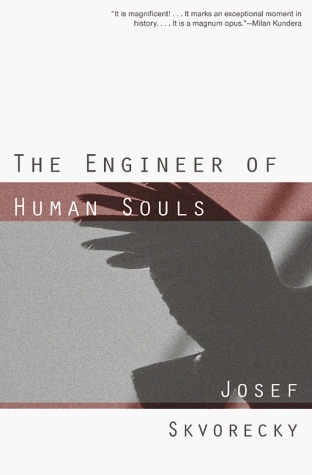
"Engineer of Human Souls" intricately weaves the life of Daniel Smiřický, a Czech émigré teaching literature at a Canadian university, with his poignant recollections of wartime Czechoslovakia. Through his lectures, Smiřický revisits cherished literary works, connecting them to his past experiences, particularly his unrequited love and the devastating impact of totalitarian regimes on individuals and society. The novel is a profound meditation on memory, exile, and the enduring power of literature to shape and interpret human experience.
The similarity to "Too Loud a Solitude" lies in their shared exploration of the intellectual's struggle against oppressive forces and the visceral connection to literature as a refuge. Both protagonists, Hrdlicka and Smiřický, are deeply immersed in books, finding solace and meaning amidst societal disillusionment. They both grapple with the weight of history and the personal toll of political systems, exhibiting a quiet resilience and an unwavering commitment to the written word as a means of survival and resistance.
This novel will appeal to those who appreciate thoughtful narratives exploring the intersection of personal history and broader political landscapes. It offers a rich tapestry of literary analysis, historical reflection, and deeply felt human emotion, ultimately validating the power of art to preserve memory and provide spiritual sustenance in the face of adversity. This book provides a resonant exploration of identity, exile, and the ongoing quest for meaning in a complex world.
Engineer of Human Souls
"Engineer of Human Souls" intricately weaves the life of Daniel Smiřický, a Czech émigré teaching literature at a Canadian university, with his poignant recollections of wartime Czechoslovakia. Through his lectures, Smiřický revisits cherished literary works, connecting them to his past experiences, particularly his unrequited love and the devastating impact of totalitarian regimes on individuals and society. The novel is a profound meditation on memory, exile, and the enduring power of literature to shape and interpret human experience.
The similarity to "Too Loud a Solitude" lies in their shared exploration of the intellectual's struggle against oppressive forces and the visceral connection to literature as a refuge. Both protagonists, Hrdlicka and Smiřický, are deeply immersed in books, finding solace and meaning amidst societal disillusionment. They both grapple with the weight of history and the personal toll of political systems, exhibiting a quiet resilience and an unwavering commitment to the written word as a means of survival and resistance.
This novel will appeal to those who appreciate thoughtful narratives exploring the intersection of personal history and broader political landscapes. It offers a rich tapestry of literary analysis, historical reflection, and deeply felt human emotion, ultimately validating the power of art to preserve memory and provide spiritual sustenance in the face of adversity. This book provides a resonant exploration of identity, exile, and the ongoing quest for meaning in a complex world.
Farewell Waltz

"Farewell Waltz" centers on a group of disparate characters in a Czechoslovakian spa town in the late 1960s, navigating intertwining desires, moral dilemmas, and the oppressive presence of the state. A celebrated dissident, a young nurse contemplating an abortion, a wealthy American, and an aging gynecologist are among those whose lives collide, revealing the complex interplay of personal freedom and societal constraint. The narrative explores themes of love, deceit, existential angst, and the often-absurdist nature of human relationships under duress.
Both novels share a distinct Central European intellectual sensibility, characterized by a melancholic yet darkly humorous contemplation of existence and the individual's place within a stifling political landscape. Like "Too Loud a Solitude," "Farewell Waltz" uses mundane settings and seemingly ordinary lives to explore profound philosophical questions, delving into the inner worlds of its characters with a lyrical and often acerbic wit. Both authors masterfully weave together personal stories and broader societal critiques, showcasing a shared concern for human dignity and intellectual freedom.
This book offers a compelling exploration of freedom, responsibility, and the human condition against a backdrop of political uncertainty. It provides a rich, thought-provoking experience, encouraging reflection on personal choices and the subtle ways political realities seep into private lives. Its elegant prose and sharp psychological insights into its characters offer a sophisticated literary engagement with enduring human struggles.
Farewell Waltz
"Farewell Waltz" centers on a group of disparate characters in a Czechoslovakian spa town in the late 1960s, navigating intertwining desires, moral dilemmas, and the oppressive presence of the state. A celebrated dissident, a young nurse contemplating an abortion, a wealthy American, and an aging gynecologist are among those whose lives collide, revealing the complex interplay of personal freedom and societal constraint. The narrative explores themes of love, deceit, existential angst, and the often-absurdist nature of human relationships under duress.
Both novels share a distinct Central European intellectual sensibility, characterized by a melancholic yet darkly humorous contemplation of existence and the individual's place within a stifling political landscape. Like "Too Loud a Solitude," "Farewell Waltz" uses mundane settings and seemingly ordinary lives to explore profound philosophical questions, delving into the inner worlds of its characters with a lyrical and often acerbic wit. Both authors masterfully weave together personal stories and broader societal critiques, showcasing a shared concern for human dignity and intellectual freedom.
This book offers a compelling exploration of freedom, responsibility, and the human condition against a backdrop of political uncertainty. It provides a rich, thought-provoking experience, encouraging reflection on personal choices and the subtle ways political realities seep into private lives. Its elegant prose and sharp psychological insights into its characters offer a sophisticated literary engagement with enduring human struggles.
The Book of Laughter and Forgetting
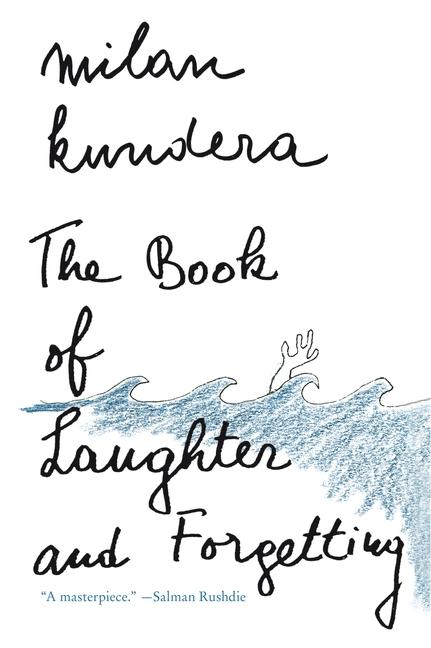
Milan Kundera's "The Book of Laughter and Forgetting" is a sprawling, fragmented novel exploring themes of memory, history, identity, and the nature of totalitarianism. Through a series of interconnected narratives, both fictional and semi-autobiographical, Kundera dissects the various ways power distorts truth, personal and collective recollections fade or are manipulated, and how these processes impact individual lives and national consciousness. It’s a philosophical and deeply human inquiry into forgetting as both a burden and a release.
Both "The Book of Laughter and Forgetting" and "Too Loud a Solitude" delve into the struggles of individuals navigating oppressive political systems and the weight of history. They share a profound melancholy and a fascination with existential questions. Both books also employ a distinctive style, blending narrative with philosophical digressions, often centered on an intellectual protagonist wrestling with the meaning of their existence amidst absurdity and hardship. The protagonists, like Hanta in "Too Loud a Solitude," are observers and interpreters of their world, burdened and enriched by knowledge.
This book offers a profound and challenging reading experience. It provides sharp insights into the human condition under duress, encouraging reflection on the importance of memory, the fragility of truth, and the enduring power of the human spirit. Its unique structure and intellectual depth reward careful attention, prompting a deeper understanding of political and personal freedom, and the subtle ways history is shaped and forgotten.
The Book of Laughter and Forgetting
Milan Kundera's "The Book of Laughter and Forgetting" is a sprawling, fragmented novel exploring themes of memory, history, identity, and the nature of totalitarianism. Through a series of interconnected narratives, both fictional and semi-autobiographical, Kundera dissects the various ways power distorts truth, personal and collective recollections fade or are manipulated, and how these processes impact individual lives and national consciousness. It’s a philosophical and deeply human inquiry into forgetting as both a burden and a release.
Both "The Book of Laughter and Forgetting" and "Too Loud a Solitude" delve into the struggles of individuals navigating oppressive political systems and the weight of history. They share a profound melancholy and a fascination with existential questions. Both books also employ a distinctive style, blending narrative with philosophical digressions, often centered on an intellectual protagonist wrestling with the meaning of their existence amidst absurdity and hardship. The protagonists, like Hanta in "Too Loud a Solitude," are observers and interpreters of their world, burdened and enriched by knowledge.
This book offers a profound and challenging reading experience. It provides sharp insights into the human condition under duress, encouraging reflection on the importance of memory, the fragility of truth, and the enduring power of the human spirit. Its unique structure and intellectual depth reward careful attention, prompting a deeper understanding of political and personal freedom, and the subtle ways history is shaped and forgotten.
Life is Elsewhere

"Life is Elsewhere" chronicles the life of Jaromil, a burgeoning poet in communist Czechoslovakia, from his overprotective mother's suffocating embrace to his awkward artistic and romantic endeavors. It’s a tragicomic exploration of the artist’s struggle for authenticity, the perils of idealism, and the often-disastrous intersection of personal ambition with oppressive political realities. The novel dissects the psychology of a young man desperate for significance, often at the expense of genuine experience.
Both novels delve deeply into the interior lives of their protagonists, emphasizing their intellectual and emotional journeys within restrictive socio-political landscapes. Like Hrabal’s Hanta, Kundera’s Jaromil is an individual grappling with his identity and purpose, often through the prism of art and literature, and both narratives are infused with philosophical musings on life, beauty, and the individual's place in history. They share a poignant irony and a critical examination of alienation and the search for meaning in absurd circumstances.
This book offers a compelling examination of artistic temperament, the complex dynamics of parent-child relationships, and the ideological fervor of a specific historical period. Its insights into the human condition, particularly the vulnerabilities of youth and the seductive nature of grand narratives, resonate deeply. It stimulates thought on the nature of creativity, freedom, and the delicate balance between personal expression and societal expectations.
Life is Elsewhere
"Life is Elsewhere" chronicles the life of Jaromil, a burgeoning poet in communist Czechoslovakia, from his overprotective mother's suffocating embrace to his awkward artistic and romantic endeavors. It’s a tragicomic exploration of the artist’s struggle for authenticity, the perils of idealism, and the often-disastrous intersection of personal ambition with oppressive political realities. The novel dissects the psychology of a young man desperate for significance, often at the expense of genuine experience.
Both novels delve deeply into the interior lives of their protagonists, emphasizing their intellectual and emotional journeys within restrictive socio-political landscapes. Like Hrabal’s Hanta, Kundera’s Jaromil is an individual grappling with his identity and purpose, often through the prism of art and literature, and both narratives are infused with philosophical musings on life, beauty, and the individual's place in history. They share a poignant irony and a critical examination of alienation and the search for meaning in absurd circumstances.
This book offers a compelling examination of artistic temperament, the complex dynamics of parent-child relationships, and the ideological fervor of a specific historical period. Its insights into the human condition, particularly the vulnerabilities of youth and the seductive nature of grand narratives, resonate deeply. It stimulates thought on the nature of creativity, freedom, and the delicate balance between personal expression and societal expectations.
The Unbearable Lightness of Being
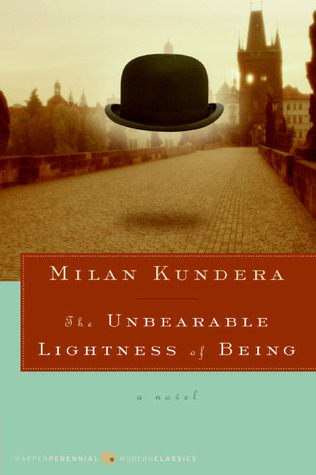
"The Unbearable Lightness of Being" explores the complex intersections of love, freedom, identity, and political upheaval in 1968 Czechoslovakia, through the entangled lives of a surgeon, his wife, and his mistress. It delves into the philosophical weight of choices and the fleeting nature of existence, questioning whether lives are meaningful or merely a series of arbitrary events.
Both novels share a profound melancholy and a philosophical underpinning to their narratives, utilizing highly individualistic protagonists who grapple with existential questions amidst a backdrop of societal or political constraint. They employ a stream-of-consciousness style and often delve into the inner lives of their characters with an almost observational, yet deeply empathetic, gaze. The introspection on the human condition and the pursuit of meaning in a seemingly absurd world are powerful common threads.
This novel will appeal to those who appreciate literature that challenges conventional narratives and explores the depths of the human psyche. Its insightful commentary on love, betrayal, and the struggle for freedom in a totalitarian state offers both intellectual stimulation and emotional resonance, making it a valuable exploration of universal themes.
The Unbearable Lightness of Being
"The Unbearable Lightness of Being" explores the complex intersections of love, freedom, identity, and political upheaval in 1968 Czechoslovakia, through the entangled lives of a surgeon, his wife, and his mistress. It delves into the philosophical weight of choices and the fleeting nature of existence, questioning whether lives are meaningful or merely a series of arbitrary events.
Both novels share a profound melancholy and a philosophical underpinning to their narratives, utilizing highly individualistic protagonists who grapple with existential questions amidst a backdrop of societal or political constraint. They employ a stream-of-consciousness style and often delve into the inner lives of their characters with an almost observational, yet deeply empathetic, gaze. The introspection on the human condition and the pursuit of meaning in a seemingly absurd world are powerful common threads.
This novel will appeal to those who appreciate literature that challenges conventional narratives and explores the depths of the human psyche. Its insightful commentary on love, betrayal, and the struggle for freedom in a totalitarian state offers both intellectual stimulation and emotional resonance, making it a valuable exploration of universal themes.
The Cowards

Josef Škvorecký’s "The Cowards" chronicles the end-of-war experience in a small Czech town, as perceived by its cynical, jazz-obsessed young narrator, Daniel Smiřický. Amidst the collapse of Nazi occupation and the arrival of Soviet and American forces, Daniel navigates youthful infatuations, the absurdity of local heroism, and the profound shift in national identity, all filtered through his irreverent gaze and love for American culture.
The similarity to "Too Loud a Solitude" lies in their shared exploration of individual consciousness confronting significant historical upheaval, often through a deeply personal and unconventional lens. Both novels feature protagonists who are observers and interpreters of their worlds – Hanta with his philosophical reflections amidst the trash, and Daniel with his sardonic commentary on wartime provincialism. They share a distinctive narrative voice, blending everyday experience with intellectual curiosity and a certain detachment from conventional norms.
The novel offers a compelling, authentic perspective on a pivotal moment in European history, rendered with a remarkable blend of humor, melancholy, and intellectual honesty. Its portrayal of youthful disillusionment and the complexities of human behavior under duress resonates deeply, providing valuable insights into Czech identity and the broader human condition during times of profound change.
The Cowards
Josef Škvorecký’s "The Cowards" chronicles the end-of-war experience in a small Czech town, as perceived by its cynical, jazz-obsessed young narrator, Daniel Smiřický. Amidst the collapse of Nazi occupation and the arrival of Soviet and American forces, Daniel navigates youthful infatuations, the absurdity of local heroism, and the profound shift in national identity, all filtered through his irreverent gaze and love for American culture.
The similarity to "Too Loud a Solitude" lies in their shared exploration of individual consciousness confronting significant historical upheaval, often through a deeply personal and unconventional lens. Both novels feature protagonists who are observers and interpreters of their worlds – Hanta with his philosophical reflections amidst the trash, and Daniel with his sardonic commentary on wartime provincialism. They share a distinctive narrative voice, blending everyday experience with intellectual curiosity and a certain detachment from conventional norms.
The novel offers a compelling, authentic perspective on a pivotal moment in European history, rendered with a remarkable blend of humor, melancholy, and intellectual honesty. Its portrayal of youthful disillusionment and the complexities of human behavior under duress resonates deeply, providing valuable insights into Czech identity and the broader human condition during times of profound change.
Spaceman of Bohemia

"Spaceman of Bohemia" follows Jakub Procházka, a Czech astrophysicist on a solo mission to Venus. Isolated in space, he confronts his past, his country's history, and a mysterious, giant alien spider that becomes his confidante. The narrative explores themes of loneliness, identity, and the burden of historical memory against a backdrop of cosmic wonder.
This novel shares a striking kinship with "Too Loud a Solitude" through its exploration of profound solitude and the intellectual internal monologues of its protagonist. Both books feature characters immersed in isolated, somewhat absurd environments, wrestling with philosophical questions and their personal histories. The solitary contemplation, rich with allusions and intellectual wanderings, is a clear parallel.
This book offers a compelling narrative that blends science fiction with deeply human introspection. It provides a unique lens through which to examine national identity, personal accountability, and the search for meaning in isolation, all while delivering an engaging, thought-provoking story.
Spaceman of Bohemia
"Spaceman of Bohemia" follows Jakub Procházka, a Czech astrophysicist on a solo mission to Venus. Isolated in space, he confronts his past, his country's history, and a mysterious, giant alien spider that becomes his confidante. The narrative explores themes of loneliness, identity, and the burden of historical memory against a backdrop of cosmic wonder.
This novel shares a striking kinship with "Too Loud a Solitude" through its exploration of profound solitude and the intellectual internal monologues of its protagonist. Both books feature characters immersed in isolated, somewhat absurd environments, wrestling with philosophical questions and their personal histories. The solitary contemplation, rich with allusions and intellectual wanderings, is a clear parallel.
This book offers a compelling narrative that blends science fiction with deeply human introspection. It provides a unique lens through which to examine national identity, personal accountability, and the search for meaning in isolation, all while delivering an engaging, thought-provoking story.
The Melancholy of Resistance

"The Melancholy of Resistance" depicts the unsettling arrival of a traveling circus and a monstrous, taxidermied whale in a provincial Hungarian town, triggering a cascade of increasingly bizarre and violent events. The novel explores themes of societal disintegration, herd mentality, and the allure of totalitarianism through the eyes of various bewildered inhabitants, most notably the naive, emotionally resonant Valuska.
This novel shares a deep thematic affinity with "Too Loud a Solitude" in its profound sense of isolation and the pervasive absurdity of existence within oppressive systems. Both narratives feature individuals grappling with the weight of overwhelming external forces and their own internal struggles, often with a darkly comedic and philosophical bent, and both employ a distinct, almost rhythmic prose style to convey a sense of dread and beauty simultaneously.
The novel offers a powerful, albeit challenging, exploration of humanity's susceptibility to manipulation and the fragility of order in the face of irrationality. Its intricate prose and deeply unsettling atmosphere provide a richly rewarding experience for those interested in allegorical fiction that delves into the darker corners of the human psyche and societal collapse.
The Melancholy of Resistance
"The Melancholy of Resistance" depicts the unsettling arrival of a traveling circus and a monstrous, taxidermied whale in a provincial Hungarian town, triggering a cascade of increasingly bizarre and violent events. The novel explores themes of societal disintegration, herd mentality, and the allure of totalitarianism through the eyes of various bewildered inhabitants, most notably the naive, emotionally resonant Valuska.
This novel shares a deep thematic affinity with "Too Loud a Solitude" in its profound sense of isolation and the pervasive absurdity of existence within oppressive systems. Both narratives feature individuals grappling with the weight of overwhelming external forces and their own internal struggles, often with a darkly comedic and philosophical bent, and both employ a distinct, almost rhythmic prose style to convey a sense of dread and beauty simultaneously.
The novel offers a powerful, albeit challenging, exploration of humanity's susceptibility to manipulation and the fragility of order in the face of irrationality. Its intricate prose and deeply unsettling atmosphere provide a richly rewarding experience for those interested in allegorical fiction that delves into the darker corners of the human psyche and societal collapse.
More Books to Explore
Discover more titles that expand on these ideas and themes.
In-House Weddings
I Served the King of England
Engineer of Human Souls
Farewell Waltz
The Book of Laughter and Forgetting
Life is Elsewhere