10 Books Similar to "To Sell is Human: The Surprising Truth About Moving Others"
by Daniel H. Pink
Drive: The Surprising Truth About What Motivates Us
"Drive: The Surprising Truth About What Motivates Us" fundamentally redefines motivation, arguing that traditional reward-and-punishment systems are often ineffective and even counterproductive. Pink introduces "Motivation 3.0," emphasizing intrinsic motivators like autonomy (the urge to direct our own lives), mastery (the desire to get better at something that matters), and purpose (the yearning to do what we do in the service of something larger than ourselves). The book provides evidence-based insights and practical strategies for fostering true engagement and high performance in individuals and organizations.
This book shares significant thematic overlap with "To Sell is Human." Both explore fundamental human behaviors and motivations, dissecting commonly held assumptions and offering a more nuanced, evidence-based understanding. Just as "To Sell is Human" reframes selling as a sophisticated act of moving others, "Drive" re-evaluates motivation beyond simple transactional incentives, suggesting that understanding deeper psychological drivers is key to influence and impact. Both works ultimately aim to empower individuals and organizations with a more effective framework for navigating human interaction and achieving desired outcomes.
Individuals seeking to enhance personal and professional effectiveness will find substantial guidance within "Drive." Its exploration of intrinsic motivation offers actionable strategies for fostering self-direction, skill development, and a sense of contribution, leading to greater satisfaction and productivity. Leaders, educators, and anyone interested in maximizing human potential will gain a powerful toolkit for inspiring genuine enthusiasm and commitment in themselves and those they influence.
Drive: The Surprising Truth About What Motivates Us
"Drive: The Surprising Truth About What Motivates Us" fundamentally redefines motivation, arguing that traditional reward-and-punishment systems are often ineffective and even counterproductive. Pink introduces "Motivation 3.0," emphasizing intrinsic motivators like autonomy (the urge to direct our own lives), mastery (the desire to get better at something that matters), and purpose (the yearning to do what we do in the service of something larger than ourselves). The book provides evidence-based insights and practical strategies for fostering true engagement and high performance in individuals and organizations.
This book shares significant thematic overlap with "To Sell is Human." Both explore fundamental human behaviors and motivations, dissecting commonly held assumptions and offering a more nuanced, evidence-based understanding. Just as "To Sell is Human" reframes selling as a sophisticated act of moving others, "Drive" re-evaluates motivation beyond simple transactional incentives, suggesting that understanding deeper psychological drivers is key to influence and impact. Both works ultimately aim to empower individuals and organizations with a more effective framework for navigating human interaction and achieving desired outcomes.
Individuals seeking to enhance personal and professional effectiveness will find substantial guidance within "Drive." Its exploration of intrinsic motivation offers actionable strategies for fostering self-direction, skill development, and a sense of contribution, leading to greater satisfaction and productivity. Leaders, educators, and anyone interested in maximizing human potential will gain a powerful toolkit for inspiring genuine enthusiasm and commitment in themselves and those they influence.
The Surprising Truth About Sales: A Holistic Approach to Closing a Deal
"The Surprising Truth About Sales: A Holistic Approach to Closing a Deal" by Maria Johnsen offers a comprehensive guide to modern sales, extending beyond traditional tactics. It emphasizes understanding customer psychology, building genuine relationships, and leveraging ethical persuasion to achieve successful outcomes. Johnsen reframes sales as a collaborative process where the seller acts as a value provider and problem solver.
This book shares significant thematic overlap with Daniel Pink’s "To Sell is Human." Both authors challenge conventional notions of sales, asserting that "selling" is a fundamental human activity pertinent to everyone, regardless of their profession. They both advocate for an approach centered on empathy, understanding, and the ability to "move" others, rather than manipulative pressure.
Individuals seeking to enhance their interpersonal influence, improve their communication skills, and understand the underpinnings of effective persuasion will discover immense value in this book. It provides actionable strategies for navigating complex interactions and building lasting connections, proving particularly useful for professionals across various sectors looking to refine their ability to advocate for ideas, products, or services.
The Surprising Truth About Sales: A Holistic Approach to Closing a Deal
"The Surprising Truth About Sales: A Holistic Approach to Closing a Deal" by Maria Johnsen offers a comprehensive guide to modern sales, extending beyond traditional tactics. It emphasizes understanding customer psychology, building genuine relationships, and leveraging ethical persuasion to achieve successful outcomes. Johnsen reframes sales as a collaborative process where the seller acts as a value provider and problem solver.
This book shares significant thematic overlap with Daniel Pink’s "To Sell is Human." Both authors challenge conventional notions of sales, asserting that "selling" is a fundamental human activity pertinent to everyone, regardless of their profession. They both advocate for an approach centered on empathy, understanding, and the ability to "move" others, rather than manipulative pressure.
Individuals seeking to enhance their interpersonal influence, improve their communication skills, and understand the underpinnings of effective persuasion will discover immense value in this book. It provides actionable strategies for navigating complex interactions and building lasting connections, proving particularly useful for professionals across various sectors looking to refine their ability to advocate for ideas, products, or services.
A Whole New Mind: Why Right-Brainers Will Rule the Future
"A Whole New Mind" argues that the future belongs to individuals who cultivate "right-brain" aptitudes like design, story, and empathy. Pink posits that while the industrial and information ages prioritized logical, linear "left-brain" thinking, the conceptual age demands creativity, meaning-making, and holistic understanding. He outlines six essential right-brain senses crucial for navigating a world of abundance, globalization, and automation.
The similarity to "To Sell Is Human" lies in their shared exploration of evolving professional landscapes and the critical roles of human connection and persuasion. Both books challenge traditional notions of work, emphasizing the increasing importance of skills once considered secondary. "A Whole New Mind" lays the theoretical groundwork for understanding these shifts, while "To Sell Is Human" applies many of these principles directly to the act of influencing others.
This book will appeal to those seeking to future-proof their careers and enhance their personal effectiveness. It offers a practical framework for developing crucial human-centric skills that AI and outsourcing cannot replicate. Its insights provide a compelling roadmap for thriving in an increasingly interconnected and concept-driven world, offering actionable strategies for cultivating a more holistic and impactful approach to both work and life.
A Whole New Mind: Why Right-Brainers Will Rule the Future
"A Whole New Mind" argues that the future belongs to individuals who cultivate "right-brain" aptitudes like design, story, and empathy. Pink posits that while the industrial and information ages prioritized logical, linear "left-brain" thinking, the conceptual age demands creativity, meaning-making, and holistic understanding. He outlines six essential right-brain senses crucial for navigating a world of abundance, globalization, and automation.
The similarity to "To Sell Is Human" lies in their shared exploration of evolving professional landscapes and the critical roles of human connection and persuasion. Both books challenge traditional notions of work, emphasizing the increasing importance of skills once considered secondary. "A Whole New Mind" lays the theoretical groundwork for understanding these shifts, while "To Sell Is Human" applies many of these principles directly to the act of influencing others.
This book will appeal to those seeking to future-proof their careers and enhance their personal effectiveness. It offers a practical framework for developing crucial human-centric skills that AI and outsourcing cannot replicate. Its insights provide a compelling roadmap for thriving in an increasingly interconnected and concept-driven world, offering actionable strategies for cultivating a more holistic and impactful approach to both work and life.
Selling the Invisible: A Field Guide to Modern Marketing

"Selling the Invisible" by Harry Beckwith offers a foundational guide to marketing services rather than tangible products. It demystifies the process of selling something intangible, providing practical, accessible strategies for understanding customer needs, crafting compelling messages, and building effective marketing campaigns. Beckwith emphasizes clarity, simplicity, and authenticity in communication, advocating for a human-centered approach to connecting with clients.
This book aligns with "To Sell is Human" in its fundamental premise: sales (or "moving others") has transformed from a purely transactional activity to one rooted in understanding, persuasion, and service. Both authors argue that regardless of one's official job title, aspects of selling are pervasive in modern life. They share an ethos that effective communication and genuine connection are paramount, elevating the act of "selling" beyond traditional stereotypes.
Individuals interested in improving their persuasive abilities, particularly those in service industries or B2B environments, will find this a highly valuable resource. It provides actionable insights for anyone needing to articulate value, differentiate their offering, or simply communicate more effectively to achieve their goals. The straightforward advice helps demystify marketing, making it accessible and empowering.
Selling the Invisible: A Field Guide to Modern Marketing
"Selling the Invisible" by Harry Beckwith offers a foundational guide to marketing services rather than tangible products. It demystifies the process of selling something intangible, providing practical, accessible strategies for understanding customer needs, crafting compelling messages, and building effective marketing campaigns. Beckwith emphasizes clarity, simplicity, and authenticity in communication, advocating for a human-centered approach to connecting with clients.
This book aligns with "To Sell is Human" in its fundamental premise: sales (or "moving others") has transformed from a purely transactional activity to one rooted in understanding, persuasion, and service. Both authors argue that regardless of one's official job title, aspects of selling are pervasive in modern life. They share an ethos that effective communication and genuine connection are paramount, elevating the act of "selling" beyond traditional stereotypes.
Individuals interested in improving their persuasive abilities, particularly those in service industries or B2B environments, will find this a highly valuable resource. It provides actionable insights for anyone needing to articulate value, differentiate their offering, or simply communicate more effectively to achieve their goals. The straightforward advice helps demystify marketing, making it accessible and empowering.
Give and Take: A Revolutionary Approach to Success
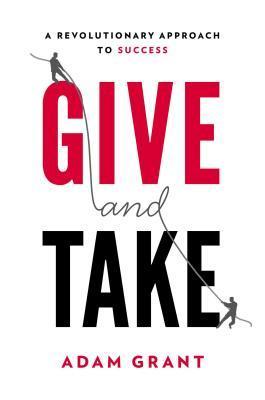
"Give and Take" explores how our reciprocity styles—Giver, Taker, or Matcher—profoundly impact our professional success and personal fulfillment. Adam Grant argues that 'Givers,' those who champion others' success without expecting immediate returns, often achieve the highest levels of sustained success, albeit with a caveat: they must learn to protect themselves from being exploited.
This book resonates with "To Sell is Human" by challenging conventional wisdom surrounding influence and human interaction. Both Pink and Grant advocate for an empathetic, service-oriented approach to moving others, moving beyond manipulative tactics. They both highlight how authentic concern for others' needs—whether in sales or general professional relationships—ultimately fosters greater trust and more effective outcomes.
The insights in "Give and Take" offer a compelling framework for understanding and optimizing interpersonal dynamics. It provides practical strategies for cultivating mutually beneficial relationships and building a supportive professional network. Its exploration of reciprocity offers a powerful lens through which to re-evaluate one's approach to collaboration, negotiation, and leadership, leading to more impactful and ethical engagement.
Give and Take: A Revolutionary Approach to Success
"Give and Take" explores how our reciprocity styles—Giver, Taker, or Matcher—profoundly impact our professional success and personal fulfillment. Adam Grant argues that 'Givers,' those who champion others' success without expecting immediate returns, often achieve the highest levels of sustained success, albeit with a caveat: they must learn to protect themselves from being exploited.
This book resonates with "To Sell is Human" by challenging conventional wisdom surrounding influence and human interaction. Both Pink and Grant advocate for an empathetic, service-oriented approach to moving others, moving beyond manipulative tactics. They both highlight how authentic concern for others' needs—whether in sales or general professional relationships—ultimately fosters greater trust and more effective outcomes.
The insights in "Give and Take" offer a compelling framework for understanding and optimizing interpersonal dynamics. It provides practical strategies for cultivating mutually beneficial relationships and building a supportive professional network. Its exploration of reciprocity offers a powerful lens through which to re-evaluate one's approach to collaboration, negotiation, and leadership, leading to more impactful and ethical engagement.
Influence: The Psychology of Persuasion
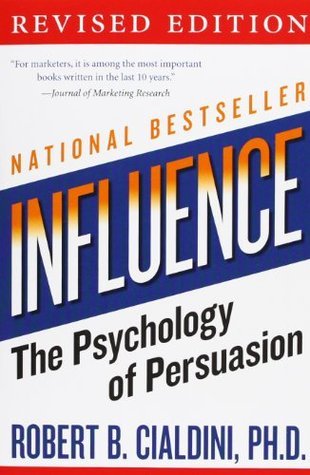
"Influence: The Psychology of Persuasion" deciphers the underlying principles that drive human compliance. Cialdini, a renowned psychologist, distills decades of research into six universal levers that compel people to say "yes": reciprocity, commitment and consistency, social proof, authority, liking, and scarcity. He illustrates how these principles are subtly and overtly employed in various contexts, from sales and advertising to interpersonal interactions, offering a comprehensive understanding of *why* we are persuaded.
This book shares a fundamental objective with "To Sell is Human." Both works explore the mechanics of motivating others to act, moving beyond superficial sales tactics to
examine the deeper psychological forces at play. While Pink emphasizes the inherent human tendency toward "selling" ideas and insights in everyday life, Cialdini provides the foundational psychological framework that explains *how* such efforts succeed or fail, making them complementary analyses of human influence.
The enduring value of "Influence" lies in its ability to empower. Understanding these principles equips individuals not only to effectively persuade but also to recognize and defend against manipulative tactics. It offers a sophisticated lens through which to navigate professional negotiations, personal interactions, and the constant barrage of marketing messages, fostering a more informed and strategic approach to communication and decision-making.
Influence: The Psychology of Persuasion
"Influence: The Psychology of Persuasion" deciphers the underlying principles that drive human compliance. Cialdini, a renowned psychologist, distills decades of research into six universal levers that compel people to say "yes": reciprocity, commitment and consistency, social proof, authority, liking, and scarcity. He illustrates how these principles are subtly and overtly employed in various contexts, from sales and advertising to interpersonal interactions, offering a comprehensive understanding of *why* we are persuaded.
This book shares a fundamental objective with "To Sell is Human." Both works explore the mechanics of motivating others to act, moving beyond superficial sales tactics to
examine the deeper psychological forces at play. While Pink emphasizes the inherent human tendency toward "selling" ideas and insights in everyday life, Cialdini provides the foundational psychological framework that explains *how* such efforts succeed or fail, making them complementary analyses of human influence.
The enduring value of "Influence" lies in its ability to empower. Understanding these principles equips individuals not only to effectively persuade but also to recognize and defend against manipulative tactics. It offers a sophisticated lens through which to navigate professional negotiations, personal interactions, and the constant barrage of marketing messages, fostering a more informed and strategic approach to communication and decision-making.
The Upside of Irrationality: The Unexpected Benefits of Defying Logic at Work and at Home

"The Upside of Irrationality" delves into the fascinating ways our minds deviate from purely rational decision-making, in settings from the workplace to our personal lives. Ariely uses engaging experiments and real-world examples to illustrate predictable patterns of irrational behavior – how incentives can backfire, the power of expectations, the surprising pleasure in exerting effort, and the true cost of procrastination. It's an exploration of human quirks and cognitive biases that shape our choices, often without us realizing it.
This book shares common ground with "To Sell is Human" by dissecting the underlying human psychology that drives behavior. While Pink focuses on the art and science of persuasion and moving others, Ariely provides the foundational understanding of *why* people respond the way they do – their inherent biases, motivations, and the predictable irrationality that influences everything from buying decisions to personal commitments. Both authors reveal the hidden mechanisms governing human interaction and influence.
This perspective will resonate with those seeking a deeper understanding of themselves and others. It offers actionable insights into navigating complex social and professional situations, improving communication, and fostering more effective relationships. The exploration of predictable human flaws transforms into a toolkit for leveraging these insights, whether for personal growth, team management, or understanding consumer behavior.
The Upside of Irrationality: The Unexpected Benefits of Defying Logic at Work and at Home
"The Upside of Irrationality" delves into the fascinating ways our minds deviate from purely rational decision-making, in settings from the workplace to our personal lives. Ariely uses engaging experiments and real-world examples to illustrate predictable patterns of irrational behavior – how incentives can backfire, the power of expectations, the surprising pleasure in exerting effort, and the true cost of procrastination. It's an exploration of human quirks and cognitive biases that shape our choices, often without us realizing it.
This book shares common ground with "To Sell is Human" by dissecting the underlying human psychology that drives behavior. While Pink focuses on the art and science of persuasion and moving others, Ariely provides the foundational understanding of *why* people respond the way they do – their inherent biases, motivations, and the predictable irrationality that influences everything from buying decisions to personal commitments. Both authors reveal the hidden mechanisms governing human interaction and influence.
This perspective will resonate with those seeking a deeper understanding of themselves and others. It offers actionable insights into navigating complex social and professional situations, improving communication, and fostering more effective relationships. The exploration of predictable human flaws transforms into a toolkit for leveraging these insights, whether for personal growth, team management, or understanding consumer behavior.
Influencer: The Power to Change Anything
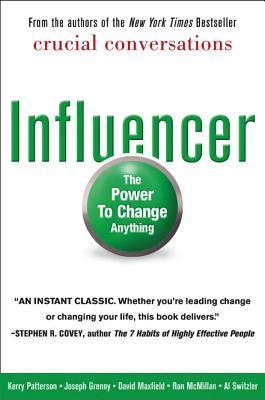
"Influencer: The Power to Change Anything" provides a systematic framework for achieving profound and lasting behavioral change, whether in individuals, groups, or organizations. It breaks down the process into six key sources of influence – personal, social, and structural – offering practical strategies to identify and leverage these levers for overcoming intractable challenges and inspiring desired outcomes. It's a pragmatic guide for anyone aiming to reshape habits, improve performance, or drive significant societal shifts.
Both books delve into the art and science of moving others. "To Sell is Human" redefines "sales" as a fundamental human activity of persuasion and influence, while "Influencer" offers a deep dive into the mechanics of achieving that influence to alter behavior. They share a core premise: understanding human motivation and strategic communication is paramount to success in nearly every personal and professional endeavor.
This book offers actionable insights for anyone seeking to master persuasion and effect meaningful change. Its structured approach and real-world examples empower individuals to diagnose complex problems and implement effective solutions, making it an indispensable resource for leaders, educators, parents, and anyone committed to improving performance or fostering better habits. The practical tools and compelling case studies ensure its immediate utility.
Influencer: The Power to Change Anything
"Influencer: The Power to Change Anything" provides a systematic framework for achieving profound and lasting behavioral change, whether in individuals, groups, or organizations. It breaks down the process into six key sources of influence – personal, social, and structural – offering practical strategies to identify and leverage these levers for overcoming intractable challenges and inspiring desired outcomes. It's a pragmatic guide for anyone aiming to reshape habits, improve performance, or drive significant societal shifts.
Both books delve into the art and science of moving others. "To Sell is Human" redefines "sales" as a fundamental human activity of persuasion and influence, while "Influencer" offers a deep dive into the mechanics of achieving that influence to alter behavior. They share a core premise: understanding human motivation and strategic communication is paramount to success in nearly every personal and professional endeavor.
This book offers actionable insights for anyone seeking to master persuasion and effect meaningful change. Its structured approach and real-world examples empower individuals to diagnose complex problems and implement effective solutions, making it an indispensable resource for leaders, educators, parents, and anyone committed to improving performance or fostering better habits. The practical tools and compelling case studies ensure its immediate utility.
Read People Like a Book: How to Analyze, Understand, and Predict People’s Emotions, Thoughts, Intentions, and Behaviors

"Read People Like a Book" delves into the intricacies of human behavior, offering strategies and frameworks for deciphering non-verbal cues, communication patterns, and underlying motivations. It provides practical techniques for understanding emotional states, anticipating responses, and interpreting intentions, focusing on enhancing interpersonal awareness.
The similarity to "To Sell is Human" lies in their shared emphasis on understanding others to achieve one's objectives. While Pink reframes selling as a broader act of "moving others" by attunement and clarity, King provides the granular tools for actually *reading* those others. Both books empower individuals with insights into human psychology to navigate interactions more effectively, whether in traditional sales, leadership, or everyday communication.
This book will appeal to anyone seeking to improve their communication, negotiation, and relationship-building skills. Its systematic approach to understanding human nature offers a significant advantage in personal and professional contexts, enabling more impactful and empathetic engagements. The actionable advice it contains proves valuable for navigating complex social dynamics and fostering stronger connections.
Read People Like a Book: How to Analyze, Understand, and Predict People’s Emotions, Thoughts, Intentions, and Behaviors
"Read People Like a Book" delves into the intricacies of human behavior, offering strategies and frameworks for deciphering non-verbal cues, communication patterns, and underlying motivations. It provides practical techniques for understanding emotional states, anticipating responses, and interpreting intentions, focusing on enhancing interpersonal awareness.
The similarity to "To Sell is Human" lies in their shared emphasis on understanding others to achieve one's objectives. While Pink reframes selling as a broader act of "moving others" by attunement and clarity, King provides the granular tools for actually *reading* those others. Both books empower individuals with insights into human psychology to navigate interactions more effectively, whether in traditional sales, leadership, or everyday communication.
This book will appeal to anyone seeking to improve their communication, negotiation, and relationship-building skills. Its systematic approach to understanding human nature offers a significant advantage in personal and professional contexts, enabling more impactful and empathetic engagements. The actionable advice it contains proves valuable for navigating complex social dynamics and fostering stronger connections.
Exactly What to Say: The Magic Words for Influence and Impact

"Exactly What to Say" by Phil M. Jones distills influence into a collection of proven phrases designed to navigate common conversational challenges. It’s a practical guide offering specific, actionable language patterns for various sales and communication scenarios, helping individuals confidently steer discussions, overcome objections, and build rapport through precise verbal strategies.
This book shares thematic ground with "To Sell is Human" by advocating for a modern, ethical approach to persuasion. While Pink broadens the definition of sales and underscores its prevalence, Jones provides the tactical communication toolkit to execute those "moving others" effectively and authentically. Both emphasize that influence isn't about manipulation, but about understanding and facilitating positive outcomes.
Professionals seeking to sharpen their communication skills will find this book immensely valuable. Its direct, prescriptive advice provides immediate utility, offering ready-to-use phrases that can significantly improve negotiation, customer interactions, and even daily interpersonal dynamics. It equips individuals with the verbal dexterity to influence more effectively and achieve their desired outcomes with greater consistency.
Exactly What to Say: The Magic Words for Influence and Impact
"Exactly What to Say" by Phil M. Jones distills influence into a collection of proven phrases designed to navigate common conversational challenges. It’s a practical guide offering specific, actionable language patterns for various sales and communication scenarios, helping individuals confidently steer discussions, overcome objections, and build rapport through precise verbal strategies.
This book shares thematic ground with "To Sell is Human" by advocating for a modern, ethical approach to persuasion. While Pink broadens the definition of sales and underscores its prevalence, Jones provides the tactical communication toolkit to execute those "moving others" effectively and authentically. Both emphasize that influence isn't about manipulation, but about understanding and facilitating positive outcomes.
Professionals seeking to sharpen their communication skills will find this book immensely valuable. Its direct, prescriptive advice provides immediate utility, offering ready-to-use phrases that can significantly improve negotiation, customer interactions, and even daily interpersonal dynamics. It equips individuals with the verbal dexterity to influence more effectively and achieve their desired outcomes with greater consistency.
More Books to Explore
Discover more titles that expand on these ideas and themes.
Drive: The Surprising Truth About What Motivates Us
The Surprising Truth About Sales: A Holistic Approach to Closing a Deal
A Whole New Mind: Why Right-Brainers Will Rule the Future
Selling the Invisible: A Field Guide to Modern Marketing
Give and Take: A Revolutionary Approach to Success
Influence: The Psychology of Persuasion