10 Books Similar to "Thinking, Fast and Slow"
by Daniel Kahneman
Blink: The Power of Thinking Without Thinking

"Blink" explores the power of rapid cognition – the snap judgments and instantaneous decisions we make based on minimal information. Gladwell argues that these unconscious thought processes, often called intuition or gut feelings, are surprisingly powerful and accurate, sometimes even more so than deliberate, in-depth analysis. He delves into examples from diverse fields, revealing how experts and everyday people make quick, effective assessments.
This book shares a core interest with "Thinking, Fast and Slow" in investigating the two distinct systems of thought. Both authors illuminate the inherent biases and remarkable efficiency of our intuitive minds, though "Blink" tends to focus more on the positive aspects and extraordinary applications of this 'fast' thinking. They both demystify the complex mechanics of human decision-making.
The book offers compelling insights into the origins and reliability of our first impressions and unconscious decisions. It affirms the value of trusting our instincts while also highlighting situations where intuition can mislead. This understanding can significantly enhance personal and professional decision-making, offering a fresh perspective on how we perceive and interact with the world around us.
Blink: The Power of Thinking Without Thinking
"Blink" explores the power of rapid cognition – the snap judgments and instantaneous decisions we make based on minimal information. Gladwell argues that these unconscious thought processes, often called intuition or gut feelings, are surprisingly powerful and accurate, sometimes even more so than deliberate, in-depth analysis. He delves into examples from diverse fields, revealing how experts and everyday people make quick, effective assessments.
This book shares a core interest with "Thinking, Fast and Slow" in investigating the two distinct systems of thought. Both authors illuminate the inherent biases and remarkable efficiency of our intuitive minds, though "Blink" tends to focus more on the positive aspects and extraordinary applications of this 'fast' thinking. They both demystify the complex mechanics of human decision-making.
The book offers compelling insights into the origins and reliability of our first impressions and unconscious decisions. It affirms the value of trusting our instincts while also highlighting situations where intuition can mislead. This understanding can significantly enhance personal and professional decision-making, offering a fresh perspective on how we perceive and interact with the world around us.
How We Decide
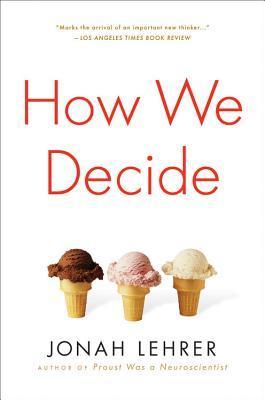
"How We Decide" by Jonah Lehrer explores the intricate dance between our rational and emotional brains, illustrating how these two systems collaborate and sometimes conflict to shape our choices. Through compelling narratives and accessible scientific research, Lehrer dissects various decision-making scenarios, from simple consumer choices to high-stakes professional judgments, revealing the underlying psychological and neurological mechanisms at play.
This book shares foundational similarities with Kahneman’s "Thinking, Fast and Slow" by delving into the dual-process theory of cognition. Both authors illuminate the rapid, intuitive, and often unconscious processes (System 1 in Kahneman’s terms, or the emotional brain in Lehrer's) and the slower, deliberate, and logical reasoning (System 2, or the rational brain). They each provide insights into how these distinct modes influence our perceptions, judgments, and ultimately, our decisions, showcasing the inherent biases and heuristics that can lead us astray.
"How We Decide" offers practical insights into improving one's decision-making abilities. It helps individuals understand the roots of cognitive errors and offers strategies to leverage both intuition and reason effectively. The engaging case studies and clear explanations of neuroscience and psychology make complex concepts digestible, empowering anyone to reflect on their own decision-making processes and cultivate a more informed and effective approach to navigating life's choices.
How We Decide
"How We Decide" by Jonah Lehrer explores the intricate dance between our rational and emotional brains, illustrating how these two systems collaborate and sometimes conflict to shape our choices. Through compelling narratives and accessible scientific research, Lehrer dissects various decision-making scenarios, from simple consumer choices to high-stakes professional judgments, revealing the underlying psychological and neurological mechanisms at play.
This book shares foundational similarities with Kahneman’s "Thinking, Fast and Slow" by delving into the dual-process theory of cognition. Both authors illuminate the rapid, intuitive, and often unconscious processes (System 1 in Kahneman’s terms, or the emotional brain in Lehrer's) and the slower, deliberate, and logical reasoning (System 2, or the rational brain). They each provide insights into how these distinct modes influence our perceptions, judgments, and ultimately, our decisions, showcasing the inherent biases and heuristics that can lead us astray.
"How We Decide" offers practical insights into improving one's decision-making abilities. It helps individuals understand the roots of cognitive errors and offers strategies to leverage both intuition and reason effectively. The engaging case studies and clear explanations of neuroscience and psychology make complex concepts digestible, empowering anyone to reflect on their own decision-making processes and cultivate a more informed and effective approach to navigating life's choices.
The Art of Thinking Clearly

"The Art of Thinking Clearly" by Rolf Dobelli is a practical guide illuminating common cognitive biases and logical fallacies that routinely undermine our decision-making. Dobelli presents these errors – from confirmation bias to sunk cost fallacy – in short, digestible chapters, offering actionable insights on how to recognize and mitigate their influence in everyday life and professional settings. It's a pragmatic toolkit for improving one's mental clarity and rational judgment.
This book shares a core intellectual lineage with Kahneman’s "Thinking, Fast and Slow" by exploring the systematic ways human cognition deviates from pure rationality. Both works delve into the inherent limitations and pitfalls of the human mind, particularly our heuristic shortcuts, which can lead to predictable errors. While Kahneman provides the foundational scientific framework, Dobelli focuses on translating similar concepts into a more readily accessible and immediately applicable format for a broader audience.
The appeal of Dobelli's book lies in its directness and utility. It offers immediate applicability, empowering individuals to identify and address their own thought patterns and those of others. Its conciseness makes it an ideal resource for busy professionals or anyone seeking rapid improvement in critical thinking, leading to better personal and professional choices informed by a deeper understanding of psychological traps.
The Art of Thinking Clearly
"The Art of Thinking Clearly" by Rolf Dobelli is a practical guide illuminating common cognitive biases and logical fallacies that routinely undermine our decision-making. Dobelli presents these errors – from confirmation bias to sunk cost fallacy – in short, digestible chapters, offering actionable insights on how to recognize and mitigate their influence in everyday life and professional settings. It's a pragmatic toolkit for improving one's mental clarity and rational judgment.
This book shares a core intellectual lineage with Kahneman’s "Thinking, Fast and Slow" by exploring the systematic ways human cognition deviates from pure rationality. Both works delve into the inherent limitations and pitfalls of the human mind, particularly our heuristic shortcuts, which can lead to predictable errors. While Kahneman provides the foundational scientific framework, Dobelli focuses on translating similar concepts into a more readily accessible and immediately applicable format for a broader audience.
The appeal of Dobelli's book lies in its directness and utility. It offers immediate applicability, empowering individuals to identify and address their own thought patterns and those of others. Its conciseness makes it an ideal resource for busy professionals or anyone seeking rapid improvement in critical thinking, leading to better personal and professional choices informed by a deeper understanding of psychological traps.
The Undoing Project: A Friendship That Changed Our Minds

"The Undoing Project" chronicles the remarkable intellectual partnership between Daniel Kahneman and Amos Tversky, two Israeli psychologists whose groundbreaking research in cognitive psychology fundamentally reshaped our understanding of human decision-making. It delves into their personal lives, their contrasting personalities, and the intense collaborative process that led to their revolutionary theories.
This book resonates strongly with "Thinking, Fast and Slow" because it provides the compelling origin story behind the concepts Kahneman later popularized. While "Thinking, Fast and Slow" explains the "what" of System 1 and System 2 thinking, biases, and heuristics, "The Undoing Project" illuminates the "how" – the personal struggles, brilliant flashes of insight, and the enduring friendship that brought these ideas into existence.
It will deeply engage anyone interested in the genesis of revolutionary scientific thought and the human drama behind intellectual breakthroughs. The book offers a unique window into the minds of two giants, revealing not just their discoveries, but the challenging and often surprising journey of discovery itself, providing profound insights into the nature of human rationality and irrationality.
The Undoing Project: A Friendship That Changed Our Minds
"The Undoing Project" chronicles the remarkable intellectual partnership between Daniel Kahneman and Amos Tversky, two Israeli psychologists whose groundbreaking research in cognitive psychology fundamentally reshaped our understanding of human decision-making. It delves into their personal lives, their contrasting personalities, and the intense collaborative process that led to their revolutionary theories.
This book resonates strongly with "Thinking, Fast and Slow" because it provides the compelling origin story behind the concepts Kahneman later popularized. While "Thinking, Fast and Slow" explains the "what" of System 1 and System 2 thinking, biases, and heuristics, "The Undoing Project" illuminates the "how" – the personal struggles, brilliant flashes of insight, and the enduring friendship that brought these ideas into existence.
It will deeply engage anyone interested in the genesis of revolutionary scientific thought and the human drama behind intellectual breakthroughs. The book offers a unique window into the minds of two giants, revealing not just their discoveries, but the challenging and often surprising journey of discovery itself, providing profound insights into the nature of human rationality and irrationality.
The Upside of Irrationality: The Unexpected Benefits of Defying Logic at Work and at Home
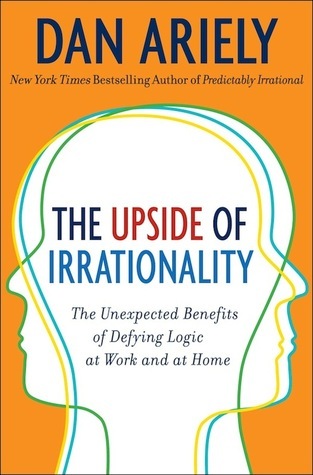
"The Upside of Irrationality" delves into the fascinating ways our seemingly illogical behaviors can, surprisingly, lead to positive outcomes in our personal and professional lives. Dan Ariely explores various instances where our decisions deviate from rational economic models, examining how emotion, habit, and social norms often supersede pure logic, sometimes to our benefit. He uncovers the nuances of human motivation, from the placebo effect's power to the hidden costs of multitasking.
This book shares a significant conceptual overlap with "Thinking, Fast and Slow" by exploring the fundamental discrepancies between ideal rational behavior and actual human decision-making. Both authors illuminate the systematic biases and cognitive shortcuts that influence our choices, albeit with Ariely often focusing on the downstream implications and unexpected advantages of these "irrationalities" rather than solely on their systematic nature.
People will appreciate this book for its insightful and often counterintuitive exploration of human behavior. It offers practical perspectives on navigating the complexities of work, relationships, and personal finance by understanding the very quirks that make us human. The book provides valuable tools for recognizing and harnessing these irrational tendencies, fostering better decision-making and a deeper understanding of ourselves and others.
The Upside of Irrationality: The Unexpected Benefits of Defying Logic at Work and at Home
"The Upside of Irrationality" delves into the fascinating ways our seemingly illogical behaviors can, surprisingly, lead to positive outcomes in our personal and professional lives. Dan Ariely explores various instances where our decisions deviate from rational economic models, examining how emotion, habit, and social norms often supersede pure logic, sometimes to our benefit. He uncovers the nuances of human motivation, from the placebo effect's power to the hidden costs of multitasking.
This book shares a significant conceptual overlap with "Thinking, Fast and Slow" by exploring the fundamental discrepancies between ideal rational behavior and actual human decision-making. Both authors illuminate the systematic biases and cognitive shortcuts that influence our choices, albeit with Ariely often focusing on the downstream implications and unexpected advantages of these "irrationalities" rather than solely on their systematic nature.
People will appreciate this book for its insightful and often counterintuitive exploration of human behavior. It offers practical perspectives on navigating the complexities of work, relationships, and personal finance by understanding the very quirks that make us human. The book provides valuable tools for recognizing and harnessing these irrational tendencies, fostering better decision-making and a deeper understanding of ourselves and others.
The Upside of Irrationality: The Unexpected Benefits of Defying Logic
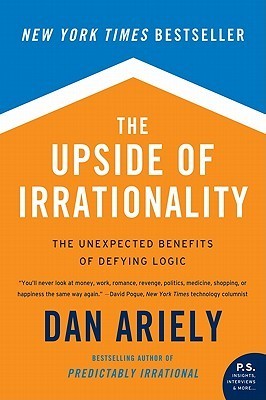
"The Upside of Irrationality" explores the often surprising ways human behavior deviates from rational economic models, and how these seemingly illogical tendencies—when understood and leveraged—can actually lead to positive outcomes. Ariely delves into experiments and real-world examples, revealing how our biases and emotional responses influence everything from work motivation to social relationships, often in ways that benefit us.
This book shares significant common ground with "Thinking, Fast and Slow" by examining the systematic and predictable ways in which human decision-making is flawed yet influential. Both books dissect the cognitive biases and heuristics that shape our world, offering profound insights into the underlying mechanisms of everyday choices, challenging the notion of humans as purely rational actors.
Someone interested in understanding the hidden forces behind their own and others' decisions will find this book highly engaging. Its practical applications, ranging from personal development to organizational strategy, make it valuable for anyone seeking to navigate a complex world with greater awareness and efficacy, transforming potential pitfalls into opportunities.
The Upside of Irrationality: The Unexpected Benefits of Defying Logic
"The Upside of Irrationality" explores the often surprising ways human behavior deviates from rational economic models, and how these seemingly illogical tendencies—when understood and leveraged—can actually lead to positive outcomes. Ariely delves into experiments and real-world examples, revealing how our biases and emotional responses influence everything from work motivation to social relationships, often in ways that benefit us.
This book shares significant common ground with "Thinking, Fast and Slow" by examining the systematic and predictable ways in which human decision-making is flawed yet influential. Both books dissect the cognitive biases and heuristics that shape our world, offering profound insights into the underlying mechanisms of everyday choices, challenging the notion of humans as purely rational actors.
Someone interested in understanding the hidden forces behind their own and others' decisions will find this book highly engaging. Its practical applications, ranging from personal development to organizational strategy, make it valuable for anyone seeking to navigate a complex world with greater awareness and efficacy, transforming potential pitfalls into opportunities.
The Invisible Gorilla: And Other Ways Our Intuitions Deceive Us

"The Invisible Gorilla" explores the surprising ways our attention and perception can betray us. Through engaging examples and rigorous research, Chabris demonstrates how we often miss readily apparent information, fall prey to illusions of memory, and overestimate our own cognitive abilities. It's an insightful look into the limitations of the human mind, showcasing how easily our everyday experiences can be based on incomplete or fabricated realities.
This book shares significant common ground with "Thinking, Fast and Slow" by examining the inherent flaws and biases in human cognition. While Kahneman delves into the two systems of thinking and their systematic errors, Chabris focuses more directly on the mechanics of attention, perception, and memory, illustrating how these fundamental processes can lead us astray. Both books unveil the often-hidden forces that shape our judgments and decisions.
The appeal of "The Invisible Gorilla" lies in its ability to demystify complex psychological phenomena. It offers a fascinating and accessible exploration of our cognitive blind spots, encouraging a deeper understanding of ourselves and others. The insights gained from this book will foster more critical thinking about personal experiences and improve decision-making in a world full of distractions and subtle deceptions.
The Invisible Gorilla: And Other Ways Our Intuitions Deceive Us
"The Invisible Gorilla" explores the surprising ways our attention and perception can betray us. Through engaging examples and rigorous research, Chabris demonstrates how we often miss readily apparent information, fall prey to illusions of memory, and overestimate our own cognitive abilities. It's an insightful look into the limitations of the human mind, showcasing how easily our everyday experiences can be based on incomplete or fabricated realities.
This book shares significant common ground with "Thinking, Fast and Slow" by examining the inherent flaws and biases in human cognition. While Kahneman delves into the two systems of thinking and their systematic errors, Chabris focuses more directly on the mechanics of attention, perception, and memory, illustrating how these fundamental processes can lead us astray. Both books unveil the often-hidden forces that shape our judgments and decisions.
The appeal of "The Invisible Gorilla" lies in its ability to demystify complex psychological phenomena. It offers a fascinating and accessible exploration of our cognitive blind spots, encouraging a deeper understanding of ourselves and others. The insights gained from this book will foster more critical thinking about personal experiences and improve decision-making in a world full of distractions and subtle deceptions.
Nudge: Improving Decisions About Health, Wealth, and Happiness
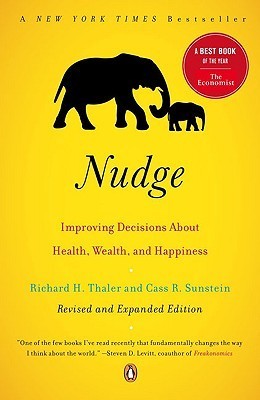
"Nudge" explores how subtle changes in environment and choice architecture can significantly influence human behavior and decision-making, often for the better. It delves into the concept of "libertarian paternalism," suggesting that institutions can design choices to guide individuals toward healthier, wealthier, and happier outcomes without restricting their freedom of choice. The book offers practical examples demonstrating how small interventions, or "nudges," can have profound effects in areas from retirement savings to organ donation.
This book shares a deep intellectual kinship with "Thinking, Fast and Slow" by examining the systematic biases and irrationalities inherent in human judgment. Both books draw heavily on insights from behavioral economics, revealing how our cognitive shortcuts and emotional responses often lead us away from optimal decisions. While Kahneman dissects the mechanics of these biases, Thaler and Sunstein focus on how we can strategically address them in practice.
The appeal of "Nudge" lies in its accessible yet profound exploration of how our environment shapes our choices. It provides a toolkit for understanding and, crucially, for designing systems that encourage more beneficial outcomes in everyday life and policymaking. The book offers valuable insights for anyone interested in improving personal decisions, influencing group behavior, or crafting more effective public policies, moving beyond theoretical understanding to practical application.
Nudge: Improving Decisions About Health, Wealth, and Happiness
"Nudge" explores how subtle changes in environment and choice architecture can significantly influence human behavior and decision-making, often for the better. It delves into the concept of "libertarian paternalism," suggesting that institutions can design choices to guide individuals toward healthier, wealthier, and happier outcomes without restricting their freedom of choice. The book offers practical examples demonstrating how small interventions, or "nudges," can have profound effects in areas from retirement savings to organ donation.
This book shares a deep intellectual kinship with "Thinking, Fast and Slow" by examining the systematic biases and irrationalities inherent in human judgment. Both books draw heavily on insights from behavioral economics, revealing how our cognitive shortcuts and emotional responses often lead us away from optimal decisions. While Kahneman dissects the mechanics of these biases, Thaler and Sunstein focus on how we can strategically address them in practice.
The appeal of "Nudge" lies in its accessible yet profound exploration of how our environment shapes our choices. It provides a toolkit for understanding and, crucially, for designing systems that encourage more beneficial outcomes in everyday life and policymaking. The book offers valuable insights for anyone interested in improving personal decisions, influencing group behavior, or crafting more effective public policies, moving beyond theoretical understanding to practical application.
Never Go With Your Gut: How Pioneering Leaders Make the Best Decisions and Avoid Business Disasters
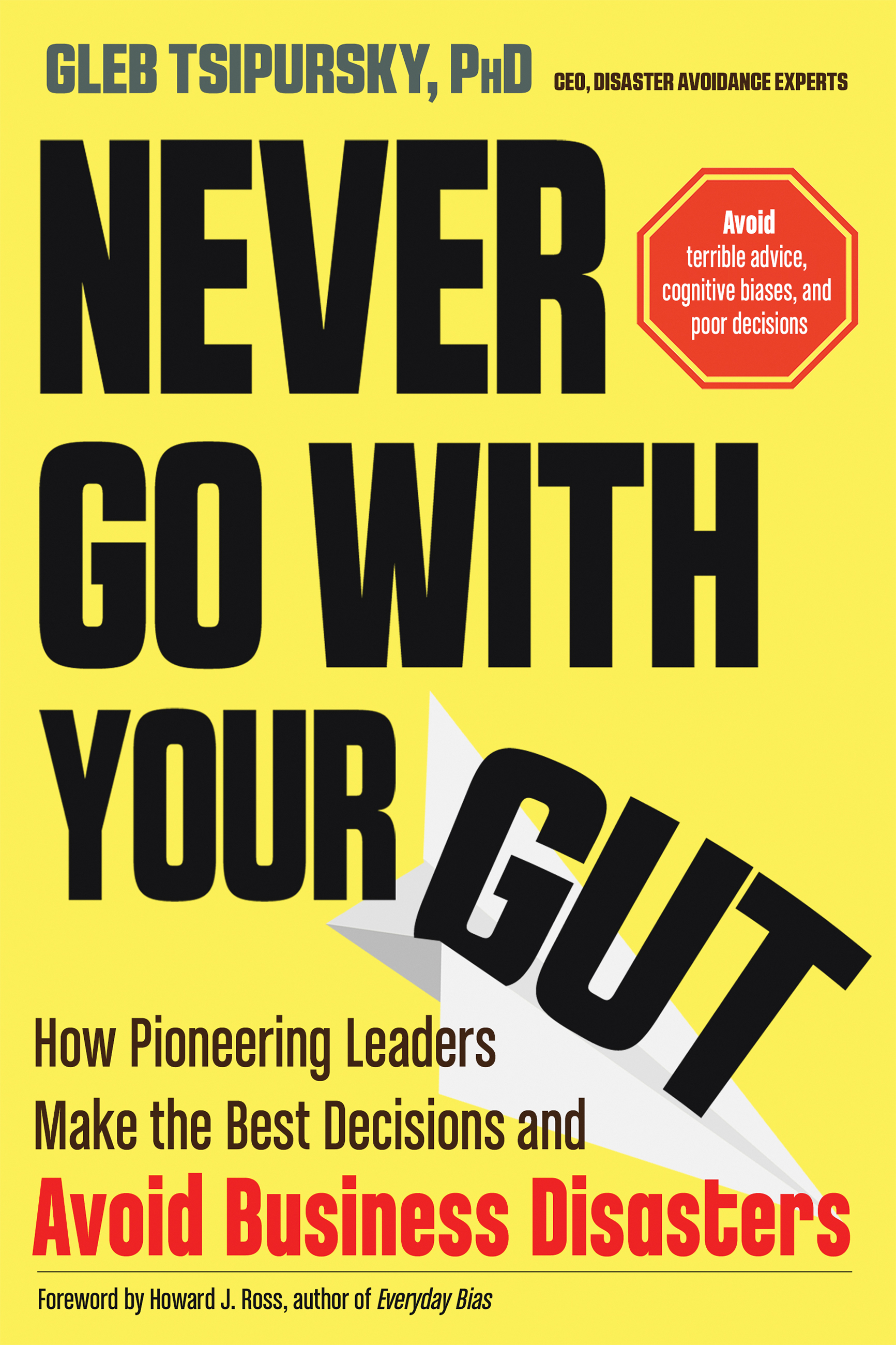
"Never Go With Your Gut" advocates for a data-driven, strategic approach to decision-making, arguing that relying on intuition in complex business environments often leads to costly mistakes. Gleb Tsipursky unpacks common cognitive biases that cloud judgment and offers practical, evidence-based methods for leaders to overcome these pitfalls, fostering a culture of rational, transparent decision-making within organizations.
This book echoes "Thinking, Fast and Slow" by dissecting the inherent flaws in human intuition and System 1 thinking. Both works emphasize that our fast, automatic cognitive processes, while useful in some contexts, are prone to systematic errors, especially when facing intricate problems. Tsipursky extends Kahneman's foundational insights into actionable strategies specifically tailored for professional leadership.
Individuals interested in optimizing their decision-making processes, understanding the psychological traps that hinder effective leadership, and building more resilient organizations will find immense value in this analysis. It provides concrete frameworks and real-world examples for mitigating bias and cultivating a more objective, successful decision-making culture.
Never Go With Your Gut: How Pioneering Leaders Make the Best Decisions and Avoid Business Disasters
"Never Go With Your Gut" advocates for a data-driven, strategic approach to decision-making, arguing that relying on intuition in complex business environments often leads to costly mistakes. Gleb Tsipursky unpacks common cognitive biases that cloud judgment and offers practical, evidence-based methods for leaders to overcome these pitfalls, fostering a culture of rational, transparent decision-making within organizations.
This book echoes "Thinking, Fast and Slow" by dissecting the inherent flaws in human intuition and System 1 thinking. Both works emphasize that our fast, automatic cognitive processes, while useful in some contexts, are prone to systematic errors, especially when facing intricate problems. Tsipursky extends Kahneman's foundational insights into actionable strategies specifically tailored for professional leadership.
Individuals interested in optimizing their decision-making processes, understanding the psychological traps that hinder effective leadership, and building more resilient organizations will find immense value in this analysis. It provides concrete frameworks and real-world examples for mitigating bias and cultivating a more objective, successful decision-making culture.
The Paradox of Choice: Why More Is Less
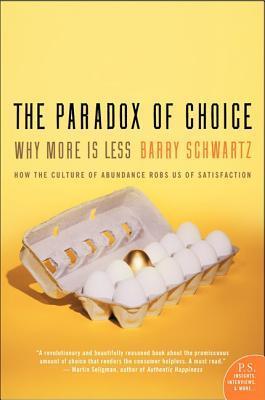
"The Paradox of Choice" explores how the abundance of options in modern life, while seemingly liberating, often leads to psychological distress. Schwartz argues that too many choices can overwhelm us, leading to indecision, chronic dissatisfaction, and even depression, rather than increased happiness or utility.
This book shares a fundamental similarity with "Thinking, Fast and Slow" in its examination of human decision-making and cognitive biases. Both authors dissect the intuitive and rational processes that guide our choices, revealing how our minds often operate in ways that deviate from purely logical models, leading to predictable errors in judgment and well-being.
The insights offered provide profound value by illuminating the often-unseen psychological costs of hyper-choice. Understanding these mechanisms can empower individuals to make more thoughtful decisions about what truly matters, fostering greater contentment and reducing the anxieties associated with a world rich in options but poor in satisfaction.
The Paradox of Choice: Why More Is Less
"The Paradox of Choice" explores how the abundance of options in modern life, while seemingly liberating, often leads to psychological distress. Schwartz argues that too many choices can overwhelm us, leading to indecision, chronic dissatisfaction, and even depression, rather than increased happiness or utility.
This book shares a fundamental similarity with "Thinking, Fast and Slow" in its examination of human decision-making and cognitive biases. Both authors dissect the intuitive and rational processes that guide our choices, revealing how our minds often operate in ways that deviate from purely logical models, leading to predictable errors in judgment and well-being.
The insights offered provide profound value by illuminating the often-unseen psychological costs of hyper-choice. Understanding these mechanisms can empower individuals to make more thoughtful decisions about what truly matters, fostering greater contentment and reducing the anxieties associated with a world rich in options but poor in satisfaction.
More Books to Explore
Discover more titles that expand on these ideas and themes.
Blink: The Power of Thinking Without Thinking
How We Decide
The Art of Thinking Clearly
The Undoing Project: A Friendship That Changed Our Minds
The Upside of Irrationality: The Unexpected Benefits of Defying Logic at Work and at Home
The Upside of Irrationality: The Unexpected Benefits of Defying Logic